How Much Does 20 Cubic Yards of Fill Dirt Cost in 2026
Get an estimate for your project in 60 seconds
 Your information is secure
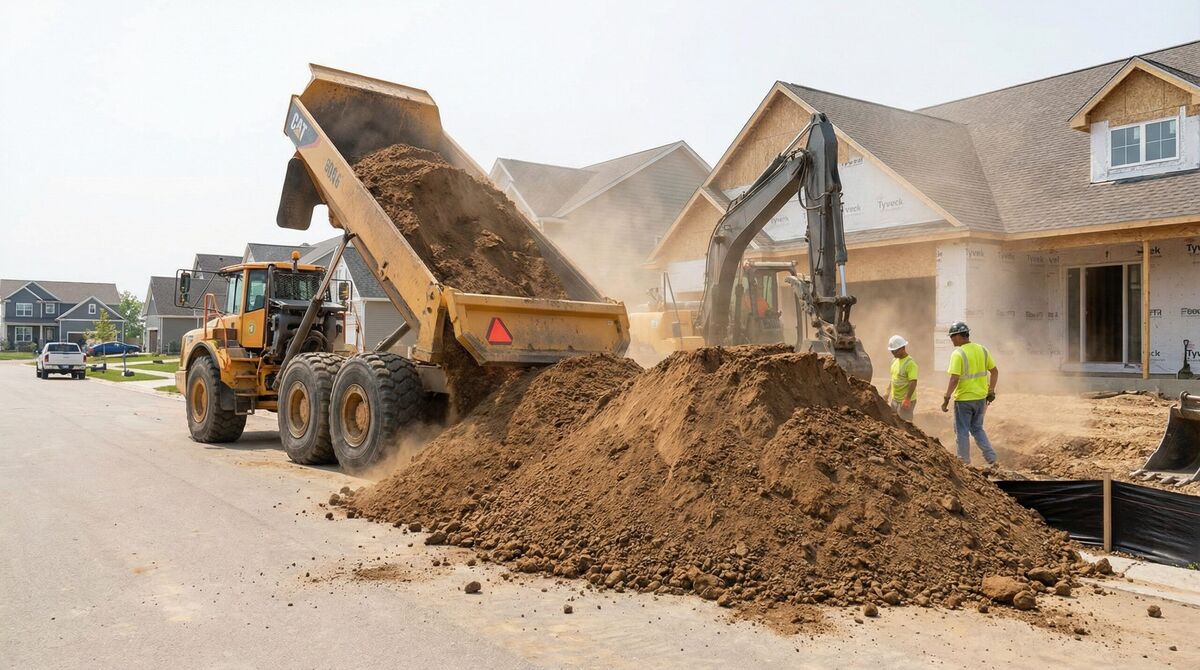
Planning a construction or landscaping project and wondering about fill dirt costs? You’re looking at spending between $160 to $600 for 20 cubic yards of fill dirt, with most homeowners paying around $12 to $25 per cubic yard. The final price depends on several factors including dirt type, quality, location, and delivery distance.
Quick Fact: Clean structural fill typically costs $15-30 per cubic yard, while basic subsoil runs $8-15 per cubic yard, making your 20-yard project range from $160 for basic fill to $600 for premium topsoil.
Understanding these costs upfront helps you budget accurately and avoid surprises. Based on data from hellogravel.com, fill dirt pricing varies significantly across regions and suppliers, making it essential to know what factors drive these differences.
Understanding fill dirt types and their costs
Fill dirt isn’t a one-size-fits-all material. Different types serve specific purposes and come with varying price points that directly impact your 20 cubic yard budget.
Structural fill represents the premium option at $15-30 per cubic yard. This compactable material creates solid foundations for buildings and driveways. For 20 cubic yards, you’ll spend $300-600, but you get superior stability and longevity. Learn more about what structural fill dirt is and its specific applications.
Subsoil fill offers the most economical choice at $8-15 per cubic yard. Sourced from beneath topsoil layers, it lacks organic matter that could cause settling. Your 20-yard project costs $160-300 with subsoil, making it perfect for basic leveling work.
Clean fill dirt falls in the middle range at $12-20 per cubic yard. Free from debris, rocks, and contaminants, it provides reliable performance for most residential projects. Expect to pay $240-400 for 20 cubic yards of clean fill.

According to hellogravel.com, the type you choose should match your project requirements rather than just your budget. Using subsoil for a foundation might save money initially but could cost more in repairs later.
Key factors that affect your 20 cubic yard fill dirt price
Several variables influence what you’ll actually pay for your fill dirt order. Understanding these helps you estimate costs more accurately and find potential savings.
Location and delivery distance significantly impact pricing. Suppliers typically charge $50-150 for delivery within 10 miles, but costs can double for longer distances. Rural areas often face higher prices due to limited supplier options and increased transportation costs.
Quality and source directly affect pricing. Fill dirt from construction sites might cost less but could contain debris or contaminants. Premium screened fill from dedicated quarries costs more but ensures consistent quality and composition.
Seasonal demand creates price fluctuations throughout the year. Spring and summer construction seasons drive prices up 15-25% compared to winter months. Planning your project for fall or winter can yield significant savings on your 20 cubic yard order.
Money-Saving Tip: Ordering during off-peak seasons (November through February) can reduce your total cost by $50-150 for a 20 cubic yard delivery.
Bulk purchasing power works in your favor with larger orders. While 20 cubic yards qualifies for bulk pricing at most suppliers, combining orders with neighbors or scheduling multiple deliveries can unlock additional discounts. If you’re considering a smaller project, check out how much 10 cubic yards of fill dirt costs for comparison.
Regional price variations across the United States
Fill dirt costs vary dramatically depending on your location. Understanding regional differences helps set realistic budget expectations for your project.
West Coast markets typically see the highest prices, with 20 cubic yards costing $400-600 in California, Oregon, and Washington. High land costs, strict environmental regulations, and limited quarry access drive these premium prices.
Midwest regions offer more affordable options, with 20 cubic yards ranging from $200-400. Abundant agricultural land and numerous suppliers create competitive pricing in states like Iowa, Illinois, and Indiana.
Southeast markets fall somewhere in the middle at $250-450 for 20 cubic yards. States like Georgia, North Carolina, and Tennessee benefit from active construction markets and reasonable transportation costs.
Northeast pricing varies widely by proximity to major cities. Rural areas might pay $200-350 for 20 cubic yards, while projects near New York or Boston could reach $500-700 due to high operational costs and limited supplier access.

According to data from hellogravel.com, these regional differences stem from local supply availability, transportation infrastructure, and market competition levels.
Smart strategies to reduce your fill dirt costs
You can significantly lower your 20 cubic yard fill dirt expense through strategic planning and smart sourcing decisions.
Compare multiple suppliers before committing to any purchase. Prices can vary by 30-50% between suppliers in the same area. Request quotes from at least three different companies, including both large operations and smaller local businesses. Understanding where to buy dirt and what to look for can help you make informed decisions.
Consider alternative sources for potential savings. Construction sites often have excess clean fill they need to dispose of. Contacting local contractors or checking with municipal projects might yield free fill dirt options.
Time your purchase strategically to avoid peak season premiums. Ordering during slower construction periods or combining your order with neighbors can unlock bulk discounts and reduce per-yard costs.
Evaluate pickup versus delivery options if you have access to appropriate equipment. While delivery adds convenience, self-pickup can save $75-200 on your total order, making it worthwhile for budget-conscious projects. You can also use a fill dirt cost calculator to estimate your specific project needs.
Verify quality before purchase to avoid costly mistakes. Inspect samples when possible and ask about the fill dirt’s source and composition. Poor quality fill might require additional materials or cause settling issues that cost more than premium dirt upfront.
Planning your 20 cubic yard fill dirt purchase doesn’t have to break your budget. By understanding the different types available, regional pricing variations, and cost-saving strategies, you can make informed decisions that balance quality with affordability. Remember that the cheapest option isn’t always the best value if it leads to project delays or additional material needs. Focus on finding the right type of fill dirt for your specific application while leveraging timing and sourcing strategies to optimize your investment.
Ready to move forward with your project? Hello Gravel offers competitive pricing on all types of fill dirt with convenient delivery options nationwide. Check out our products to get accurate quotes and ensure your project starts on solid ground.

 Chance Kittrell
