
Sand vs Gravel for Shed Foundations: Can You Use Sand for a Shed Base?
Building a solid foundation for your shed is crucial for preventing costly problems like doors that won’t close, rotting floors, or a structure that tilts over time. You’re probably wondering whether sand can work as your shed base, especially if you’re looking for an affordable DIY option.
Quick answer: Yes, you can use sand for a shed foundation, but it’s rarely the best choice. Sand works for small, lightweight sheds in stable climates, but gravel typically offers better drainage, stability, and long-term performance for most situations.
Key insight: While sand is cheaper upfront, it often leads to settling and drainage issues that can cost more to fix later than using gravel from the start.
This guide will walk you through when sand makes sense, why gravel usually wins, and how to build either foundation correctly. You’ll also learn about hybrid approaches that combine the best of both materials.
Why your shed foundation material matters
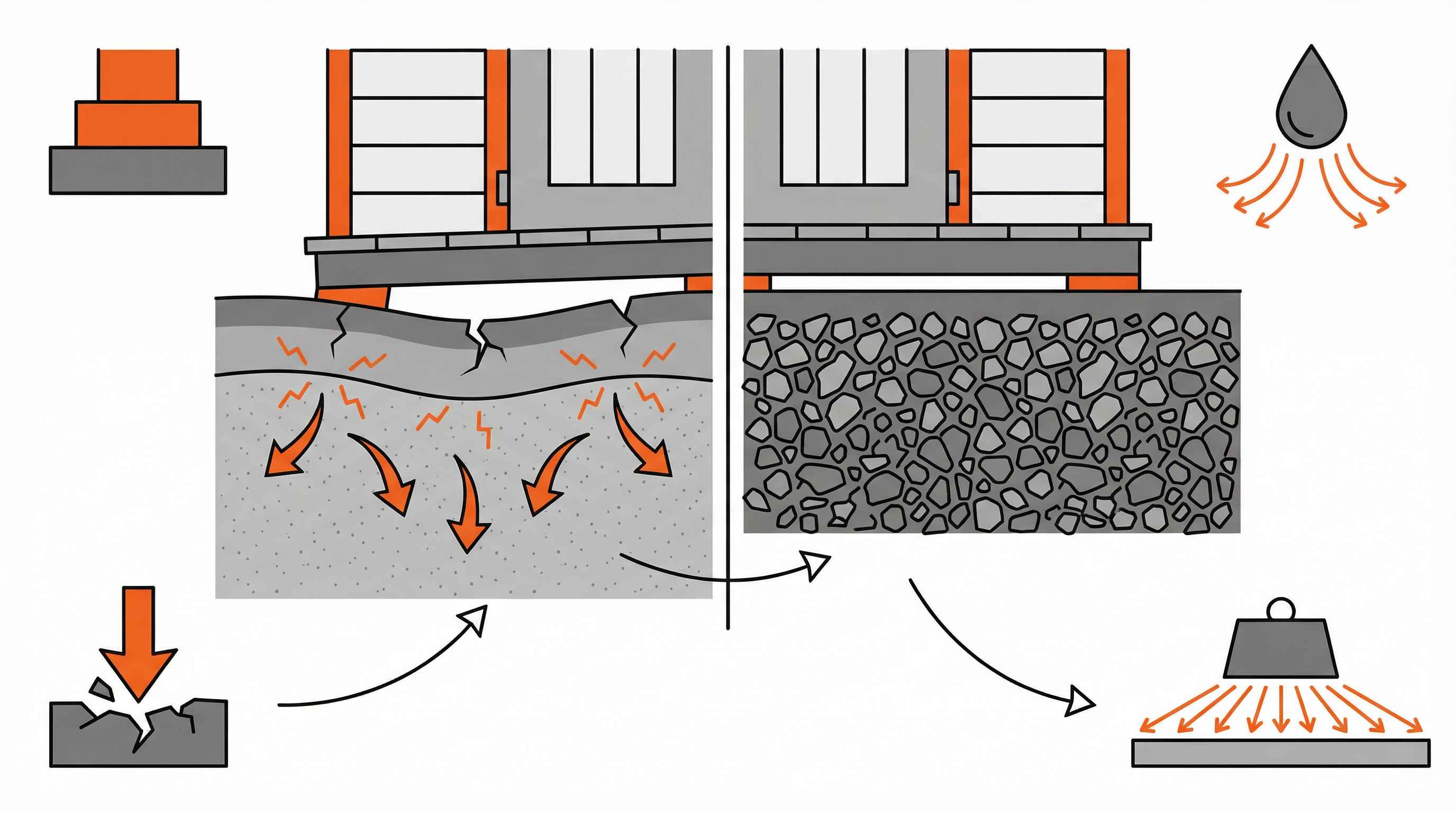
Your foundation does three critical jobs that directly impact your shed’s lifespan. First, it distributes weight evenly across the ground, preventing your shed from sinking into soft soil or tilting as the ground shifts with weather changes.
Second, proper drainage keeps moisture away from your shed’s floor and walls. Water pooling around or under your shed leads to rot, mold, and structural damage that can destroy your investment within a few years.
Finally, a stable base keeps everything level and square. When foundations shift or settle unevenly, doors stick, walls crack, and the entire structure becomes compromised.
Can you use sand for a shed base? The short answer
Sand can work as a shed foundation, but only under specific conditions. It’s acceptable for small sheds under 8×10 feet, lightweight resin or metal structures, and areas with excellent natural drainage and minimal freeze-thaw cycles.
However, sand struggles with heavier wooden sheds, areas with poor drainage, or climates with significant temperature swings. The material’s fine particles compact differently than gravel and don’t provide the same load-bearing capacity.
Most shed manufacturers and foundation experts recommend gravel as the primary base material because it handles weight better, drains faster, and stays stable longer than sand alone.
Pros and cons of using sand as a shed foundation
Sand offers some genuine advantages that make it appealing for certain projects. It’s significantly cheaper than gravel or concrete, often costing 30-50% less per cubic yard. Sand is also easier to level initially since you can rake and screed it smooth without special equipment.
For temporary sheds or structures you might move later, sand provides a less permanent option that’s simple to remove or relocate. It’s also readily available at most home improvement stores.
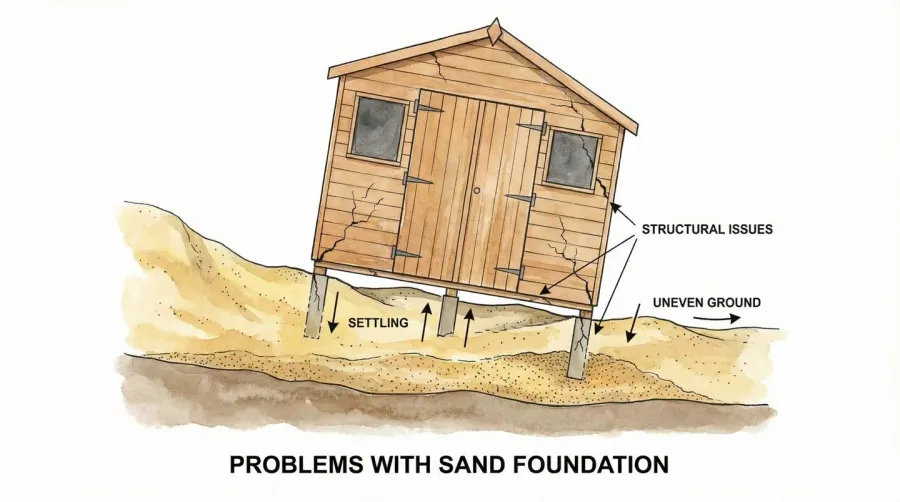
The drawbacks, however, are significant. Sand erodes easily during heavy rains, creating low spots and uneven surfaces. It doesn’t drain as effectively as gravel, which can lead to water pooling and frost heave in colder climates.
Sand also has lower load-bearing capacity than angular gravel. Fine particles shift under weight, causing gradual settling that throws your shed out of level over time. This settling often accelerates after the first winter freeze-thaw cycle.
Warning: Using sand alone for sheds over 100 square feet or in areas with poor drainage often leads to foundation failure within 2-3 years.
When sand foundations make sense and when they don’t
Sand works best for specific scenarios where its limitations won’t cause problems. Small garden sheds, tool storage units under 64 square feet, and temporary structures are good candidates for sand bases.
Areas with naturally sandy, well-draining soil also work better with sand foundations since the base material matches the existing ground conditions. Flat yards without slope issues reduce erosion concerns.
Avoid sand for larger sheds, heavy wooden structures, or anything you plan to keep for more than a few years. Skip sand entirely if you live in areas with heavy rainfall, significant freeze-thaw cycles, or clay soil that doesn’t drain well.
If your shed will store heavy equipment, vehicles, or serve as a workshop, the extra load requires the superior stability that gravel or concrete provides.
Step-by-step guide to building a sand shed base
If sand fits your specific situation, here’s how to build it correctly. Start by marking your area and excavating 4-6 inches deep, extending 12 inches beyond your shed’s footprint on all sides.
Install landscape fabric over the excavated area to prevent weeds and help separate the sand from the soil below. This barrier also reduces sand migration into the ground.
Create a sturdy perimeter using treated lumber, concrete blocks, or steel edging. This containment system is crucial for preventing sand erosion and maintaining your foundation’s shape.
Fill the contained area with coarse sand or sand-gravel mix, spreading it evenly with a rake. Compact the sand using a plate compactor, working in thin 2-inch lifts rather than trying to compact the entire depth at once.
Check for level frequently during compaction and add sand as needed to maintain proper grade and thickness.
Best alternatives to a sand shed foundation
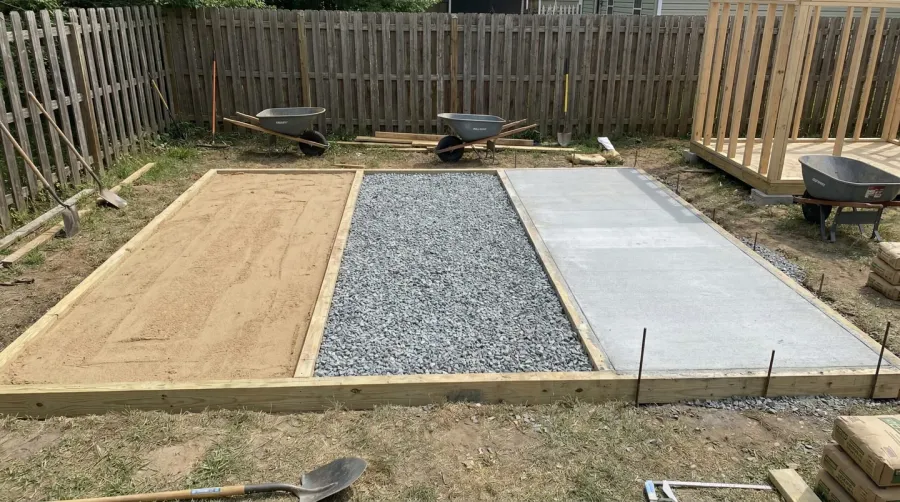
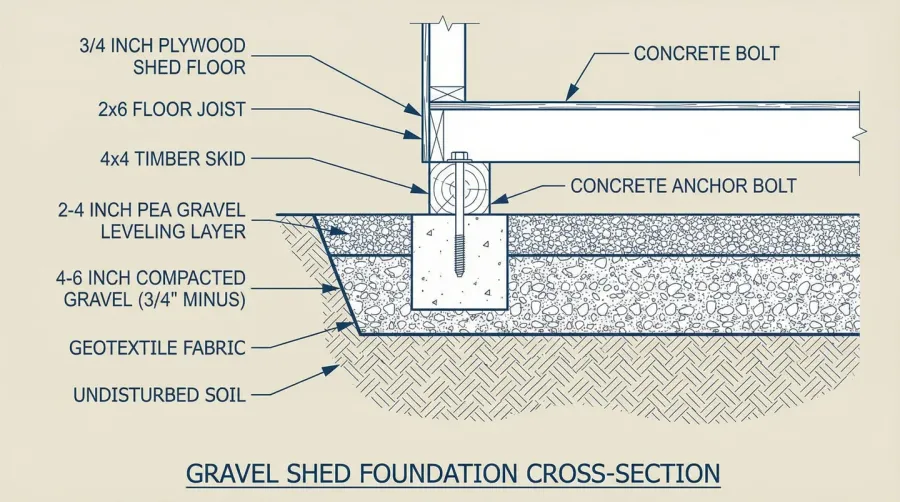
Gravel remains the gold standard for most shed foundations because it combines excellent drainage with superior load-bearing capacity. Crushed stone or gravel costs more initially but typically lasts 10-20 years without major maintenance.
Concrete slabs provide the strongest, most permanent option for large or heavy sheds. While expensive and labor-intensive, concrete handles any load and provides a perfectly level surface that won’t shift over time.
Hybrid approaches often work best for many situations. A base layer of gravel for drainage and stability, topped with a thin sand layer for final leveling, combines the benefits of both materials while minimizing their individual weaknesses.
| Foundation Type | Cost | Drainage | Stability | Best For |
|---|---|---|---|---|
| Sand only | Low | Poor | Fair | Small, temporary sheds |
| Gravel | Medium | Excellent | Good | Most permanent sheds |
| Concrete | High | Good | Excellent | Large, heavy structures |
| Gravel + Sand | Medium | Very Good | Good | DIY permanent bases |
Common mistakes with sand foundations
The biggest mistake is using sand as the sole foundation material for sheds that exceed its load-bearing capacity. Many people underestimate how quickly sand settles under even moderate weight.
Skipping proper edging or containment leads to rapid erosion and foundation failure. Sand needs strong borders to maintain its shape and prevent washout during storms.
Another common error is insufficient compaction. Loose sand compresses significantly under load, creating uneven settling that damages your shed’s structure. Always compact in thin layers rather than trying to compress thick deposits.
Finally, many people choose sand without considering their local climate and soil conditions. What works in dry, sandy regions often fails in areas with clay soil, heavy rainfall, or freeze-thaw cycles. For better alternatives, consider limestone for shed foundations or river rock options that offer superior performance in challenging conditions.
Ready to build your shed foundation with confidence? Hello Gravel provides high-quality sand, gravel, and aggregate materials delivered directly to your project site. Whether you choose a traditional gravel base or a hybrid sand-gravel approach, we’ll help you get the right materials in the exact quantities you need. Our expert team can guide you through material selection and ensure your foundation project starts with quality supplies that will last for years.
Frequently Asked Questions
Can you put a shed directly on sand?
A shed can be placed directly on sand, but it’s usually not recommended for anything beyond small, lightweight structures. Because sand shifts and erodes easily, the base can become uneven over time, causing doors to stick, floors to feel spongy, or the shed to lean. Most professional installers recommend a compacted gravel pad or concrete slab for better long-term stability and drainage.
Is sand or gravel better for a shed foundation?
For most sheds, gravel is better than sand. A compacted crushed-stone base spreads weight more evenly, drains water away from the shed, and resists erosion and movement much better than loose sand. Sand works only in limited situations and often requires more maintenance to stay level over time.
How thick should a sand base be for a shed?
For a small shed on stable, well-drained soil, many DIYers use 3-4 inches of compacted sand inside a solid perimeter frame. However, for better performance, it’s wiser to excavate 4-6 inches and fill most of that depth with compacted crushed stone, then use only a thin layer of sand on top for leveling. This hybrid approach combines the leveling ease of sand with the strength and drainage of gravel.
Can I mix sand and gravel for a shed base?
Yes, mixing sand and gravel is often a best practice. Build a 4-6 inch compacted gravel pad for structure and drainage, then add a thin layer of sand on top to fine-tune the final level before placing the shed. This approach avoids the weaknesses of using sand alone while still making installation easier.