
Best Compacting Gravel Types for Driveways and Walkways
Guide handoff
Want help applying this guide to your project?
Share your ZIP and what you need help with. We'll use this guide as context when we follow up.
- 1 This guide gives us the context you were reading.
- 2 Ask about pricing, material choice, delivery timing, or quantity.
- 3 Keep it broad if you are still figuring out the project.
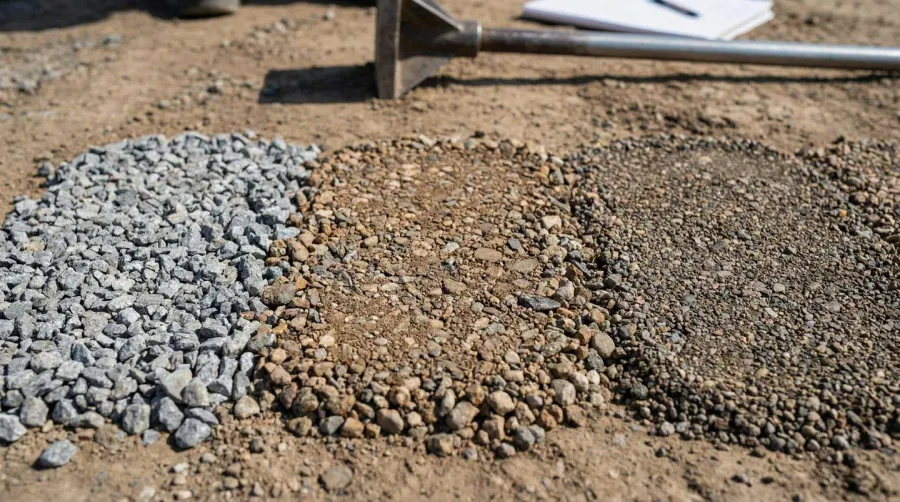
Looking for the perfect foundation material for your outdoor project? Road Base and #57 Crushed Stone are the top compacting gravel choices, offering superior stability through their angular shapes and fine particle content that locks together tightly when compressed.
Quick Answer: The best compacting gravels include Road Base (crusher run), #57 Crushed Stone, and crushed concrete. These materials compact to 95% density compared to loose gravel’s 70%, creating stable surfaces that handle heavy loads while providing excellent drainage.
Whether you’re building a new driveway, creating garden pathways, or laying foundations for patios, choosing the right compacting gravel makes all the difference. This guide walks you through the top options, helping you select materials that will create durable, attractive surfaces for years to come.
Understanding compacting gravel basics
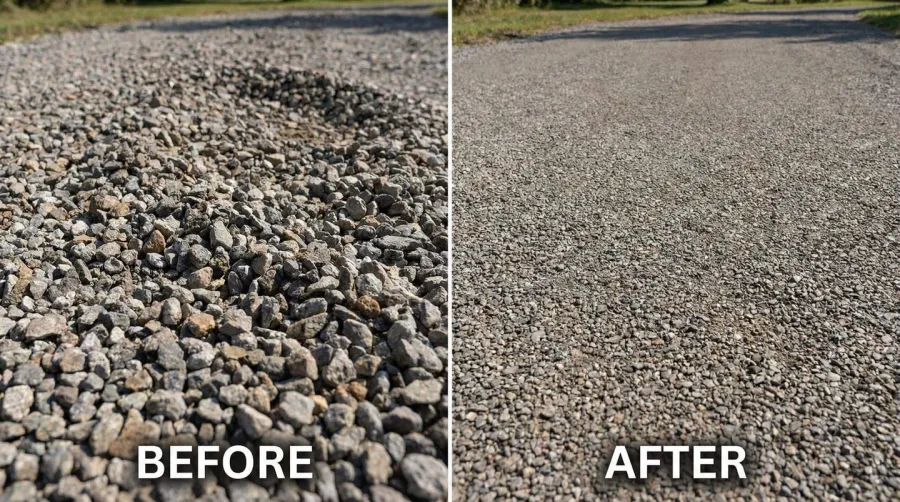
Compacting gravel refers to stone materials that compress tightly under mechanical pressure to form stable, load-bearing surfaces. Unlike decorative gravels that remain loose, these materials contain specific particle size distributions that allow them to interlock effectively.
The compaction process uses vibrating plate compactors or drum rollers to eliminate air gaps between stones. Angular materials like crushed stone work best because their jagged edges create mechanical bonds that resist shifting under weight.
According to hellogravel.com, properly compacted gravel can achieve densities of 95% or higher, creating surfaces strong enough for vehicle traffic while maintaining permeability for drainage.
Top compacting gravel types for your project
Road Base (Crusher Run) stands out as the most compactable option available. This engineered blend combines crushed stone ranging from 1.5 inches down to fine particles, with the smaller materials filling voids between larger stones. The result is exceptional stability that resists erosion and shifting.
#57 Crushed Stone offers excellent versatility for both structural and drainage applications. These angular stones, typically 3/4 inch in size, lock together well when compacted while still allowing water flow. They work particularly well as top layers over more compactable base materials.
Crushed Concrete provides an eco-friendly alternative that compacts nearly as well as natural stone. Made from recycled concrete, it contains various particle sizes that create strong interlocking when compressed, making it ideal for cost-conscious projects requiring good load-bearing capacity. Learn more about what crushed concrete is and its applications.
| Gravel Type | Compaction Rating | Best Uses | Drainage |
|---|---|---|---|
| Road Base | Excellent | Driveways, foundations | Good |
| #57 Crushed Stone | Very Good | Driveways, walkways | Excellent |
| Crushed Concrete | Very Good | Base layers, roads | Good |
Choosing the right gravel for your needs
Consider your project’s specific requirements when selecting compacting gravel. Heavy-duty applications like driveways benefit from Road Base’s superior compaction properties, while decorative walkways might work well with #57 Crushed Stone that offers both stability and visual appeal.
Size matters significantly in compaction success. Smaller particles fill gaps between larger stones, creating denser surfaces. However, purely fine materials may compact too tightly, reducing drainage. The ideal mix contains various sizes that work together. For specific guidance on sizing, check out what gravel size is best for a patio.
Pro Tip: For maximum stability, use Road Base as your foundation layer and top it with #57 Crushed Stone for improved drainage and appearance. This two-layer approach combines the best properties of both materials.
Color and texture affect both function and aesthetics. Lighter colors reflect heat better in sunny areas, while darker stones may provide better contrast against landscaping. Rough textures offer more traction but can be less comfortable for walking.
Climate considerations also matter. Areas with heavy rainfall need materials with excellent drainage properties, while regions with freeze-thaw cycles benefit from gravels that resist frost heaving through good compaction and permeability. Understanding what type of gravel is best for erosion control can help you make the right choice for your climate.
Installation and maintenance essentials
Proper ground preparation sets the foundation for successful compaction. Remove all vegetation, debris, and organic matter from the area. Grade the surface to ensure proper drainage away from structures, typically maintaining a 2% slope.
Apply geotextile fabric over prepared ground to prevent gravel mixing with underlying soil while maintaining stability. This barrier also helps prevent weed growth and extends the life of your gravel surface.
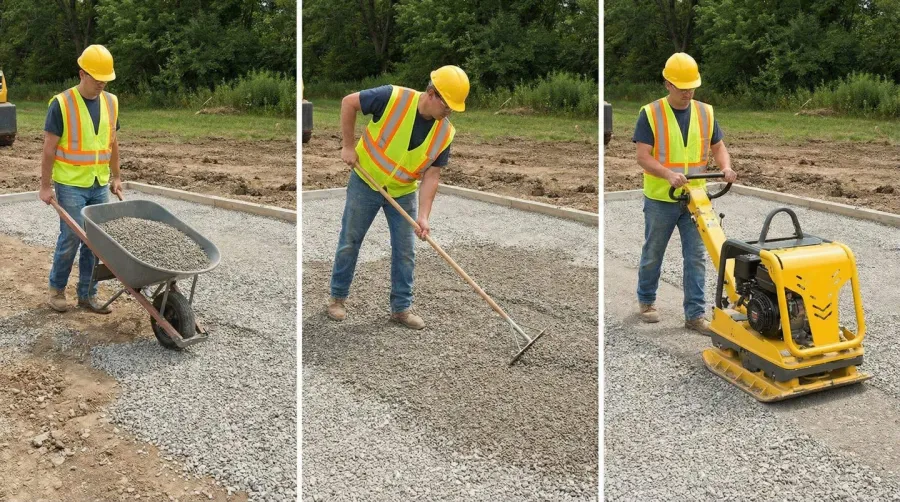
Spread gravel in lifts no thicker than 4 inches for optimal compaction. Use mechanical compactors, making multiple passes until the surface feels solid underfoot. Work systematically from one end to the other, overlapping passes slightly for uniform density.
Regular maintenance keeps compacted gravel performing well. Remove debris and organic matter promptly to prevent weed growth and maintain appearance. Inspect for signs of erosion or displacement, particularly after heavy rains or freeze-thaw cycles. For persistent weed issues, explore how to permanently get rid of weeds in a gravel driveway.
Maintenance Schedule: Check your gravel surface monthly, removing debris and addressing any thin spots immediately. Annual top-dressing with fresh material maintains optimal thickness and appearance.
Add fresh gravel to areas that become thin over time, compacting new material to match surrounding density. Consider applying stabilizing agents in high-traffic areas to enhance durability and reduce maintenance needs.
Proper drainage management prevents most gravel problems. Ensure water flows away from the surface through appropriate grading and consider installing edge restraints to prevent material migration. For comprehensive drainage solutions, review the best gravel for drainage.
Compacting gravel offers an excellent balance of durability, drainage, and cost-effectiveness for outdoor projects. By choosing the right type for your specific needs and following proper installation techniques, you can create surfaces that perform reliably for years while enhancing your property’s functionality and appeal.
FAQ
What is the best compacting gravel for driveways?
Road Base (crusher run) is the best compacting gravel for driveways due to its engineered blend of crushed stone ranging from 1.5 inches down to fine particles. The smaller materials fill voids between larger stones, creating exceptional stability that resists erosion and shifting while handling heavy vehicle loads.
Does #57 crushed stone compact well?
Yes, #57 crushed stone compacts very well due to its angular 3/4-inch stones that lock together effectively when compressed. While it doesn’t compact as tightly as Road Base, it offers excellent versatility for both structural and drainage applications, making it ideal for driveways and walkways.
How thick should compacted gravel be for a driveway?
Compacted gravel should be applied in lifts no thicker than 4 inches for optimal compaction. For driveways, a total depth of 4-6 inches is typically recommended, with each layer properly compacted using mechanical compactors before adding the next lift to ensure maximum density and stability.
What is the difference between compacting gravel and regular gravel?
Compacting gravel contains specific particle size distributions with angular shapes that allow stones to interlock and compress tightly under mechanical pressure, achieving 95% density. Regular decorative gravel remains loose and doesn’t compact effectively, typically only reaching 70% density and lacking the stability needed for load-bearing surfaces.