Fill Dirt for House Pad Construction Guide
Get an estimate for your project in 60 seconds
 Your information is secure

Building a stable house pad requires the right foundation material, and fill dirt is your best choice for creating a level, durable base. Fill dirt provides the structural stability needed to prevent foundation settling while remaining cost-effective for most construction budgets. This guide walks you through everything you need to know about selecting, purchasing, and properly installing fill dirt for your house pad project.
Quick Answer: Fill dirt is subsoil material free from organic matter, typically composed of sand, clay, and rock. For house pads, you need 8-12 inches of compacted layers to create a stable foundation base.
What makes fill dirt ideal for house pads
Fill dirt differs significantly from topsoil because it contains no organic matter that could decompose and cause settling. According to hellogravel.com, this subsoil material consists primarily of sand, clay, and rock particles that create excellent structural stability.
The absence of roots, leaves, and other organic materials means your house pad won’t experience the shifting that occurs when organic matter breaks down over time. This stability becomes crucial when you consider that foundation repairs can cost thousands of dollars if settling occurs after construction.
Most quality fill dirt contains a balanced mixture where sand provides drainage, clay offers compaction strength, and rock particles add overall structural integrity. This combination creates the solid base your home’s foundation needs to remain level and stable for decades.
Selecting quality fill dirt for your project
Not every fill dirt source meets construction standards, so knowing what to look for protects your investment. Clean fill dirt should be completely free from contaminants like construction debris, chemicals, or excessive organic matter that could compromise your foundation.
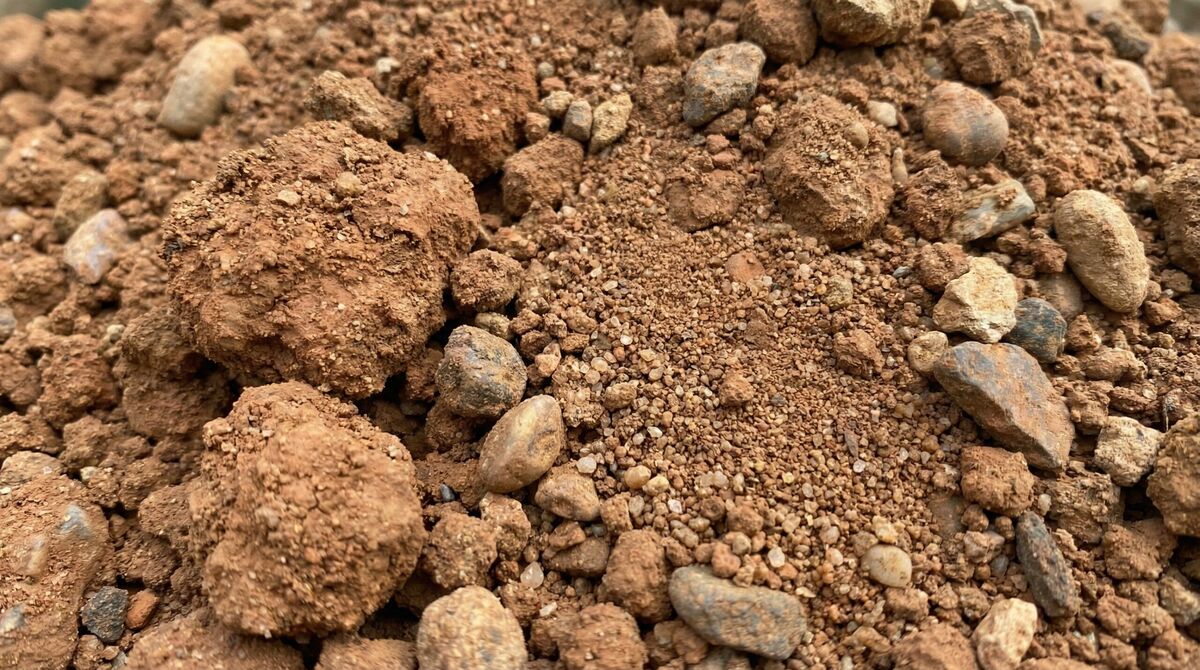
The ideal composition contains roughly 15-25% clay content for binding, 60-70% sand and silt for drainage, and 10-15% rock fragments for stability. You can test this by grabbing a handful of slightly damp fill dirt and squeezing it. Quality material should hold together briefly but crumble when poked, indicating proper clay-to-sand ratios.
Always request documentation showing the fill dirt source and any contamination testing performed. Reputable suppliers like Hello Gravel provide certificates confirming their material meets construction standards and local building code requirements.
Pro Tip: Ask your supplier about the soil’s Proctor density rating. Quality fill dirt should achieve 95% Standard Proctor density when properly compacted, ensuring maximum stability for your house pad.
Step-by-step house pad construction process
Proper installation determines whether your fill dirt performs as expected, so following the correct sequence prevents costly mistakes. Start by clearing your construction site of all vegetation, debris, and existing topsoil down to the natural subgrade level.
Excavate the area to your planned depth, typically 12-18 inches below your finished pad elevation. Compact the existing soil using a plate compactor or vibratory roller to create a firm base that won’t settle under the weight of your fill dirt layers.
Add your fill dirt in 8-12 inch lifts, spreading each layer evenly across the entire pad area. Compact each lift thoroughly before adding the next layer, paying special attention to edges and corners where settling commonly occurs. This methodical approach ensures uniform density throughout your house pad.
Continue this process until you reach your target elevation, then perform a final compaction pass across the entire surface. The finished pad should be level within 1/4 inch across its entire surface and properly sloped for drainage away from where your foundation will sit.
Understanding fill dirt costs and delivery options
Fill dirt pricing varies significantly based on your location, quantity needed, and delivery requirements. Most suppliers charge between $15-25 per cubic yard for standard fill dirt, with clean certified fill commanding premium prices of $25-35 per cubic yard.
| Fill Dirt Type | Price Range | Best Use Case |
|---|---|---|
| Standard Fill | $15-25/yard | General construction |
| Clean Fill | $25-35/yard | Residential projects |
| Engineered Fill | $35-50/yard | Critical foundations |
Delivery costs typically add $50-150 depending on distance and load size, making bulk orders more economical. Most suppliers require minimum orders of 10-15 cubic yards, so calculate your needs carefully to avoid multiple delivery charges.
Money-Saving Tip: Order 10-15% extra fill dirt to account for compaction and settling. It costs less to order extra material upfront than to pay for a second delivery later.

Hello Gravel offers competitive pricing with transparent delivery fees and no hidden charges. Their online quote system lets you calculate exact costs based on your project size and location, helping you budget accurately from the start.
You can expect most residential house pad projects to require 15-30 cubic yards of fill dirt, depending on your pad size and desired elevation changes. A typical 30×40 foot house pad with 12 inches of fill dirt needs approximately 45 cubic yards of material after accounting for compaction.
Planning your house pad construction with quality fill dirt sets the foundation for a stable, long-lasting home. By choosing the right material, following proper installation procedures, and working with reliable suppliers, you create the solid base your foundation needs to perform well for decades. Remember that investing in quality fill dirt and proper installation now prevents expensive foundation problems later, making it one of the most important decisions in your construction process.

 Chance Kittrell
