Fill dirt cost calculator 2026 – Get accurate pricing instantly

Get an estimate for your project in 60 seconds
 Your information is secure

Planning a construction or landscaping project and wondering about fill dirt costs? You’re looking at spending between $5 to $25 per cubic yard for fill dirt in 2026, depending on the type and your location. Clean fill dirt runs higher at $10-25 per cubic yard, while common fill dirt ranges from $5-15 per cubic yard. Understanding these costs upfront can save you hundreds of dollars and prevent project delays.
This guide walks you through everything you need to calculate fill dirt costs accurately, from measuring your project area to choosing the right dirt type for your specific needs. Whether you’re building a foundation, leveling your yard, or filling low spots, knowing the exact pricing helps you budget effectively and avoid costly surprises.
Quick tip: Most projects require 10-20% more fill dirt than initially calculated due to compaction and settling. Factor this into your budget from the start.
Understanding fill dirt types and their 2026 pricing
Fill dirt isn’t a one-size-fits-all material, and the type you choose directly impacts your project cost. Each variety serves specific purposes and comes with different price points that can significantly affect your budget.
Clean fill dirt represents the premium option at $10-25 per cubic yard. This material gets screened to remove rocks, roots, and debris, making it more expensive but easier to work with. You’ll find clean fill dirt essential for foundation work where stability matters most.
Common fill dirt offers the most economical choice at $5-15 per cubic yard. This unscreened material may contain natural materials like small rocks and organic matter. While it costs less, you might need additional sorting on your end, making it better suited for basic grading projects.
Structural fill falls in the middle range at $12-20 per cubic yard. This engineered material provides excellent compaction properties, making it ideal for road construction and retaining walls where long-term stability is crucial.

The choice between these types depends entirely on your project requirements. Foundation work typically demands clean fill dirt for optimal stability, while basic landscaping projects can often use common fill dirt effectively without compromising results.
Key factors that determine your fill dirt costs
Several variables influence how much you’ll pay for fill dirt, and understanding these helps you budget more accurately for your 2026 project.
Volume requirements work in your favor for larger projects. Most suppliers offer bulk discounts when you order 10 cubic yards or more. Smaller orders under 5 cubic yards typically carry higher per-yard costs due to delivery minimums and handling fees. You can save 20-30% by ordering in bulk compared to smaller quantities.
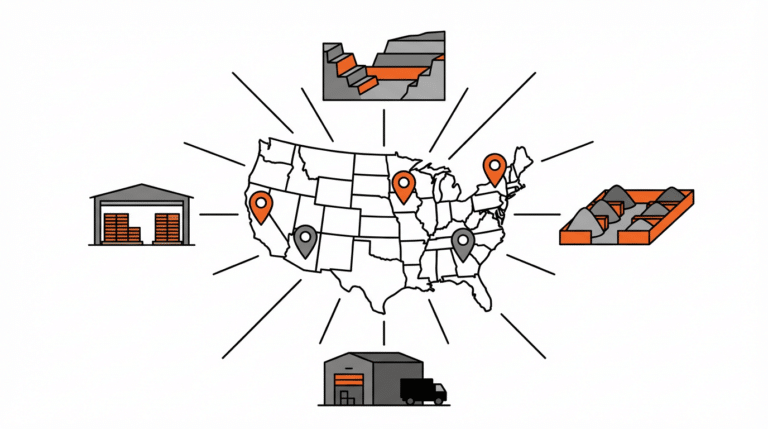
Delivery distance significantly impacts your total cost. Local deliveries within 20 miles usually cost $50-100, while longer distances can double or triple these fees. If you’re located near a supplier, you might save substantially on transportation costs. With Hello Gravel’s nationwide network of local suppliers, we can source and deliver material nearby wherever your job is located, helping minimize delivery costs. For more details on delivery expenses, check out our guide on fill dirt delivery cost.
Seasonal demand affects pricing throughout the year. Spring and summer months see higher prices due to increased construction activity. Planning your project for fall or winter can sometimes result in 10-15% savings, though weather conditions might limit delivery options.
Money-saving insight: Ordering during off-peak seasons and combining orders with neighbors can reduce costs by up to 25% compared to peak-season individual orders.
Calculating how much fill dirt you need
Getting the right amount of fill dirt prevents both overspending and project delays. The calculation process is straightforward once you understand the basic formula.
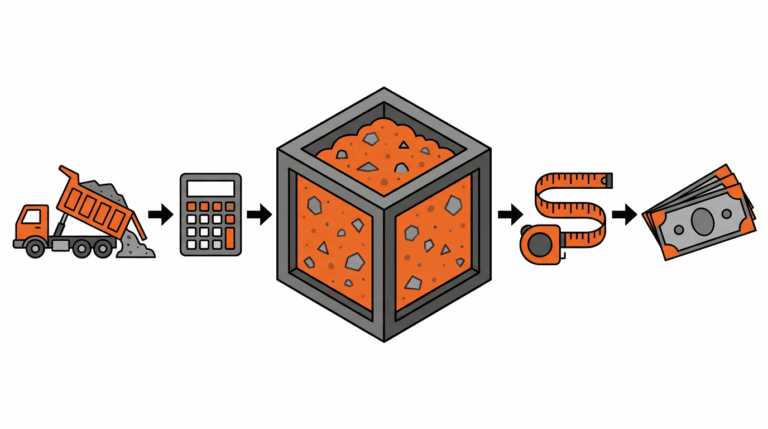
Start by measuring your project area in feet. For rectangular areas, multiply length times width times depth to get cubic feet. Then divide by 27 to convert to cubic yards, since fill dirt is sold by the cubic yard.
For example, if you’re filling an area that’s 20 feet long, 10 feet wide, and needs 2 feet of fill, your calculation would be: 20 × 10 × 2 = 400 cubic feet ÷ 27 = 14.8 cubic yards. Round up to 15 cubic yards to account for compaction. To better understand fill dirt cost per yard, it’s essential to calculate accurately from the start.
Irregular shapes require breaking the area into smaller rectangles or triangles, calculating each section separately, then adding the totals together. Always add 10-20% extra to your final calculation for settling and compaction.
Hello Gravel’s online material calculator can help you determine the exact cubic yards and tons needed based on your project measurements, taking the guesswork out of ordering. Our team can also help verify your calculations and recommend the right amount based on your specific project type. Getting this right the first time saves money and prevents delays from running short on material. If you’re wondering how much is fill dirt delivered, remember that accurate measurements are the foundation of accurate quotes.
Regional price variations across the United States
Fill dirt costs vary significantly depending on where your project is located. Understanding regional differences helps you set realistic budget expectations for 2026.
| Region | Common Fill Dirt | Clean Fill Dirt | Structural Fill |
|---|---|---|---|
| Northeast | $8-18/yd³ | $15-28/yd³ | $18-30/yd³ |
| Southeast | $5-12/yd³ | $10-20/yd³ | $12-22/yd³ |
| Midwest | $6-14/yd³ | $12-22/yd³ | $15-25/yd³ |
| West Coast | $10-20/yd³ | $18-30/yd³ | $20-35/yd³ |
Urban areas typically see higher prices due to increased demand and limited supply sources. Rural locations often benefit from lower costs but may face higher delivery fees due to distance from suppliers.

Local geology also influences pricing. Areas with abundant clay deposits often have lower fill dirt costs, while regions requiring imported materials see premium pricing. Coastal areas frequently pay more due to environmental regulations and limited extraction sites.
Regional tip: Contact multiple local suppliers for quotes, as prices can vary by 30-40% between competitors in the same area, especially for specialty fill types.
Getting accurate fill dirt pricing for your 2026 project requires understanding the interplay between material type, quantity, location, and timing. By considering these factors and calculating your needs precisely, you can budget effectively and ensure your project stays on track. Hello Gravel simplifies this process by providing transparent pricing and working with local pits and haulers nationwide to deliver on time, every time. Our marketplace serves as a free directory of up-to-date aggregate prices, helping you compare costs across suppliers. For contractors managing multiple projects, our material sourcing secrets for busy contractors can help streamline your procurement process. Remember to always add extra material for compaction and get quotes from multiple suppliers to find the best value for your specific requirements. If you need to understand how much does it cost to fill in dirt for various project types, our comprehensive guides provide detailed breakdowns for every scenario.