Crusher Run vs Gabion Stone Complete Material Comparison Guide
Get an estimate for your project in 60 seconds
 Your information is secure
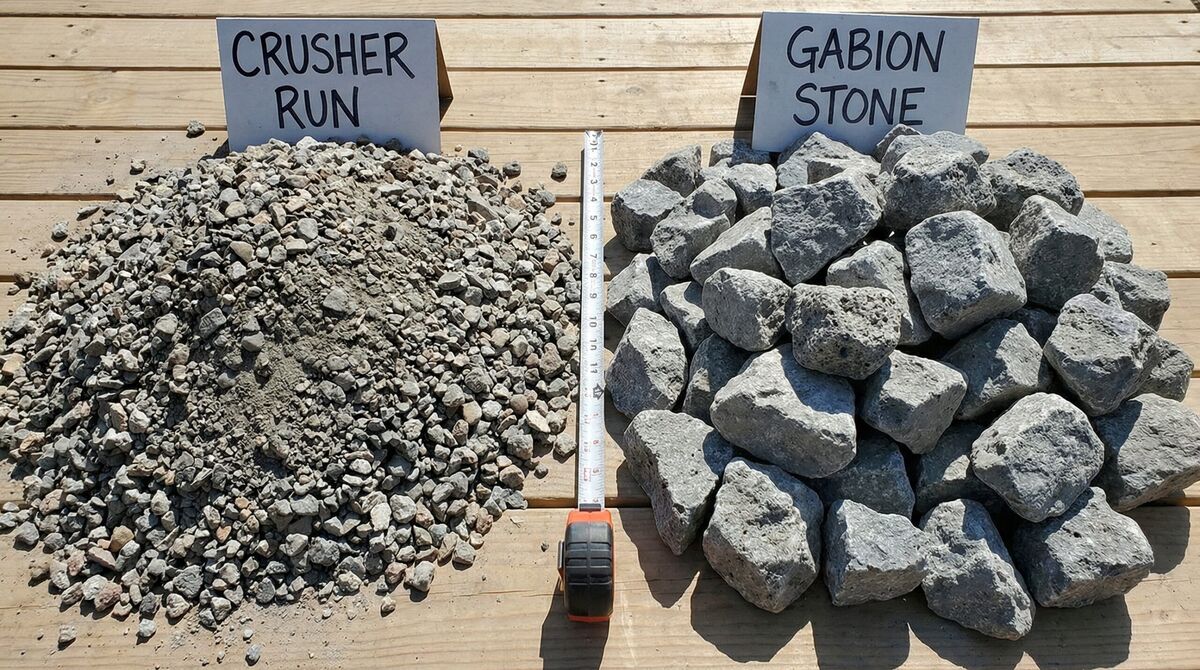
Choosing between crusher run and gabion stone can make or break your construction project. Crusher run works best for driveways and walkways, while gabion stone excels in erosion control and structural applications. Understanding their differences helps you select the right material for your specific needs and budget.
Quick Answer: Crusher run ranges from 2 inches down to dust particles and costs less, making it ideal for base materials. Gabion stone measures 4-6 inches in diameter and offers superior stability for heavy-duty applications like retaining walls.
Both materials serve distinct purposes in construction and landscaping. You’ll find crusher run perfect for creating stable foundations under driveways and patios. Gabion stone, with its larger angular pieces, provides the structural integrity needed for erosion control and gabion wall construction.
What is crusher run and how does it work
Crusher run, also called crush and run or crusher gravel, consists of crushed stone fragments ranging from 2 inches down to fine dust particles. This gradation creates a material that compacts extremely well when properly installed.
The composition typically includes crushed limestone, granite, and other hard stone materials. When you compact crusher run, the smaller particles fill gaps between larger stones, creating a solid, interlocking surface that resists movement and settling.
You’ll recognize crusher run by its rough texture and varied color palette, which depends on the source materials. The natural appearance blends well with most outdoor environments while providing excellent functionality.

The dust and fine particles in crusher run serve a crucial purpose. They act as a binding agent when moisture is present, helping the material compact into a firm, stable base. This characteristic makes crusher run particularly effective for applications requiring a solid foundation. Understanding crushed concrete compaction techniques can help you achieve optimal results with similar materials.
Understanding gabion stone characteristics and applications
Gabion stone refers to larger, angular stone aggregates measuring 4 to 6 inches in diameter. These irregularly shaped stones feature sharp edges and corners that create excellent interlocking properties when placed together.
The angular nature of gabion stone provides superior stability compared to rounded materials. When stones interlock, they resist displacement from water flow, soil pressure, and other forces that might destabilize a structure.
You’ll primarily encounter gabion stone in wire mesh containers called gabion baskets. These flexible structures can conform to ground movement while maintaining their protective function. The permeable nature allows water to flow through while preventing soil erosion. For projects requiring erosion control structures, understanding material properties is essential.
Pro Tip: Gabion stone’s irregular shape and size variation actually improve its performance by creating more contact points between stones, enhancing overall stability.
Beyond gabion walls, you can use these stones for decorative landscaping features. Rock gardens, water features, and natural-looking pathways benefit from gabion stone’s rugged appearance and varied textures.
Comparing composition and material properties
The fundamental difference between these materials lies in their size gradation and intended function. Crusher run contains a complete range of particle sizes, while gabion stone maintains consistent larger dimensions.
| Property | Crusher Run | Gabion Stone |
|---|---|---|
| Size Range | 2″ down to dust | 4-6 inches |
| Shape | Mixed angular/rounded | Angular only |
| Compaction | Excellent | Minimal |
| Drainage | Good | Excellent |
Crusher run’s varied particle sizes allow for maximum compaction density. The fine materials fill voids between larger pieces, creating a tight, stable matrix. This characteristic makes it ideal for load-bearing applications where settlement must be minimized. If you’re working with recycled materials, comparing crushed concrete vs crusher run can help you make informed decisions.
Gabion stone maintains its original size and shape after installation. The large voids between stones promote excellent drainage while the angular surfaces provide mechanical stability through interlocking action.

The material source affects both products’ characteristics. Limestone-based materials tend to be lighter in color and may contain some softer particles. Granite-based products offer superior hardness and weather resistance but typically cost more. For those considering alternatives, exploring crushed concrete vs limestone comparisons can provide valuable insights.
Cost analysis and project selection guidelines
Crusher run generally costs less per ton than gabion stone due to its production process and widespread availability. The crushing operation that creates crusher run produces multiple size grades simultaneously, making it economical to produce.
Gabion stone requires additional sorting and sizing, which increases production costs. However, the specialized applications where gabion stone excels often justify the higher material cost through improved performance and longevity.
Consider your project’s specific requirements when evaluating costs. Crusher run works well for driveways, walkway bases, and general fill applications. Its ability to compact tightly reduces the total material volume needed. When planning your project, learning how much crushed concrete do I need can help with accurate budgeting.
Cost Consideration: While gabion stone costs more upfront, its durability in erosion control applications often provides better long-term value than alternatives requiring frequent replacement.
For erosion control, slope stabilization, and decorative rock features, gabion stone’s superior performance characteristics make it the logical choice despite higher initial costs. The material’s longevity and minimal maintenance requirements offset the price difference over time.
Project timeline also affects material selection. Crusher run requires proper compaction techniques and may need multiple lifts for thick applications. Understanding crushed concrete compaction factor helps ensure proper installation. Gabion stone installation is typically faster since it doesn’t require mechanical compaction.
Both crusher run and gabion stone offer reliable solutions for different construction challenges. Your choice depends on the specific application, budget constraints, and performance requirements. Crusher run excels as an economical base material, while gabion stone provides unmatched stability for structural and erosion control applications. Consider consulting with hellogravel.com for material recommendations specific to your project needs.

 Chance Kittrell