Crushed Concrete vs Limestone Price Per Ton 2026
Get an estimate for your project in 60 seconds
 Your information is secure
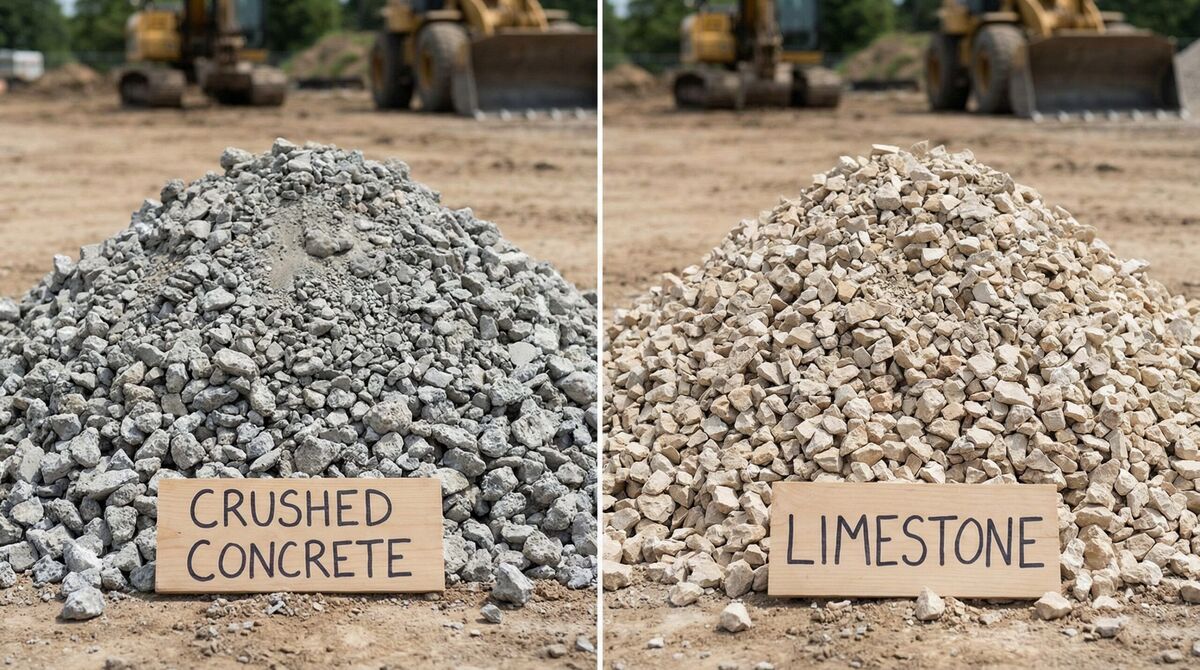
When choosing between crushed concrete and limestone for your construction or landscaping project, price often becomes the deciding factor. Crushed concrete typically costs $10-50 per ton, while limestone ranges from $30-100 per ton. However, the best choice depends on more than just upfront costs.
Quick Answer: Crushed concrete offers budget-friendly pricing at $10-50 per ton and excellent eco-friendliness, while limestone provides superior durability and aesthetics at $30-100 per ton.
Both materials serve similar purposes but bring different advantages to your project. Understanding their price differences, performance characteristics, and ideal applications will help you make the right choice for your specific needs and budget.
Understanding crushed concrete costs
Crushed concrete, also known as recycled concrete aggregate (RCA), represents one of the most cost-effective aggregate options available. This eco-friendly material comes from demolished concrete structures that are processed, crushed, and screened to remove impurities.
The price advantage of crushed concrete stems from its recycled nature. Since it doesn’t require mining or quarrying new materials, production costs remain lower. You’ll typically find crushed concrete priced between $10-50 per ton, depending on your location and the aggregate size you need.
Several factors influence crushed concrete pricing. Smaller aggregate sizes generally cost more due to additional processing requirements. Understanding different types of crushed concrete can help you select the right grade for your budget. Local availability plays a significant role too – areas with active construction and demolition projects often have lower prices due to abundant supply.

Transportation costs can significantly impact your final price. Since crushed concrete is heavy, sourcing from nearby suppliers helps keep costs manageable. Bulk purchases often provide substantial savings, with some suppliers offering discounts for orders over 10 tons.
Limestone pricing and cost factors
Limestone commands higher prices than crushed concrete due to its natural origin and extraction process. This sedimentary rock forms over millions of years from marine organism deposits, creating a durable and attractive material that costs $30-100 per ton.
The wide price range reflects quality variations and processing levels. Basic crushed limestone for road base applications sits at the lower end, while premium decorative limestone for landscaping reaches higher price points. Size also matters – larger stones require less processing and often cost less per ton.
Cost Tip: Limestone prices can vary by 50% or more between regions based on local quarry availability and transportation distances.
Regional geology heavily influences limestone costs. Areas near limestone quarries enjoy lower prices, while regions requiring long-distance shipping see significant price increases. The stone’s natural color and purity also affect pricing, with uniform, high-quality limestone commanding premium rates.
Quality grades impact costs too. Construction-grade limestone costs less than architectural-grade stone. Processing level matters as well – washed and screened limestone costs more than basic crushed material but provides better performance in many applications.
Comparing uses and performance
Both materials excel in different applications, making cost comparison more complex than simple per-ton pricing. Crushed concrete works exceptionally well for road base, driveway foundations, and drainage applications where appearance isn’t critical.
The recycled nature of crushed concrete makes it ideal for environmentally conscious projects. It provides excellent drainage properties and compacts well, creating stable foundations for pavement and structures. However, its appearance varies based on the source concrete, which may not suit decorative applications.
Limestone offers superior aesthetics and consistency, making it perfect for visible applications like walkways, patios, and landscaping features. Its natural beauty and uniform appearance justify higher costs in projects where visual appeal matters.
| Material | Price Range | Best Uses | Key Benefits |
|---|---|---|---|
| Crushed Concrete | $10-50/ton | Road base, drainage, foundations | Eco-friendly, excellent drainage |
| Limestone | $30-100/ton | Walkways, landscaping, decorative | Attractive, durable, consistent |
Performance-wise, both materials offer excellent durability and weather resistance. Limestone typically lasts longer in exposed applications due to its natural hardness and resistance to weathering. Crushed concrete performs admirably in structural applications but may show more wear in high-traffic decorative settings.

Making the right choice for your project
Your project type should guide your material selection more than price alone. For utilitarian applications like driveway bases, septic system backfill, or road construction, crushed concrete’s lower cost and excellent performance make it the smart choice. If you’re planning a crushed concrete driveway, you can see how this material performs in real-world applications.
Choose limestone when aesthetics matter or when you need consistent appearance. Landscaping projects, decorative walkways, and visible drainage features benefit from limestone’s natural beauty despite the higher cost. The material’s longevity often justifies the initial investment in these applications.
Project Planning: Consider total project costs, not just material prices. Limestone’s durability may provide better long-term value despite higher upfront costs.
Budget considerations extend beyond material costs. Factor in delivery charges, which can be substantial for heavy aggregates. Local suppliers often provide the best value by minimizing transportation costs. When comparing options, consider crushed concrete versus gravel pricing to understand the full range of aggregate costs. Bulk purchasing typically offers savings for both materials, especially on larger projects.
Environmental impact may influence your decision too. Crushed concrete supports sustainability by recycling waste materials and reducing landfill burden. This eco-friendly choice appeals to environmentally conscious builders and homeowners. However, it’s worth researching whether crushed concrete is toxic to ensure safety for your specific application.
The choice between crushed concrete and limestone ultimately depends on balancing cost, performance, and aesthetic requirements. Crushed concrete delivers excellent value for structural and utilitarian applications, while limestone provides superior beauty and consistency for decorative projects. Consider your specific needs, budget, and long-term goals to make the best decision for your project.

 Chance Kittrell