Crushed Concrete vs Flex Base: Which Road Base Is Best for Your Driveway
Published on: December 10, 2025
Get an estimate for your project in 60 seconds
 Your information is secure
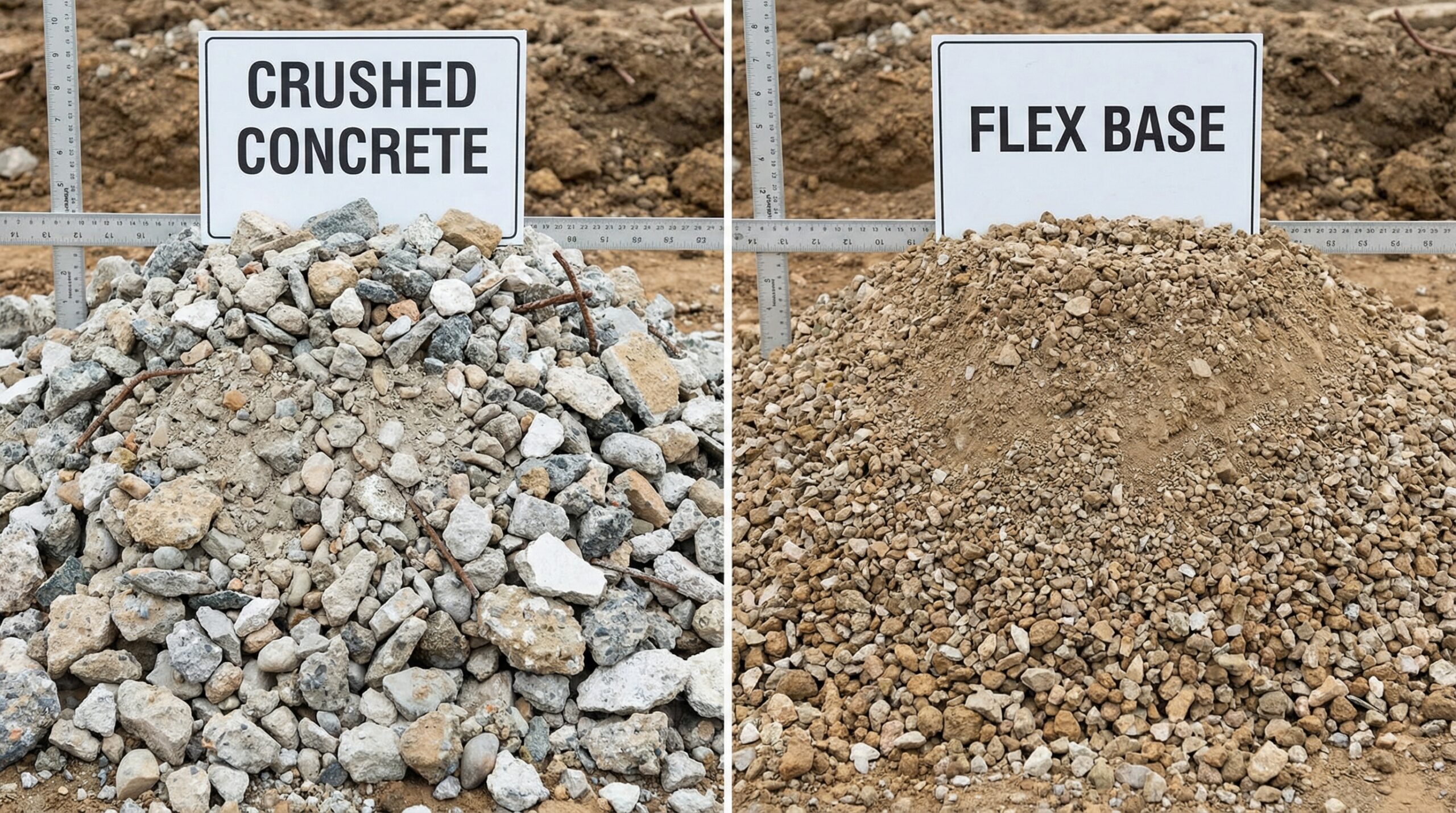
Choosing the right base for your driveway or private road usually comes down to crushed concrete vs flex base. Both materials serve as excellent foundations, but they have distinct characteristics that make each better suited for different situations.
Flex base is a mix of crushed rock ranging from about 1.5 inches down to fine dust that packs tightly and flexes slightly with ground movement. Crushed concrete, also called recycled concrete aggregate, is old concrete that’s been crushed into road base material. While flex base typically costs more upfront, crushed concrete offers excellent value through its durability and eco-friendly recycled nature.
Quick Answer: Choose crushed concrete if you prioritize cost savings and environmental benefits. Choose flex base when you need a material that adapts well to changing ground conditions and meets specific local specifications.
This guide covers everything you need to know about cost, durability, installation depth, and when to choose which material for your specific project.
What is flex base and how does it work
Flex base gets its name from its ability to flex and adapt to ground movement while maintaining structural integrity. The material consists of crushed limestone or granite mixed with varying sizes of aggregate, from larger chunks down to fine particles that fill gaps when compacted.
The magic happens in the gradation. When you compact flex base properly, the different sized particles lock together to create a stable yet slightly flexible surface. This flexibility helps prevent cracking when the ground shifts due to weather changes or settling.
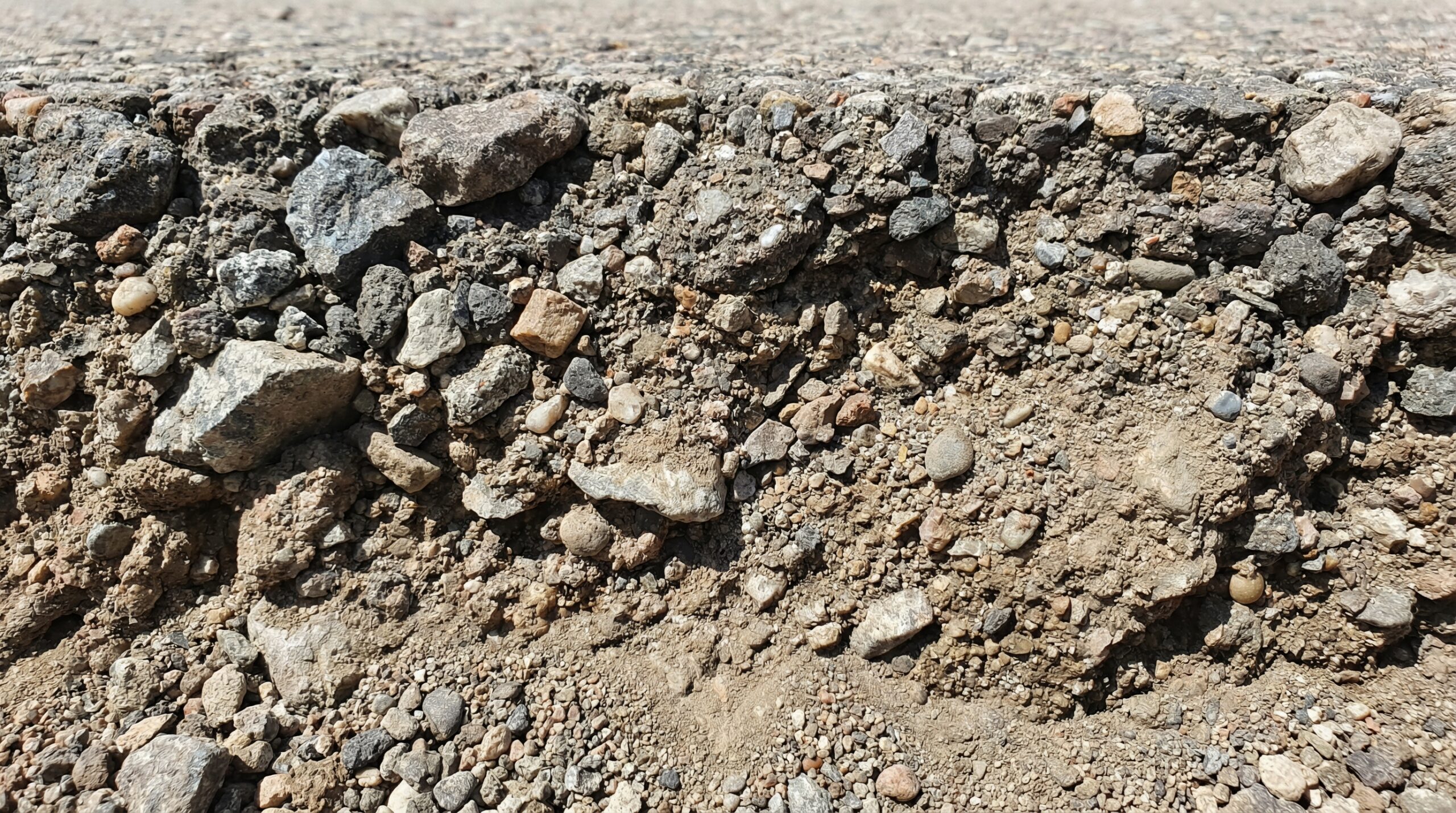
In Texas and many other states, flex base refers to a type of road base that may not necessarily meet state specifications for highway construction. However, it’s perfectly suited for residential driveways, private roads, and parking areas where you need reliable performance without the strict requirements of public road construction.
The typical installation depth for flex base ranges from 6 to 12 inches before compaction, depending on your soil conditions and expected traffic load. A standard residential driveway usually performs well with 6-8 inches of compacted flex base.
What is crushed concrete and why contractors love it
Crushed concrete starts its life as demolished concrete from buildings, roads, or other structures. Instead of ending up in landfills, this concrete gets crushed, cleaned, and screened to remove contaminants like rebar and debris.
The recycling process creates an angular, well-graded material that compacts extremely well. Unlike rounded gravel that can shift under load, the angular edges of crushed concrete particles lock together to form a solid, stable base that can last for decades. To understand the different forms available, check out our guide on types of crushed concrete.
What makes crushed concrete particularly attractive is its environmental benefit. You’re essentially giving old concrete a second life while reducing the need for virgin aggregate materials. This recycled approach often translates to cost savings that you can pass along to your project budget.
Environmental Impact: Using crushed concrete diverts waste from landfills and reduces the demand for new quarried materials, making it one of the most sustainable base options available.
Quality crushed concrete from reputable suppliers undergoes thorough cleaning and screening to ensure consistent performance. The end result is a material that often exceeds the strength characteristics of many natural aggregates while costing significantly less.
Comparing performance, cost, and durability
When you’re deciding between these materials, the comparison often comes down to specific performance needs and budget considerations. Here’s how they stack up:
| Factor | Flex Base | Crushed Concrete |
|---|---|---|
| Material Source | Virgin crushed rock | Recycled concrete |
| Typical Cost | Higher upfront | Lower upfront |
| Compaction | Excellent with flexibility | Excellent with rigidity |
| Durability | Very good | Excellent |
| Environmental Impact | Standard | Highly sustainable |
Crushed concrete typically wins on initial cost and long-term durability. The angular particles create exceptional load-bearing capacity, often allowing you to use slightly thinner sections compared to other materials. This can offset some of the savings from cheaper alternatives that require greater depth. If you’re comparing budget options, our article on which is cheaper crushed concrete or gravel provides detailed cost analysis.
Flex base excels in situations where ground movement is a concern. Its engineered gradation allows it to accommodate minor shifts without losing structural integrity. This makes it particularly valuable in areas with expansive clay soils or frequent freeze-thaw cycles.
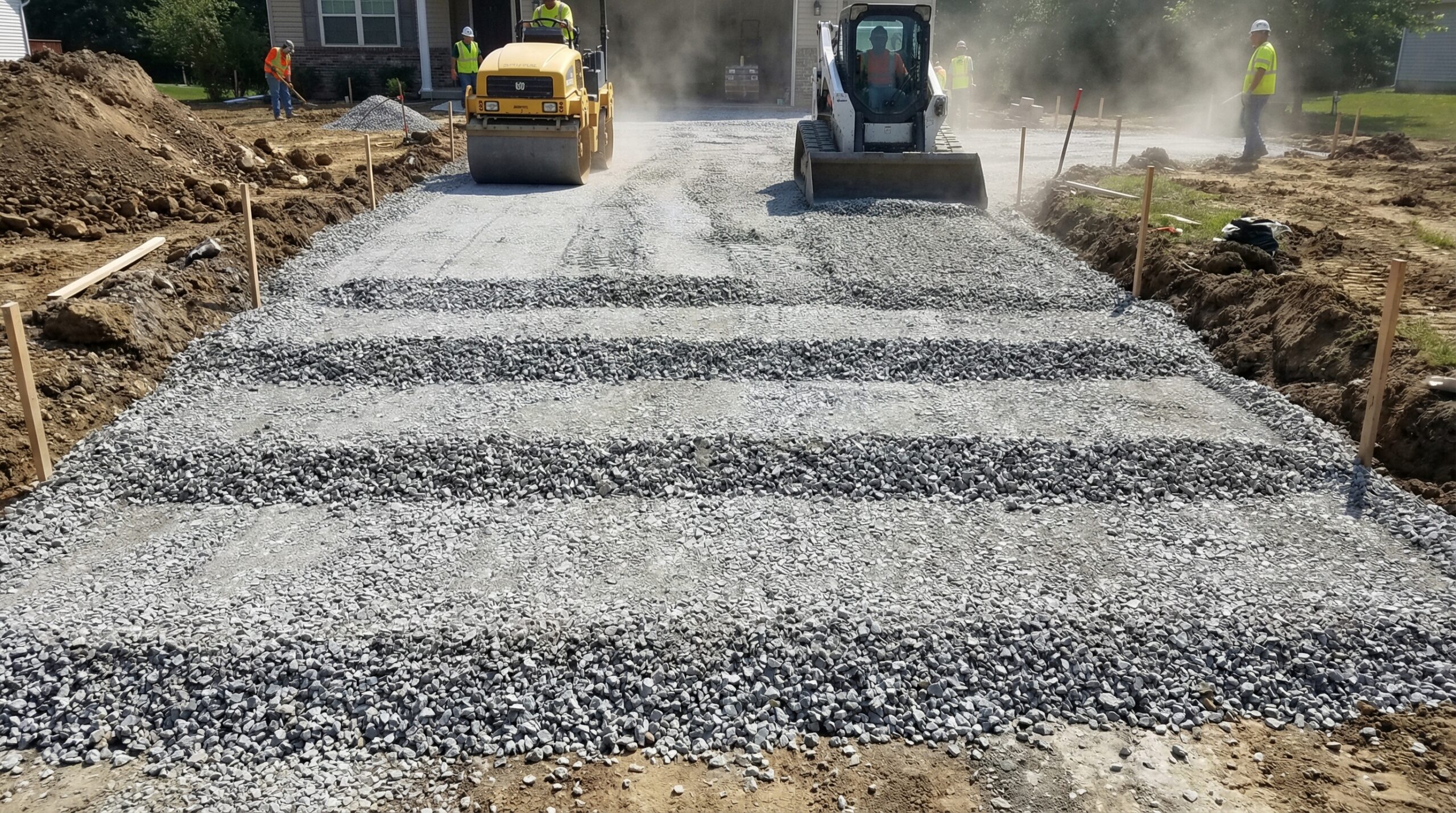
Both materials require proper installation with adequate compaction and moisture control. The key difference lies in how they respond to stress: crushed concrete tends to be more rigid and permanent, while flex base offers more adaptability to changing conditions.
Choosing the right material for your specific project
Your choice between crushed concrete and flex base should align with your project’s specific requirements, budget, and long-term goals.
For residential driveways with normal passenger vehicle traffic, crushed concrete often provides the best value. Its superior durability means less maintenance over time, and the cost savings can be substantial. If you’re environmentally conscious, the recycled nature of crushed concrete adds another compelling reason to choose it.
Flex base makes more sense when you’re dealing with challenging soil conditions or need a base that meets specific local requirements. Some municipal codes or homeowner associations may specify flex base for certain applications. The material’s flexibility also makes it ideal for areas where heavy trucks or equipment will create dynamic loading conditions.
Pro Tip: For projects requiring state specifications or heavy commercial use, verify whether your chosen material meets local engineering requirements. Some applications may require certified materials that meet specific gradation standards.
Consider your maintenance tolerance as well. While both materials are relatively low-maintenance, crushed concrete’s exceptional durability often means you can “set it and forget it” for many years. Flex base may require occasional touch-ups in high-traffic areas, though this is typically minimal for residential applications.
The decision often comes down to balancing upfront costs against long-term performance. If budget is tight initially but you want maximum longevity, crushed concrete usually delivers better value over time. If you need the specific performance characteristics of flex base or must meet certain specifications, the higher initial cost is often justified by the material’s engineered properties.
When comparing crushed concrete to other popular base materials, you might also want to explore crushed concrete vs road base or crushed concrete vs crusher run to understand how these options differ. For those in regions where limestone is common, our comparison of crushed concrete vs limestone can help you make an informed decision.
Ready to move forward with your project? Hello Gravel offers both high-quality crushed concrete and flex base materials with convenient delivery throughout our service area. Our team can help you calculate exactly how much material you need and ensure you get the right product for your specific application. Contact us today to get started on creating a durable, long-lasting base for your driveway or construction project.
FAQ
Is crushed concrete better than flex base for driveways?
How thick should flex base or crushed concrete be for a driveway?
Does crushed concrete drain as well as flex base?
Can crushed concrete be used as a substitute for flex base?
Author: igor