
Crushed Concrete RV Pad (Benefits and Installation)
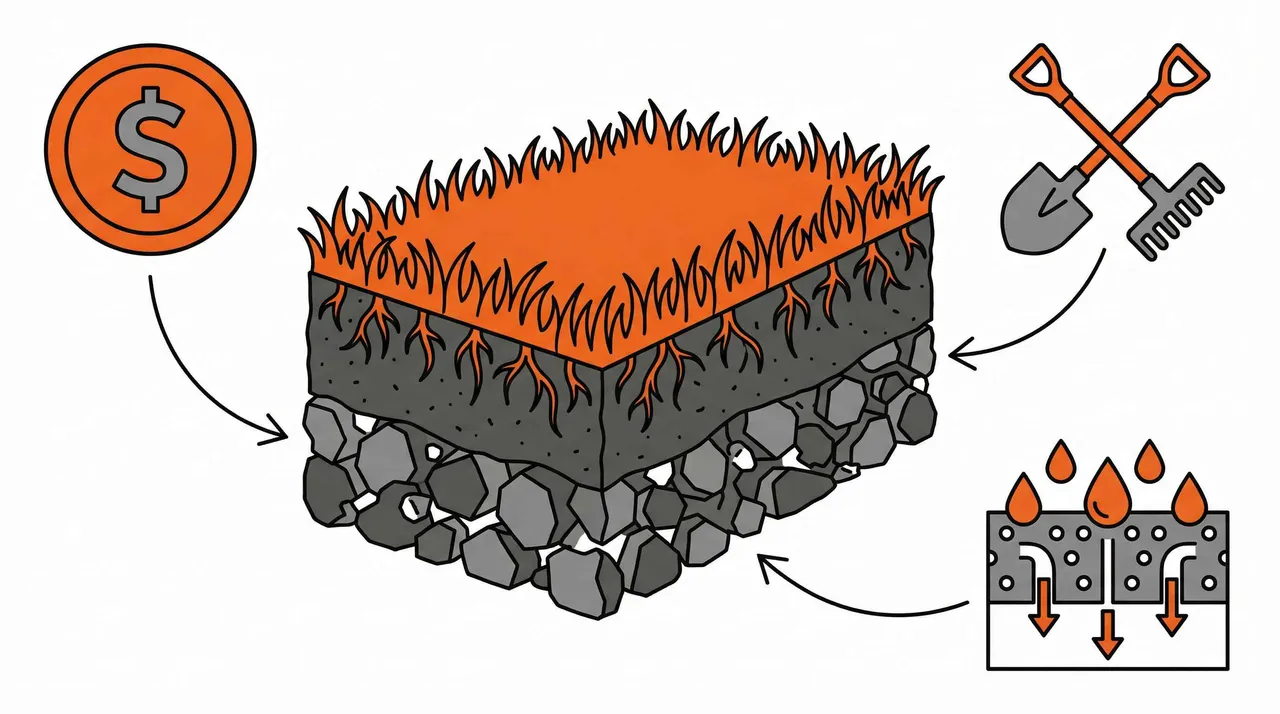
Pricing your crushed concrete? Get delivered prices for your ZIP.
We'll text your delivered price. No obligation.
Delivered to your driveway. You pick the date.
★ 4.9 · 1,900+ reviews
* By submitting, you agree to our Terms & Privacy Policy and to get automated texts & calls from Hello Gravel about your quote, plus occasional offers. Agreeing isn’t required to buy. Msg frequency varies. Msg & data rates may apply. Reply STOP to opt out, HELP for help.
- Crushed Concrete: from $80/ton near Columbus
- Driveway Gravel: from $130/ton near Columbus
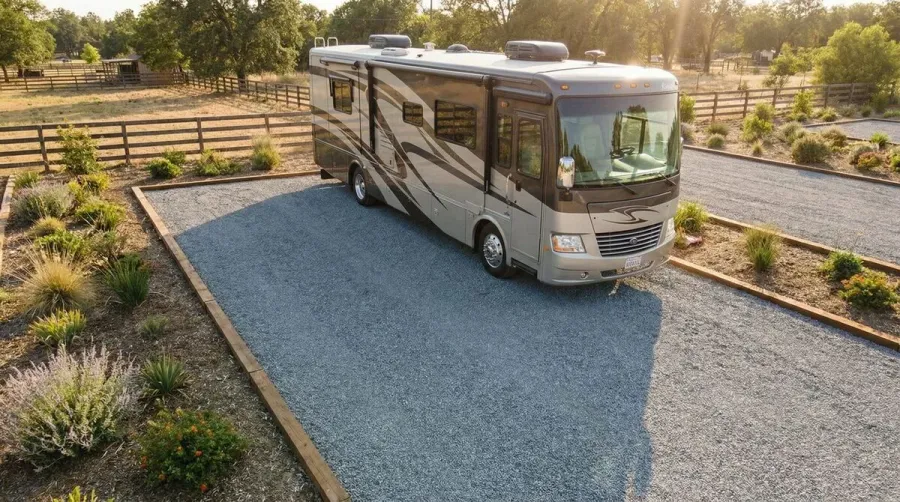
Looking for a durable, cost-effective solution for your RV parking pad? Crushed concrete offers the perfect balance of strength, affordability, and environmental responsibility. This recycled concrete aggregate creates stable, long-lasting RV pads that can handle heavy loads while providing excellent drainage and traction.
Quick Answer: Crushed concrete RV pads typically cost $2-4 per square foot installed, last 15-20 years with minimal maintenance, and provide superior stability compared to traditional gravel options.
You’ll discover everything you need to know about crushed concrete RV pads, from understanding the material itself to step-by-step installation and ongoing maintenance. Whether you’re planning a DIY project or working with contractors, this guide will help you make informed decisions for your RV parking needs.
About Hello Gravel
Hello Gravel delivers bulk gravel, rock, dirt, and sand by the ton. Enter your ZIP code to see prices with delivery included. A local dump-truck driver places the load where access is safe; spreading is not included.
What is crushed concrete for RV pads
Crushed concrete, also known as recycled concrete aggregate, comes from demolished concrete structures like buildings, roads, and sidewalks. The material gets processed through crushing machines that break it down into various sizes, typically ranging from 1.5 inches down to fine particles.
This recycled material maintains the strength characteristics of original concrete while offering improved drainage properties. The angular shapes of crushed concrete pieces interlock when compacted, creating a stable foundation that resists shifting under heavy RV loads.
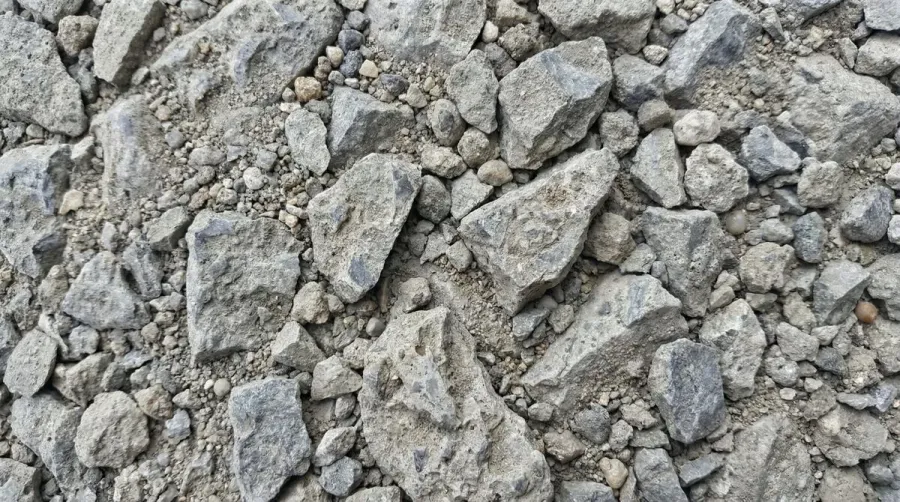
The production process removes contaminants like rebar and other debris, leaving clean aggregate suitable for construction applications. Hello Gravel sources high-quality crushed concrete that meets industry standards for RV pad construction.
Unlike smooth river rock or rounded gravel, crushed concrete’s rough texture provides excellent traction for RV tires and foot traffic. The material compacts well due to its varied particle sizes, with fines filling gaps between larger pieces to create a solid surface. Understanding crushed concrete fines is essential for achieving optimal compaction and stability.
Key benefits of crushed concrete RV pads
Cost effectiveness and durability
Crushed concrete typically costs 30-50% less than new concrete slabs or asphalt paving. For a standard 12×40 foot RV pad, you can expect to save $800-1,500 compared to poured concrete options. If you’re comparing materials, check out our detailed analysis of crushed concrete vs gravel price to see which option best fits your budget.
The material’s durability rivals that of new concrete, withstanding heavy RV weights without cracking or settling when properly installed. Most crushed concrete pads last 15-20 years with minimal maintenance, making them an excellent long-term investment.
Environmental advantages
Using recycled concrete diverts waste from landfills while reducing demand for new aggregate mining. This choice significantly lowers the carbon footprint of your RV pad project compared to virgin materials.
Environmental Impact: Each ton of crushed concrete used prevents approximately 1,360 pounds of CO2 emissions compared to producing new concrete aggregate.
The permeable nature of crushed concrete allows rainwater to filter through rather than creating runoff, helping prevent erosion and supporting natural groundwater recharge. Learn more about crushed concrete drainage capabilities and how they benefit your property.
Superior performance characteristics
Crushed concrete provides excellent load-bearing capacity, easily supporting Class A motorhomes and heavy travel trailers. The material’s angular shape creates mechanical interlock that prevents shifting under dynamic loads.
The rough surface texture offers superior traction compared to smooth concrete or asphalt, reducing slip hazards during wet conditions. This texture also helps RV tires maintain grip when parking on slopes.
Installation process and requirements
Site preparation essentials
Start by marking your RV pad boundaries and checking for underground utilities. Clear the area of vegetation, rocks, and debris, then excavate to a depth of 4-6 inches depending on your RV’s weight and local soil conditions.
Level the excavated area using a rake and check for proper drainage slope. A slight grade of 1-2% away from any structures ensures water runoff without creating pooling issues.
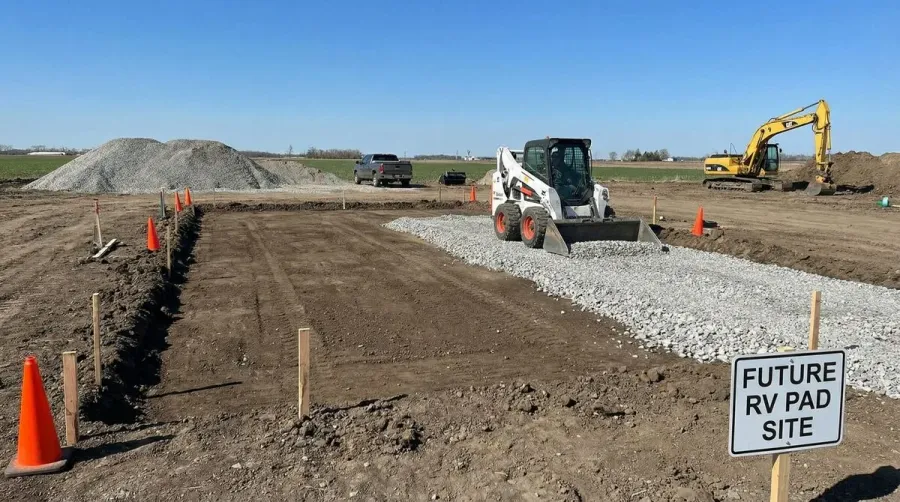
Install landscape fabric or geotextile if your soil has poor drainage or high clay content. This barrier prevents mixing between the crushed concrete and underlying soil while maintaining drainage.
Material application and compaction
Spread crushed concrete evenly across the prepared area in 2-3 inch lifts. For heavy RVs, plan for a total depth of 4-6 inches of compacted material to ensure adequate load distribution. For detailed guidance, refer to our comprehensive guide on how to spread crushed concrete.
Compact each lift using a plate compactor or vibratory roller, working from the edges toward the center. Proper compaction is crucial for long-term stability and prevents settling under RV weight. Understanding the crushed concrete compaction factor will help you achieve optimal density and performance.
Add a final layer and compact again, then check the surface level using a straight board. Make adjustments as needed to achieve a smooth, even finish that matches your desired grade.
Water the surface lightly during compaction if the material appears dusty, but avoid over-wetting which can interfere with proper compaction. For more tips on achieving the best results, see our article on how to compact crushed concrete.
Cost breakdown and maintenance
| **Cost Factor** | **Price Range** | **Notes** |
|---|---|---|
| Material | $25-40/ton | Covers 80-100 sq ft at 4″ depth |
| Delivery | $50-150 | Varies by distance and quantity |
| Installation | $2-6/sq ft | DIY vs professional labor |
| Total Project | $960-2,400 | For 12×40 ft RV pad |
Material costs vary based on your location and local availability of recycled concrete. Larger orders typically receive better per-ton pricing, and some suppliers offer volume discounts for orders over 10 tons. To accurately estimate your material needs, use our crushed concrete road base calculator.
Ongoing maintenance requirements
Inspect your crushed concrete pad seasonally for any settling or erosion, particularly after heavy rains or freeze-thaw cycles. Address minor depressions by adding fresh material and re-compacting affected areas.
Maintenance Tip: Keep a small stockpile of matching crushed concrete for quick repairs. Most pads need only minor touch-ups every 3-5 years with proper initial installation.
Weed control involves occasional application of landscape fabric or eco-friendly herbicides around pad edges. The compacted surface naturally resists weed growth in high-traffic areas.
Remove any debris or organic matter that accumulates on the surface to maintain proper drainage and prevent staining. A leaf blower or stiff broom works well for regular cleaning.
Crushed concrete RV pads offer an ideal combination of durability, affordability, and environmental responsibility for RV owners seeking long-term parking solutions. The material’s proven performance, combined with relatively simple installation requirements, makes it an excellent choice for both DIY enthusiasts and those working with contractors. With proper installation and minimal maintenance, your crushed concrete RV pad will provide decades of reliable service while supporting your outdoor adventures.
FAQ
How thick should a crushed concrete RV pad be?
For most RV applications, a crushed concrete pad should be 4-6 inches thick when properly compacted. Light travel trailers can use 4 inches, while heavy Class A motorhomes require 6 inches or more. The key is proper compaction in 2-3 inch lifts to ensure adequate load distribution and prevent settling under RV weight.
Is crushed concrete better than gravel for RV pads?
Yes, crushed concrete typically outperforms traditional gravel for RV pads. The angular shapes interlock when compacted, creating superior stability and preventing shifting under heavy loads. Crushed concrete also provides better traction, excellent drainage, and costs 30-50% less than new concrete while lasting 15-20 years with minimal maintenance.
How much does a crushed concrete RV pad cost?
A crushed concrete RV pad typically costs $2-4 per square foot installed. For a standard 12×40 foot RV pad, expect to pay $960-2,400 total including materials, delivery, and installation. Material costs range from $25-40 per ton, with each ton covering approximately 80-100 square feet at 4-inch depth.
Can I install a crushed concrete RV pad myself?
Yes, crushed concrete RV pad installation is a manageable DIY project with the right tools. You’ll need basic excavation tools, a plate compactor (available for rent), and landscape fabric. The process involves site preparation, spreading material in lifts, and proper compaction. Most homeowners can complete installation in 1-2 weekends with proper planning.
Delivered price for your ZIP
Delivered to your driveway. You pick the date.
★ 4.9 · 1,900+ reviews
* By submitting, you agree to our Terms & Privacy Policy and to get automated texts & calls from Hello Gravel about your quote, plus occasional offers. Agreeing isn’t required to buy. Msg frequency varies. Msg & data rates may apply. Reply STOP to opt out, HELP for help.
How much do you need?
Pricing your crushed concrete? Get delivered prices for your ZIP.
Delivered to your driveway. You pick the date.
★ 4.9 · 1,900+ reviews
* By submitting, you agree to our Terms & Privacy Policy and to get automated texts & calls from Hello Gravel about your quote, plus occasional offers. Agreeing isn’t required to buy. Msg frequency varies. Msg & data rates may apply. Reply STOP to opt out, HELP for help.
Delivered price for your ZIP
Delivered to your driveway. You pick the date.
★ 4.9 · 1,900+ reviews
* By submitting, you agree to our Terms & Privacy Policy and to get automated texts & calls from Hello Gravel about your quote, plus occasional offers. Agreeing isn’t required to buy. Msg frequency varies. Msg & data rates may apply. Reply STOP to opt out, HELP for help.
Before you call
One quick detail helps the person who picks up. You can skip it.