Class 2 Base Rock Complete Guide to Uses Specifications and Costs
Published on: December 18, 2025
Get an estimate for your project in 60 seconds
 Your information is secure
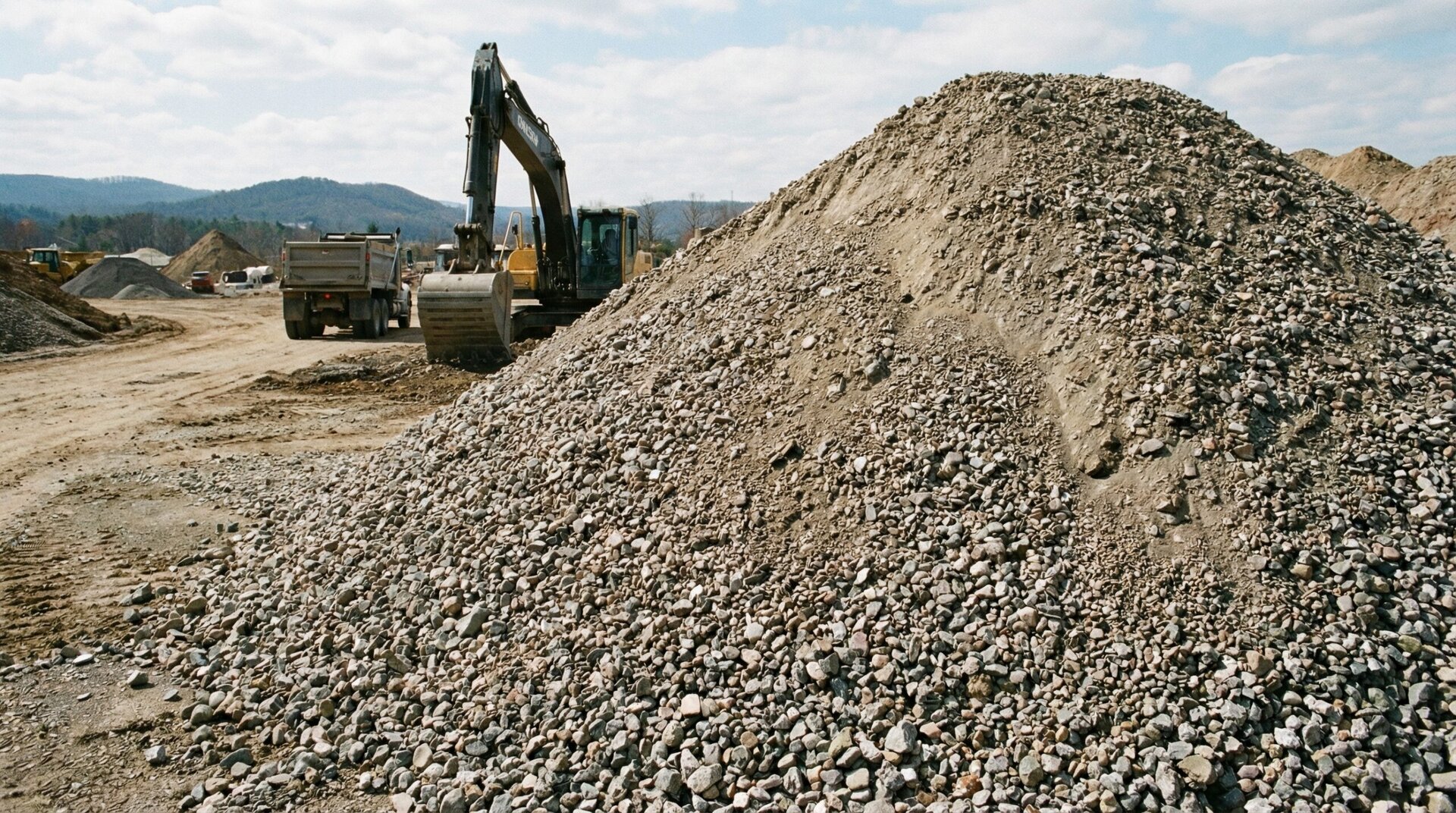
Whether you’re planning a new driveway, preparing a foundation, or working on road construction, the quality of your base material makes all the difference. Class 2 base rock, also known as ABC (Aggregate Base Course), stands as one of the most reliable and cost-effective materials for construction projects.
Class 2 base rock is a carefully engineered blend of crushed stone, sand, and fine particles that meets specific gradation standards. This recycled material typically combines crushed concrete and asphalt, creating an eco-friendly alternative that provides exceptional stability and drainage properties. When properly compacted, it forms a solid foundation capable of supporting heavy loads while maintaining excellent permeability.
Key Insight: Class 2 base rock compacts to 95% density when properly installed, providing superior load-bearing capacity compared to regular gravel or sand bases.
What makes Class 2 base rock different
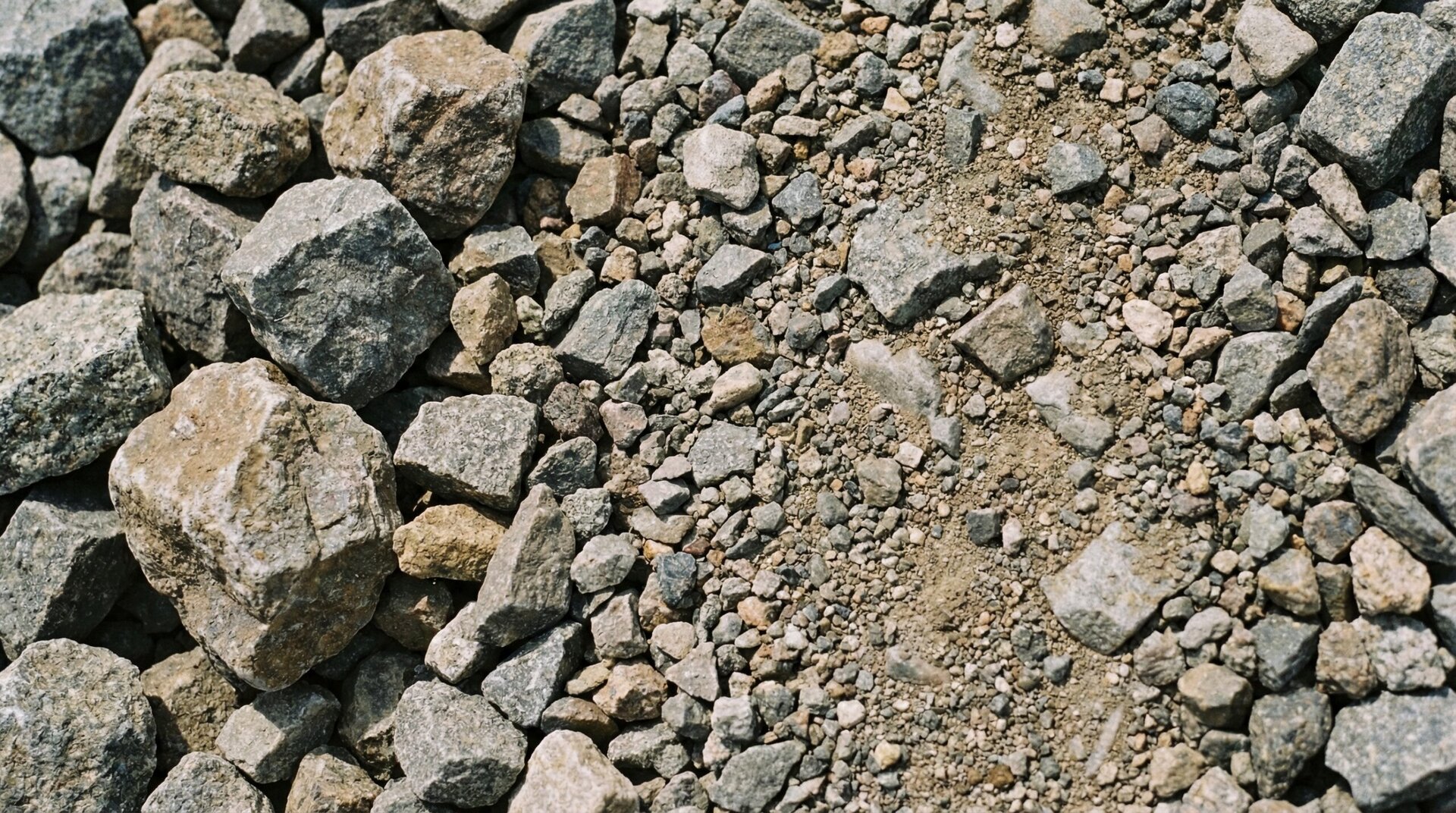
Class 2 base rock differs significantly from regular gravel due to its engineered composition and strict gradation requirements. The material contains a specific blend of particle sizes, from larger stones down to fine dust, which allows it to compact tightly and lock together.
The production process involves crushing recycled concrete and asphalt into precise sizes, then screening and blending the material to meet Caltrans Class 2 specifications. This creates a uniform product that performs consistently across different applications. Unlike single-size gravel, the varied particle sizes in Class 2 base rock fill gaps and create a dense, stable surface.
Most Class 2 base rock contains 50-70% recycled content, making it an environmentally responsible choice. This recycled composition doesn’t compromise performance – in fact, the angular particles from crushed concrete often provide better interlocking than naturally rounded gravel. For projects that don’t require strict specifications, non-spec aggregate base may offer a more budget-friendly alternative.
Primary uses and applications
Class 2 base rock serves as the foundation for numerous construction projects. Driveways represent one of the most common applications, where a 4-6 inch compacted layer provides excellent support for vehicle traffic. The material’s ability to shed water while maintaining stability makes it ideal for residential and commercial driveways.
Road construction projects rely heavily on Class 2 base rock as a sub-base layer. Highway departments and contractors use it to create stable foundations that can handle heavy truck traffic and weather extremes. The material’s load-bearing capacity and resistance to rutting make it essential for long-lasting road surfaces.
Paver and flagstone installations benefit from Class 2 base rock’s uniform compaction properties. A properly prepared base prevents settling and maintains level surfaces over time. Contractors often prefer it over sand bases because it provides better long-term stability. For specialized applications requiring superior drainage, quarter minus material can achieve optimal compaction and drainage performance.
Pro Tip: For paver installations, compact Class 2 base rock in 2-inch lifts to achieve optimal density and prevent future settling issues.
Installation process and specifications
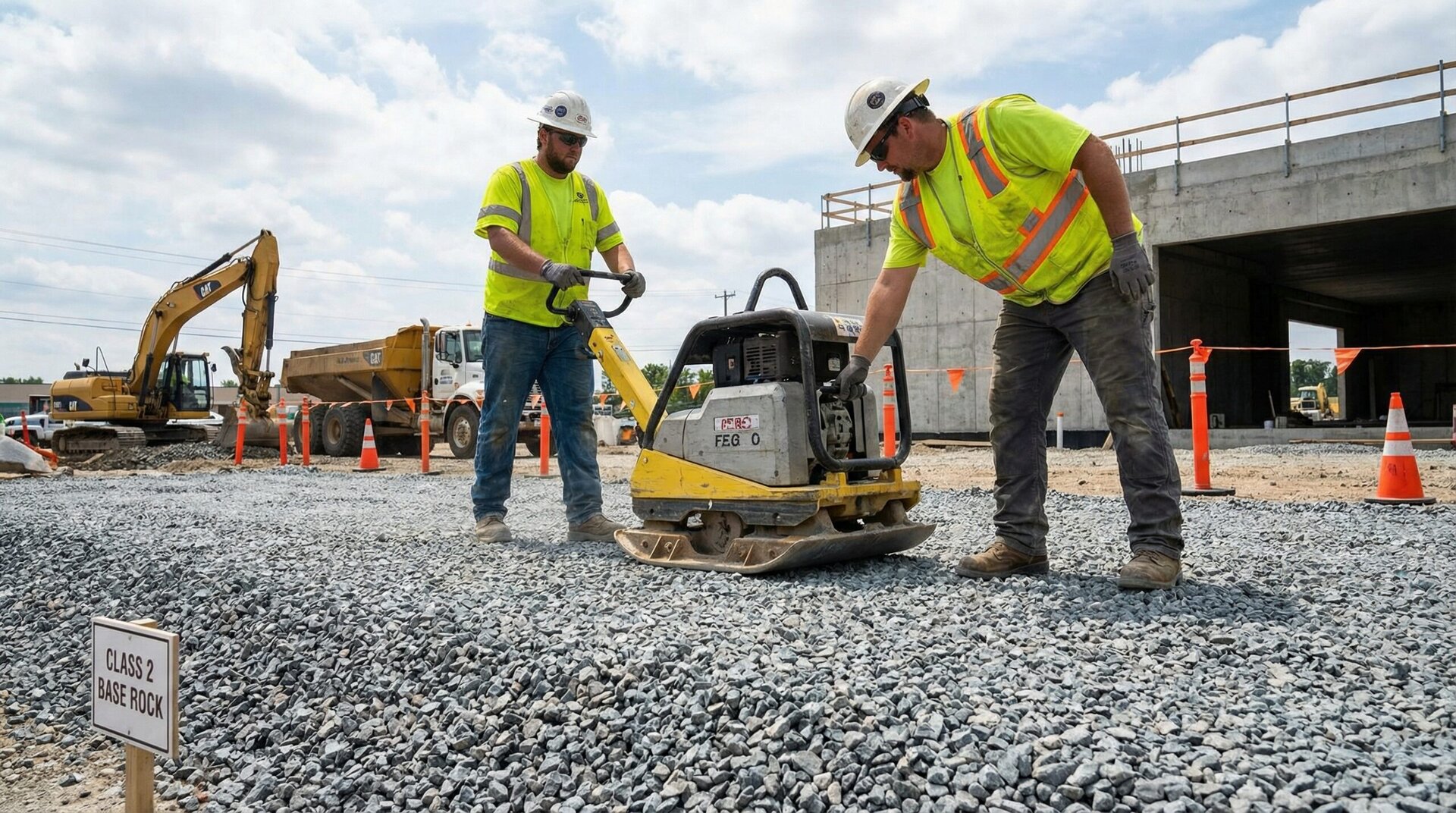
Proper installation of Class 2 base rock requires attention to detail and the right equipment. The process begins with excavating the area to the required depth, typically 4-6 inches for driveways and 6-8 inches for roads or heavy-use areas.
The material should be spread in lifts no thicker than 4 inches and compacted with a vibratory plate compactor or roller. Each lift must achieve 95% compaction density to meet engineering standards. Water may be added during compaction to achieve optimal moisture content, usually around 6-8%. Understanding the difference between minus gravel and screened gravel can help you select the right material for your specific compaction needs.
Grade control becomes critical during installation. The base should slope away from structures at a minimum 2% grade to ensure proper drainage. Edges should be contained with forms or existing pavement to prevent lateral movement during compaction.
| Application | Thickness | Compaction | Typical Use |
|---|---|---|---|
| Driveways | 4-6 inches | 95% density | Residential access |
| Roads | 6-8 inches | 95% density | Heavy traffic |
| Pavers | 3-4 inches | 95% density | Walkways, patios |
Cost factors and considerations
Class 2 base rock pricing varies based on several factors including location, quantity, and delivery distance. Material costs typically range from $25-45 per ton, with bulk orders often receiving volume discounts. Transportation represents a significant portion of total project costs, especially for smaller quantities or remote locations.
Project size directly impacts overall costs. Larger projects benefit from economies of scale in both material pricing and delivery efficiency. Many suppliers offer tiered pricing with better rates for orders exceeding 10-15 tons.
Quality variations can affect pricing, with virgin material commanding premium prices over recycled content. However, recycled Class 2 base rock often performs equally well while providing cost savings and environmental benefits. The key lies in ensuring the material meets proper gradation specifications regardless of its source. For projects requiring specific regional standards, Type 2 aggregate may be specified in certain jurisdictions.
Budget Planning: Factor in 10-15% additional material for waste and compaction loss when calculating project quantities.
When comparing alternatives, Class 2 base rock often provides better value than asphalt or concrete bases. While initial costs may be higher than regular gravel, the superior performance and longevity typically justify the investment. Maintenance requirements remain minimal when properly installed, reducing long-term ownership costs.
The versatility and proven performance of Class 2 base rock make it an excellent choice for most construction applications. Its combination of stability, drainage, and cost-effectiveness continues to make it the preferred base material for contractors and property owners alike. Whether you’re building a simple driveway or preparing for major construction, understanding these fundamentals will help ensure project success.
FAQ
What is the difference between Class 2 base rock and regular gravel?
How thick should Class 2 base rock be for a driveway?
Is Class 2 base rock permeable and good for drainage?
How much does Class 2 base rock cost per ton?
Author: igor