Can You Use Pea Gravel for Outdoor Staircase Support

Get an estimate for your project in 60 seconds
 Your information is secure
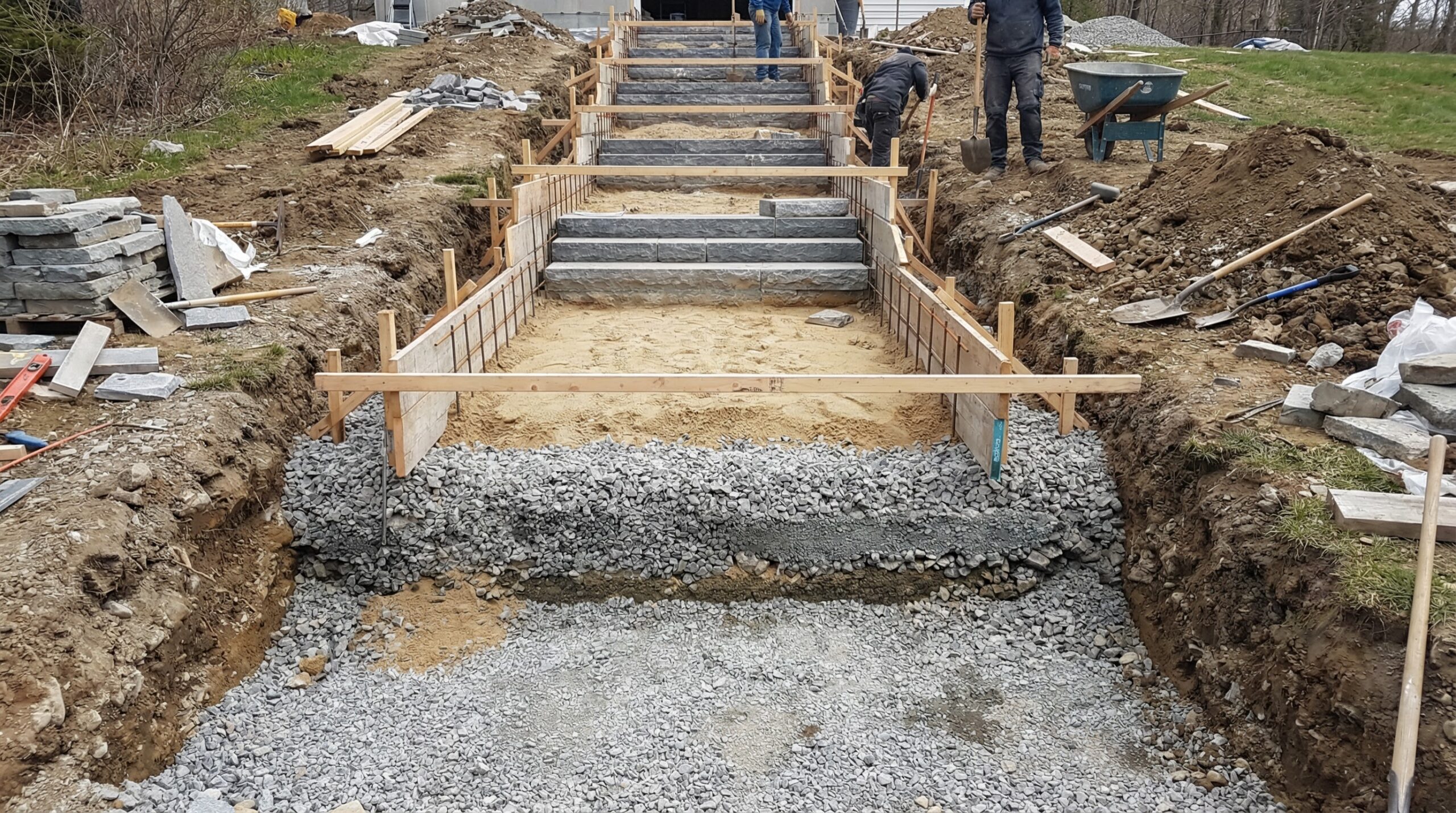
Building outdoor stairs requires careful consideration of your foundation materials. While pea gravel offers excellent drainage and aesthetic appeal, its rounded shape makes it unsuitable as the primary structural support for outdoor staircases. However, you can successfully incorporate pea gravel into your staircase project when used correctly with proper base materials.
Quick Answer: Pea gravel alone cannot provide adequate structural support for outdoor stairs due to its poor compaction properties. However, it works excellently as a surface material over a properly constructed crushed stone base.
Understanding how different gravel types work together helps you build stairs that remain stable and attractive for years. Let’s explore when pea gravel fits into outdoor staircase construction and how to use it effectively.
Understanding pea gravel’s structural limitations
Pea gravel consists of small, naturally rounded stones measuring 1/8 to 3/8 inches in diameter. These smooth stones create beautiful, comfortable surfaces but present significant challenges for structural applications.
The rounded shape prevents proper interlocking between particles. When you step on pea gravel, the stones roll against each other rather than locking in place. This movement makes pea gravel unsuitable for bearing the weight and foot traffic that outdoor stairs experience.
According to hellogravel.com, properly compacted pea gravel can support 100-125 pounds per cubic foot, but only when confined and supported by other materials. Without proper containment, pea gravel shifts under load, creating unstable walking surfaces.
Important: Wet pea gravel loses even more stability, with load capacity dropping to as low as 2,000 pounds per square inch compared to 5,000-8,000 PSI when dry and well-supported.
The right way to incorporate pea gravel in stair construction
While pea gravel cannot serve as your primary support material, it plays valuable roles in outdoor staircase projects when used appropriately. The key lies in understanding where pea gravel excels and building your foundation accordingly.
Start with angular crushed stone for your structural base. This material compacts tightly and provides the stability your stairs need. As noted by hellogravel.com, angular crushed stone creates foundations that handle weather changes and foot traffic beautifully.
Once your crushed stone base is properly compacted, you can add a thin layer of pea gravel as a surface material. This approach gives you the aesthetic benefits of pea gravel while maintaining structural integrity.
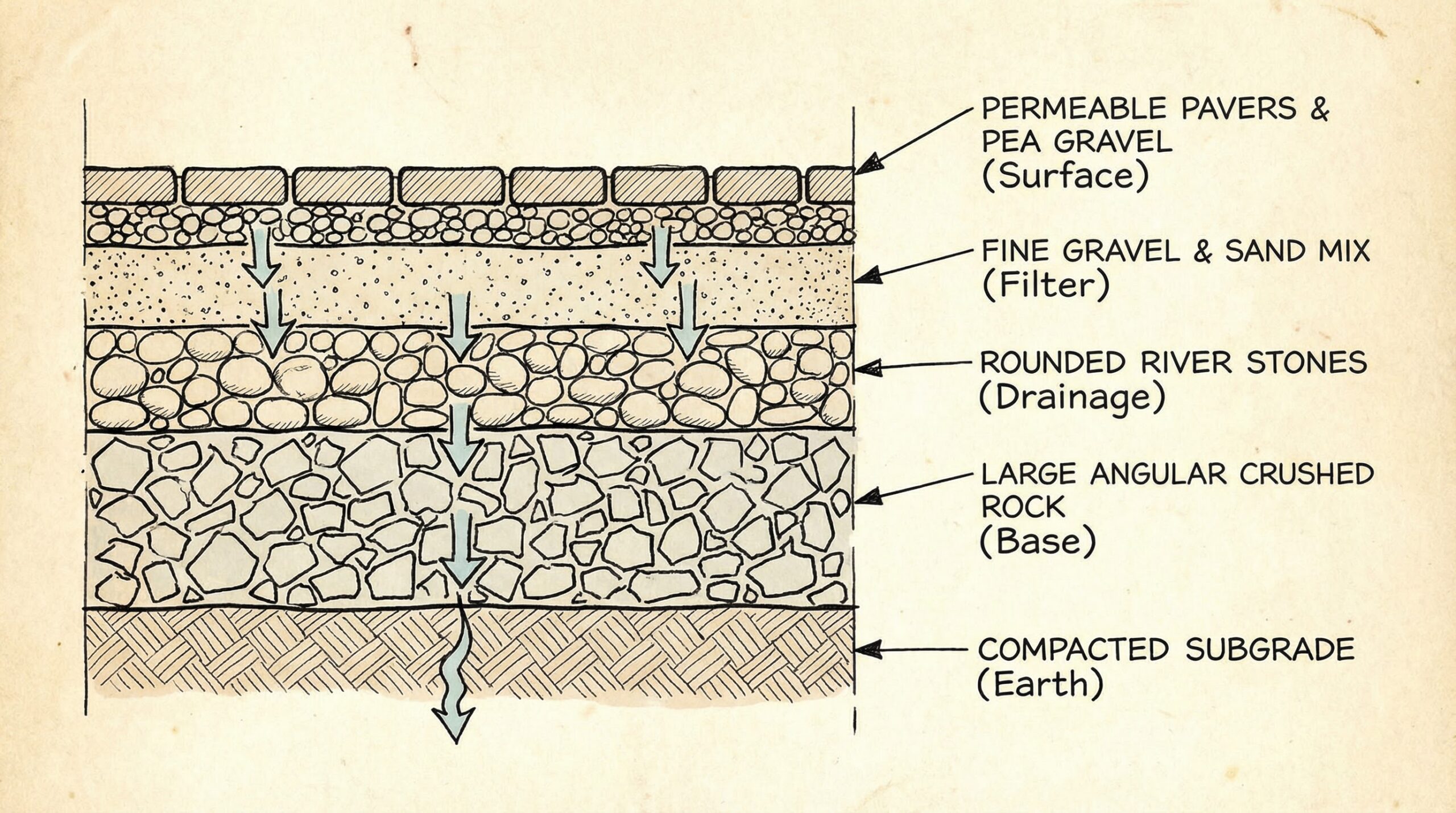
For stair treads, limit pea gravel depth to 2-4 inches maximum. Deeper layers become unstable and difficult to walk on. Consider installing edge restraints to prevent the pea gravel from spreading beyond your intended areas. Understanding the ideal pea gravel size for your specific application ensures optimal performance and aesthetics.
Better alternatives for staircase support systems
When structural stability matters most, several materials outperform pea gravel for outdoor staircase support. Understanding these alternatives helps you choose the best option for your specific project needs.
Crushed stone or road base gravel provides superior compaction and stability. The angular particles lock together when compacted, creating a solid foundation that won’t shift under load. This material typically costs less than pea gravel while delivering better structural performance. Learn more about crushed gravel vs pea gravel to make an informed decision for your project.
| Material | Compaction Quality | Cost | Best Use |
|---|---|---|---|
| Crushed Stone | Excellent | Low | Primary support base |
| Pea Gravel | Poor | Medium | Surface/decorative layer |
| Road Base | Excellent | Low | Heavy-duty foundations |
| Decomposed Granite | Good | Medium | Finished walking surfaces |
For areas requiring both stability and aesthetics, consider using crushed stone as your base with a decorative top layer. This approach, recommended by hellogravel.com, provides the structural integrity you need while achieving the visual appeal you want. The comparison between base material vs pea gravel highlights why this layered approach works so effectively.
Decomposed granite offers another excellent option that compacts better than pea gravel while maintaining a natural appearance. This material works particularly well for garden stairs and informal pathways.
Installation tips for mixed gravel systems
Successfully combining different gravel types requires attention to proper installation techniques. Following these guidelines ensures your outdoor stairs remain stable and attractive over time.
Begin by excavating your stair area to the proper depth, typically 6-8 inches below your finished grade. Install geotextile fabric to prevent soil mixing with your gravel and improve long-term stability. As highlighted by hellogravel.com, this fabric layer prevents many common problems that develop over time.
Add your crushed stone base in 2-inch lifts, compacting each layer thoroughly before adding the next. This systematic approach creates the solid foundation your stairs require. Use a plate compactor for best results, ensuring each layer reaches maximum density.
Pro Tip: Test your base stability by walking on it before adding pea gravel. If you notice any soft spots or movement, add more crushed stone and compact again.

When adding your pea gravel surface layer, work in small sections and rake smooth. Install edge restraints immediately to prevent spreading. Consider using larger pea gravel sizes (3/8 inch or bigger) for better stability on walking surfaces. For more guidance on selecting the right material, explore what is the best pea gravel size for landscaping.
Remember that pea gravel requires periodic maintenance. Plan to add fresh material annually and re-level high-traffic areas as needed. This ongoing care keeps your stairs looking great and functioning properly. If you’re working on similar projects, check out how to maintain a pea gravel parking pad for additional maintenance insights.
Building outdoor stairs with the right materials creates lasting value for your property. While pea gravel cannot provide primary structural support, it adds beauty and comfort when used appropriately over a proper crushed stone foundation. This combination approach gives you the best of both worlds – structural integrity and aesthetic appeal that enhances your outdoor space for years to come.

 Chance Kittrell
