Can a Dump Truck Carry 20 Tons of Material
Get an estimate for your project in 60 seconds
 Your information is secure
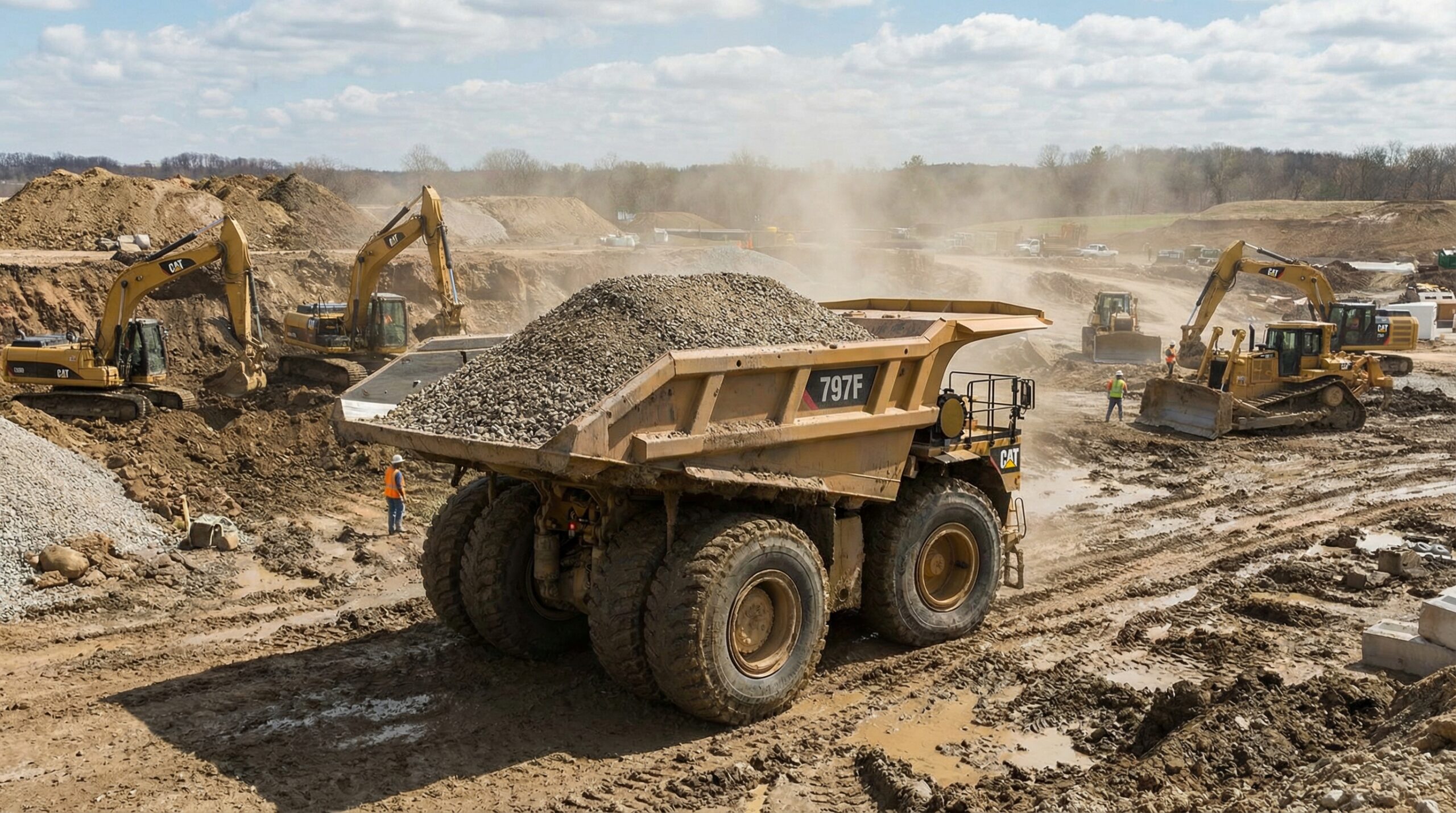
When planning construction or excavation projects, you need to know exactly how much material your dump truck can handle. The short answer is yes, many dump trucks can carry 20 tons, but it depends on the truck type and what you’re hauling.
Standard dump trucks typically carry 10-14 tons, while transfer dump trucks handle 15-25 tons, and super dump trucks can manage 19-26 tons. The material type matters too – 20 tons of gravel takes up less space than 20 tons of mulch, affecting whether your truck can physically hold that volume.
Quick fact: A super dump truck with additional axles can safely carry 20+ tons of most construction materials, making it ideal for large-scale projects.
Understanding these capacity limits helps you choose the right equipment and avoid costly delays or safety issues on your job site.
Different dump truck types and their weight limits
The type of dump truck you choose directly impacts how much weight you can legally and safely transport. Each design serves specific purposes and comes with distinct capacity ranges.
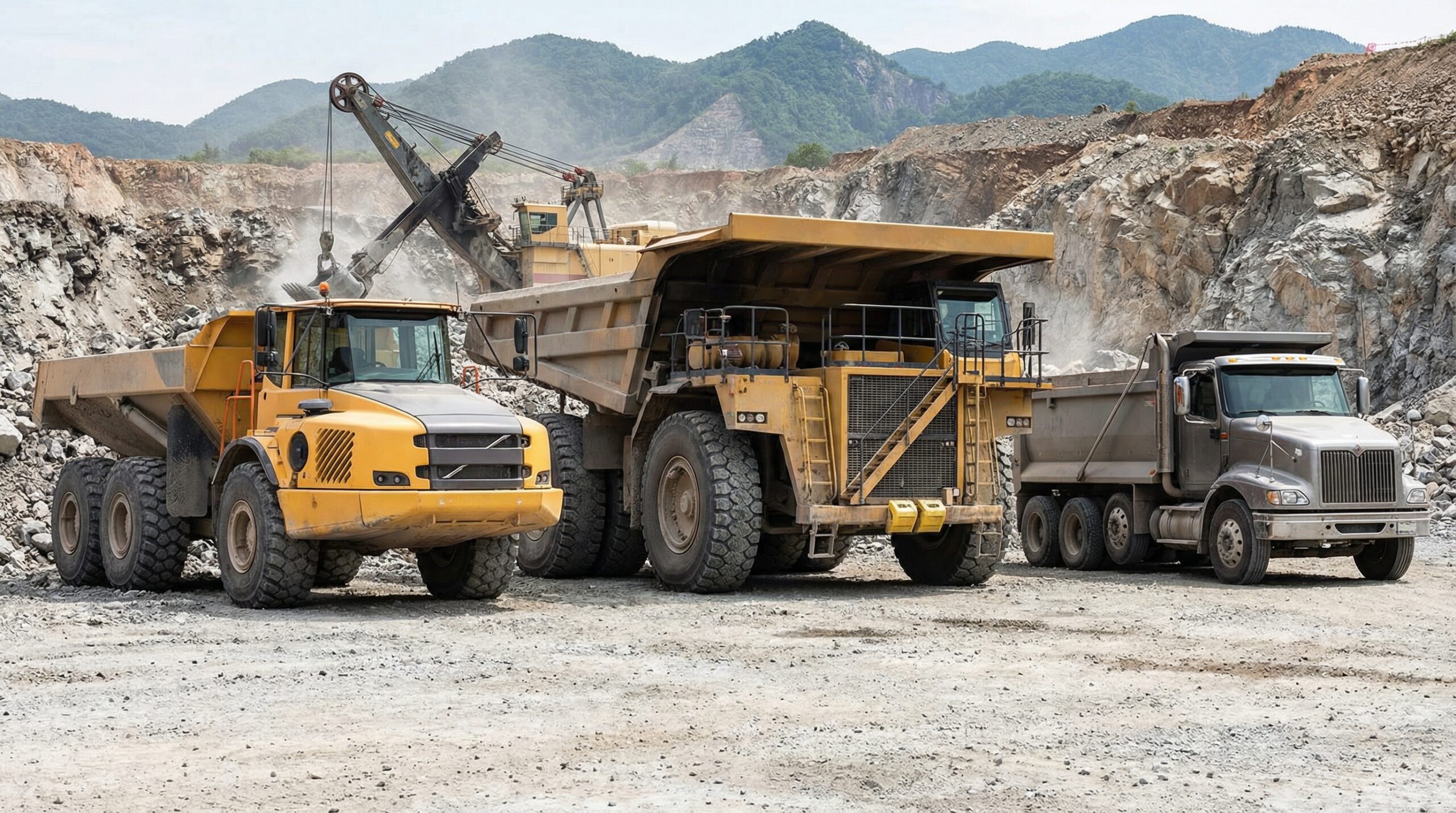
Standard dump trucks are your most common option on construction sites. These single-unit vehicles feature a hydraulic lifting system and typically handle 10-14 tons of material. They’re perfect for smaller projects where maneuverability matters more than maximum capacity.
Transfer dump trucks offer a smart middle ground. By pulling a separate trailer with a movable cargo container, they boost capacity to 15-25 tons while maintaining good handling. This setup works well when you need more material per trip but still want reasonable maneuverability around tight job sites.
Super dump trucks represent the heavy-duty option, carrying 19-26 tons thanks to additional axles that distribute weight safely. These trucks excel at large construction projects where maximum payload justifies their size and complexity. To better understand how many axles does a dump truck have and how they affect capacity, the configuration typically ranges from two to five axles depending on the truck type.
How material type affects carrying capacity
The material you’re hauling plays a huge role in determining actual capacity, even when your truck can theoretically handle 20 tons. Different materials have varying densities and volumes that impact both weight and space limitations.
Dense materials like sand, clay, or crushed stone pack efficiently into dump beds. A truck rated for 20 tons can usually carry close to its full weight capacity with these materials because they don’t take up excessive volume. You’ll hit your weight limit before running out of space. For instance, when hauling asphalt, understanding how many tons of asphalt can fit in a dump truck helps you plan loads more effectively.
Lighter materials create the opposite challenge. Mulch, wood chips, or loose gravel might fill your dump bed completely while weighing far less than 20 tons. In these cases, volume becomes the limiting factor rather than weight capacity. If you’re working with gravel specifically, you should also consider how many yards of gravel can fit in a dump truck to maximize efficiency.
Important consideration: Always check both weight and volume limits for your specific material to avoid overloading or underutilizing your truck’s capacity.
The moisture content also affects your calculations. Wet sand weighs significantly more than dry sand, potentially pushing you over weight limits even with smaller volumes. Factor in weather conditions and material storage when planning your loads.
Key factors that determine actual hauling capacity
Several technical and regulatory factors influence whether your dump truck can actually carry its rated 20-ton capacity in real-world conditions.
Axle configuration plays a critical role in weight distribution and legal limits. Trucks with more axles can distribute weight more evenly, allowing higher total capacities while staying within per-axle weight restrictions. This is why super dump trucks add extra axles specifically to handle heavier loads. For tri-axle configurations specifically, how much does a tri-axle dump truck weigh when empty affects your total payload capacity.
The truck’s construction materials affect its empty weight, which directly impacts payload capacity. Steel dump beds are durable but heavy, while aluminum beds weigh less and allow for more cargo weight. However, aluminum may not handle abrasive materials as well as steel over time.
Road regulations and bridge weight limits often restrict actual carrying capacity below the truck’s mechanical limits. Many areas have seasonal weight restrictions during spring thaw periods, and some bridges have lower weight limits that force you to reduce loads regardless of truck capacity. If you’re delivering to residential areas, you should also consider whether a dump truck can drive on your driveway without causing damage.
Your truck’s suspension system and tire ratings must match the intended load. Overloading beyond these specifications creates safety risks and potential legal liability, even if the engine and frame could theoretically handle more weight.
Choosing the right truck for your 20-ton needs
Selecting the appropriate dump truck for consistent 20-ton loads requires balancing capacity, cost, and operational requirements specific to your projects.
For regular 20-ton hauling, super dump trucks offer the most reliable solution. Their 19-26 ton capacity provides a comfortable safety margin while meeting legal requirements. The additional axles distribute weight properly, reducing road damage and improving stability during transport.
Transfer dump trucks work well when you need flexibility between smaller and larger loads. Their 15-25 ton range handles 20-ton loads adequately while offering better maneuverability than super dumps for mixed-use applications. When selecting equipment for aggregate materials, exploring the various types of dump trucks for aggregate can help you make an informed decision.

Consider your typical routes and job site conditions when making this decision. Tight urban construction sites might favor smaller trucks with multiple trips, while highway hauling between large sites justifies the efficiency of maximum-capacity vehicles. If you’re new to operating these vehicles, you might wonder are dump trucks hard to drive, especially the larger capacity models.
| Truck Type | Capacity Range | Best For | Key Advantage |
|---|---|---|---|
| Standard | 10-14 tons | Small projects | Maneuverability |
| Transfer | 15-25 tons | Mixed loads | Flexibility |
| Super | 19-26 tons | Large projects | Maximum capacity |
The operating costs also vary significantly between truck types. Larger trucks cost more upfront and require commercial driver’s licenses, but they reduce the number of trips needed for big jobs. Calculate your total project costs, including driver time and fuel, to determine the most economical option for your specific situation.
Most dump trucks can handle 20 tons when properly matched to your material type and operational needs. Super dump trucks and larger transfer dumps provide the most reliable capacity for consistent 20-ton loads, while standard dumps work better for lighter materials or smaller projects. To learn more about general capacity limits, check out how much weight can dump trucks hold. Consider your specific hauling requirements, local regulations, and job site conditions to choose the right equipment that keeps your projects moving efficiently and safely.


 Chance Krittel
