Aggregate Price vs Performance Guide Making Smart Material Choices

Get an estimate for your project in 60 seconds
 Your information is secure

Choosing the right aggregate for your construction project feels like walking a tightrope between your budget and quality expectations. You want materials that perform well without breaking the bank, but how do you know which aggregates deliver the best value?
Aggregates typically range from $15 to $75 per ton depending on type and location, with crushed stone averaging $25-60 per ton and sand running $20-40 per ton. The key is understanding that performance factors like hardness, strength, and durability directly impact long-term costs, making some higher-priced materials actually more economical over time.
Quick Fact: Transportation can add $5-15 per ton to your aggregate costs, making local sourcing a smart strategy for budget-conscious projects.
This guide walks you through the essential balance between aggregate pricing and performance, helping you make informed decisions that protect both your budget and project quality. We’ll explore current market prices, performance metrics that matter, and practical strategies for getting the best value from your aggregate investment.
Understanding aggregate types and their market pricing
The aggregate market offers several distinct material categories, each with unique pricing structures and performance characteristics. Understanding these differences helps you match materials to your specific project needs and budget constraints.
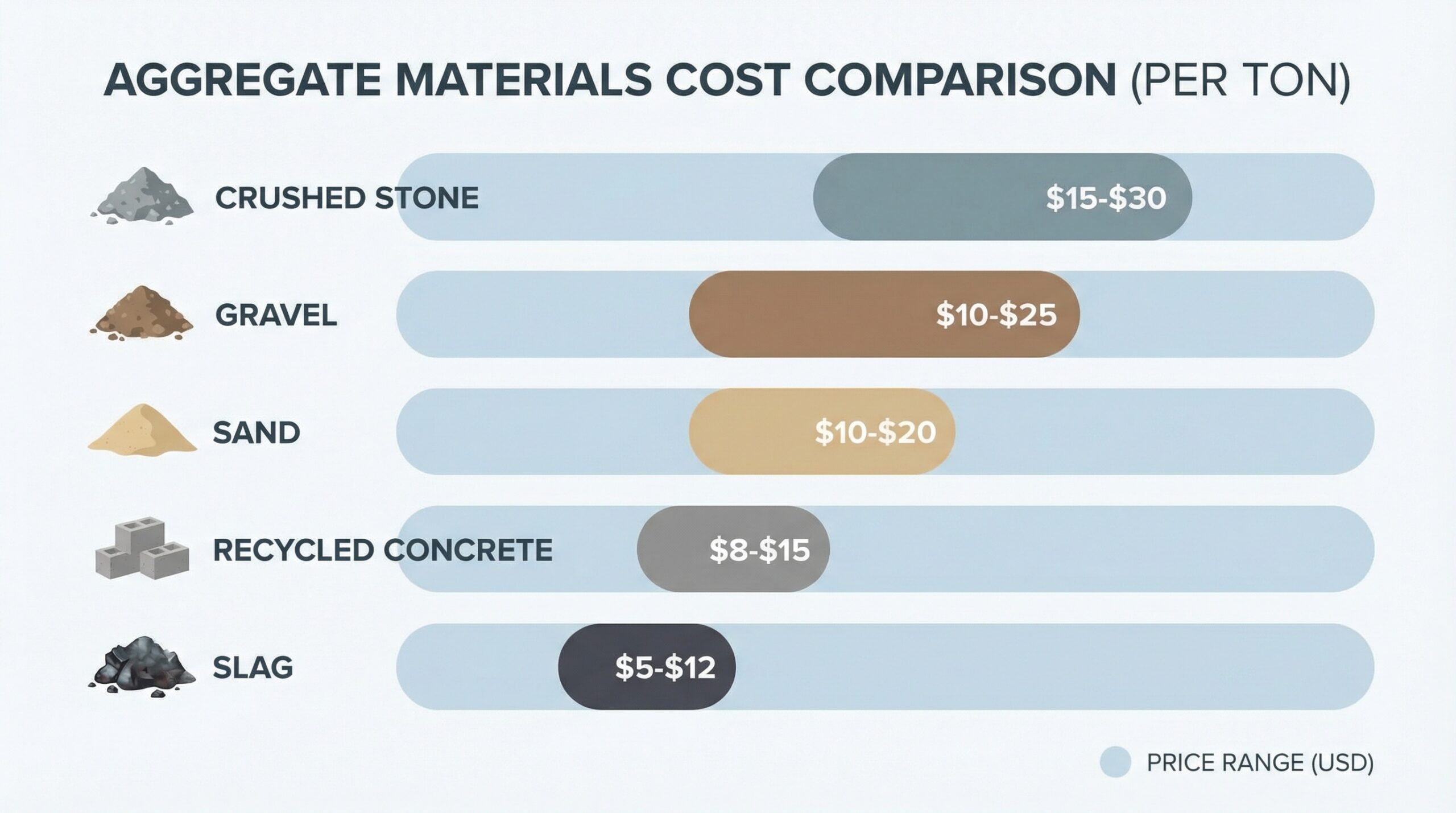
Crushed stone leads the market as the most versatile option, typically costing $25-60 per ton. These angular fragments provide excellent stability and drainage, making them ideal for driveways and road bases. The crushing process creates sharp edges that interlock well, delivering superior load-bearing capacity compared to rounded materials.
Gravel offers the most budget-friendly choice at $20-40 per ton. Natural gravel works well for drainage applications and decorative landscaping, though its rounded shape provides less structural stability than crushed alternatives. River rock and pea gravel fall into this category, with prices varying based on size and source location.
Sand typically runs $20-40 per ton and serves as a crucial fine aggregate in concrete mixes. Different sand types command different prices, with concrete sand costing more than fill sand due to stricter gradation requirements.
Recycled concrete emerges as an increasingly popular option at $10-20 per ton, offering significant cost savings while supporting sustainability goals. This material performs well as base material for driveways and road construction, though it may not meet specifications for all applications. Learn more about crushed concrete pricing per ton to understand the cost benefits.
Performance metrics that impact long-term value
Performance characteristics determine how well your chosen aggregate will serve your project over time. Understanding these metrics helps you evaluate whether paying more upfront saves money in the long run.
Hardness and abrasion resistance directly affect durability under traffic loads. High-quality granite aggregates resist wear better than softer limestone options, making them worth the premium for high-traffic applications. The Los Angeles Abrasion Test measures this property, with values below 40% indicating excellent durability.
Strength and load-bearing capacity determine how much weight your aggregate can support without failing. Crushed stone typically offers superior strength compared to rounded gravel due to its angular shape and interlocking properties. This becomes critical for structural applications like concrete production or heavy-duty pavement bases.
Shape and gradation influence how well particles fit together and compact. Well-graded aggregates with a mix of particle sizes create denser, more stable foundations. Angular shapes provide better interlocking than rounded particles, improving overall structural performance.
Drainage properties affect long-term durability by preventing water accumulation that can cause freeze-thaw damage or base failure. Open-graded aggregates allow better water flow but may sacrifice some stability, requiring careful consideration of your local climate conditions.
Pro Tip: Aggregates meeting ASTM C33 standards for concrete applications typically cost 10-20% more but deliver significantly better long-term performance than non-specification materials.
Cost-benefit analysis for smart aggregate selection
Making smart aggregate choices requires looking beyond initial purchase prices to understand total project costs. This analysis helps you identify when spending more upfront actually saves money over your project’s lifespan.
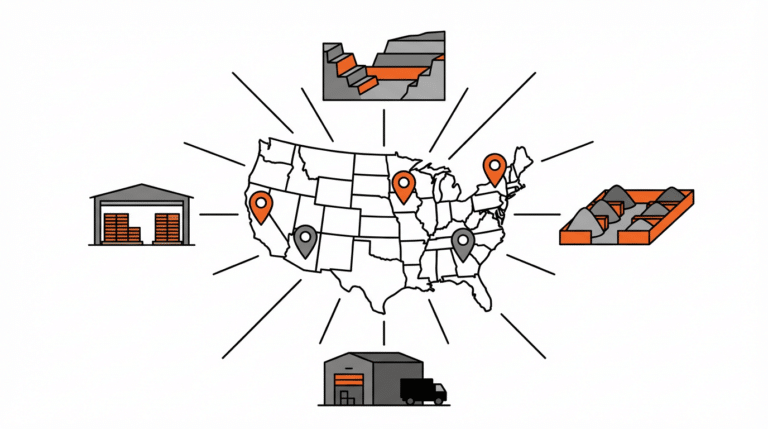
Transportation costs often represent the largest variable in aggregate pricing. A quarry 50 miles away might offer lower base prices, but trucking fees can easily eliminate any savings. Calculate total delivered costs when comparing suppliers, and prioritize local sources when quality meets your requirements. Hello Gravel’s nationwide network of local pits and haulers helps minimize these transportation costs while ensuring reliable delivery across all 50 states.
Maintenance and replacement considerations reveal the true cost of different materials. Higher-grade aggregates with better durability may cost 20-30% more initially but last twice as long as cheaper alternatives. For permanent installations like driveways or building foundations, this translates to significant long-term savings. Understanding gravel driveway costs can help you budget for both initial installation and long-term maintenance.
Project-specific requirements influence which performance characteristics matter most. A decorative garden path doesn’t need the same strength specifications as a commercial parking lot, allowing you to optimize costs by matching material grades to actual performance needs. Whether you’re a DIY homeowner working on a weekend project or a contractor managing multiple commercial sites, understanding these requirements helps you make informed decisions.
| Aggregate Type | Initial Cost/Ton | Expected Lifespan | Maintenance Needs | Total 10-Year Cost |
|---|---|---|---|---|
| Premium Crushed Stone | $45-60 | 15-20 years | Minimal | $50-65 |
| Standard Gravel | $25-35 | 8-12 years | Moderate | $45-60 |
| Recycled Concrete | $15-25 | 10-15 years | Low-Moderate | $20-35 |

Practical strategies for balancing cost and quality
Successfully balancing aggregate costs and performance requires strategic planning and informed decision-making. These practical approaches help you optimize your material selection process.
Local sourcing strategies offer the most immediate cost savings. Research quarries and suppliers within 25 miles of your project site to minimize transportation expenses. Many local suppliers offer competitive pricing on regional materials that perform well in local climate conditions. Hello Gravel’s marketplace serves as a free directory of up-to-date aggregate prices, making it easier to find the best gravel around you while comparing costs from multiple local sources.
Mix optimization techniques allow you to achieve desired performance while controlling costs. Combining different aggregate types can deliver the benefits of premium materials at lower overall costs. For example, using recycled concrete as base material topped with higher-grade crushed stone provides excellent performance at moderate cost.
Bulk purchasing considerations become important for larger projects. Many suppliers offer significant discounts for orders over 10-20 tons, but ensure you have proper storage and can use materials before they degrade. Calculate storage costs and material waste when evaluating bulk pricing. Hello Gravel specializes in transactions of 500 tons or more but accommodates smaller orders as well, helping you discover the benefits of purchasing gravel in bulk to maximize your savings.
Seasonal timing strategies can impact both availability and pricing. Aggregate demand peaks during construction season, driving up prices. Planning purchases during off-peak periods or establishing supply agreements can help control costs. With Hello Gravel’s 2-business-day minimum delivery window and dedicated account managers, you can better plan your material timing to optimize costs.
Money-Saving Strategy: Combining 70% recycled concrete base with 30% premium crushed stone surface layer can reduce material costs by 25-40% while maintaining excellent performance for most applications.
The key to successful aggregate selection lies in matching material properties to your specific project requirements while considering total lifecycle costs. Start by clearly defining your performance needs, then evaluate options based on delivered costs rather than just base pricing. Remember that the cheapest option upfront often becomes the most expensive over time, while strategic investments in quality materials typically pay dividends through reduced maintenance and longer service life.
Whether you’re building a residential driveway or managing a commercial construction project, taking time to understand the relationship between aggregate pricing and performance ensures your project succeeds both financially and functionally. For contractors managing multiple projects, explore material sourcing secrets for busy contractors to streamline your procurement process and eliminate the traditional hassles of calling around for price sheets.