
Why Mixing Sand with Gravel Creates Superior Construction Results
Guide handoff
Want help applying this guide to your project?
Share your ZIP and what you need help with. We'll use this guide as context when we follow up.
- 1 This guide gives us the context you were reading.
- 2 Ask about pricing, material choice, delivery timing, or quantity.
- 3 Keep it broad if you are still figuring out the project.
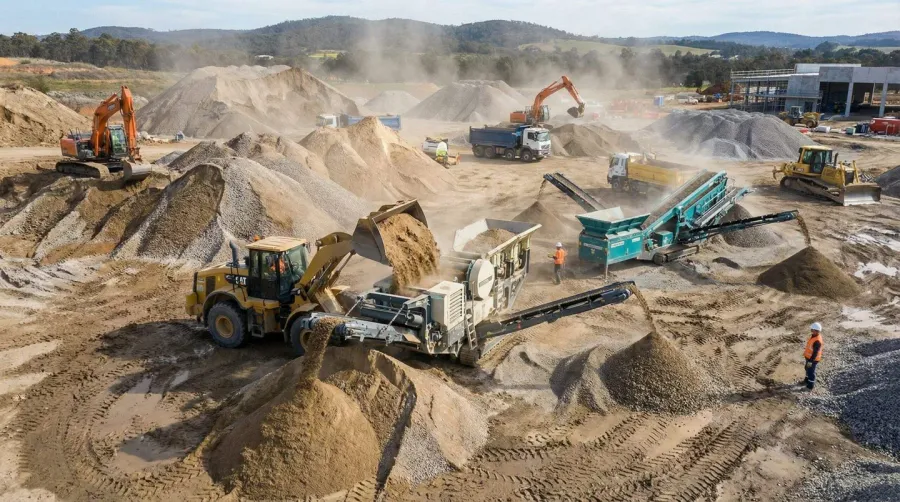
When you combine sand with gravel, you create a construction material that outperforms either component alone. This mixture fills gaps between larger stones, improves drainage by up to 40%, and reduces material costs while enhancing structural stability. Whether you’re building a driveway, foundation, or drainage system, understanding how these materials work together can save you time and money while ensuring long-lasting results.
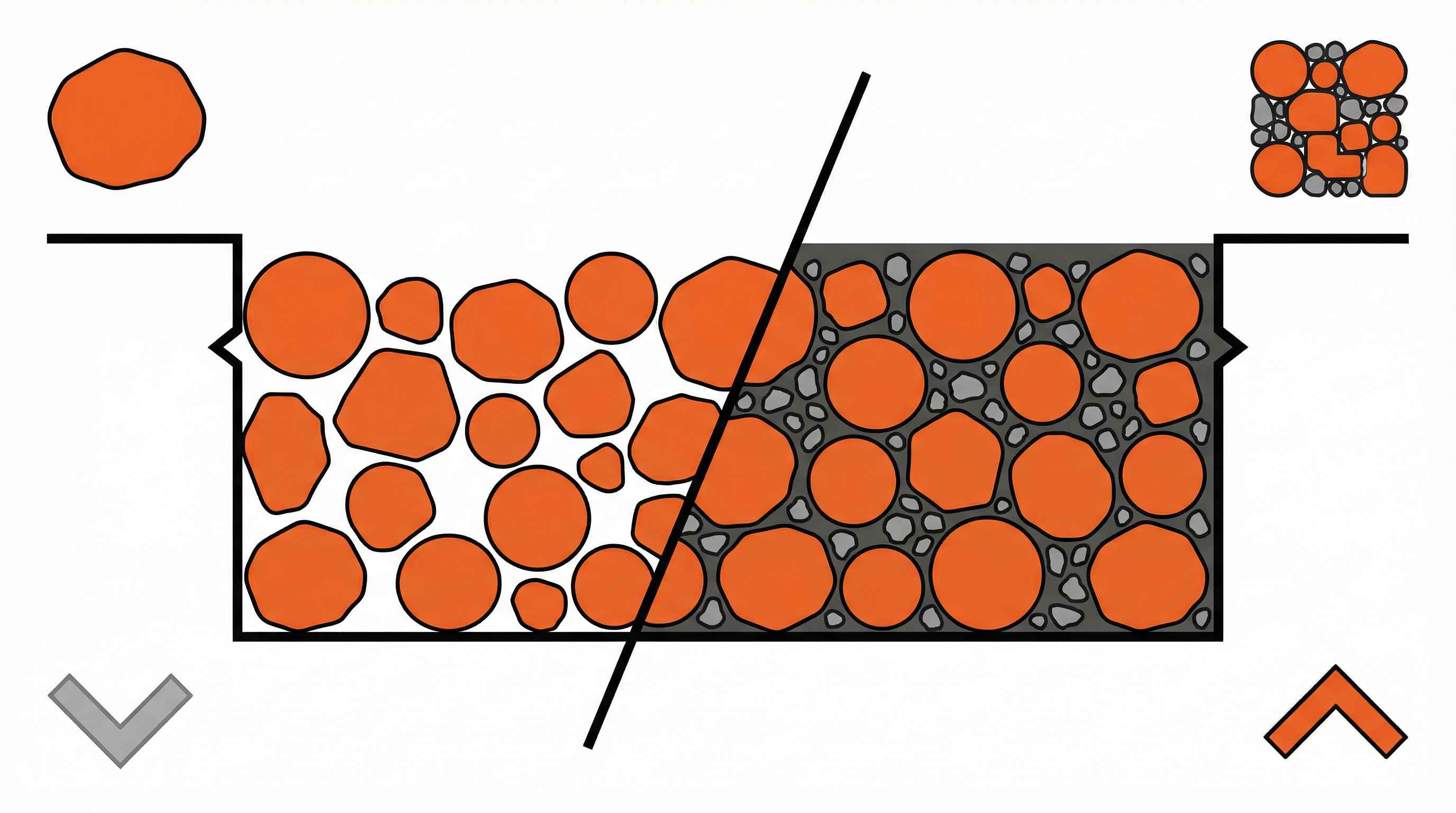
Quick Fact: Sand particles (0.0625mm to 2mm) perfectly fill the voids between gravel pieces (2mm to 64mm), creating a dense, stable surface that prevents settling and improves load distribution.
The science behind this combination lies in particle size distribution. Sand acts as a natural filler, occupying spaces that would otherwise remain empty in pure gravel applications. This creates what engineers call a “well-graded aggregate” that maximizes density and minimizes movement over time.
What makes sand and gravel work so well together
Sand consists of finely divided rock particles, primarily silica, that have been naturally weathered over thousands of years. You’ll find different types depending on their source. River sand offers rounded particles that compact well, while quarry sand provides angular edges that lock together for extra stability.
Gravel brings the structural backbone to any mixture. These larger rock fragments range from small pebbles to substantial stones, each contributing to the overall strength of your project. Crushed stone gravel provides excellent compaction properties, while river rock offers natural drainage channels.
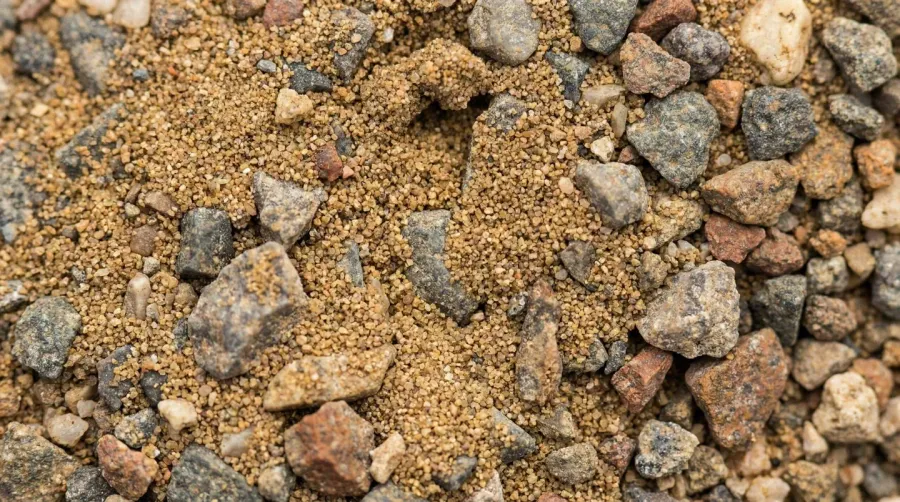
When you combine these materials, the sand fills approximately 30-35% of the void space between gravel particles. This creates a matrix that distributes weight more evenly than either material could achieve alone. The result is a surface that resists shifting, settling, and erosion.
According to research from hellogravel.com, the interlocking particle arrangement enables more efficient load distribution and prevents individual particle movement, significantly enhancing structural integrity.
How proper mixing transforms your construction projects
The mixing process determines whether you’ll achieve optimal results or face future problems. You need the right proportions to balance stability with drainage. Most applications work best with a 70-30 or 80-20 gravel-to-sand ratio, though specific projects may require adjustments.
Manual mixing works for smaller projects. Spread your gravel in layers, add sand gradually, and use rakes or shovels to ensure even distribution. Each layer should be compacted before adding the next to prevent separation during settling.
For larger projects, mechanical mixers provide consistent results. Conveyor systems and rotating drums blend materials more thoroughly than hand mixing, ensuring uniform composition throughout your project area.
Pro Tip: Test your mixture by grabbing a handful and squeezing. It should hold together briefly when compressed but crumble easily when disturbed, indicating proper moisture and particle distribution.
The key lies in achieving what contractors call “maximum density.” This occurs when smaller particles completely fill the spaces between larger ones, creating a solid mass that behaves as a single unit rather than loose individual components.
The performance advantages you can expect
Enhanced drainage stands out as perhaps the most significant benefit of sand-gravel mixtures. The combination creates pathways for water flow while maintaining structural integrity. Unlike pure sand, which can become waterlogged, or pure gravel, which may allow too much erosion, the mixture provides controlled drainage. For projects requiring optimal water management, consider exploring the best gravel for drainage.
Improved compaction and stability follow naturally from proper particle distribution. When you compact a sand-gravel mixture, the materials lock together in a way that resists movement under load. This prevents the formation of ruts, potholes, or uneven surfaces that plague poorly designed surfaces. Understanding the best gravel for compacting can further enhance your project outcomes.
Cost efficiency makes sand-gravel mixtures attractive for budget-conscious projects. Sand typically costs less than gravel, so incorporating it reduces your overall material expenses. You also need less total volume to achieve the same coverage area because the mixture compacts more efficiently than loose materials.
| Benefit | Pure Gravel | Sand-Gravel Mix | Improvement |
|---|---|---|---|
| Drainage Rate | High | Moderate-High | Controlled flow |
| Stability | Moderate | High | 40% better |
| Cost per Yard | $35-45 | $25-35 | 25% savings |
| Compaction | Poor | Excellent | Minimal settling |
The mixture also provides better resistance to freeze-thaw cycles. Water that enters the material can drain away before freezing, preventing the expansion damage that destroys poorly drained surfaces during winter months.
Choosing the right materials for your specific needs
Not all sand works equally well with every type of gravel. River sand pairs excellently with crushed stone for road bases because both materials compact well under pressure. Beach sand, while readily available, contains salt and organic matter that can cause problems in some applications.
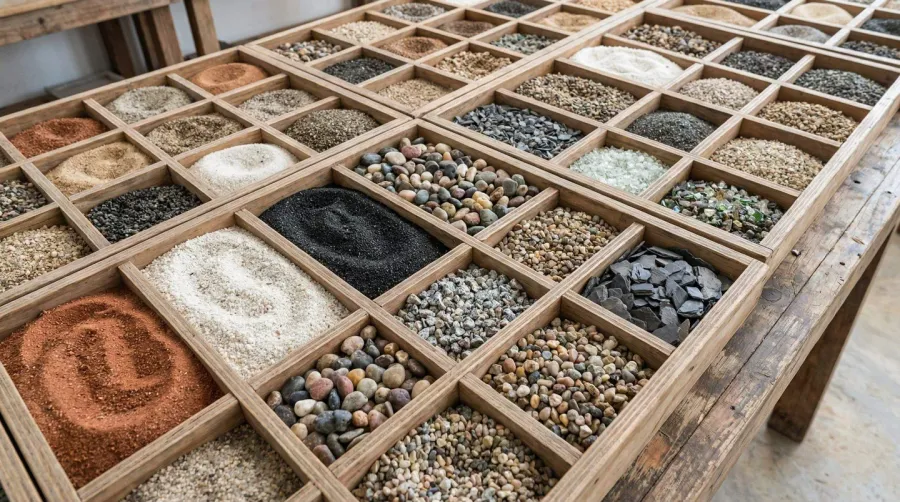
Particle size matters more than you might expect. Fine sand works best for filling small gaps in dense gravel mixtures, while coarser sand suits applications where drainage takes priority over maximum compaction. Your project requirements should guide these choices. For foundation work, learning about the best gravel size for a foundation is essential.
Quality control prevents future headaches. Source materials from reputable suppliers who test for contaminants, proper gradation, and consistent composition. Poor-quality sand or gravel can introduce weak spots that compromise your entire project.
Important: Always request sieve analysis results from your supplier. This shows the exact particle size distribution and helps you verify that materials meet project specifications before delivery.
Consider environmental factors when making selections. Local materials reduce transportation costs and environmental impact while often providing better compatibility with existing soil conditions. Regional geology influences which combinations work best in your area. If you’re working on a patio project, check out what is the best gravel size for a patio for specific guidance.
The combination of sand and gravel creates construction materials that exceed the performance of either component alone. By understanding how particle size, mixing ratios, and material selection affect results, you can make informed decisions that lead to successful, long-lasting projects. Whether you’re tackling a small landscaping project or major construction work, this knowledge helps you achieve professional results while managing costs effectively. For comprehensive information on selecting the right materials, explore different types of gravel for construction.
FAQ
What is the ideal ratio of sand to gravel for construction projects?
Most construction applications work best with a 70-30 or 80-20 gravel-to-sand ratio. For driveways and foundations, use 70% gravel and 30% sand for optimal stability. For drainage-focused projects, increase the gravel proportion to 80% while maintaining 20% sand to fill voids without compromising water flow.
How does mixing sand with gravel improve drainage compared to using gravel alone?
Sand-gravel mixtures provide controlled drainage by creating pathways for water flow while maintaining structural integrity. Pure gravel allows too much erosion and shifting, while the sand component fills 30-35% of void spaces between gravel particles, preventing excessive water movement while still allowing proper drainage. This combination improves drainage efficiency by up to 40% compared to poorly graded materials.
What types of sand work best when mixing with gravel?
River sand with rounded particles works excellently for compaction and natural drainage, while quarry sand provides angular edges that lock together for enhanced stability. Avoid beach sand due to salt content and organic matter. The sand should have particles ranging from 0.0625mm to 2mm to properly fill voids between gravel pieces (2mm to 64mm). Always request sieve analysis results from suppliers to verify proper gradation.
How much money can I save by using a sand-gravel mixture instead of pure gravel?
Sand-gravel mixtures typically cost $25-35 per yard compared to $35-45 for pure gravel, providing approximately 25% cost savings. Since sand costs less than gravel and the mixture compacts more efficiently, you need less total volume to achieve the same coverage area. The improved compaction also reduces long-term maintenance costs by preventing settling, rutting, and surface deterioration.