Types of Sand Used in Construction: River Sand vs M-Sand vs Concrete Sand Guide
Published on: December 18, 2025
Get an estimate for your project in 60 seconds
 Your information is secure
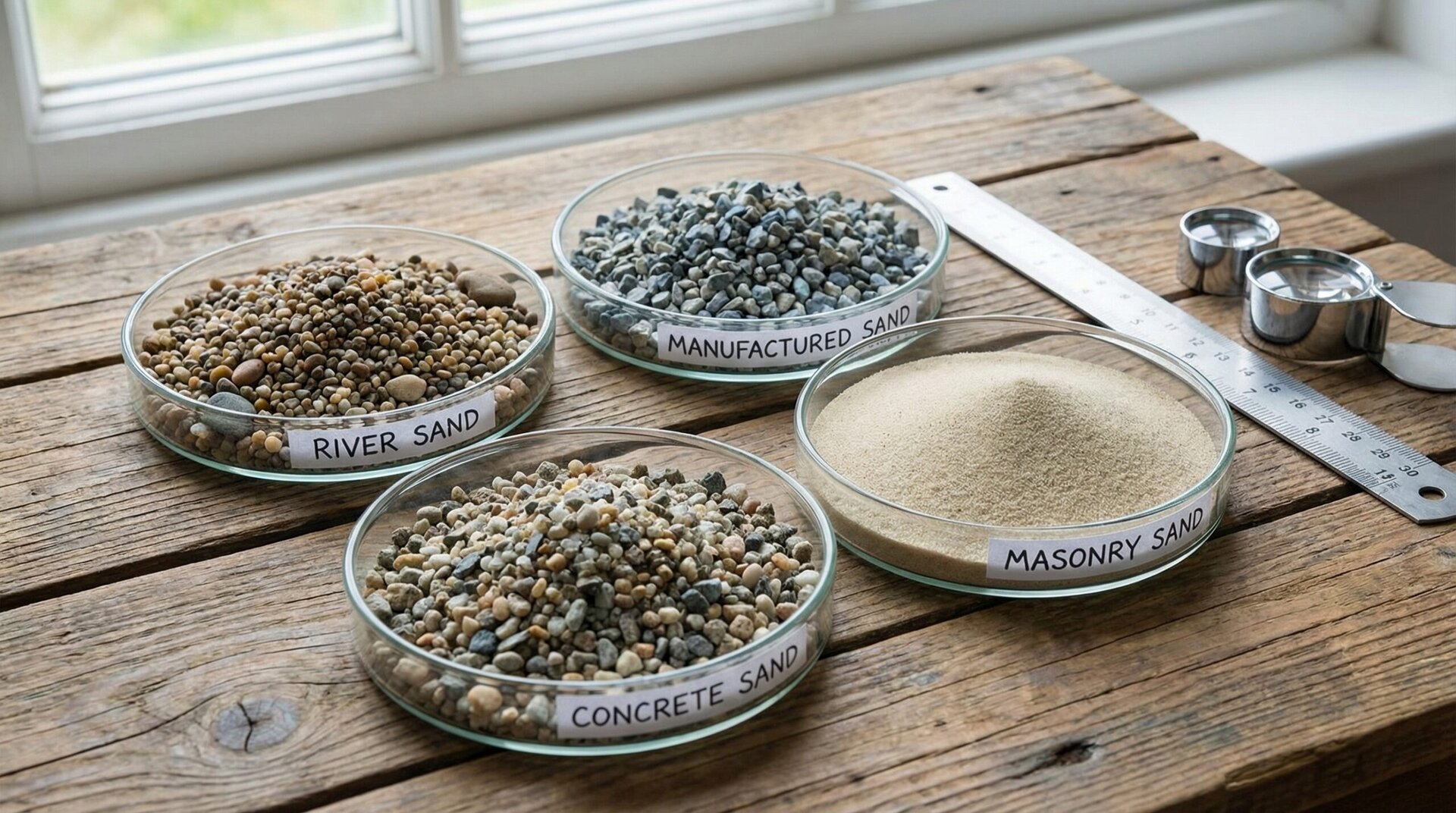
Choosing the wrong sand for your construction project can lead to cracks, weak foundations, and costly repairs down the line. With over 10 different types of sand available for construction, each serves specific purposes based on grain size, shape, and source material.
The most commonly used construction sands include river sand for general concrete work, manufactured sand (M-sand) for high-strength applications, concrete sand for structural projects, and masonry sand for brickwork and plastering. Understanding which type works best for your specific needs can save you both time and money while ensuring structural integrity.
Quick Fact: Angular M-sand provides 20-30% better bonding strength compared to rounded river sand due to its rough surface texture and consistent particle size.
River sand and pit sand for general construction
River sand remains the gold standard for most construction applications due to its naturally rounded grains and excellent workability. Sourced from riverbeds, this sand offers smooth particle surfaces that make mixing concrete easier while providing adequate strength for residential and commercial projects.
The rounded nature of river sand particles creates excellent flow characteristics, making it perfect for concrete pumping applications. You’ll find this sand works exceptionally well for general concrete work, plastering, and mortar preparation. However, its smooth surface can sometimes result in slightly lower bonding strength compared to angular alternatives.
Pit sand, extracted from natural deposits in the ground, shares similar properties with river sand but often contains more clay and silt. This makes it suitable for basic construction tasks but requires proper washing before use in critical structural applications. Understanding the differences between sand and soil composition helps ensure you’re using the right material for your project.
Manufactured sand (M-sand) for high-strength applications
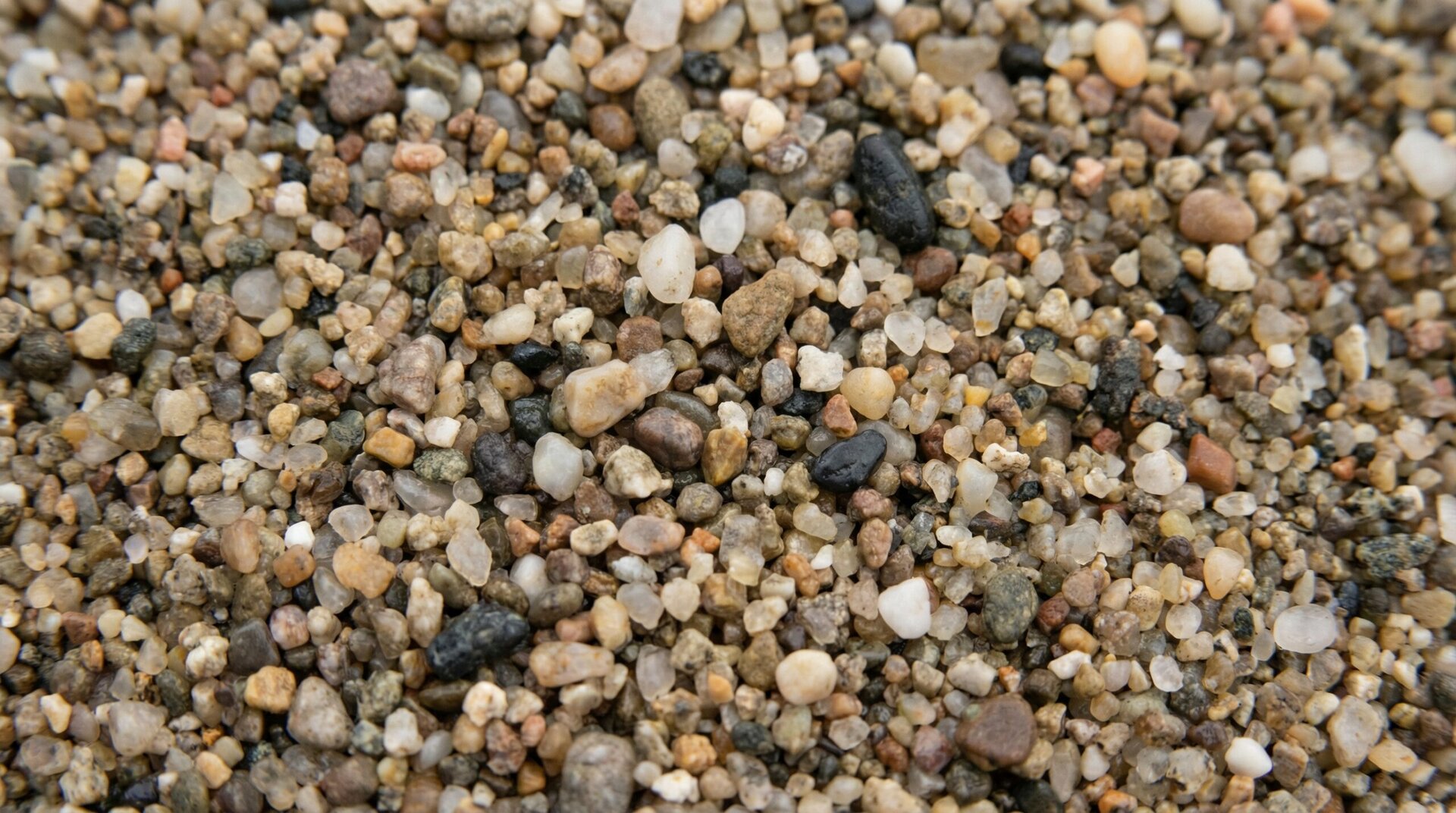
Manufactured sand, created by crushing granite or basalt rocks, has revolutionized modern construction with its consistent quality and superior bonding properties. The angular shape of M-sand particles creates better interlocking between cement and aggregates, resulting in stronger concrete structures.
Unlike natural sand, M-sand offers predictable gradation and minimal impurities, making it ideal for high-rise buildings, bridges, and infrastructure projects. The rough surface texture of crushed particles provides excellent grip with cement paste, often eliminating the need for additional bonding agents. For more detailed information on selecting the right material, check out our guide to choosing the right sand type for construction projects.
Environmental benefits make M-sand increasingly popular as it reduces river mining while utilizing quarry waste materials. You can expect consistent performance across batches, unlike natural sand which varies based on source location and seasonal factors.
Pro Tip: M-sand requires slightly more water in concrete mixes due to its angular shape, but this results in 15-25% higher compressive strength compared to river sand concrete.
Concrete sand and masonry sand for specific applications
Concrete sand, also known as sharp sand, features coarser particles specifically graded for structural concrete applications. This sand type provides the backbone for foundations, slabs, and load-bearing elements where maximum strength is essential.
The particle size distribution of concrete sand typically ranges from 0.15mm to 4.75mm, creating optimal void filling and cement bonding. You’ll notice this sand feels rougher to the touch compared to finer alternatives, which directly translates to better mechanical properties in hardened concrete. Learn more about coarse sand soil and its specific uses in various construction applications.
Masonry sand takes a different approach with its finer, more uniform particles designed for bricklaying and plastering work. The smooth texture allows for thin, consistent mortar joints while the smaller particle size creates excellent workability for detailed masonry applications. For projects requiring even finer particles, explore our guide on fine sand soil definition and uses.
| Sand Type | Particle Size | Best Applications | Key Advantage |
|---|---|---|---|
| Concrete Sand | 0.15-4.75mm | Foundations, slabs | Maximum strength |
| Masonry Sand | 0.05-2mm | Brickwork, plaster | Smooth finish |
| River Sand | 0.06-2mm | General concrete | Easy workability |
| M-Sand | 0.15-4.75mm | High-rise, bridges | Consistent quality |
Utility and fill sand for site preparation
Utility sand serves as the workhorse for site preparation and leveling applications where structural strength isn’t the primary concern. This coarser sand mixture often contains varying particle sizes and may include small amounts of clay or silt, making it perfect for backfilling trenches and creating stable bases for non-structural elements.
Fill sand provides an economical solution for large-volume applications like landscaping, drainage systems, and general site grading. While not suitable for concrete production due to potential impurities, it excels at providing stable foundations for walkways, patios, and utility installations. If you’re working on projects requiring white fill sand, our white fill sand definition and uses guide provides comprehensive information.
The key advantage of utility sand lies in its cost-effectiveness and availability. You can use it confidently for projects requiring bulk material where precise engineering properties aren’t critical, such as pipe bedding, septic system installation, and general earthwork. Understanding the benefits of material sand and gravel for construction projects helps you make informed decisions about which materials to use.
Cost Saver: Utility sand typically costs 30-40% less than concrete sand, making it ideal for large site preparation projects where structural strength isn’t required.
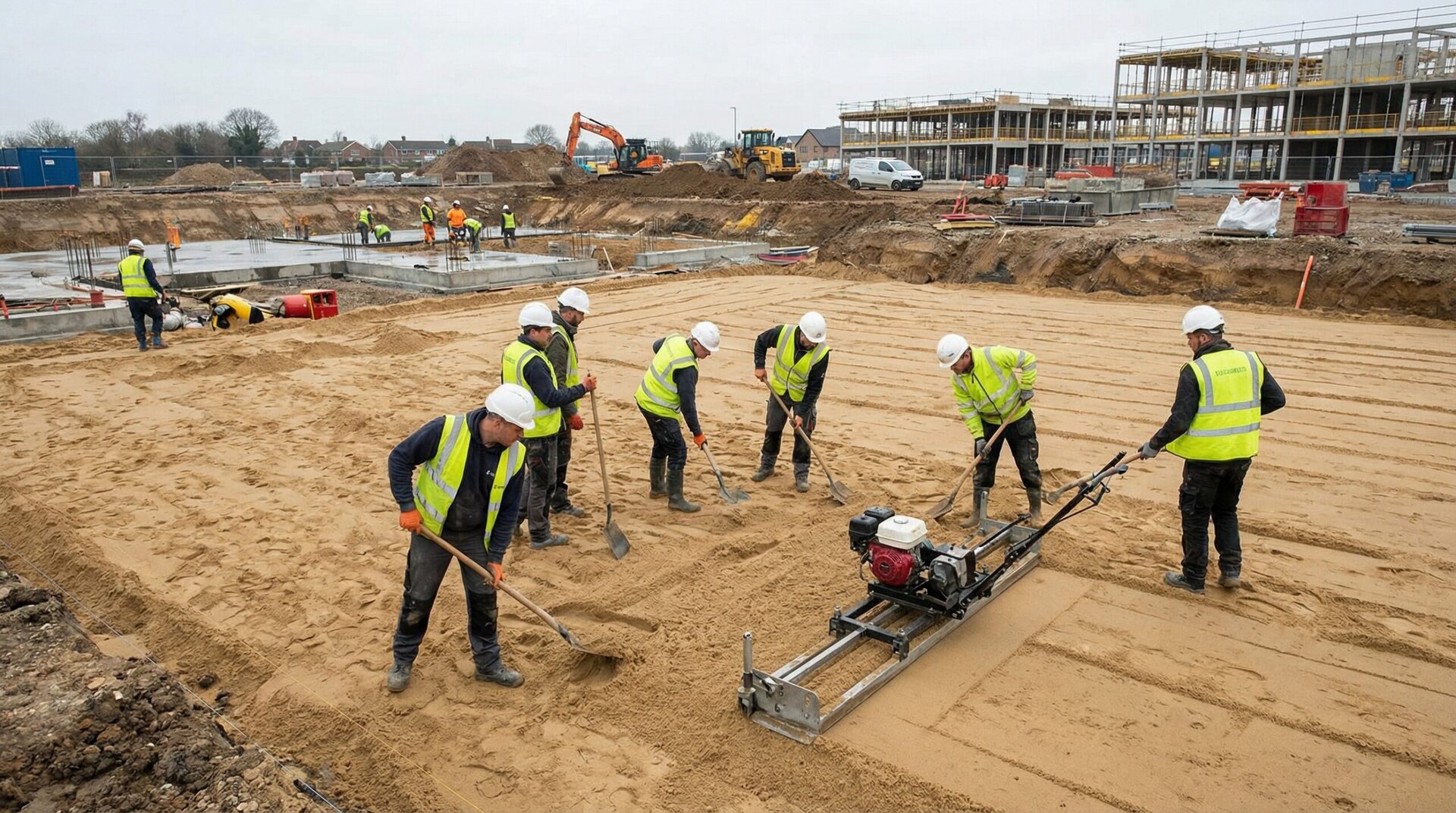
Understanding the right sand type for your construction project ensures optimal performance and cost efficiency. River sand works well for general applications, while M-sand provides superior strength for critical structures. Concrete sand handles heavy-duty structural work, masonry sand creates smooth finishes, and utility sand manages site preparation tasks economically. By matching sand properties to specific applications, you’ll achieve better results while avoiding common construction pitfalls that lead to structural problems later.
FAQ
What are the main types of sand used in construction?
What is the difference between river sand and M-sand?
Which type of sand is best for concrete foundations?
When should I use utility sand versus concrete sand?
Author: igor