Gravel Path Materials: Walkway Stone Size, Depth & Tons
A well-designed gravel path creates a natural, permeable walkway that enhances your landscape while controlling erosion. This guide explains what a gravel path is, which materials you need, how to design and lay out your path, how to install it step by step, and how to estimate the amount of gravel required. Whether you are creating a simple garden walkway or planning an intricate meandering path through your yard, use the sections below to find what you need.
See How to Build a Gravel Path
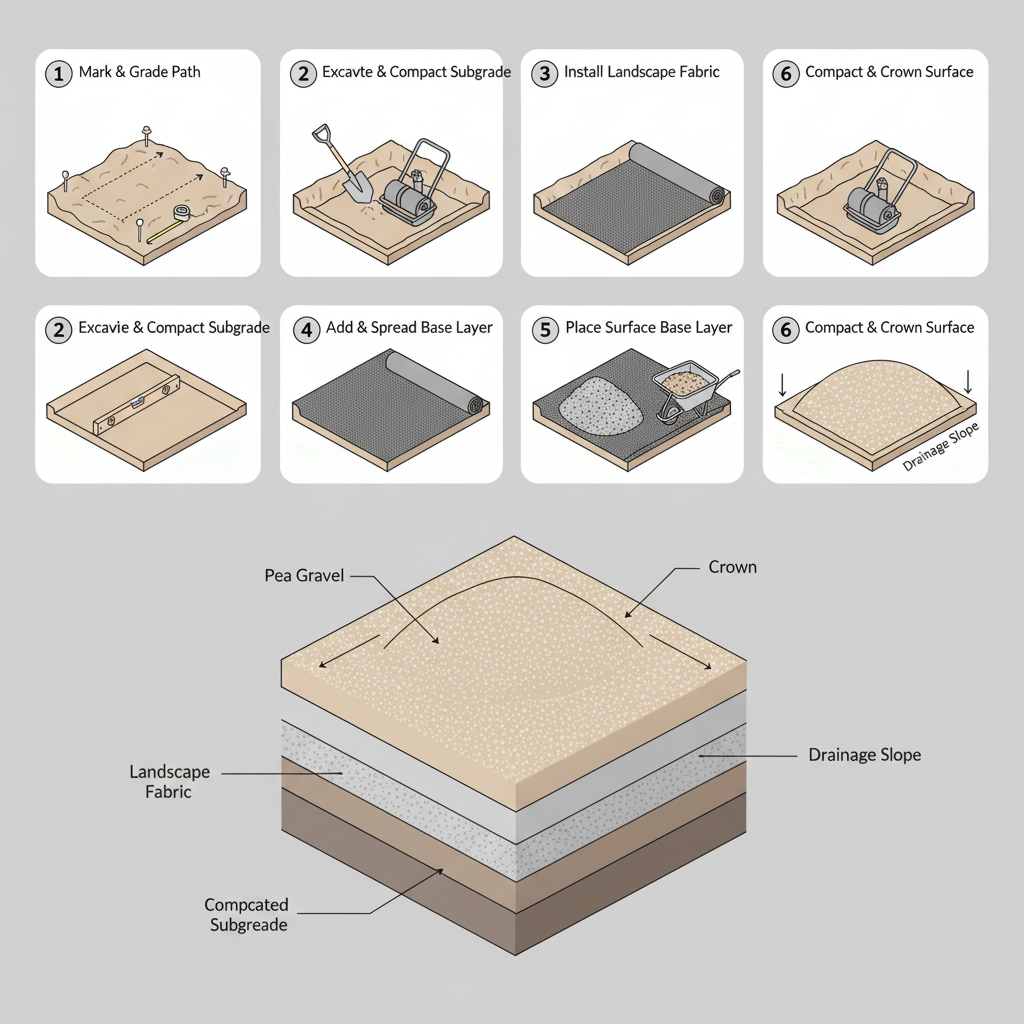
This visual guide illustrates the step-by-step installation sequence for building a durable gravel path, clarifying the order of operations from marking to finishing. It also breaks down the essential layered structure—from compacted subgrade to crowned surface—so you can see how each component contributes to stability and drainage. Understanding this sequence and layer build-up helps ensure your path is properly constructed for long-lasting performance.
Gravel for Paths: Best Materials, Depth, Cost & How to Build
A gravel path provides an attractive, low-maintenance walking surface that enhances your landscape while ensuring proper drainage. For optimal results, use 3/8 to 3/4 inch pea gravel at a 2-3 inch depth over landscape fabric. This combination creates a stable, comfortable walking surface that prevents weed growth and allows water to drain effectively. The layered construction with compacted subgrade, fabric, and proper crown ensures long-lasting performance with minimal maintenance.
How This Gravel Path Is Built (Layer-by-Layer System)
A gravel path is constructed as a layered system that provides a stable walking surface while allowing proper water drainage. The system begins with a compacted subgrade, followed by a layer of landscape fabric that prevents weeds and separates soil from gravel. The top layer consists of Pea Gravel, which creates a smooth, decorative surface that compacts well under foot traffic. A slight crown or slope is incorporated to ensure water runs off the path surface and prevents pooling or erosion.
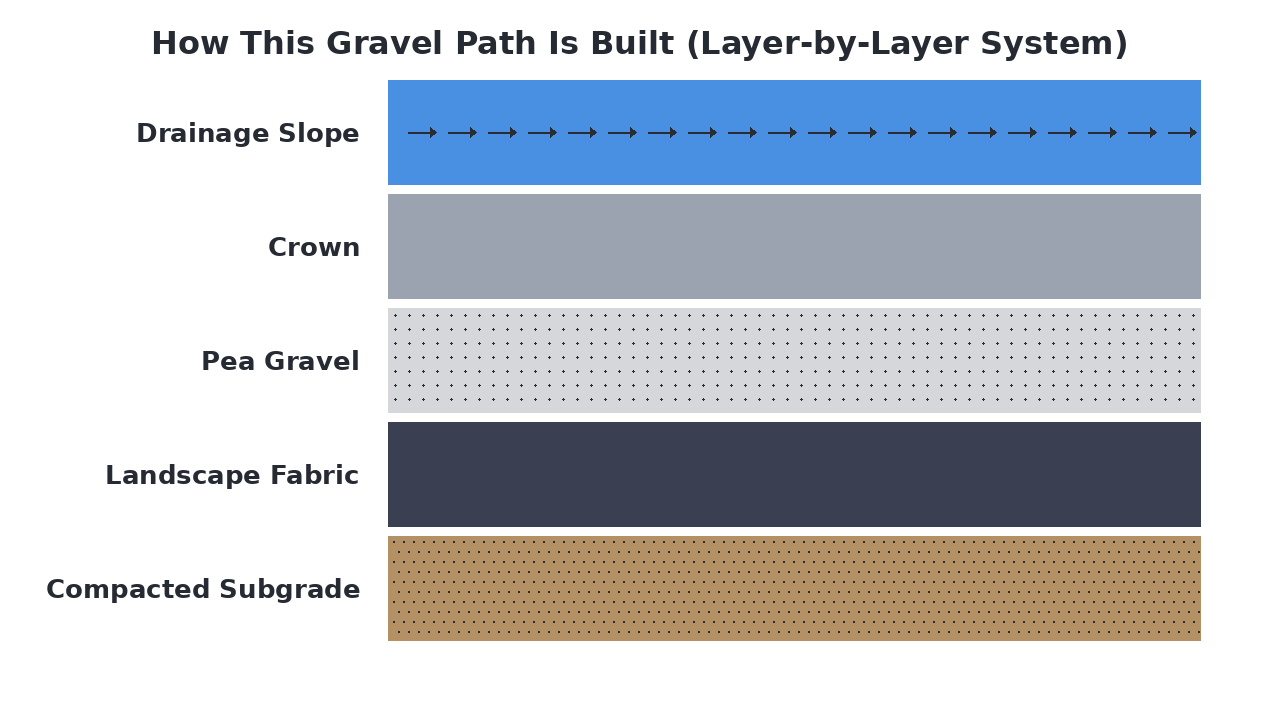
Materials Breakdown: What Each Layer Does
A durable gravel path is constructed as a layered system where each component serves a distinct purpose in providing stability and drainage. The materials are selected and placed in a specific order to ensure the path remains level, sheds water effectively, and resists shifting over time. This approach prevents common issues like rutting, puddling, and weed growth, creating a long-lasting and functional landscape feature.
Compacted Soil
The native soil that is leveled and firmly compacted to create a stable, solid base for the entire path structure.
Landscape Fabric
A geotextile barrier placed over the subgrade to prevent weeds from growing up and to separate the soil from the gravel layers.
Pea Gravel
A smooth, rounded aggregate layer that provides the primary walking surface and allows for good drainage.
View Pea Gravel →Surface Crown
The slight convex curve built into the path's surface to help rainwater run off to the sides rather than pooling.
Discharge Slope
The gentle, consistent downhill grade along the path's length that ensures water flows away and does not accumulate.
What Is a Gravel Path and Why Does It Matter?
A gravel path is a layered landscaping feature that creates a stable, permeable walking surface through your yard or garden. It matters because it provides an affordable, low-maintenance alternative to concrete or pavers while allowing rainwater to infiltrate naturally into the soil. Unlike solid surfaces that create runoff, gravel paths help manage stormwater and prevent erosion. They're also easier to install and modify than permanent hardscapes, making them ideal for DIY landscaping projects.
Common Types of Gravel Path Systems
Gravel paths come in several common varieties, each with distinct characteristics. Pea gravel offers a smooth, rounded texture that's comfortable to walk on but can shift underfoot. Decomposed granite compacts firmly for a stable surface but requires occasional refreshing. Crushed stone provides excellent drainage and stays in place well due to angular edges. River rock creates a decorative look but is less stable for walking surfaces.
- Smooth, rounded stones
- Comfortable barefoot walking
- Shifts easily underfoot
- Natural drainage capability
- Easy DIY installation
Best for: Low-traffic garden paths
- Compacts to firm surface
- Natural earthy appearance
- Excellent drainage properties
- Low maintenance needs
- Budget-friendly material
Best for: Medium-traffic walkways and paths
- Angular edges lock together
- Excellent stability and traction
- Superior drainage performance
- Resists shifting and washout
- Durable for heavier use
Best for: High-traffic or sloped paths
- Decorative rounded stones
- Natural water-worn appearance
- Poor walking stability
- Difficult to maintain level
- Best for visual accents
Best for: Decorative garden accents
When a Gravel Path Is the Best Solution
A decomposed granite gravel path is ideal when you need an affordable, permeable walking surface that balances stability with natural drainage. It's perfect for moderate foot traffic areas like garden walkways, backyard paths, or informal entryways where you want a rustic aesthetic without the permanence of concrete. Choose this option when managing stormwater runoff is important, as it allows rainwater to soak into the ground naturally. It's also an excellent DIY project for homeowners seeking a low-maintenance solution that can be easily modified over time.
Everything You Need to Build a Gravel Path
Constructing a durable gravel path requires a few specific materials and tools to ensure proper installation. You'll need foundational materials for a stable base, a weed barrier, and surface gravel for the walking layer. Essential tools will help you excavate, level, and compact each layer effectively.
- Road base or crushed stone for subgrade
- Landscape fabric
- Pea gravel or decomposed granite for surface
- Shovel
- Rake
- Hand tamper or plate compactor
- String line and stakes
- Wheelbarrow
- Hello Gravel (materials)
- Local equipment rental (compactor)
- A contractor supply store
What to Consider Before You Start
Before digging, consider these key planning steps to ensure your path is built correctly and lasts for years.
-
Path Layout and Width
Mark the exact route and width of your path, ensuring it's practical for its intended use and fits the space.
-
Drainage and Slope
Plan for a slight crown or cross-slope along the path's length to ensure water runs off and doesn't pool.
-
Soil Type and Excavation Depth
Check your soil's drainage and stability to determine the necessary excavation depth for the base layer.
-
Material Quantity and Delivery
Calculate the volume of base and surface gravel needed and arrange for delivery or pickup.
-
Edging and Border Options
Decide if you will install permanent edging to contain the gravel and define the path's edges.
How to Prepare the Ground for a Gravel Path
Begin by clearing the path area of all vegetation, rocks, and debris to create a clean work surface. Mark the desired path boundaries using stakes and string lines to establish the exact layout. Grade the subgrade to create a consistent drainage slope, typically 1-2% away from structures, then thoroughly compact the soil to form a stable, level foundation.
How a Gravel Path Works
A gravel path functions as a layered system where each component manages load and water flow. The compacted subgrade provides structural support, while landscape fabric prevents weed growth and separates layers. The gravel surface distributes foot traffic loads evenly while allowing rainwater to percolate through to the drainage slope below, preventing puddling and erosion.
How to Install a Gravel Path
Mark & Grade Path
Establish the path boundaries with stakes and string, then grade the area to create a consistent drainage slope away from structures.
Excavate & Compact Subgrade
Remove soil to the required depth and thoroughly compact the exposed subgrade to create a stable foundation layer.
Install Landscape Fabric
Lay landscape fabric over the compacted subgrade to suppress weeds and prevent gravel from mixing with soil.
Add & Spread Base Layer
Spread a layer of crushed stone or decomposed granite as a base material and compact it to enhance stability.
Place Surface Gravel
Spread the chosen surface gravel (pea gravel, river rock, etc.) evenly across the path to the desired depth.
Compact & Crown Surface
Compact the surface gravel and shape it with a slight crown in the center to promote water runoff to the sides.
Alternative Gravel Options for Gravel Paths
A stable, compactable, and natural-looking aggregate ideal for primary path surfaces.
View Product →Provides excellent stability and drainage, perfect for high-traffic or load-bearing paths.
View Product →A smooth, decorative option best for low-traffic areas or as a top dressing.
View Product →Large, smooth stones that are unstable for walking and best used for drainage or decoration.
View Product →A durable, economical recycled aggregate suitable for base or secondary path layers.
View Product →Homeowners have several aggregate choices for constructing a gravel path, each with different characteristics. Crushed stone and decomposed granite are top contenders due to their angular shapes, which lock together for a stable, walkable surface. Pea gravel and river rock offer a decorative look but are less stable underfoot. Ultimately, decomposed granite often wins for its perfect balance of firm compaction, natural appearance, and excellent drainage, making it a reliable choice for primary path material.
Common Gravel Path Mistakes (And How to Avoid Them)
Even with the right materials, a gravel path can fail if installed incorrectly. Avoiding these common pitfalls ensures your path remains functional and attractive for years. Here are the key mistakes to watch out for.
- Insufficient base layer
- Poor drainage planning
- No path crown
- Wrong gravel type
- Inadequate edging
How to Maintain a Gravel Path
Regular maintenance keeps a gravel path looking neat and prevents minor issues from becoming major repairs. Annually, rake the surface to redistribute gravel, fill in low spots or potholes with fresh material, and re-establish the center crown to ensure proper water runoff. Keep edges clean and defined, and promptly remove any weeds or debris that accumulate to maintain the path's integrity and appearance.