Does Pea Gravel Drain Well? Complete Guide to Drainage Performance
Get an estimate for your project in 60 seconds
 Your information is secure

Yes, pea gravel drains exceptionally well due to its rounded shape and natural void spaces between stones. The small, smooth stones create excellent permeability, allowing water to flow freely through gaps while preventing surface pooling. This makes pea gravel one of the most effective materials for drainage applications in landscaping and construction projects.
Understanding how pea gravel works for drainage can help you make informed decisions for your next project. Whether you’re planning a French drain, improving driveway drainage, or managing water flow in your garden, pea gravel offers proven performance backed by simple physics.
Quick Fact: Pea gravel typically allows water to drain at rates of 15-20 inches per hour, significantly faster than most soil types which drain at 0.5-2 inches per hour.
What makes pea gravel effective for drainage
Pea gravel consists of small, naturally rounded stones ranging from 1/8 inch to 3/8 inch in diameter. These stones are created through water erosion over time, which smooths their surfaces and creates their characteristic round shape. This natural process directly contributes to their drainage capabilities.
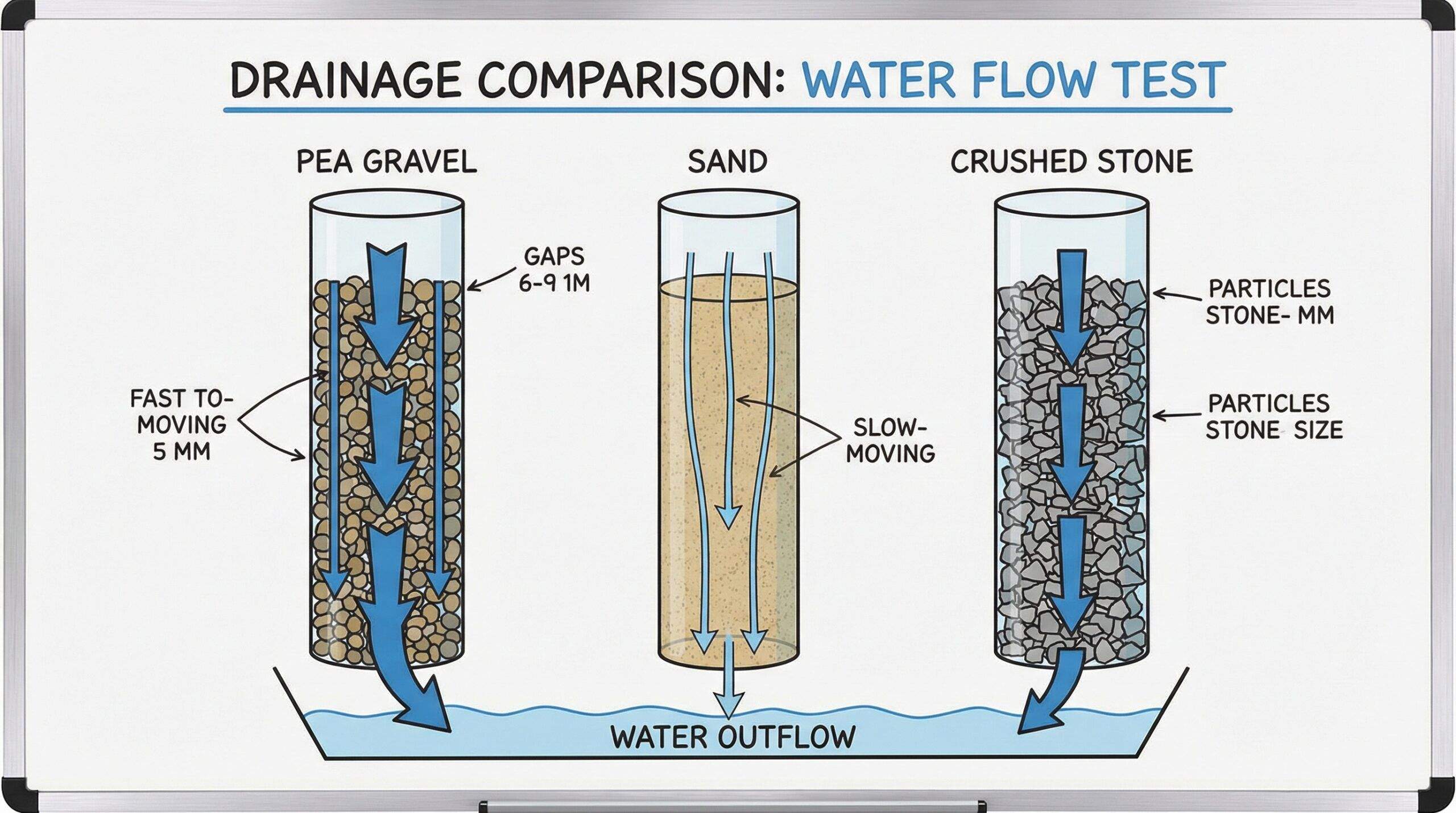
The rounded shape prevents stones from interlocking tightly, creating consistent void spaces throughout the material. These gaps allow water to move freely in multiple directions, unlike angular materials that can lock together and restrict flow. The smooth surfaces also reduce friction, helping water move more efficiently through the gravel bed.
Different types of pea gravel offer varying benefits. River pea gravel provides the smoothest texture and best drainage, while granite pea gravel offers superior durability for high-traffic areas. Recycled pea gravel presents an eco-friendly option that maintains good drainage properties while supporting sustainability goals.
How pea gravel compares to other drainage materials
When choosing drainage materials, understanding the differences between options helps ensure project success. Pea gravel stands out from alternatives in several key ways.
Sand, while commonly used, has smaller particles that tend to compact over time. This compaction reduces void spaces and limits drainage effectiveness. Sand also requires more maintenance as fine particles can wash away or clog drainage systems. Learn more about the differences in our pea gravel vs sand comparison guide.Crushed stone features angular edges that create strong interlocking but can impede water flow. While crushed stone provides excellent structural stability, its irregular shapes create inconsistent void patterns that may slow drainage compared to pea gravel’s uniform gaps. For a detailed analysis, see our pea gravel vs crushed gravel breakdown.
| Material | Particle Size | Drainage Rate | Compaction Risk | Best Use |
|---|---|---|---|---|
| Pea Gravel | 1/8″ – 3/8″ | Excellent | Low | General drainage |
| Sand | Fine particles | Poor | High | Leveling base |
| Crushed Stone | Varies | Good | Medium | Structural support |
Pro Tip: For optimal drainage performance, choose pea gravel with minimal fines content. Fines are small particles like dirt or clay that can clog void spaces and reduce water flow efficiency.
Best applications for pea gravel drainage
Pea gravel excels in numerous drainage applications where water management is essential. French drains represent one of the most common uses, where pea gravel creates a porous trench that captures and redirects excess water away from foundations or low-lying areas. Calculate exactly how much pea gravel you need for a French drain to ensure proper installation.
Driveway and walkway drainage benefits significantly from pea gravel installation. When properly installed beneath these surfaces, pea gravel prevents water accumulation that can cause cracking, settling, or ice formation during winter months.
Garden and landscape drainage applications include dry creek beds, rain gardens, and around retaining walls. Pea gravel allows plant roots to access moisture while preventing waterlogging that can damage vegetation. The material also provides attractive visual appeal while serving functional drainage purposes. For garden applications, check out our guide on the best pea gravel size for a garden bed.
Foundation drainage systems often incorporate pea gravel around building perimeters. This application helps direct water away from structures, reducing hydrostatic pressure and preventing basement flooding or foundation damage. Determine the best pea gravel size for a foundation to maximize drainage efficiency.
Installation tips for maximum drainage performance
Proper installation significantly impacts pea gravel drainage effectiveness. Start by excavating the drainage area to appropriate depth, typically 12-18 inches for most applications. Create a slight slope of at least 1% grade to encourage water flow toward desired outlets.
Layer installation improves long-term performance. Place larger stones or drainage rock at the bottom as a base layer, followed by geotextile fabric to prevent soil migration. Add pea gravel in 4-6 inch lifts, lightly compacting each layer to maintain void spaces while ensuring stability. Understanding what to put under pea gravel is crucial for long-term drainage success.
Avoid over-compaction during installation, as this reduces the void spaces essential for drainage. Use hand tamping or light mechanical compaction rather than heavy equipment that can crush stones together. Proper compaction maintains structural integrity while preserving drainage capabilities.

Installation Note: Always wash pea gravel before installation to remove dust and fines that can reduce drainage performance. Clean gravel maintains maximum void space for optimal water flow.
Consider combining pea gravel with perforated drainage pipes for enhanced performance in challenging conditions. The pipes collect and direct water while pea gravel provides filtration and additional flow capacity. This combination works particularly well in areas with heavy clay soil or high water tables. For specific drainage needs, explore what type of pea gravel is best for drainage.
Regular maintenance ensures continued drainage effectiveness. Remove debris that accumulates on the surface and check for signs of settling or compaction. Adding fresh pea gravel every few years maintains proper drainage levels and extends system life.
Pea gravel provides reliable, long-lasting drainage solutions for various applications when properly selected and installed. Its natural properties create effective water management while offering aesthetic appeal and low maintenance requirements. Whether you’re addressing existing drainage problems or planning new construction, pea gravel delivers proven performance that protects your property investment.

 Chance Kittrell
