A Practical Guide To Using Crusher Run for a Project Base
Published on: January 16, 2026
Get an estimate for your project in 60 seconds
 Your information is secure
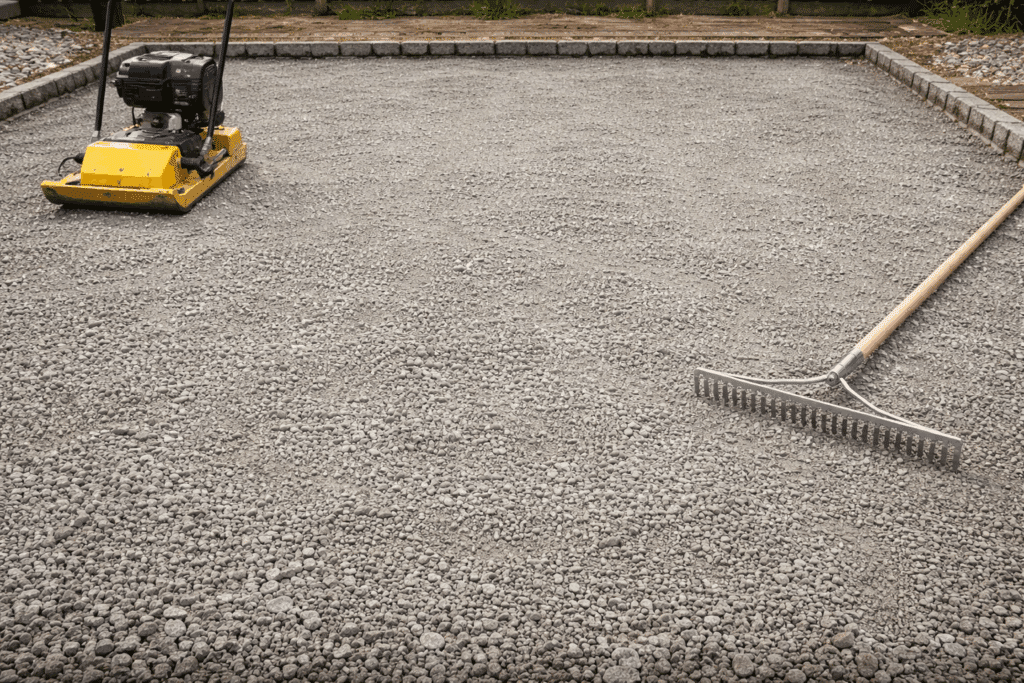
Quick Answer: Crusher run is a mixture of crushed stone and fine dust used to create a solid base for projects like driveways, patios, and walkways. Its primary benefit is its ability to compact into a dense, interlocking foundation that provides excellent stability and prevents settling over time.
Crusher run is the industry-standard material for creating a solid, compacted base for driveways, patios, and walkways. Its unique mixture of angular crushed stone and fine dust allows it to lock together, preventing the settling, shifting, and potholes common with improper foundations.
This guide gets right to the point, helping you decide if crusher run is right for your project and answering the key questions: what size to get, how much you need, and how to install it correctly.
Why Is Crusher Run Used as a Base?
The key to crusher run’s performance is its composition. It’s a blend of angular crushed stone (typically 3/4-inch to 2 inches) and fine stone dust. When compacted, the larger stones provide structure and the dust fills the voids, creating a dense, interlocking base with exceptional stability. This is why it is the go-to material for projects needing a firm foundation. Crusher run is typically sold by the ton or cubic yard.
Pro Tip: You may see crusher run listed as Graded Aggregate Base (GAB), Dense Grade Aggregate (DGA), or ABC Stone. These are regional names for the same product, so be sure you’re comparing equivalent materials when getting quotes.
What Projects Require a Crusher Run Base?
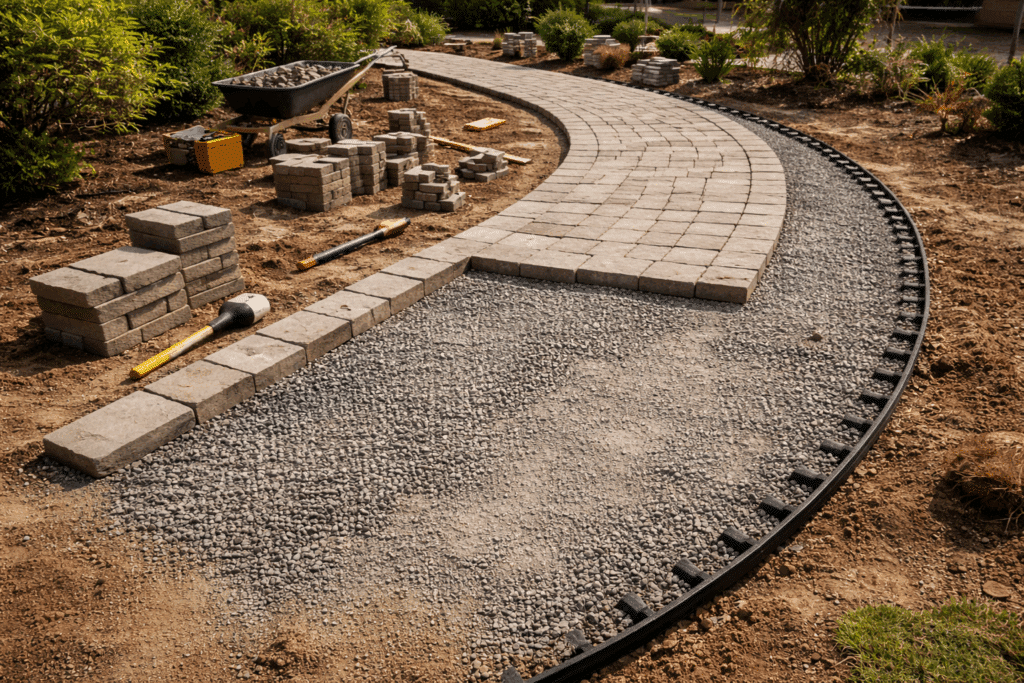
Crusher run is essential for any project that needs a stable, load-bearing foundation. It is the standard base material placed under gravel or paved driveways to prevent cracks and potholes. It also creates a level foundation for patios and walkways, ensuring pavers or flagstone won’t settle unevenly.
Beyond surface projects, it is also used for drainage solutions, as a backfill for utility trenches, and as the sub-base for unpaved roads and parking lots.
What Size Crusher Run Do I Need?
Choosing the right size is critical for performance. A smaller grade, like 3/4-inch to 1-inch minus, is ideal for projects that require a smoother surface. This size is typically used for patio bases, walkways, and as a top layer over a larger base.
For heavy-duty applications like driveways, road construction, or under concrete slabs, a larger grade like 1.5-inch to 4-inch minus provides greater structural strength. Some projects benefit from using both sizes, with the larger stone as the primary base and the smaller grade added on top for leveling.
How Do I Calculate How Much Crusher Run I Need?
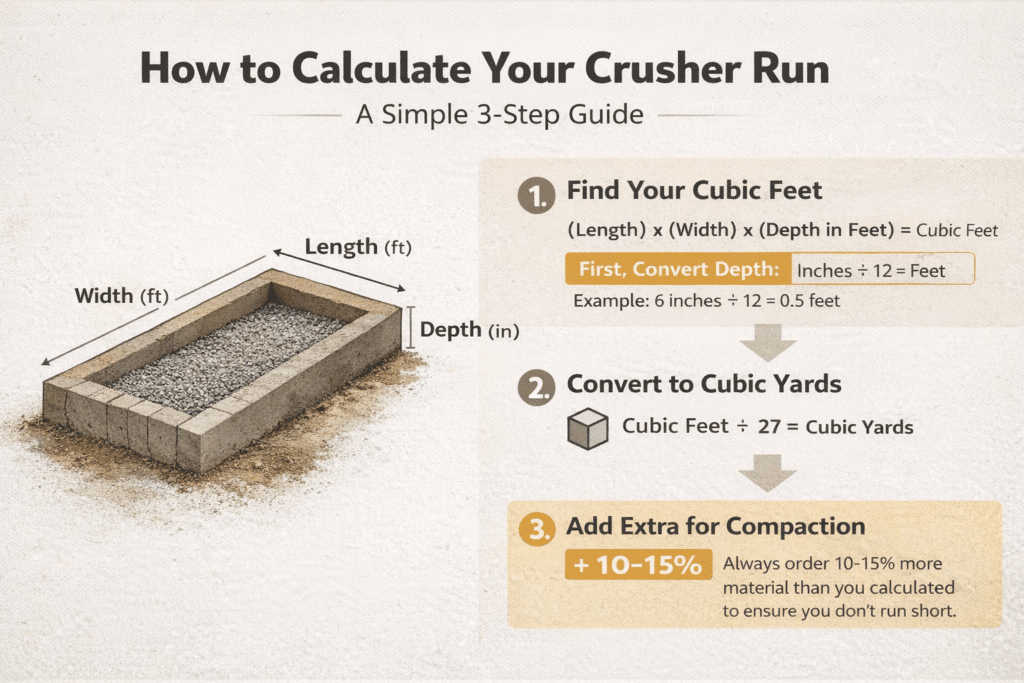
To calculate the amount of crusher run you need, first measure the length and width of your project area in feet. Next, determine your desired depth—usually 4 to 6 inches for most bases. Convert this depth into feet by dividing the number of inches by 12.
Multiply the length by the width and the depth (Length × Width × Depth) to find the total cubic feet. Finally, divide the cubic feet by 27 to get the number of cubic yards required.
Planning Tip: Always order 10-15% more crusher run than your calculation suggests. This extra material accounts for compaction and ensures you don’t run short.
How Does Crusher Run Compare to Other Materials?
While other materials can serve as a base, they don’t perform the same way. Clean gravel, which lacks fine particles, is excellent for drainage but will not compact into a stable foundation.
Recycled crushed concrete functions very similarly to natural crusher run and can be a more budget-friendly choice. Sand, on the other hand, lacks structural strength and should only be used as a thin bedding layer on top of a compacted crusher run base.
How Should I Install Crusher Run?
Proper installation is non-negotiable for a lasting foundation. You must spread and compact the material in layers no more than 4 inches thick. After spreading a layer, wet it slightly and pass over it multiple times with a plate compactor or roller.
Installation Tip: Compacting layers thicker than 4 inches will result in a weak, unstable foundation. This is the most common installation mistake.
You will know the base is properly compacted when water beads on the surface. Always grade the base with a slight slope to direct water away from buildings.
Where Can I Buy Crusher Run?
Crusher run is available from local quarries and aggregate suppliers. Pricing depends on your location, order quantity, and delivery distance. Most suppliers have minimum orders, often requiring full truckloads of 10-15 tons.
Delivery Note: A standard pickup truck can only safely haul about half a cubic yard. Since most projects require several tons, delivery is the most practical option.
Key Takeaways
- Crusher run is a mix of crushed stone and fines that compacts into a stable base for driveways, patios, and walkways.
- Use smaller 3/4-inch minus for level surfaces and larger 1.5-inch minus for heavy-duty bases.
- Calculate your required quantity by multiplying the project’s length, width, and depth, then order 10-15% extra.
- For best results, install and compact the material in 4-inch layers and ensure the final grade allows for proper drainage.
With your measurements and project plan ready, the next step is to find your material. Hello Gravel makes it easy to get instant online quotes for crusher run from suppliers in your area, compare prices, and schedule a delivery right to your site. Contact us today to get an estimate for your project.
Frequently Asked Questions About Crusher Run
How thick should a crusher run base be for a driveway?
For a standard residential driveway with cars and light trucks, a compacted base of 4 to 6 inches is sufficient. For areas that will support heavy vehicles like RVs or commercial trucks, a thicker base of 8 to 12 inches is recommended.
Can you put pavers directly on top of crusher run?
No, pavers should not be placed directly on crusher run. While crusher run provides the stable foundation, you must add a 1-inch layer of coarse sand (called bedding sand) on top. This sand layer allows you to make the small adjustments needed to get the pavers perfectly level.
Will weeds grow through crusher run?
A properly compacted crusher run base is very dense and will resist most weeds. However, some persistent weeds can eventually find their way through. For long-term prevention, it is best to install a high-quality geotextile fabric on the soil before laying down the crusher run.
With your measurements and project plan ready, the next step is to find your material. Hello Gravel makes it easy to get instant online quotes for crusher run from suppliers in your area, compare prices, and schedule a delivery right to your site.
Author: Chance Kittrell