Polymeric Sand for Pond Edging: Complete Guide to Safe Installation and Alternatives
Published on: December 12, 2025
Get an estimate for your project in 60 seconds
 Your information is secure

Creating a clean, stable edge around your backyard pond can feel like a puzzle. You want something that looks great, prevents erosion, and won’t harm your fish or pond liner. Polymeric sand can work for pond edging in specific situations, but it requires careful placement away from direct water contact and proper installation to avoid washout into your pond.
The key is understanding when polymeric sand makes sense for your pond and when other materials might serve you better. This guide walks you through the pros and cons, safe installation methods, and alternative edging materials to help you make the right choice for your specific pond setup.
Quick Answer: Polymeric sand works well for pond edging when used with pavers or stones positioned above the waterline, but should never be placed where it can wash directly into the pond water or constantly stay saturated.
What is polymeric sand and how does it work
Polymeric sand combines fine sand particles with polymer additives that activate when moistened with water. Once activated, these polymers bind the sand particles together, creating a flexible yet stable joint material commonly used between pavers and stones.
The binding process happens gradually as water activates the polymers, which then harden to lock sand particles in place. This creates joints that resist erosion, prevent weed growth, and maintain their shape under normal weather conditions.
Most polymeric sand products work best in applications where they stay relatively dry most of the time. Constant moisture or submersion can break down the polymer bonds, causing the sand to wash away or lose its binding properties.
For pond applications, this means polymeric sand should only be used in areas that stay above the normal waterline and won’t experience constant splashing or overflow conditions.
Can you safely use polymeric sand around a pond
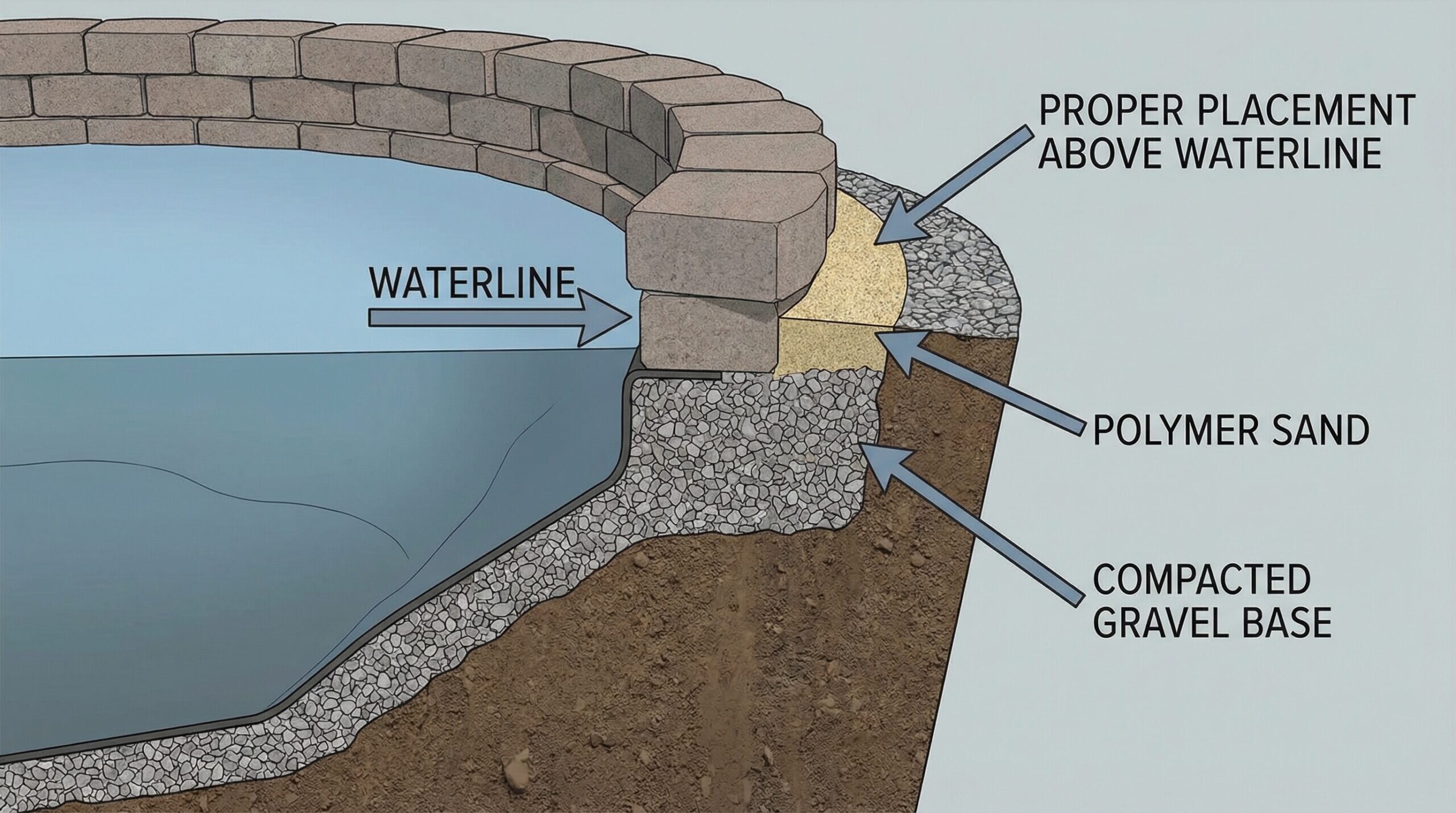
Yes, you can use polymeric sand around a pond, but placement and application method matter significantly for both safety and effectiveness. The sand must stay above the waterline and away from areas where it might wash into the pond water.
When polymeric sand works well for pond edging:
– Between pavers or stones positioned at least 6 inches above normal water level
– In formal pond designs with raised edges and controlled drainage
– Around ponds with stable water levels and minimal splashing
– When used with proper liner protection and base preparation
When to avoid polymeric sand near ponds:
– Directly at the waterline where constant moisture occurs
– In natural or wildlife ponds where flexible, plant-based edges work better
– Around ponds with frequent water level changes or overflow situations
– Near steep banks where erosion might carry sand into the water
The biggest safety concern involves preventing polymeric sand from entering your pond water, where it could affect water chemistry or harm fish and aquatic plants.
Comparing pond edging materials
Different edging materials offer distinct advantages depending on your pond style, maintenance preferences, and budget. Understanding these options helps you choose the best approach for your specific situation.
| Material | Durability | Maintenance | Wildlife Friendly | Best Use Case |
|---|---|---|---|---|
| Natural stone | High | Low | Excellent | Natural ponds, wildlife areas |
| Polymeric sand + pavers | Medium | Medium | Good (when properly placed) | Formal designs, clean lines |
| Timber/logs | Medium | High | Excellent | Rustic, natural styles |
| Plant edges | High | Medium | Excellent | Wildlife ponds, natural look |
Natural stone edges offer the most flexibility and wildlife-friendly options, while polymeric sand with pavers creates the cleanest, most formal appearance. Timber provides a rustic look but requires regular maintenance to prevent rot.
Plant-based edges work exceptionally well for wildlife ponds and natural designs, offering erosion control through root systems while providing habitat for beneficial insects and small animals. For those considering alternative materials, volcanic rock offers excellent drainage and aesthetic appeal for pond edging projects.
Pro Tip: Many successful pond edges combine multiple materials, using polymeric sand with pavers for seating areas while transitioning to natural stone or plants in other sections.
Step-by-step installation for polymeric sand pond edging
Proper installation ensures your polymeric sand edging stays stable and doesn’t contaminate your pond water. This process requires careful attention to drainage and placement relative to your pond’s waterline.
Tools and materials needed:
– Polymeric sand (calculate 1.5 bags per 100 square feet of joints)
– Pavers or flat stones for the actual edge
– Compactable base material (crushed stone or sand)
– Plate compactor or hand tamper
– Stiff broom and gentle spray nozzle
Installation process:
Start by marking your edge line at least 6 inches above your pond’s normal water level. Excavate the area to accommodate your base material, pavers, and proper drainage away from the pond.
Install a compacted base layer 2-3 inches thick, ensuring it slopes slightly away from the pond to direct water runoff. Set your pavers or stones on this base, checking that joints between pieces are consistent and properly aligned. If you’re working with a patio base adjacent to your pond, the same principles apply for proper drainage and stability.
Sweep polymeric sand into all joints, filling them completely but avoiding excess sand on paver surfaces. Use a plate compactor to settle the sand, then add more sand as needed to fill any low spots.
Activate the sand with a gentle mist from your hose, working in small sections to ensure even moisture distribution. Avoid overwatering, which can wash the polymers away before they set properly.
Allow 24-48 hours for full curing before heavy use, and avoid rain or irrigation during this period.
Critical Warning: Never install polymeric sand during rainy weather or when rain is forecast within 24 hours, as this can wash uncured polymers into your pond.
Design ideas that work with polymeric sand
Polymeric sand works best in formal or semi-formal pond designs where clean lines and stable joints enhance the overall aesthetic. These design approaches help you integrate polymeric sand effectively while maintaining pond safety.
Raised formal edging creates a clear boundary between your pond and surrounding landscape. Use rectangular pavers or cut stone set 8-12 inches above water level, with polymeric sand joints providing clean lines and weed prevention. This approach works particularly well when you’re also creating raised garden beds nearby for a cohesive landscape design.
Stepped stone terraces work well for sloped areas around ponds. Install flat stones in graduated levels, using polymeric sand between stones on the upper levels while transitioning to loose stone or plants closer to the water.
Mixed material borders combine the stability of polymeric sand joints with the natural appeal of varied textures. Use polymeric sand with pavers for high-traffic areas like seating spots, then transition to loose stone or planted areas for a more natural feel. Consider incorporating river rock for visual interest in transitional zones.
Pathway integration extends your pond edging into connecting walkways, creating a cohesive design throughout your landscape. Polymeric sand joints in pathways can match those used in pond edging for visual continuity. If you’re planning garden paths that connect to your pond area, polymeric sand provides excellent joint stability.

Remember that successful pond edging often combines multiple approaches rather than relying on a single material throughout the entire perimeter.
When you’re ready to start your pond edging project, Hello Gravel provides high-quality polymeric sand and all the base materials you need for professional results. Our delivery service brings materials directly to your project site, and our team can help you calculate exactly what you need for your specific design. Get started with a quick quote to see how we can support your pond edging goals.
FAQ
Can polymeric sand be used directly next to a pond liner?
Is polymeric sand safe for fish and pond wildlife?
Will polymeric sand wash out from constant pond splashing?
What’s the best alternative to polymeric sand for pond edging?
Author: igor