
Best Surface Materials for Bocce Ball Courts (Is Sand a Good Option?)
Guide handoff
Want help applying this guide to your project?
Share your ZIP and what you need help with. We'll use this guide as context when we follow up.
- 1 This guide gives us the context you were reading.
- 2 Ask about pricing, material choice, delivery timing, or quantity.
- 3 Keep it broad if you are still figuring out the project.
Choosing the right surface for your bocce ball court directly impacts ball roll, speed, and long-term maintenance costs. Whether you’re considering sand for its affordability or exploring premium options like crushed oyster shell, the surface material determines how well your court performs during gameplay.
You can use sand for a bocce ball court, but it’s not the top choice for consistent, tournament-style play. Crushed stone and oyster shell flour provide better ball roll and durability, while sand works best for casual backyard courts where budget matters more than professional-level performance.
Quick Tip: The ideal bocce court surface should be firm enough for predictable ball roll but not so hard that balls bounce excessively.
What Makes a Good Bocce Ball Court Surface?
Before comparing specific materials, you need to understand what creates an excellent playing experience. The surface affects every aspect of gameplay, from ball speed to maintenance requirements.
Firmness and smoothness are essential for predictable ball roll. A good surface allows balls to travel in straight lines without unexpected bounces or direction changes. You want enough firmness to prevent balls from sinking but not so much hardness that they bounce like on concrete.
Proper drainage keeps your court playable after rain and prevents standing water that can damage the surface. Materials that compact well while allowing water to flow through perform best in various weather conditions.
Maintenance requirements vary significantly between materials. Some surfaces need weekly raking and leveling, while others can go months with minimal care. Consider how much time you want to spend maintaining your court when making your choice.
Common Bocce Ball Court Surface Options
Several materials work well for bocce courts, each with distinct advantages depending on your priorities and budget. Understanding the basics of each option helps you make an informed decision.
Crushed Oyster Shell and Oyster Shell Flour
Crushed oyster shell represents the traditional gold standard for serious bocce players. This material creates an authentic playing surface that many consider ideal for competitive play.
The typical construction uses a base of decomposed granite topped with crushed oyster shell and finished with fine oyster shell flour. This combination provides excellent drainage while maintaining the firm, smooth surface that bocce players prefer.
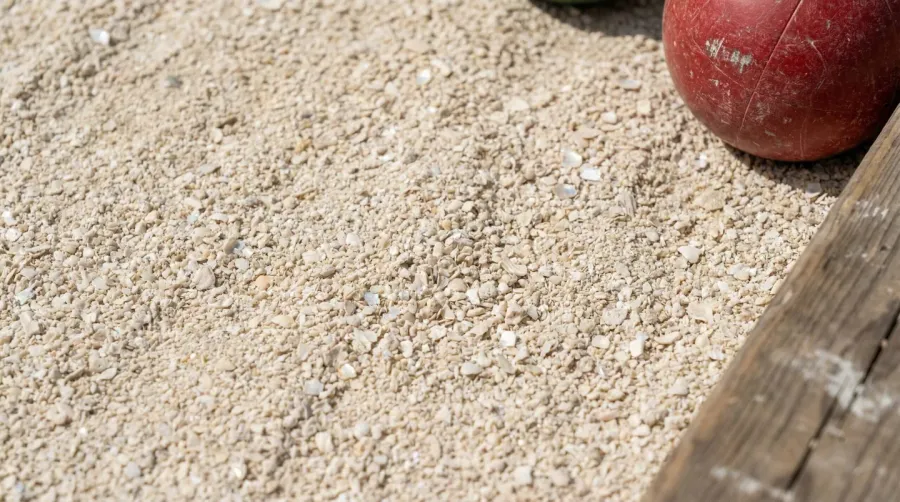
Maintenance involves periodic raking to keep the surface level and occasional top-ups of shell flour. The material can become dusty in very dry conditions, and costs tend to be higher than alternatives, especially in areas where oyster shell must be imported.
Crushed Stone and Decomposed Granite
Crushed stone offers excellent durability and creates a firm, stable playing surface when properly installed over a compacted base. This option provides more consistent ball roll than loose sand while remaining more affordable than premium materials.
The stone compacts well, reducing shifting during play and minimizing maintenance compared to loose-fill materials. You get better long-term durability and more predictable gameplay than with sand-based surfaces.
The texture feels slightly coarser than oyster shell flour but still provides good playability for most recreational and competitive situations. Using crushed stone for a bocce ball court surface works particularly well in climates with frequent rain due to its excellent drainage properties.
Sand and Pea Gravel
Sand remains popular for backyard bocce courts due to its low cost and wide availability. Many casual players appreciate the soft feel underfoot and natural appearance that sand provides.
The main advantages include affordability, easy DIY installation, and environmental friendliness. Sand feels comfortable for players who might fall and creates an attractive, natural-looking court that blends well with landscape designs.
However, sand moves easily during play, requiring frequent raking and leveling. It can track outside the court area, creating cleanup issues. The loose material also provides less predictable ball roll compared to firmer surfaces, and hygiene can become a concern as sand harbors debris and bacteria more readily than solid surfaces.
Important Note: Regular beach sand is typically too soft for optimal bocce play and should be used over a compacted base for better stability.
Artificial Turf Bocce Courts
Synthetic turf with appropriate infill offers a modern solution that combines excellent playability with minimal maintenance. The surface provides smooth, fast, consistent ball roll while handling weather conditions better than most natural materials.
Artificial turf requires the lowest ongoing maintenance among common options and offers the longest lifespan, though it demands higher upfront investment. This option works particularly well for rooftop courts, resorts, or facilities that need clean, multi-use spaces.
The consistent surface eliminates the raking and leveling required with loose-fill materials, making it attractive for high-traffic installations or situations where maintenance time is limited.
Can You Use Sand for a Bocce Ball Court Surface?
Yes, you can definitely use sand for a bocce ball court, especially for casual or budget-friendly builds. Sand works well for recreational projects when you prioritize low cost and comfortable play over tournament-level performance standards.
The key is choosing the right type of sand and installation method. Straight beach sand or play sand is typically too soft and shifting for optimal gameplay. You’ll get better results using sand over a properly compacted base, ideally with some mixing or grading to improve firmness.
When Sand Makes Sense for Your Court
Sand works best for recreational backyard courts where families and friends play casually. If you want an affordable surface that feels comfortable underfoot and creates a natural appearance, sand can be an excellent choice.
Consider sand when budget constraints are significant, when you enjoy regular maintenance activities like raking, or when you’re building a temporary or experimental court to test interest before investing in premium materials.
Limitations to Consider
Sand requires more frequent maintenance than firmer surfaces. You’ll need to rake and level the surface regularly to maintain consistent playability. The loose material can track outside the court area, potentially creating cleanup issues around your property.
Ball roll tends to be slower and less predictable on sand compared to firmer surfaces like crushed stone or oyster shell. This affects gameplay quality, especially for players who want consistent, competitive-level performance.
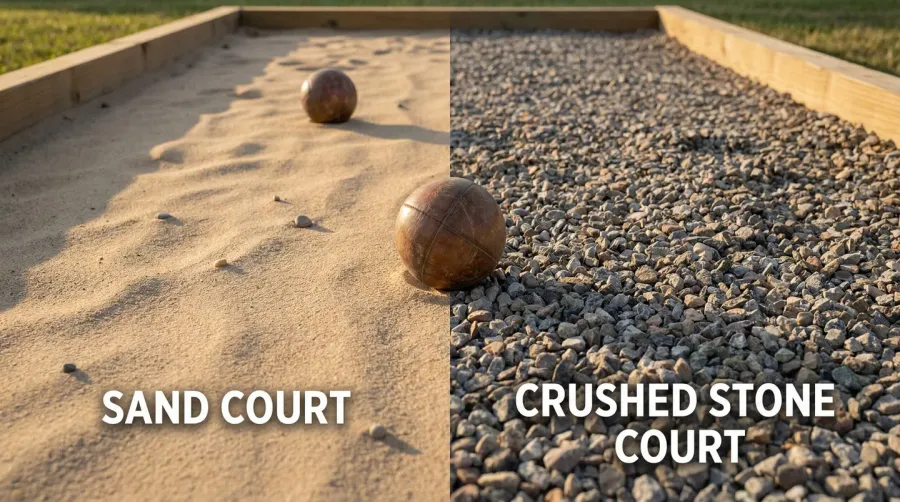
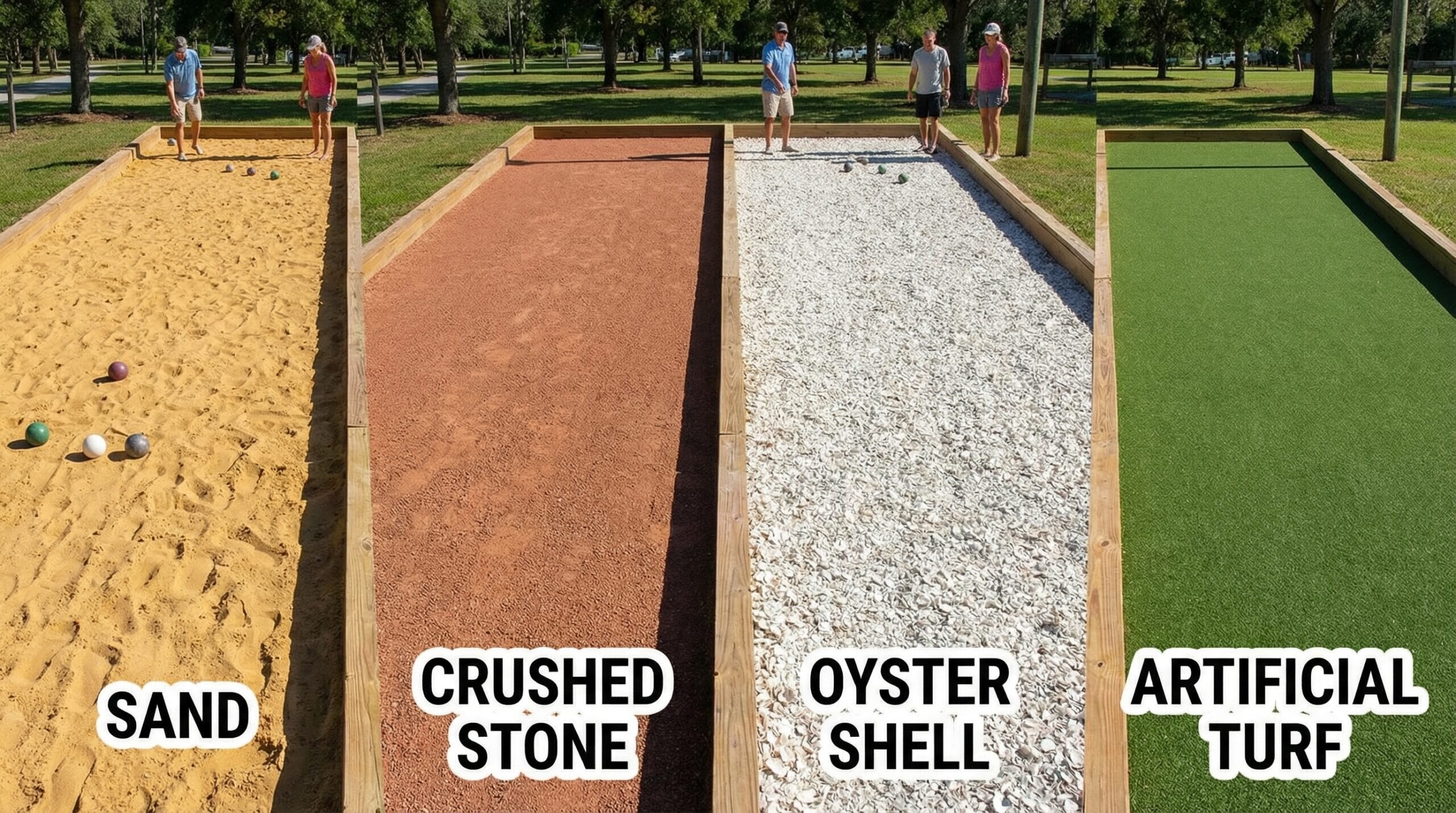
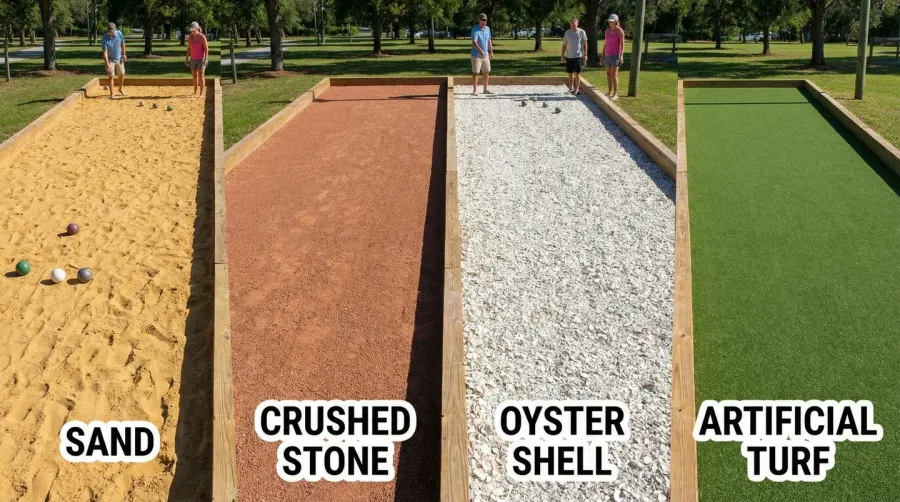
Sand vs Crushed Stone vs Oyster Shell Comparison
| Material | Playability | Maintenance | Initial Cost | Drainage | Best For |
|---|---|---|---|---|---|
| Sand | Good for casual play | High (weekly raking) | Low | Moderate | Budget builds |
| Crushed Stone | Excellent consistency | Low (occasional leveling) | Moderate | Excellent | Most courts |
| Oyster Shell | Premium tournament feel | Moderate (periodic raking) | High | Excellent | Serious players |
| Artificial Turf | Consistent, fast | Very low | High | Excellent | Low maintenance |
For most bocce court projects, crushed stone provides the best balance of playability, maintenance, and cost. Oyster shell offers premium performance for serious players willing to invest more, while sand works well for budget-conscious recreational builds.
Pro Tip: Consider your long-term maintenance preferences when choosing materials, as this often matters more than initial cost differences.
Recommended Bocce Ball Court Build-Up
Proper construction starts with excavation to about 4-6 inches deep, depending on your chosen surface material and local drainage needs. The base layer is crucial regardless of your surface choice.
Base Layers for Good Drainage
Install a compacted base of crushed stone or decomposed granite about 3-4 inches thick. This provides stability and drainage while preventing the surface material from mixing with underlying soil. Using decomposed granite as a sub-base at this stage determines long-term court performance.
Surface Layer Guidelines
For sand courts, apply 2-3 inches of sand over the compacted base. Crushed stone surfaces typically need 1-2 inches of final material over the base layer. Oyster shell courts work best with 2-3 inches of crushed shell topped with 1/2 inch of shell flour.
Artificial turf requires professional installation over a precisely graded base, while clay surfaces need specialized preparation and ongoing professional maintenance.
How to Choose the Right Surface for Your Project
Your decision should balance several practical factors that affect both immediate enjoyment and long-term satisfaction with your bocce court investment.
Consider your local climate first. Areas with heavy rainfall benefit from materials with excellent drainage like crushed stone or artificial turf. Dry, dusty climates might make oyster shell less appealing due to dust issues.
Think honestly about maintenance preferences. If you enjoy weekend court care and don’t mind regular raking, sand or oyster shell work well. For minimal maintenance, consider crushed stone or artificial turf despite higher initial costs.
Budget affects both upfront and ongoing costs. Sand offers the lowest initial investment but requires more time and occasional material replacement. Artificial turf costs more initially but saves money on long-term maintenance and replacement.
Match the surface to your intended use. Casual family play works fine with sand, while competitive players or league use benefits from crushed stone or oyster shell consistency. If you’re also considering other outdoor projects, you might want to explore options like limestone for bocce ball court surfaces or bluestone alternatives.
Where to Buy Bocce Ball Court Sand and Surface Materials
Hello Gravel provides the bulk aggregate materials you need for professional bocce court construction. We supply various grades of crushed stone, sand blends suitable for bocce courts, and base materials for proper drainage and stability.
Our delivery service brings materials directly to your project site, and our team can help you estimate quantities based on your court dimensions and chosen surface type. We understand the specific requirements for recreational surfaces and can recommend the right gradations for optimal performance.
Getting started is simple. Contact us with your court size, location, and preferred surface material for a detailed estimate that includes delivery costs. We’ll help you choose materials that match your performance expectations and maintenance preferences.
Whether you’re building a casual backyard court or a more serious playing surface, proper material selection makes the difference between a court you’ll love for years and one that becomes a maintenance headache. The right surface enhances every game while fitting your budget and lifestyle needs.
FAQ
Can you use sand for a bocce ball court surface?
Yes, you can use sand for a bocce ball court, especially for casual backyard play. However, sand requires more frequent maintenance than firmer surfaces and provides less predictable ball roll compared to crushed stone or oyster shell. Sand works best when installed over a compacted base and is ideal for budget-conscious recreational builds.
What is the best surface material for a bocce ball court?
Crushed stone provides the best balance of playability, maintenance, and cost for most bocce courts. Oyster shell flour offers premium tournament-level performance, while artificial turf provides consistent play with minimal maintenance. The best choice depends on your budget, maintenance preferences, and intended level of play.
How deep should the surface material be on a bocce ball court?
For sand courts, apply 2-3 inches of sand over a compacted base. Crushed stone surfaces typically need 1-2 inches of final material over the base layer. Oyster shell courts work best with 2-3 inches of crushed shell topped with 1/2 inch of shell flour. All surfaces require a 3-4 inch compacted base for proper stability and drainage.
How much maintenance does a bocce court surface require?
Sand courts require weekly raking and leveling to maintain consistent playability. Crushed stone surfaces need occasional leveling and are low maintenance overall. Oyster shell courts require moderate maintenance with periodic raking and top-ups of shell flour. Artificial turf requires the least maintenance, needing only occasional brushing and debris removal.