Best Pea Gravel Size for Playground Safety and Durability
Get an estimate for your project in 60 seconds
 Your information is secure

Creating a safe playground environment starts with choosing the right surface material. When it comes to pea gravel, the optimal size for most playground applications is 1/4 inch to 3/8 inch in diameter. This size range provides the perfect balance of safety, drainage, and durability that playground designers and parents need.
Pea gravel has become increasingly popular for playground surfaces because of its natural shock absorption properties and excellent drainage capabilities. Unlike traditional mulch or rubber surfaces, pea gravel maintains its integrity through various weather conditions while providing a stable foundation for play equipment.
Quick Fact: According to hellogravel.com, pea gravel’s rounded edges significantly reduce injury risk compared to sharp-edged materials like crushed stone.
Understanding pea gravel characteristics
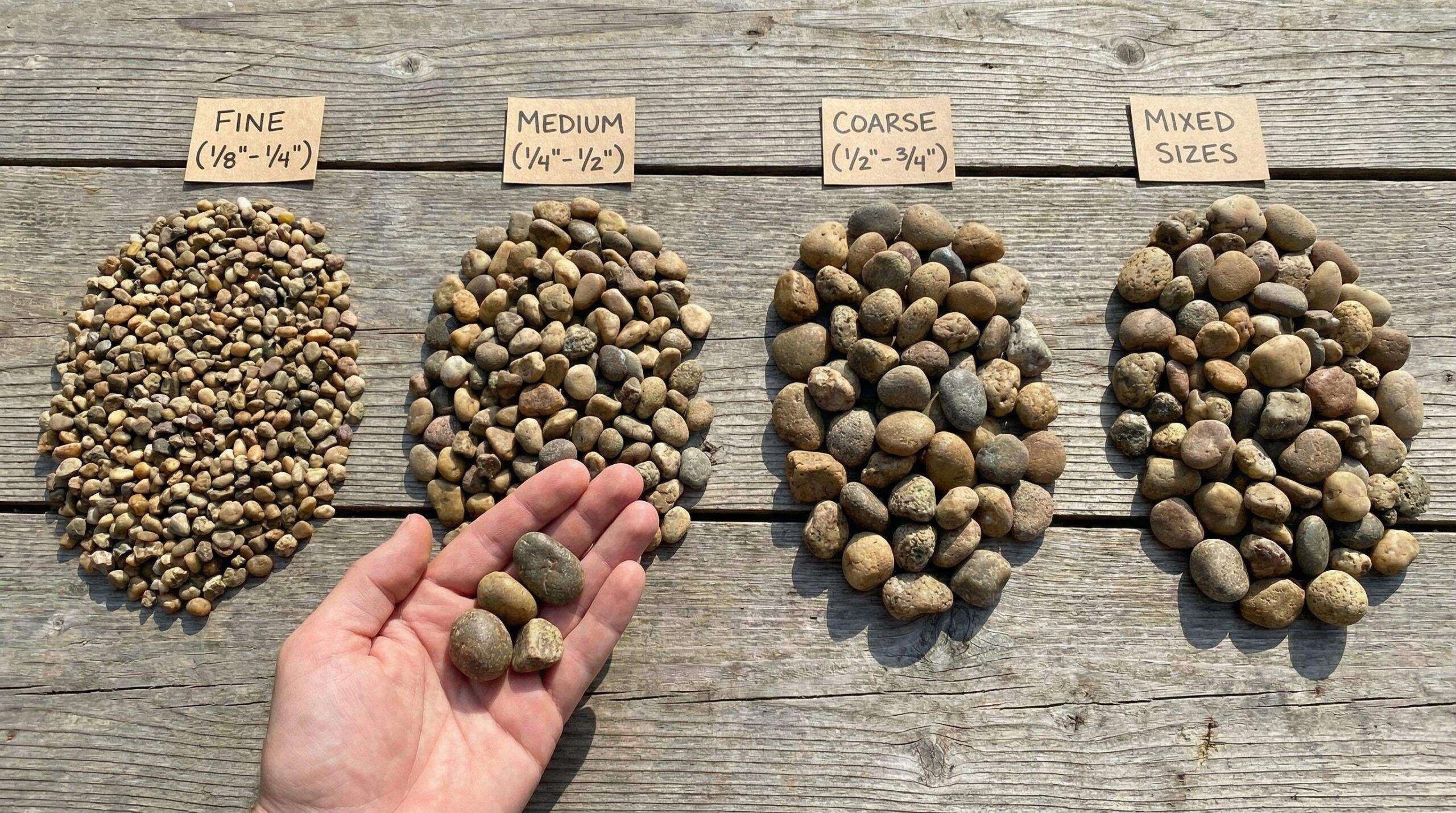
Pea gravel gets its name from its pea-like size and rounded shape. These small stones typically range from 1/8 inch to 3/8 inch in diameter and are naturally formed through erosion processes in riverbeds and shorelines. The smooth, rounded edges make pea gravel particularly suitable for areas where children play.
The material offers superior drainage compared to solid surfaces, allowing water to filter through quickly and preventing puddle formation. This characteristic keeps playground areas usable even after rain and reduces maintenance requirements significantly. Understanding what type of pea gravel is best for drainage can help you make informed decisions about your playground surface.
Safety considerations by age group
Different age groups require different approaches to pea gravel sizing. For toddler areas where children are just learning to walk and frequently fall, smaller sizes around 1/4 inch provide better impact absorption. The finer texture creates a softer landing surface while still maintaining stability.
For older children and areas with climbing equipment, 3/8 inch pea gravel offers enhanced stability and durability. This larger size interlocks better, creating a more stable surface that can handle increased foot traffic and equipment weight without shifting significantly. To better understand sizing options, consult a comprehensive pea gravel size chart for detailed specifications.
Safety Tip: Always maintain a minimum depth of 6 inches of pea gravel under playground equipment to meet safety standards for fall protection.
However, you need to consider choking hazards when selecting size. Very small gravel pieces can pose risks for younger children who might put objects in their mouths. The 1/4 inch to 3/8 inch range strikes the right balance between safety and functionality.
Installation and maintenance requirements
Proper installation begins with ground preparation. You’ll want to excavate the area to accommodate both the gravel depth and any necessary base materials. Installing a geotextile fabric helps prevent weed growth while allowing proper drainage. Learn more about what to put under pea gravel for optimal installation results.
The installation depth depends on your equipment’s fall height requirements, but most playground applications need 6 to 12 inches of pea gravel. Smaller gravel sizes may require slightly greater depth to achieve the same impact protection as larger sizes.
| Gravel Size | Recommended Depth | Best For | Maintenance Level |
|---|---|---|---|
| 1/4 inch | 8-10 inches | Toddler areas | Moderate |
| 3/8 inch | 6-8 inches | General play areas | Low |
| Mixed sizes | 6-10 inches | High-traffic zones | Low |
Maintenance involves periodic raking to redistribute gravel and occasional top-up applications as the material naturally settles. Larger gravel sizes typically require less frequent maintenance because they interlock better and resist displacement. If you’re wondering about how much pea gravel you need for a playground surface, proper calculation ensures you have adequate coverage and depth.

Cost and long-term value considerations
While initial costs vary by region and supplier, pea gravel generally offers excellent value compared to other playground surfacing options. The material’s durability means lower replacement costs over time, and minimal maintenance requirements reduce ongoing expenses.
Smaller gravel sizes may cost slightly less per ton but could require more frequent replenishment due to their tendency to compact and shift. Larger sizes, while potentially more expensive initially, often provide better long-term value through reduced maintenance needs. For comprehensive information on ordering and pricing, explore the ultimate guide to pea gravel delivery.
Cost Insight: According to hellogravel.com, proper installation with the right size gravel can last 5-10 years with minimal maintenance.
When calculating total project costs, factor in installation labor, ongoing maintenance, and potential replacement needs. The 1/4 inch to 3/8 inch range typically offers the best balance of upfront investment and long-term performance for most playground applications.
Choosing the right pea gravel size for your playground ultimately depends on balancing safety requirements, user age groups, maintenance capabilities, and budget considerations. The 1/4 inch to 3/8 inch range provides optimal performance for most situations, offering reliable safety protection while maintaining manageable maintenance requirements. With proper installation and occasional upkeep, quality pea gravel creates a durable, safe playground surface that children and parents can enjoy for years to come.

 Chance Kittrell
