Complete Stone Size Chart Guide for Every Project Type
Published on: February 11, 2026
Get an estimate for your project in 60 seconds
 Your information is secure
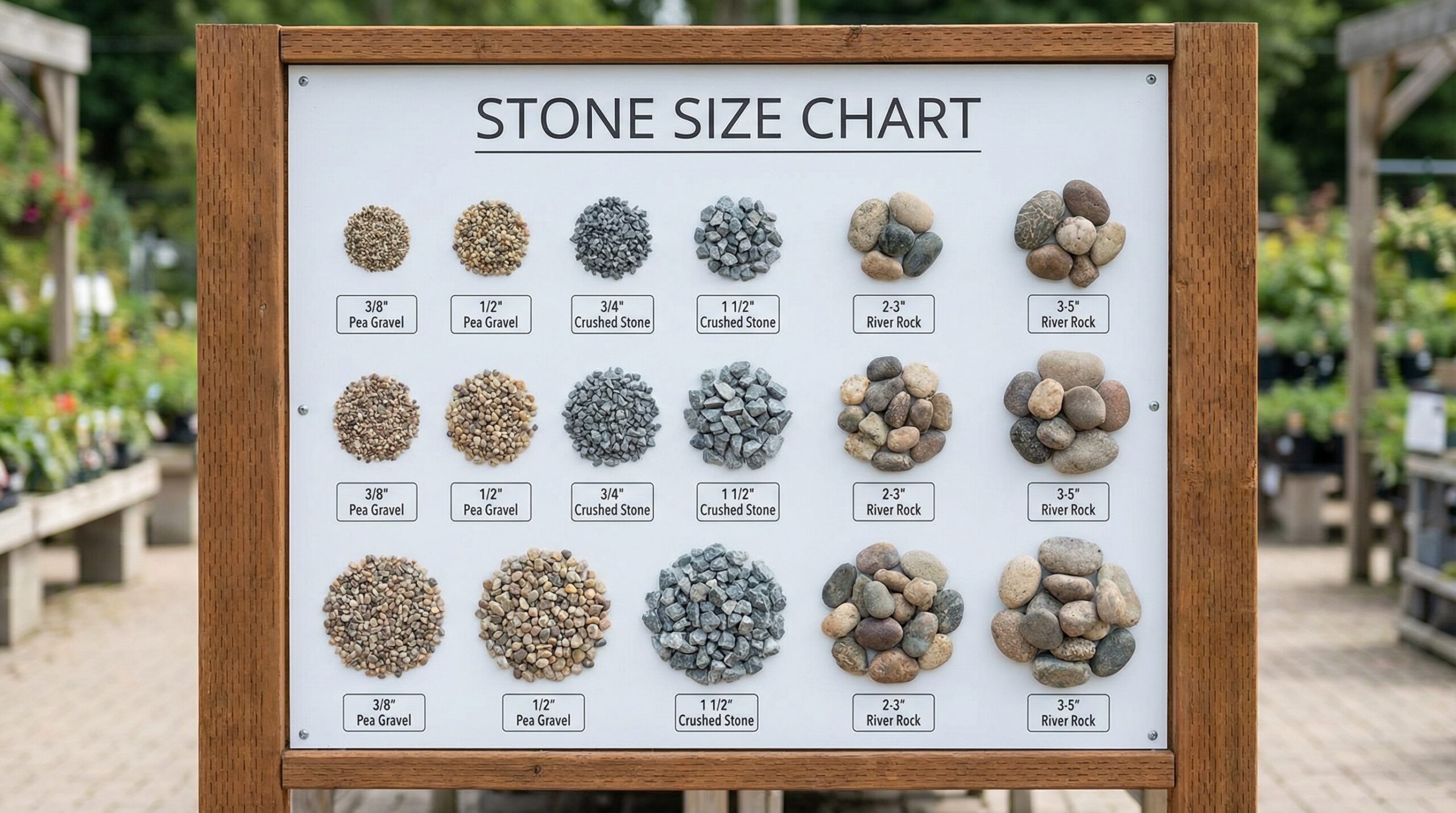
Choosing the wrong stone size can turn your dream project into a costly nightmare. Whether you’re building a driveway that needs to handle heavy traffic or creating a garden path that feels comfortable underfoot, the size of your stones affects everything from structural integrity to visual appeal.
This guide walks you through stone size measurements, shows you how to read size charts, and matches specific sizes to common projects. You’ll discover which stones work best for driveways versus walkways, how to avoid common sizing mistakes, and practical tips for making confident decisions.
Quick Answer: Most driveways work best with 3/4-inch crushed stone for the surface and 1-2 inch base stone underneath. Garden paths perform well with pea gravel (1/4 to 3/8 inch), while drainage projects need larger 1-2 inch angular stones.
Understanding stone size measurements
Stone sizes follow standardized measurements that help you compare options and communicate clearly with suppliers. The construction industry typically measures stones by their diameter, with sizes ranging from fine dust particles under 1/8 inch to massive boulders over 10 inches.
Most residential projects use stones between 1/4 inch and 3 inches. These sizes provide the right balance of stability, drainage, and visual appeal for common applications like driveways, walkways, and landscaping features.
The industry uses two main measurement systems. Actual measurements describe the physical dimensions in inches or millimeters, while grade numbers like #57 or #4 refer to standardized size categories. Understanding both systems helps you navigate supplier catalogs and ensure you get exactly what your project needs. To learn more about how these classifications work, explore our guide on understanding the different sizes of gravel aggregates.
Stone shape matters as much as size. Angular crushed stones have sharp edges that lock together for stability, making them perfect for driveways and structural applications. Rounded stones like pea gravel feel more comfortable underfoot and drain better, which works well for decorative areas and garden paths.
Stone size chart for common projects
| Stone Size | Grade Number | Best Applications | Key Benefits |
|---|---|---|---|
| 1/4″ – 3/8″ | #8, Pea Gravel | Garden paths, decorative beds | Comfortable walking, attractive appearance |
| 3/4″ – 1″ | #57 | Driveway surface, walkways | Good compaction, vehicle stability |
| 1″ – 2″ | #3, #4 | Driveway base, drainage | Excellent stability, superior drainage |
| 2″ – 6″ | River rock | Landscaping, erosion control | Visual impact, natural appearance |
This chart covers the most popular stone sizes for residential projects. The smaller sizes create smooth, comfortable surfaces but may shift under heavy loads. Larger sizes provide excellent structural support but can feel uncomfortable for walking.
When reading size specifications, remember that natural stone varies within each category. A product labeled “3/4 inch stone” typically contains pieces ranging from 1/2 inch to 1 inch, with most falling around the 3/4 inch mark. This variation actually helps with compaction and creates more stable surfaces.
Pro Tip: Always ask suppliers about the actual size range within each grade. Some regions have slight variations in how they classify stone sizes, which can affect your project’s performance.
Choosing stones for specific project types
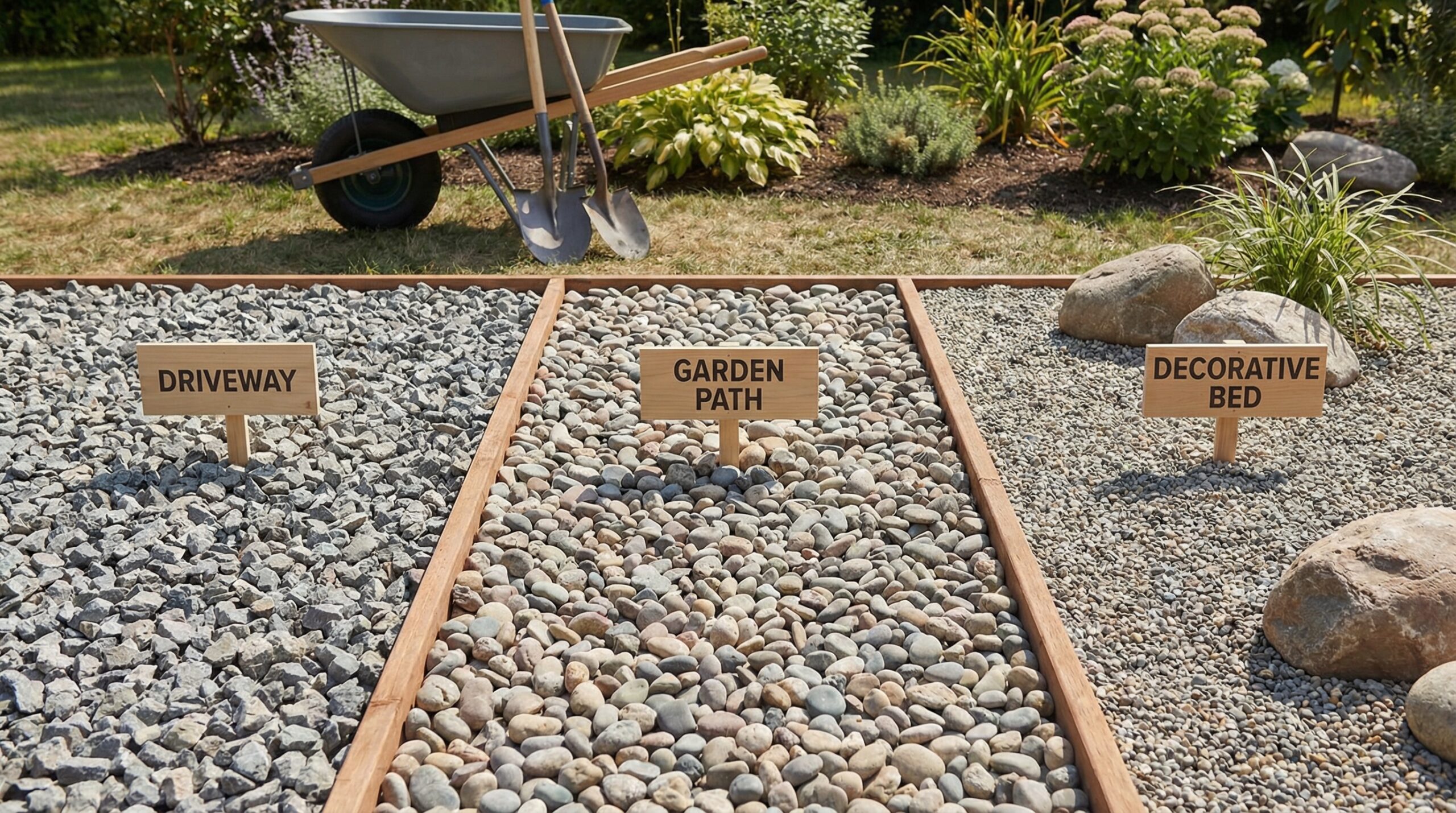
Different projects demand different stone characteristics based on their intended use, traffic patterns, and aesthetic goals. Understanding these requirements helps you select materials that perform well and look great for years to come.
For driveways and parking areas, you need stones that can handle vehicle weight without shifting or creating ruts. Start with a base layer of 1-2 inch angular crushed stone, then add a surface layer of 3/4 inch material. This two-layer approach provides structural stability while creating a smooth driving surface. For detailed recommendations, check out our article on the best crushed stone size for a driveway.
Walkways and garden paths prioritize comfort and appearance over load-bearing capacity. Pea gravel or small crushed stone between 1/4 and 1/2 inch works perfectly for these applications. The smaller size feels comfortable underfoot while still providing adequate drainage and weed suppression. Learn more about choosing the best gravel size for a walkway to ensure optimal results.
Drainage projects like French drains require larger stones that maintain void spaces for water flow. Use 3/4 to 1.5 inch angular crushed stone without fine particles. The angular shape prevents settling while the size range ensures consistent drainage performance over time.
Decorative landscaping offers the most flexibility in stone selection. Consider the scale of your space and surrounding elements when choosing sizes. Small areas benefit from smaller stones that won’t overwhelm the design, while large spaces can handle bigger statement pieces like river rock or fieldstone. Discover more options in our guide to the best crushed rock size for decorative landscaping.
Common stone sizing mistakes and solutions
Many homeowners make predictable mistakes when selecting stone sizes, leading to poor performance and costly do-overs. Understanding these common pitfalls helps you avoid expensive errors and achieve better results from the start.
Using stones that are too small for structural applications creates unstable surfaces that shift and settle over time. This commonly happens when people choose pea gravel for driveways or use fine materials for retaining wall bases. The solution involves selecting appropriately sized angular stones that can handle the expected loads.
Choosing stones that are too large for the intended space creates visual imbalance and practical problems. Oversized stones in small garden areas look disproportionate, while large stones on walkways create uncomfortable, uneven surfaces. Match stone size to the scale of your project and consider how people will interact with the space. For garden applications, our guide on the best crushed stone size for a garden bed provides specific recommendations.
Ignoring drainage requirements leads to water problems that damage projects over time. Fine stones without proper drainage can trap water and create muddy conditions, while poorly graded materials may wash away during heavy rains. Always consider how water will move through and around your stone installation.
Important: When in doubt, consult with local suppliers who understand regional soil conditions and climate factors. They can recommend stone sizes that perform well in your specific area and help you avoid common regional mistakes.

Making confident stone size decisions
Armed with this knowledge about stone sizes and their applications, you can approach your project with confidence. Start by clearly defining your project’s primary purpose, then consider factors like traffic patterns, drainage needs, and aesthetic preferences.
Don’t hesitate to request samples from suppliers before placing large orders. Seeing and handling the actual stones helps you verify that the size and appearance match your expectations. Many suppliers offer small sample bags that let you test materials in your specific location. Whether you’re considering bulk bags of gravel stones or smaller quantities, sampling is always a smart approach.
Remember that stone projects often benefit from using multiple sizes strategically. A driveway might use large base stones for stability, medium stones for the main surface, and small decorative stones for borders. This layered approach optimizes both function and appearance.
The investment in choosing the right stone sizes pays dividends through better performance, lower maintenance, and enhanced curb appeal. Take time to understand your options, and don’t rush the selection process. Your future self will thank you for making thoughtful decisions that create lasting, beautiful results.
Ready to start your stone project? Hello Gravel provides expert guidance on stone sizing and delivers quality materials directly to your site. Our team understands the technical requirements behind successful stone installations and can help you select the perfect sizes for your specific needs.
FAQ
What is the best stone size for a gravel driveway?
What size stone should I use for landscaping and garden beds?
What’s the difference between crushed stone and rounded stone?
How do I choose the right stone size for drainage projects?
Author: