Complete Crushed Concrete Size Chart and Selection Guide
Published on: January 27, 2026
Get an estimate for your project in 60 seconds
 Your information is secure
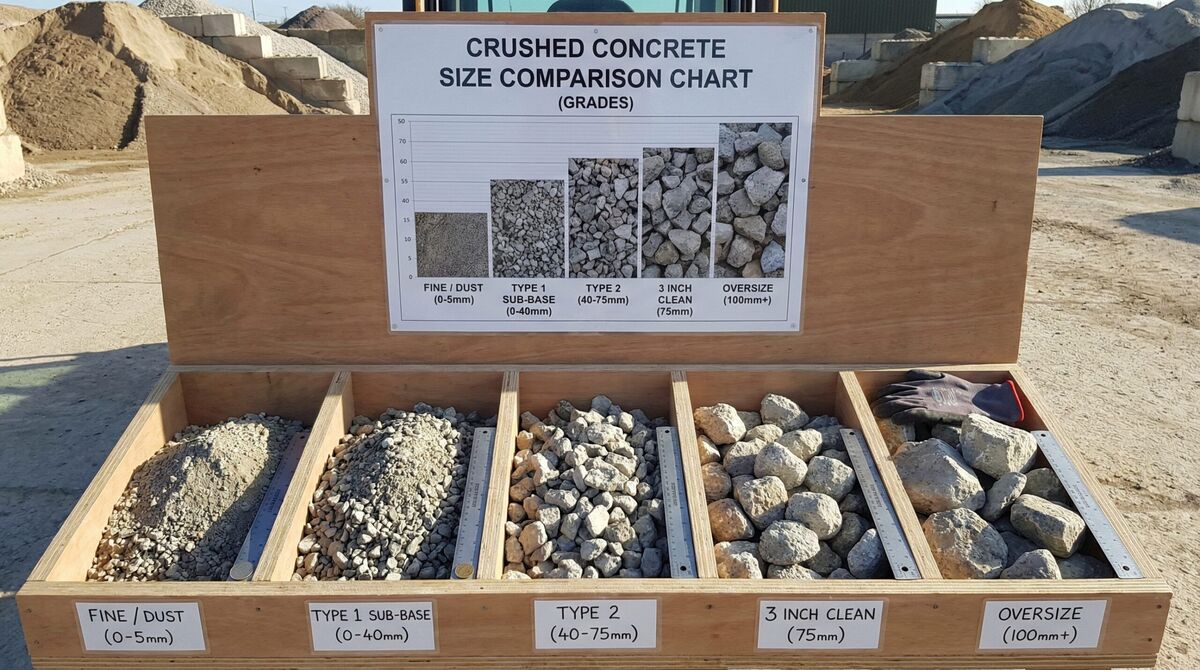
Choosing the right crushed concrete size can make or break your project. Whether you’re building a driveway, creating drainage solutions, or working on landscaping, understanding the size chart is essential for success. This guide breaks down everything you need to know about crushed concrete sizes, from fine dust to large aggregate pieces.
Quick Answer: Crushed concrete comes in three main grades – Grade 3 (dust to 5mm) for leveling, Grade 2 (10-20mm) for driveways and paths, and Grade 1 (20-40mm) for heavy-duty construction and drainage projects.
Understanding crushed concrete grades
Crushed concrete, also known as recycled concrete aggregate (RCA), transforms demolished concrete into valuable construction material. This eco-friendly alternative reduces landfill waste while providing excellent performance for various applications.
The grading system categorizes crushed concrete by particle size, with each grade serving specific purposes. According to hellogravel.com, these grades range from fine dust particles to substantial pieces measuring several inches across.
The material offers superior compaction properties compared to traditional gravel, making it ideal for creating stable bases. Its porous nature also provides excellent drainage, preventing water accumulation that could damage your project over time.
Complete size chart breakdown
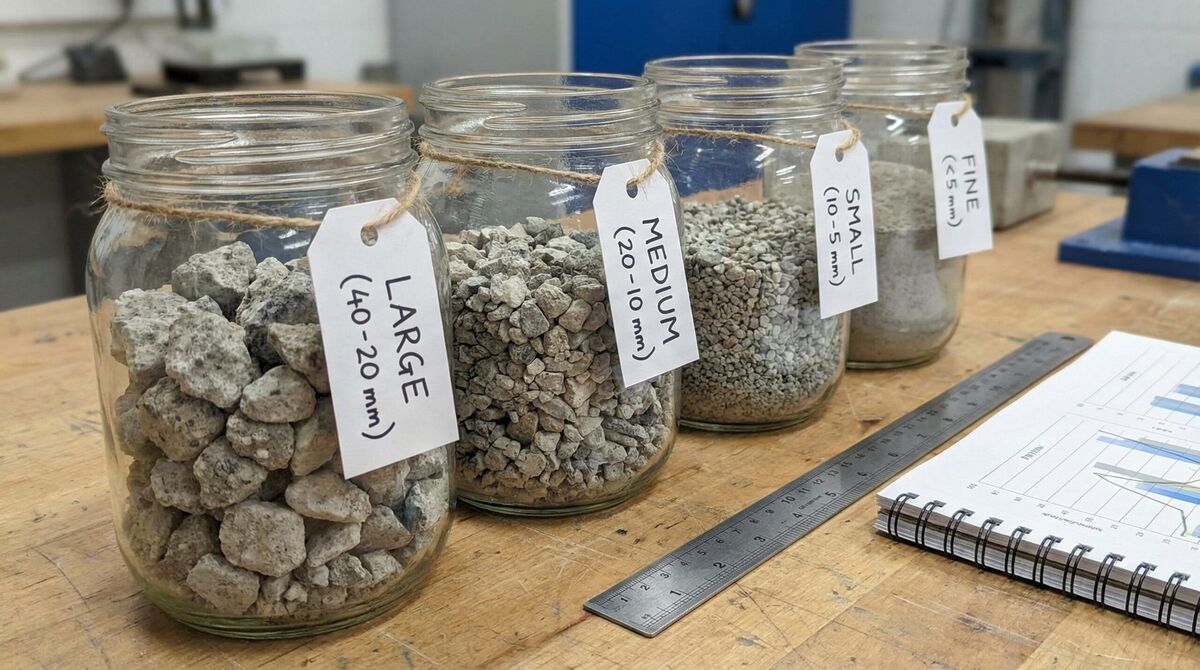
Understanding the specific measurements and applications for each grade helps you make informed decisions for your project needs. Similar to understanding standard gravel sizes, crushed concrete follows a systematic grading approach.
| Grade | Size Range | Best Applications | Key Benefits |
|---|---|---|---|
| Grade 3 (Fines) | Dust to 5mm | Leveling, pipe bedding | Smooth finish, excellent compaction |
| Grade 2 (Medium) | 10mm to 20mm | Driveways, walkways | Balanced stability and aesthetics |
| Grade 1 (Coarse) | 20mm to 40mm | Road bases, heavy construction | Maximum stability, superior drainage |
Grade 3 crushed concrete works perfectly for creating smooth, level surfaces. The fine particles fill gaps effectively and provide cushioning for underground utilities. You’ll find this grade essential for final grading and creating even foundations.
Grade 2 crushed concrete offers the sweet spot between functionality and appearance. This medium-sized aggregate handles moderate traffic while maintaining an attractive finish. It’s the go-to choice for residential driveways and pedestrian areas.
Grade 1 crushed concrete delivers maximum performance for demanding applications. The larger pieces create exceptional stability and allow excellent water flow, making it perfect for high-traffic areas and drainage systems.
Choosing the right grade for your project
Your project requirements determine which grade will deliver the best results. Consider these key factors when making your selection, much like you would when choosing construction stone sizes.
Traffic load plays a crucial role in grade selection. Light foot traffic areas work well with Grade 2 or Grade 3 materials. However, areas supporting heavy vehicles or equipment require the stability that only Grade 1 can provide.
Drainage needs also influence your choice. Projects requiring superior water flow benefit from Grade 1’s larger particle size. For areas where you need controlled drainage with some water retention, Grade 2 offers better balance.
Pro Tip: For multi-layer applications, start with Grade 1 as your base layer, add Grade 2 for the middle layer, and finish with Grade 3 for a smooth, professional appearance.
Aesthetic considerations matter for visible areas. Grade 3 provides the smoothest finish for decorative applications, while Grade 2 offers texture without being too rough. Grade 1 creates a more industrial appearance suitable for utility areas.
Budget constraints often factor into decisions. While Grade 1 costs more initially, its durability can provide better long-term value for heavy-use applications. Grade 3 offers cost-effective solutions for lighter-duty projects.

Installation tips and best practices
Proper installation ensures your crushed concrete performs as expected throughout its lifespan. Following proven techniques saves time and prevents costly mistakes.
Site preparation sets the foundation for success. Remove all vegetation, debris, and unstable soil from the area. Create proper slopes for drainage, typically 1-2% grade away from structures.
Layer thickness varies by grade and application. Grade 1 base layers typically require 4-6 inches for standard applications, while Grade 3 finishing layers need only 1-2 inches. Compact each layer thoroughly before adding the next. For driveway projects specifically, consult the ultimate driveway stone size chart to ensure optimal results.
Compaction technique affects final stability. Use a plate compactor for smaller areas or a roller for larger projects. Work in thin lifts, adding water lightly if needed to achieve optimal compaction. Over-watering creates weak spots that will fail under load.
Important: Always compact crushed concrete when it’s slightly damp but not saturated. The material should hold together when squeezed but not leave water on your hand.
Edge restraint prevents material migration over time. Install proper edging along driveways and walkways to maintain clean lines and prevent spreading. This step is especially important for Grade 2 and Grade 3 applications.
Regular maintenance extends the life of your crushed concrete installation. Rake the surface periodically to redistribute material and fill any low spots. Add fresh material as needed to maintain proper thickness and appearance.
Working with crushed concrete offers an excellent balance of performance, cost-effectiveness, and environmental responsibility. By understanding the size chart and selecting the appropriate grade for your specific needs—whether you’re working with aggregate materials or various stone sizes—you create durable installations that serve you well for years to come. Whether you’re tackling a small landscaping project or major construction work, the right crushed concrete grade provides the foundation for success.
FAQ
What size crushed concrete is best for driveway base?
What’s the difference between Grade 1, 2, and 3 crushed concrete?
How much crushed concrete do I need for my project?
Can crushed concrete be used for drainage applications?
Author: