
How to Use Gravel for Concrete Complete Guide to Stronger Mixes
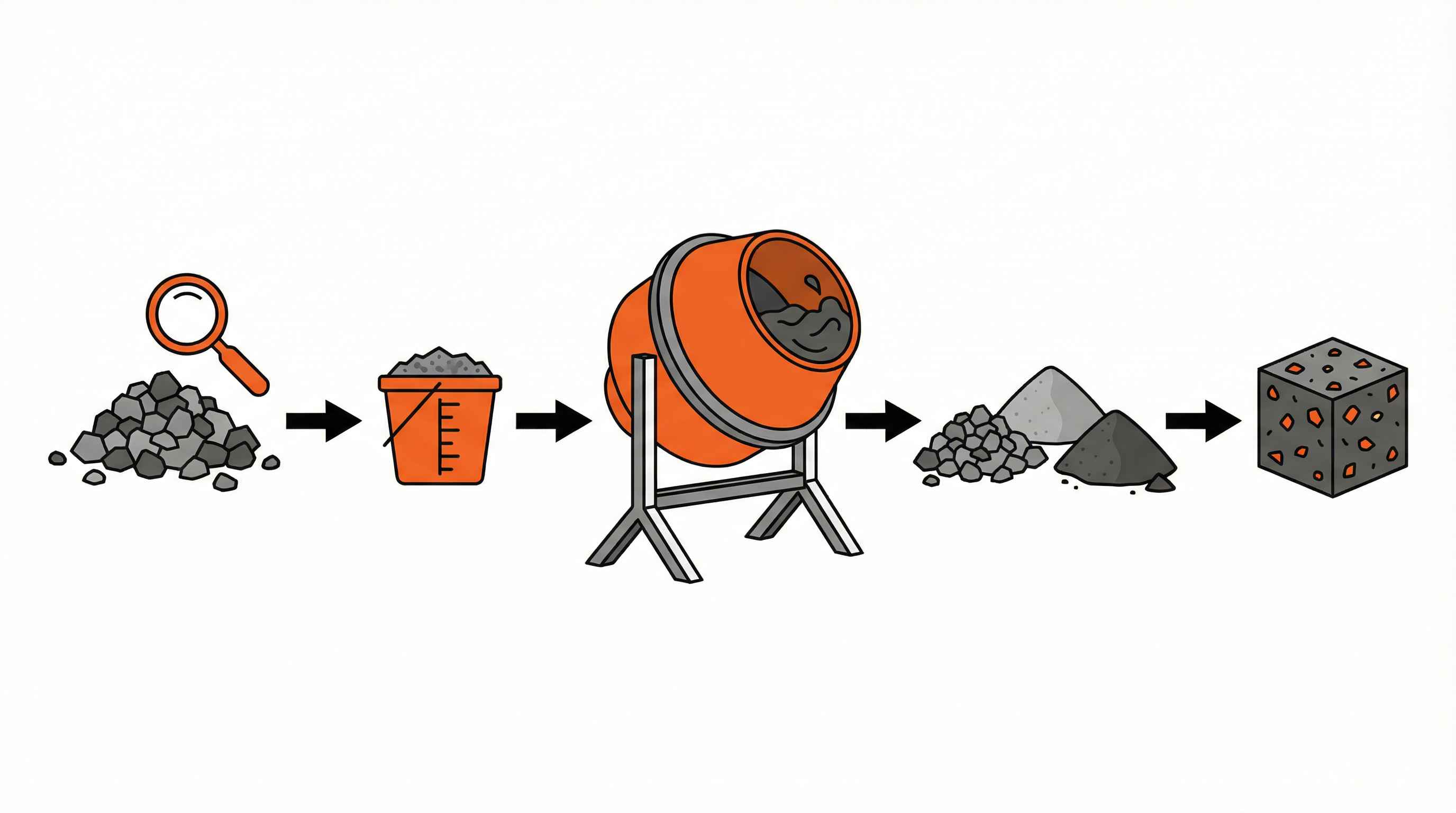
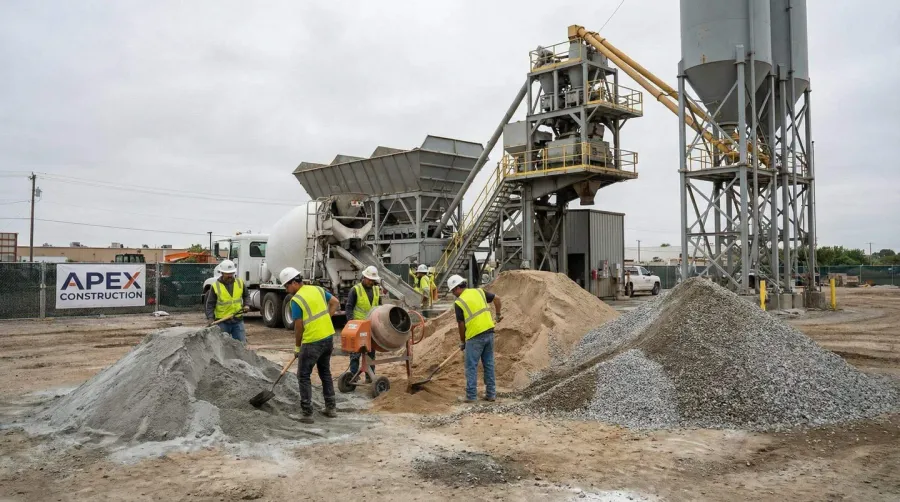
When you’re working with concrete, gravel isn’t just filler material. It’s the backbone that gives your concrete its strength and durability. According to hellogravel.com, aggregates like gravel typically account for 60-75% of the total volume in concrete mixes, making them crucial for structural integrity.
Whether you’re pouring a driveway, building a foundation, or working on a large construction project, understanding how to properly use gravel in concrete can mean the difference between a structure that lasts decades and one that cracks within years.
Quick Fact: Gravel provides mechanical interlocking with cement paste, enhancing compressive strength and making concrete capable of withstanding heavy loads and pressures.
What makes gravel essential for concrete strength
Gravel serves as the coarse aggregate in concrete, working alongside cement and sand to create a strong, durable material. When you mix gravel with cement paste, something important happens at the microscopic level.
The irregular shapes of gravel particles create mechanical interlocking with the cement paste. This interlocking effect dramatically improves your concrete’s compressive strength. Think of it like a puzzle where each piece locks into place, creating a structure that’s much stronger than its individual parts.
Beyond strength, gravel helps distribute stress evenly throughout your concrete mix. When loads are applied to the finished concrete, the gravel particles help spread that force across the entire structure rather than concentrating it in one area. This stress distribution prevents weak points that could lead to cracking or failure.
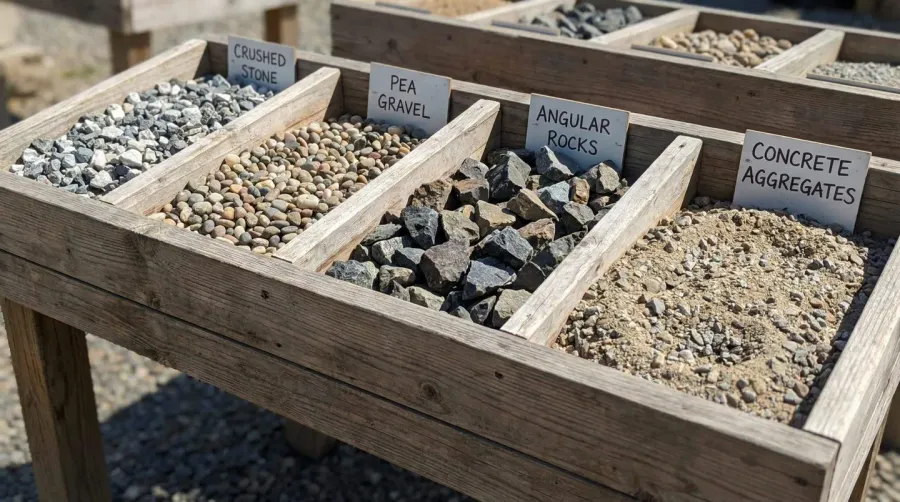
The size and shape of your gravel also matter significantly. Angular gravel particles provide better interlocking and shear resistance, while rounded particles improve workability during mixing and pouring. The key is choosing the right type for your specific project needs. Understanding the essential type of gravel used in concrete will help you make informed decisions for your project.
Choosing the right gravel type for your concrete project
Not all gravel works the same in concrete. You need to consider several factors when selecting gravel for your mix.
Crushed stone remains the most popular choice for structural concrete. It’s produced by crushing larger rocks into smaller, angular pieces. These angular edges create excellent bonding with cement paste and provide superior strength. You’ll typically find crushed stone in sizes ranging from 3/8 inch to 1.5 inches.
Pea gravel offers a different set of benefits. Its smooth, rounded shape makes mixing easier and creates attractive exposed aggregate finishes. However, the rounded shape means less mechanical interlocking, so it’s better suited for decorative applications rather than high-strength structural work. If you’re considering pea gravel for your project, check out our guide on using pea gravel for a shed foundation to understand its limitations.
Washed gravel has been cleaned to remove dirt, clay, and other impurities that could weaken your concrete. This cleaning process ensures better bonding between the gravel and cement paste, resulting in stronger, more durable concrete.
Pro Tip: For structural applications like foundations or driveways, choose angular crushed stone in the 3/4-inch size range for optimal strength and workability.
When selecting gravel, also consider your local availability and project requirements. The gravel should be sourced from reliable suppliers who can provide consistent quality and meet relevant industry standards. For more detailed information, explore different types of gravel for construction.
Proper mixing ratios and techniques
Getting your gravel-to-cement ratio right makes all the difference in concrete performance. According to hellogravel.com, the ideal mix typically contains 55-65% coarse aggregates (gravel) and 35-45% fine aggregates (sand) by weight.
For a standard concrete mix, you’ll want to follow these general proportions: 1 part cement, 2 parts sand, and 3 parts gravel. This creates what’s known as a 1:2:3 mix ratio. However, you might need to adjust these ratios based on your specific project requirements.
| Mix Type | Cement | Sand | Gravel | Water |
|---|---|---|---|---|
| Standard | 1 part | 2 parts | 3 parts | 0.5 parts |
| High Strength | 1 part | 1.5 parts | 2.5 parts | 0.4 parts |
| Decorative | 1 part | 2.5 parts | 2 parts | 0.6 parts |
Start by combining your dry ingredients first. Mix the cement and sand thoroughly before adding the gravel. This ensures even distribution of the binding agent. Add water gradually while mixing continuously. Too much water weakens the concrete, while too little makes it difficult to work with.
The mixing process itself is crucial. Whether you’re using a portable mixer or mixing by hand, ensure all materials are thoroughly combined. You should see no dry spots or lumps in your final mix. The concrete should have a consistent color and texture throughout. For foundation work specifically, consult our guide on what is the best gravel size for a foundation.
Avoiding common gravel concrete problems
Even experienced builders can run into issues when working with gravel concrete. Understanding these common problems helps you avoid costly mistakes.
Segregation happens when gravel particles separate from the cement paste during mixing or pouring. This creates weak spots in your finished concrete. To prevent segregation, avoid over-vibrating your concrete and maintain proper water content. If your mix looks too wet and the gravel starts settling to the bottom, add more cement and sand in the correct proportions.
Poor workability makes your concrete difficult to pour and finish properly. This often results from using too much large gravel or not enough fine aggregate. If your mix seems harsh or difficult to work with, consider adjusting your gravel size or adding a small amount of sand to improve flow.
Bleeding occurs when excess water rises to the surface, leaving a weak, dusty layer on top of your concrete. This typically happens when you use too much water or have an improper aggregate gradation. Stick to recommended water-cement ratios and ensure your gravel is properly graded. Learn more about ensuring quality aggregates for optimal results.
Important: Monitor your concrete’s consistency throughout the mixing process. The mix should hold together when squeezed but not be so wet that water separates out.
Weather conditions also affect how gravel concrete behaves. In hot weather, your concrete may set too quickly, while cold temperatures can slow the curing process significantly. Plan your mixing and pouring schedule accordingly, and consider using additives if necessary to control setting time.
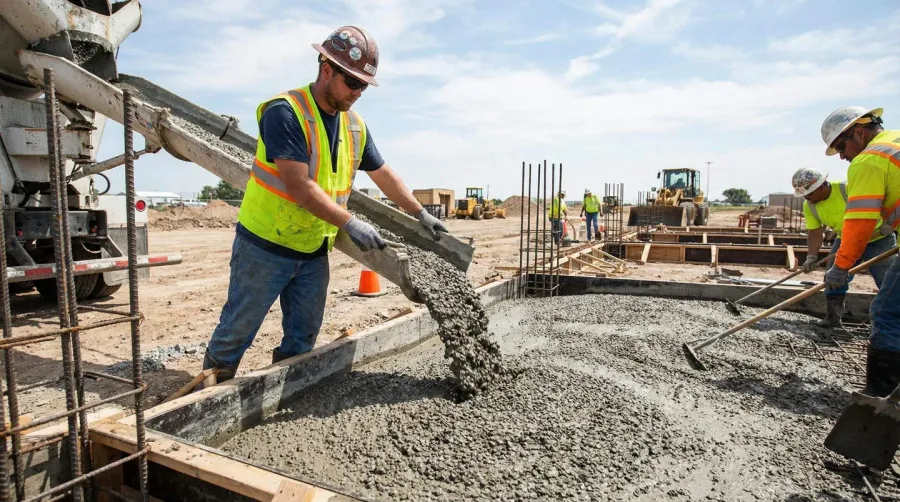
Remember that quality control doesn’t end when you finish mixing. Proper curing is essential for achieving the full strength potential of your gravel concrete. Keep the surface moist for at least seven days, and protect it from extreme temperatures during this critical period.
Using gravel effectively in concrete requires attention to detail, but the results are worth the effort. When you select the right gravel type, maintain proper mixing ratios, and follow good construction practices, you’ll create concrete that can withstand decades of use while maintaining its structural integrity. For comprehensive information on gravel applications, visit our ultimate guide to bulk aggregate.
FAQ
What is the ideal gravel to cement ratio for concrete?
The standard concrete mix ratio is 1 part cement, 2 parts sand, and 3 parts gravel by volume. For higher strength applications like foundations, you can use a 1:2:3 ratio. This creates concrete with 3000-4000 PSI strength suitable for most residential projects including driveways and slabs.
What size gravel is best for concrete mix?
For most concrete applications, use 3/4-inch gravel as the maximum size. Crushed stone in the 3/8-inch to 3/4-inch range provides optimal strength and workability. For thin pours or detailed work, stick to 3/8-inch gravel. Angular crushed stone offers better interlocking and strength compared to rounded pea gravel.
Can you use pea gravel in concrete mix?
Yes, pea gravel can be used in concrete, but it’s best suited for decorative applications rather than structural work. The smooth, rounded shape of pea gravel provides less mechanical interlocking compared to angular crushed stone, resulting in lower compressive strength. Use pea gravel for exposed aggregate finishes or non-load-bearing applications.
Can you mix concrete with just gravel and cement without sand?
No, you cannot make proper concrete with just gravel and cement. Sand is essential as fine aggregate to fill voids between gravel particles and provide workability. Without sand, the concrete will have poor cohesion, be difficult to work with, and result in a weak, porous mix that’s prone to cracking and failure.