
Marble Quarrying Process From Ancient Techniques to Modern Extraction Methods
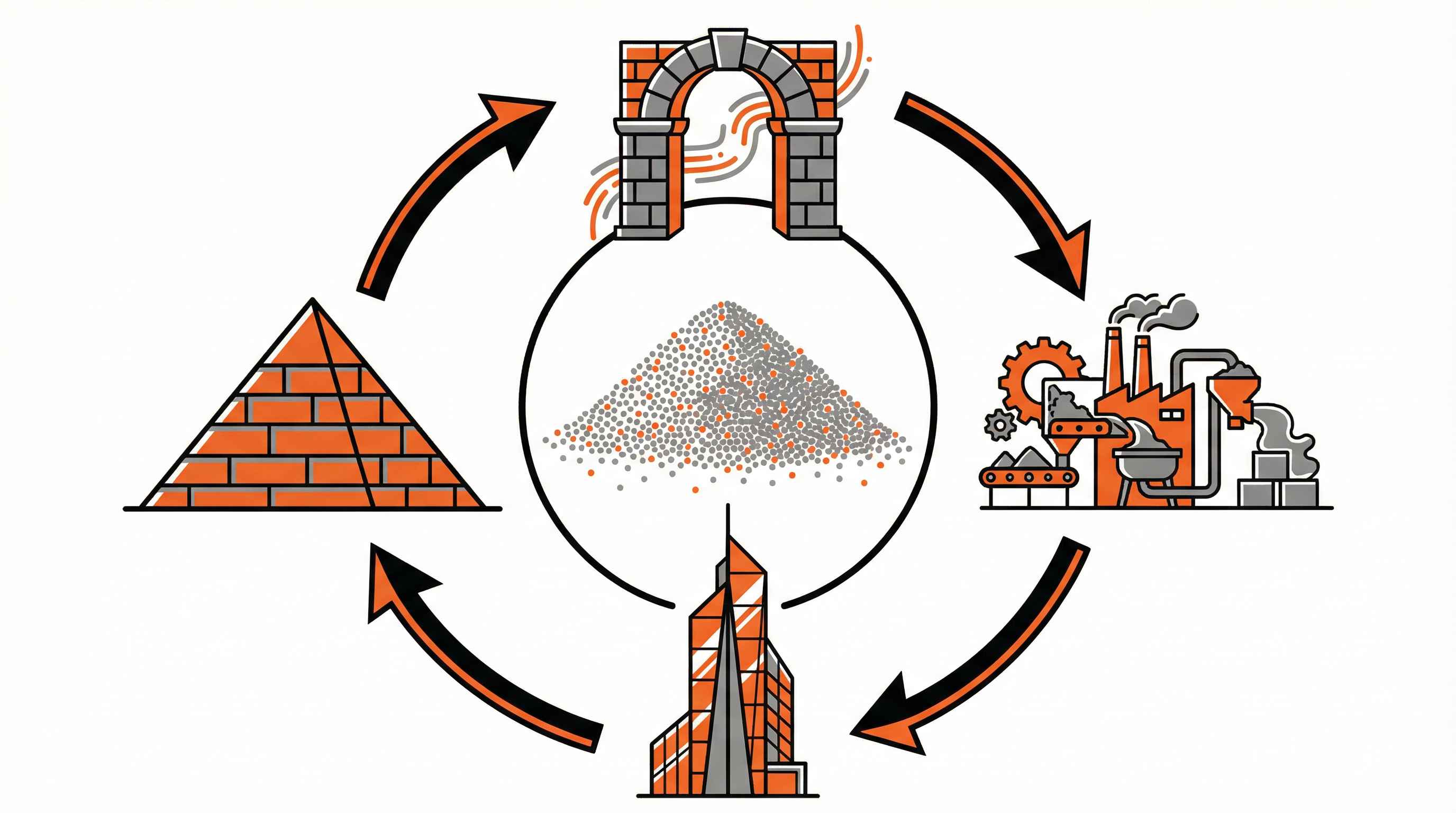
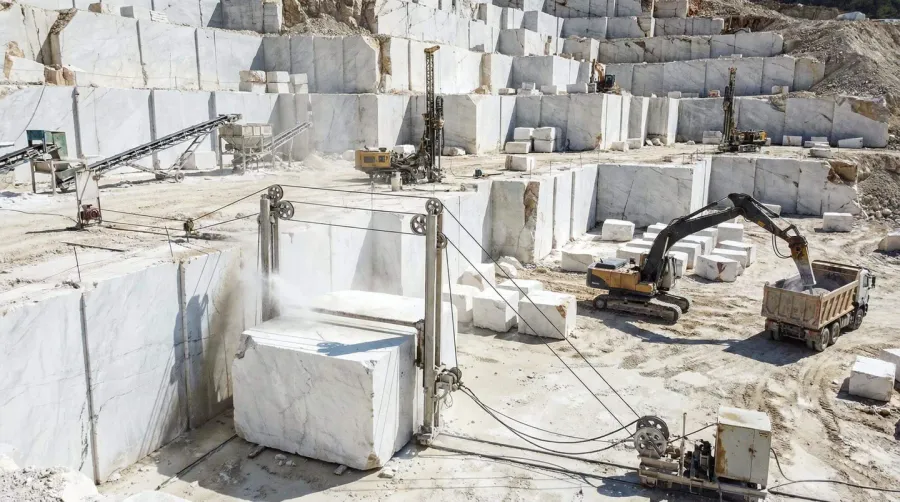
Marble quarrying represents one of humanity’s oldest industrial practices, transforming raw limestone into the elegant stone that has graced everything from Michelangelo’s David to modern luxury countertops. This fascinating process combines ancient craftsmanship with cutting-edge technology, creating a bridge between our historical past and contemporary architectural needs.
The marble quarrying process involves extracting metamorphic rock from deposits worldwide, using techniques that have evolved from simple chisels to sophisticated diamond wire saws. Today’s quarries produce approximately 71.73 billion USD worth of marble annually, with major operations spanning from Italy’s famous Carrara quarries to Vermont’s Danby deposits.
Quick Fact: Modern diamond wire cutting technology can extract marble blocks with 98% precision, compared to traditional blasting methods that often resulted in 70% material waste.
Evolution of marble quarrying techniques
The journey of marble extraction began over 2,000 years ago when Greek and Roman craftsmen developed the first systematic quarrying methods. Ancient workers created strategic cutting lines called “tagliata,” taking advantage of natural rock fractures to separate massive blocks from mountainsides.
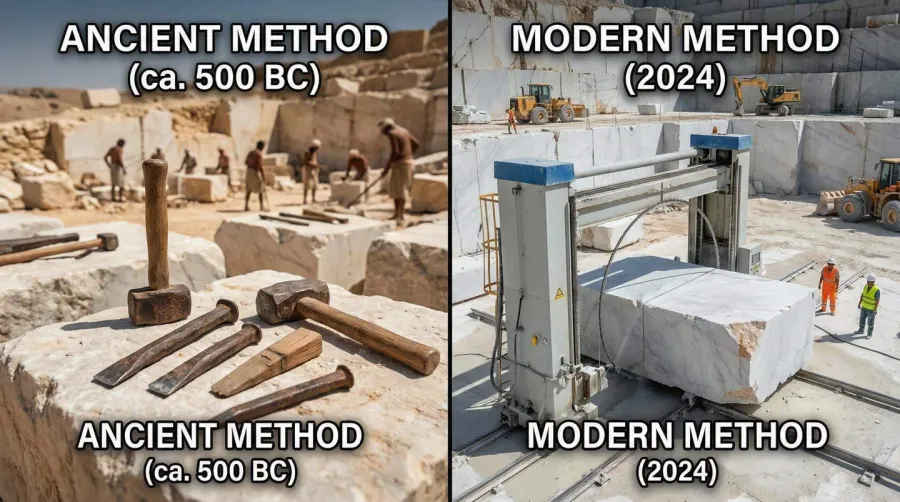
These early techniques relied heavily on manual labor and simple tools. Workers would drive iron wedges into natural cracks, or place wooden wedges that expanded when wetted, gradually splitting the marble. The process was incredibly slow but surprisingly effective, as evidenced by structures like the Parthenon, built entirely from Pentelic marble extracted using these methods.
The Industrial Revolution brought dramatic changes to marble quarrying. Steam-powered equipment replaced hand tools, and the introduction of gunpowder enabled the spectacular “varata” technique. This method involved controlled explosions to separate large bench walls, though it often resulted in significant material waste. Similar to the quarrying process used for other construction materials, these advancements marked a turning point in extraction efficiency.
Modern marble extraction process
Today’s marble quarrying process follows a precise sequence that maximizes both efficiency and material quality. The process begins with geological surveys using ground-penetrating radar and remote sensing technologies to locate the best marble deposits.
Site preparation involves creating access points and establishing infrastructure. Many modern operations work underground rather than open-pit, which reduces environmental impact and provides better control over extraction conditions. Teams use bench sawing machines to create flat working surfaces for heavy equipment placement.
The actual extraction uses advanced diamond wire sawing technology, which Carrara quarries adopted in the late 1970s. These systems use steel cables embedded with diamond-coated segments that cut through marble with remarkable precision. The process creates minimal waste and allows for extraction of larger, more valuable blocks.
Transportation requires specialized heavy machinery and cranes to move blocks that typically weigh between 15,000 to 25,000 pounds. These massive blocks then travel to processing facilities where they’re cut into slabs using gang saws or wire saws, depending on the intended application. Understanding how quarries make money helps explain the importance of maximizing block size and minimizing waste during extraction.
Famous marble quarries worldwide
Several quarries have gained international recognition for their exceptional marble quality and historical significance. The Carrara Marble Quarries in Italy remain the most famous, operating continuously since Roman times and covering over 5 square kilometers in the Apuan Alps.
Carrara produces multiple marble varieties, from the pure white Statuario beloved by sculptors to the distinctive Calacatta with its golden veining. This quarry supplied marble for Michelangelo’s masterpieces and continues to provide material for luxury applications worldwide.
Greece’s Pentelic Marble Quarry on Mount Pentelicus has operated since ancient times, producing the light gray marble used in the Parthenon. The quarry covers approximately 3 square kilometers and remains active today, though at a much smaller scale than during classical antiquity.
In the United States, Vermont’s Danby Marble Quarry spans about 10 square kilometers in the Green Mountains. This operation produces the pure white marble used in iconic American monuments, including the Lincoln Memorial. The quarry represents one of the largest marble deposits in North America.
| Quarry Location | Marble Type | Famous Applications | Operating Since |
|---|---|---|---|
| Carrara, Italy | White Statuario | Michelangelo’s David, Pantheon | Roman Era |
| Pentelic, Greece | Light Gray | Parthenon, Ancient Athens | Ancient Times |
| Danby, Vermont | Pure White | Lincoln Memorial | 1800s |
Sustainable quarrying practices
The marble industry faces increasing pressure to address environmental concerns while maintaining production quality. Traditional quarrying methods often resulted in significant landscape alteration and biodiversity loss, particularly in regions like Carrara where 2,000 years of extraction has dramatically changed the local ecosystem.
Water pollution represents another major challenge, as marble processing generates fine particles and chemical byproducts that can contaminate local waterways. The extraction process also produces marble slurry equivalent to 4-5% of total block production, creating substantial waste management challenges. These concerns mirror the environmental impacts of quarrying operations across the construction materials industry.
Modern quarries are implementing comprehensive sustainability measures to address these issues. Advanced machinery creates less waste, while solar power installations and rainwater collection systems reduce environmental footprint. Some operations now achieve material utilization rates of 75-80%, compared to just 20% with traditional blasting methods.
Restoration efforts focus on returning quarried areas to natural states through revegetation programs and habitat creation. Companies like Stonethica demonstrate innovative approaches by converting 98% of marble waste into new products using non-toxic resin systems. Understanding why quarries are dangerous also helps operators implement better safety and environmental protocols.
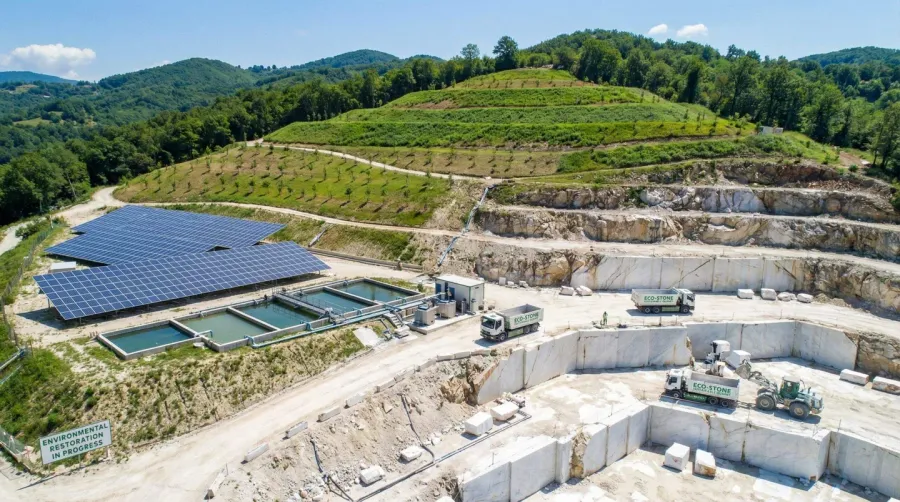
The marble quarrying industry continues evolving, balancing ancient traditions with modern technology and environmental responsibility. As diamond wire cutting and computer-controlled systems become standard, quarries can extract higher-quality blocks while minimizing waste. This evolution ensures that marble quarrying remains viable for future generations while preserving the natural beauty that makes this stone so treasured in architecture and art. For those interested in the broader context of quarry operations, learning about types of machinery in the quarry industry provides valuable insight into modern extraction capabilities.
Future Outlook: Industry experts predict that technological advances in precision cutting and waste reduction will increase marble utilization rates to over 90% by 2026, making quarrying more sustainable than ever before.
FAQ
How did ancient Romans cut marble without modern tools?
Romans used the “panel” method, making 15-20 cm deep cuts with metal chisels that were pounded to separate blocks. They also exploited natural rock fractures by driving iron wedges into cracks or using wooden wedges that expanded when wetted. This technique, called “tagliata,” allowed them to extract massive blocks for structures like the Pantheon, though the process was incredibly labor-intensive and slow.
What is diamond wire cutting and how does it work in modern quarries?
Diamond wire cutting uses steel cables embedded with diamond-coated segments that cut through marble with 98% precision. This technology, adopted by Carrara quarries in the late 1970s, creates minimal waste and allows extraction of larger, more valuable blocks weighing 15,000 to 25,000 pounds. The process is far more efficient than traditional blasting methods, which often resulted in 70% material waste.
Where are the world’s most famous marble quarries located?
The most renowned marble quarries include Carrara in Italy’s Apuan Alps (operating since Roman times, used for Michelangelo’s David), Pentelic Quarry in Greece on Mount Pentelicus (source of Parthenon marble), and Danby Quarry in Vermont’s Green Mountains (supplied marble for the Lincoln Memorial). Carrara remains the most famous, covering over 5 square kilometers and producing varieties like pure white Statuario and distinctive Calacatta marble.
How sustainable are modern marble quarrying practices?
Modern quarries have significantly improved sustainability, achieving material utilization rates of 75-80% compared to just 20% with traditional methods. Advanced machinery creates less waste, while solar power and rainwater collection systems reduce environmental impact by up to 40%. Many operations now implement water recycling systems, reforestation programs, and convert 98% of marble waste into new products using innovative technologies like non-toxic resin systems.