
River Rock Sizes Chart and Complete Guide for Your Project
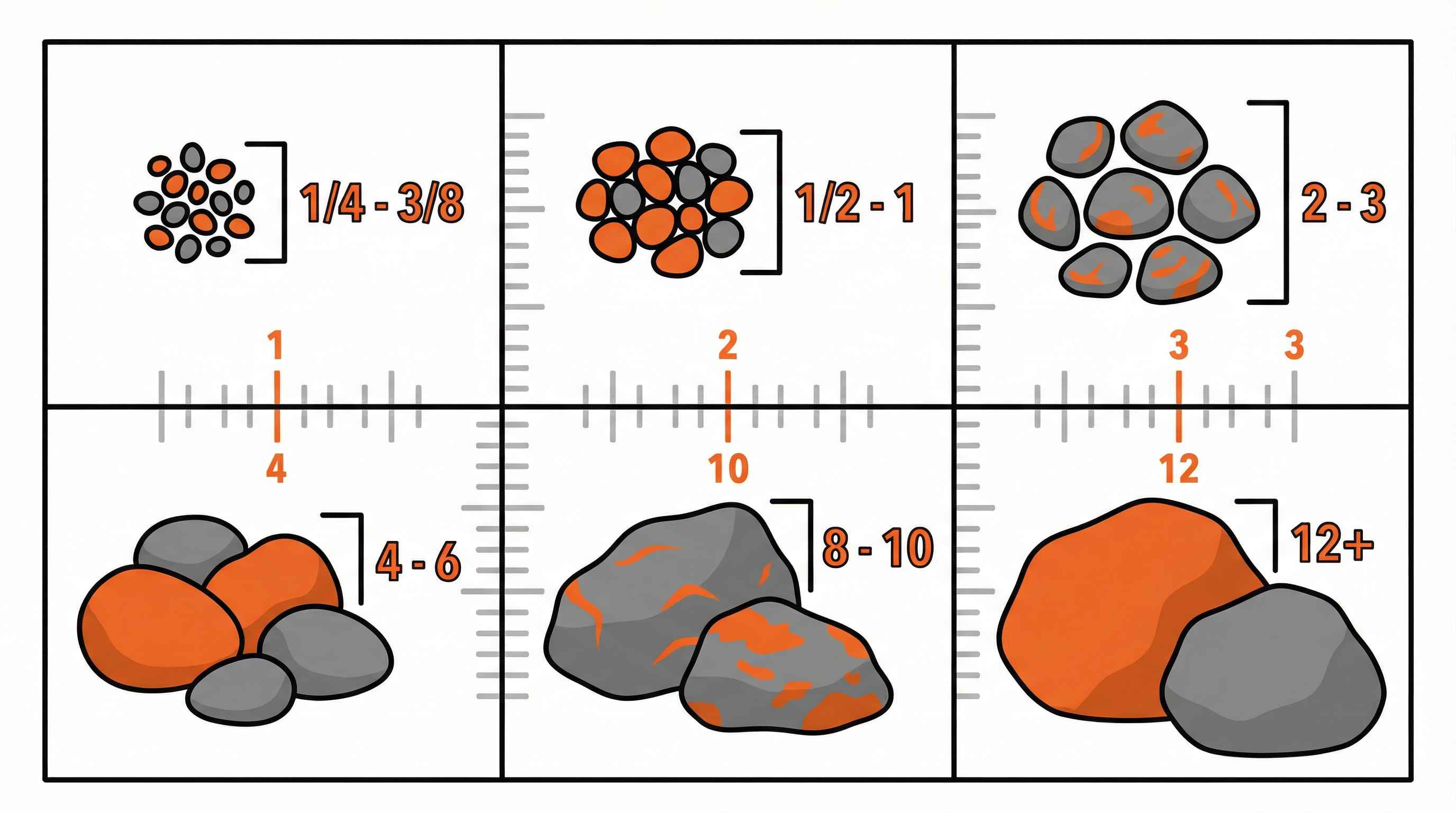
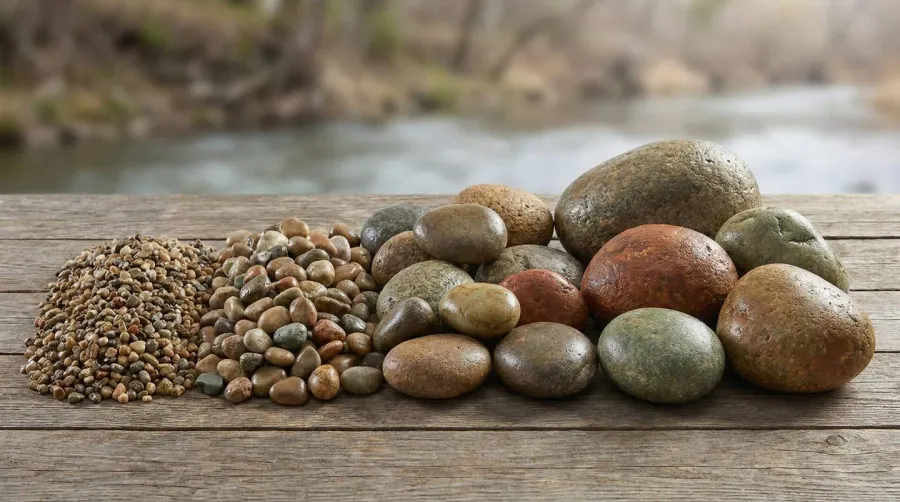
River rocks range from tiny 1/8-inch pea gravel to massive boulders over 8 inches in diameter. Understanding these size variations helps you choose the right material for drainage, pathways, decorative features, and structural applications in your landscaping project.
Whether you’re planning a garden pathway, installing drainage systems, or creating water features, selecting the correct river rock size makes the difference between a successful project and costly mistakes. The size determines everything from water flow rates to visual appeal and long-term stability.
Quick Answer: River rocks are classified into five main categories: pea gravel (1/8-3/8 inch), small pebbles (0.5-1 inch), medium rocks (1-3 inches), large rocks (3-8 inches), and boulders (over 8 inches). Each size serves specific landscaping and construction purposes.
River rock sizes chart
Here’s a comprehensive breakdown of river rock sizes with their specific measurements and best applications:
| Size Category | Diameter Range | Common Uses | Drainage Rating |
|---|---|---|---|
| Pea Gravel | 1/8 – 3/8 inch | Walkways, ground cover | Excellent |
| Small Pebbles | 0.5 – 1 inch | Decorative borders, mulch | Very Good |
| Medium Rocks | 1 – 3 inches | Dry riverbeds, retaining walls | Good |
| Large Rocks | 3 – 8 inches | Focal points, erosion control | Moderate |
| Boulders | 8+ inches | Statement pieces, shoreline protection | Limited |
The Udden-Wentworth scale, used by geologists worldwide, classifies particles from 4-64mm as pebbles and 64-256mm as cobbles. This scientific standard helps ensure consistency when ordering materials for your project.
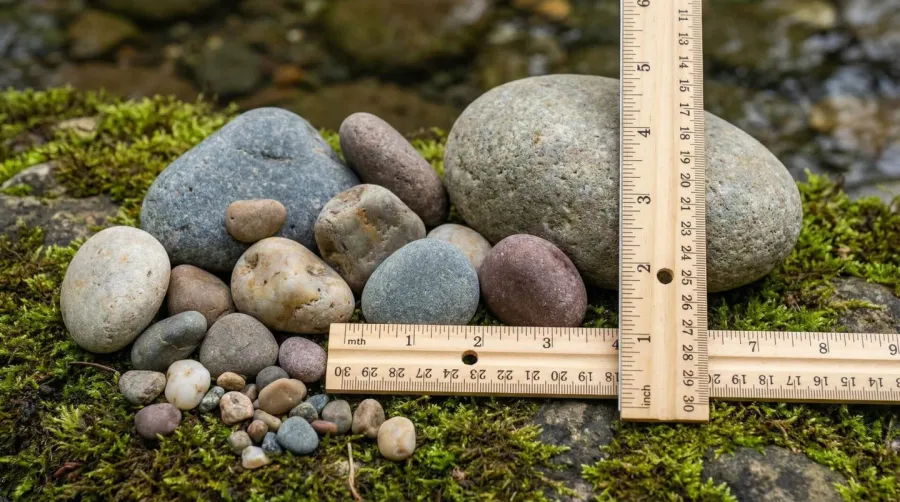
What determines river rock size
River velocity plays the primary role in determining rock size. Fast-flowing mountain streams carry away smaller particles, leaving behind larger rocks and boulders. Slower rivers allow fine sediments to settle while transporting medium-sized rocks downstream.
Geological factors also influence size distribution. Rivers originating in granite mountain regions typically contain larger, more angular rocks. In contrast, rivers flowing through sedimentary areas produce smaller, more rounded stones due to extended weathering processes. Regional variations like Tennessee river rock and Ohio river rock showcase how local geology creates distinct characteristics in color, texture, and size distribution.
Key Insight: Rivers with higher velocities naturally sort rocks by size, with the largest specimens remaining near the source and smaller particles traveling farther downstream.
Weathering and erosion continuously break down larger rocks into smaller fragments. Temperature changes, freeze-thaw cycles, and chemical weathering gradually reduce rock size over thousands of years. This natural process explains why river systems contain such diverse size ranges.
Choosing the right size for your project
Small river rocks work best for high-traffic areas like walkways and driveways. Their compact size creates stable surfaces that resist shifting under foot traffic. Pea gravel, the smallest category, provides excellent drainage while maintaining a neat appearance in formal landscapes.
Medium-sized rocks excel in decorative applications and functional drainage systems. They’re large enough to create visual interest but small enough to handle easily during installation. These rocks work particularly well in dry creek beds and around water features. For more detailed guidance on selecting appropriate dimensions, explore our guide on understanding river stone sizes.
Pro Tip: For retaining walls and erosion control, choose rocks at least 3 inches in diameter to ensure structural stability and prevent washout during heavy rains.
Large rocks and boulders serve as focal points and provide serious erosion protection. Their weight and size make them ideal for shoreline stabilization and creating dramatic landscape features. However, their installation requires heavy equipment and careful planning.
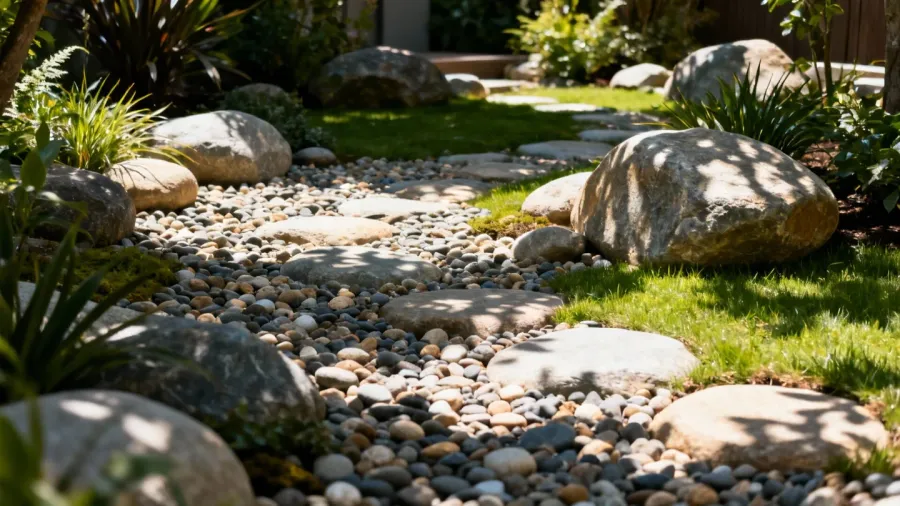
Practical applications by size category
Pea gravel shines in areas requiring good drainage and easy maintenance. It works perfectly between stepping stones, around outdoor furniture, and as a base layer under larger decorative rocks. Its small size allows for precise placement and creates clean, professional-looking edges.
Small to medium pebbles handle moderate foot traffic while providing attractive ground cover. They’re perfect for Japanese-style gardens, around tree bases, and in areas where you want texture without overwhelming nearby plants. These sizes also work well in permeable paving applications. If you’re considering river rock gravel sizes for specific landscaping needs, understanding how each category performs in different applications is essential.
Large rocks and boulders anchor landscape designs and solve practical problems. Use them to direct water flow, create seating areas, or establish property boundaries. Their substantial presence adds permanence and natural beauty to any outdoor space. Unique varieties like blue gray river rock can add distinctive color elements to your design.
When planning your project, consider both immediate needs and long-term maintenance. Smaller rocks may require occasional replenishment due to natural migration, while larger specimens typically stay in place for decades with minimal upkeep. Before starting, it’s wise to research where to buy river rock from reputable suppliers who can provide consistent quality and sizing.
Understanding river rock sizes empowers you to make informed decisions for your landscaping projects. From functional drainage solutions to stunning decorative features, choosing the right size ensures your investment delivers both beauty and performance for years to come.
FAQ
What are the different sizes of river rocks?
River rocks are classified into five main categories by diameter: pea gravel (1/8-3/8 inch), small pebbles (0.5-1 inch), medium rocks (1-3 inches), large rocks (3-8 inches), and boulders (over 8 inches). This classification follows the Udden-Wentworth geological scale used worldwide for consistent sizing standards.
What size river rock is best for walkways and pathways?
Small river rocks work best for walkways, particularly pea gravel (1/8-3/8 inch) and small pebbles (0.5-1 inch). Their compact size creates stable surfaces that resist shifting under foot traffic while providing excellent drainage and maintaining a neat, professional appearance in formal landscapes.
How does river velocity affect rock sizes?
River velocity plays the primary role in determining rock size distribution. Fast-flowing mountain streams carry away smaller particles, leaving behind larger rocks and boulders near the source. Slower rivers allow fine sediments to settle while transporting medium-sized rocks downstream, creating natural sorting by size.
What’s the difference between pea gravel and larger river rocks?
Pea gravel is the smallest river rock category (1/8-3/8 inch) and provides excellent drainage with easy maintenance, perfect for ground cover and between stepping stones. Larger river rocks (1-8+ inches) serve as focal points, erosion control, and structural elements but require heavier equipment for installation and create different visual impacts in landscaping.