
Gravel Cost Per Ton 2026 Complete Pricing Guide
Guide handoff
Want help applying this guide to your project?
Share your ZIP and what you need help with. We'll use this guide as context when we follow up.
- 1 This guide gives us the context you were reading.
- 2 Ask about pricing, material choice, delivery timing, or quantity.
- 3 Keep it broad if you are still figuring out the project.
Planning a construction or landscaping project and wondering about gravel costs? You can expect to pay between $15 to $75 per ton for gravel in 2026, with most common types falling in the $30-55 range. The final price depends on several factors including gravel type, quality, location, and quantity purchased.
Whether you’re building a gravel driveway, creating garden pathways, or working on drainage systems, understanding gravel pricing helps you budget accurately and avoid costly surprises. This guide breaks down current market prices, compares different gravel types, and shows you how to calculate exactly what you need for your project.
Current gravel prices by type in 2026
Different gravel types serve specific purposes and come with varying price points. Understanding these differences helps you choose the right material while staying within budget.
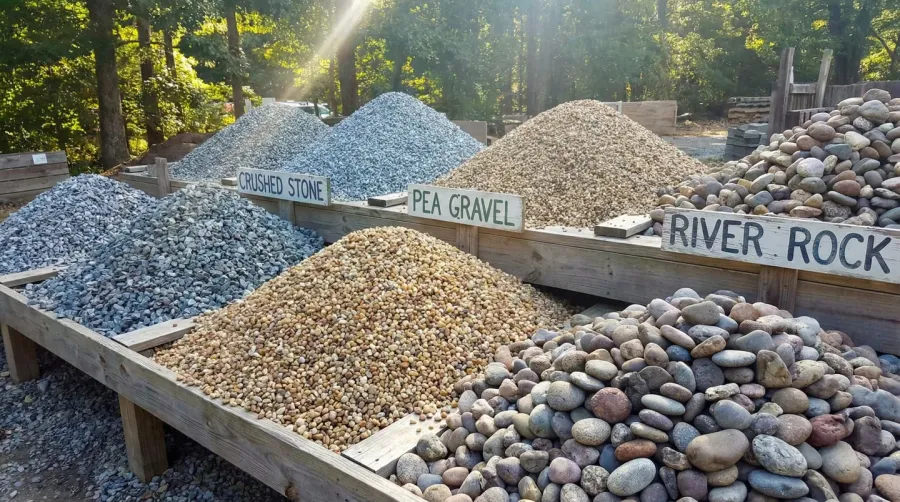
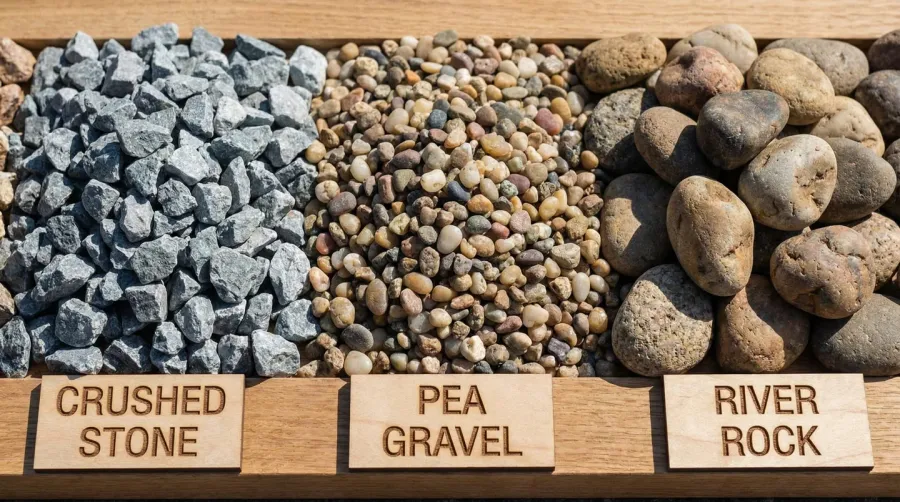
Crushed stone remains the most popular choice for construction projects, typically costing $40-75 per ton. This angular material provides excellent stability for driveways and foundations. The crushing process creates sharp edges that lock together, making it ideal for high-traffic areas.
Pea gravel offers a more decorative option at $30-55 per ton. These smooth, rounded stones work perfectly for pathways, drainage applications, and decorative landscaping. The smaller size and attractive appearance make it a favorite for residential projects. To learn more about specific pricing, check out our guide on how much a ton of pebbles costs.
River rock commands premium prices of $45-100 per ton due to its natural beauty and limited availability. These naturally weathered stones create stunning water features and decorative borders. The smooth, polished appearance justifies the higher cost for aesthetic applications. For detailed pricing information, visit our comprehensive guide to river stone prices.
Limestone gravel falls in the middle range at $30-100 per ton, depending on size and processing. According to industry data, #57 limestone (ranging from 1/2″ to 1″) remains popular for driveways and costs around $75-100 per ton. Learn more about limestone gravel pricing and factors to consider.
| Gravel Type | Price Range (Per Ton) | Best Uses | Key Benefits |
|---|---|---|---|
| Crushed Stone | $40-75 | Driveways, foundations | Excellent stability |
| Pea Gravel | $30-55 | Pathways, drainage | Decorative appeal |
| River Rock | $45-100 | Water features, borders | Natural beauty |
| Limestone | $30-100 | General construction | Versatile applications |
Factors that affect your gravel costs
Several key elements influence what you’ll ultimately pay for gravel. Understanding these factors helps you make smarter purchasing decisions and potentially reduce costs.
Location and transportation create the biggest price variations. Areas near quarries typically have lower prices due to reduced shipping costs. If you’re located far from the source, expect to pay $20-40 more per ton for transportation. Remote locations may see even higher delivery charges. At Hello Gravel, we work with local pits and haulers nationwide to minimize transportation costs and deliver materials efficiently across all 50 states.
Quality and grading standards directly impact pricing. Premium gravel with consistent sizing, minimal dust, and attractive appearance commands higher prices. Construction-grade materials cost less but may not be suitable for decorative applications where appearance matters. For more insights on decorative gravel prices and options, explore our detailed guide.
Quantity purchased offers significant savings opportunities. Most suppliers provide bulk discounts starting at 10 tons, with the best rates available for 20+ ton orders. Buying larger quantities reduces the per-ton cost because suppliers can deliver more efficiently. Hello Gravel specializes in transactions of 500 tons or more but accommodates smaller orders as well, ensuring you get competitive pricing regardless of project size. Discover the benefits of purchasing gravel by bulk to maximize your savings.
Money-saving tip: Ordering during off-peak seasons (late fall through early spring) can save you 15-25% on gravel costs due to reduced demand during slower construction periods.
Processing requirements add to the base cost. Specialty sizes, custom screening, or washed materials require additional processing steps that increase the final price. Standard sizes typically offer the best value for most projects.
How to calculate gravel needs and costs
Accurately determining how much gravel you need prevents costly overages or project delays. The calculation process involves measuring your space and converting to tons.
Start by measuring your project area in feet for length, width, and desired depth. Convert depth to feet by dividing inches by 12. For example, a 4-inch deep layer equals 0.33 feet.
Use this simple formula: Cubic feet needed = Length × Width × Depth (in feet). Then convert to tons by dividing cubic feet by the coverage rate. Most gravel covers about 80-100 square feet per ton at 2-inch depth. For a more detailed breakdown, see our article on the cost of gravel per yard.
Consider compaction factors when calculating. Loose gravel settles about 10-15% after installation, so add extra material to account for this natural compression. This prevents having too little material halfway through your project.
Factor in waste and spillage by adding 5-10% to your calculated amount. This buffer accounts for uneven surfaces, spillage during installation, and future maintenance needs. It’s better to have slightly too much than to halt work for additional deliveries.
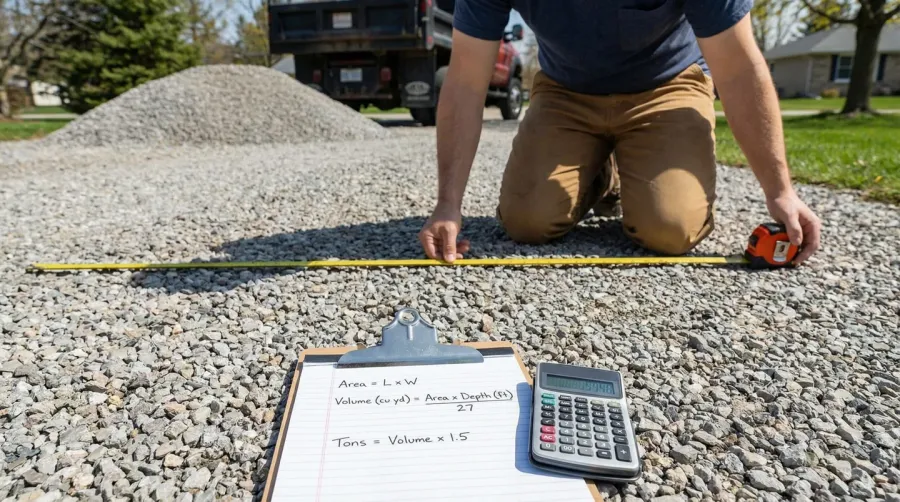
Online calculators can simplify this process, but understanding the basic math helps you verify results and make adjustments for specific project requirements. Hello Gravel provides an online material calculator to help you determine exactly how many cubic yards or tons you need based on your project measurements. If you’re wondering how much a yard of gravel costs, we’ve got you covered with detailed pricing information.
Smart strategies to reduce gravel expenses
Several proven approaches can significantly lower your gravel costs without compromising quality. These strategies work best when planned in advance.
Bulk purchasing offers the most substantial savings. Suppliers typically reduce prices by 15-30% for orders over 10 tons. If your project doesn’t require that much, consider coordinating with neighbors on similar projects to reach bulk pricing thresholds. Learn more about how to find the best deals on aggregates for large projects.
Seasonal timing can cut costs dramatically. Winter months often see 20-25% lower prices due to reduced demand. Planning your project for late fall or early spring delivery can result in significant savings, especially for larger orders.
Local sourcing eliminates expensive transportation costs. Research quarries and suppliers within 50 miles of your project site. Local materials often cost 25-40% less than those shipped from distant locations. Hello Gravel’s nationwide network allows us to source materials locally wherever your job is located, helping you avoid excessive transportation fees. Use our guide to find the best gravel around you for convenient options.
Pro tip: Get quotes from at least three suppliers and ask about price matching policies. Many companies will match competitor prices to secure your business, especially for larger orders.
Self-pickup options can save delivery fees ranging from $50-200. If you have access to a truck or trailer, picking up smaller quantities yourself eliminates transportation charges. This works best for projects under 5 tons. However, for larger orders, Hello Gravel’s delivery service with morning (7 am – 12 pm) or afternoon (12 pm – 5 pm) windows often provides better value when you factor in time and equipment costs.
Understanding gravel costs per ton in 2026 empowers you to make informed decisions for your construction or landscaping project. With prices ranging from $15-75 per ton depending on type and location, proper planning and smart purchasing strategies can save hundreds of dollars. Remember to calculate your needs accurately, get multiple quotes, and consider timing your purchase during off-peak seasons for the best deals. Hello Gravel’s streamlined ordering process and nationwide delivery network make it easier than ever to get quality materials at competitive prices, whether you’re a DIY homeowner, contractor, or municipality.
FAQ
How much does gravel cost per ton in 2026?
Gravel costs range from $15 to $75 per ton in 2026, with most common types falling between $30-55 per ton. Crushed stone typically costs $40-75 per ton, pea gravel ranges from $30-55 per ton, and river rock commands premium prices of $45-100 per ton. The final price depends on gravel type, quality, location, and quantity purchased.
What factors affect gravel costs the most?
Location and transportation create the biggest price variations, with areas far from quarries paying $20-40 more per ton for shipping. Quantity purchased offers significant savings with bulk discounts starting at 10 tons. Quality and grading standards, processing requirements, and seasonal timing also impact costs, with winter purchases potentially saving 20-25% due to reduced demand.
How do I calculate how much gravel I need for my project?
Measure your project area in feet (length × width × depth in feet) to get cubic feet needed. Most gravel covers about 80-100 square feet per ton at 2-inch depth. Add 10-15% for compaction and 5-10% for waste and spillage. For example, a 20×10 foot driveway at 4-inch depth needs approximately 2.7 cubic feet, which equals about 3-4 tons including buffers.
When is the best time to buy gravel to save money?
Late fall through early spring offers the best savings, with prices typically 15-25% lower during off-peak construction seasons. Winter months see the lowest demand and best deals. Combine seasonal timing with bulk purchasing (10+ tons) and local sourcing to maximize savings. Getting quotes from multiple suppliers and asking about price matching can also reduce costs significantly.