Can You Use Mulch Glue on Pea Gravel
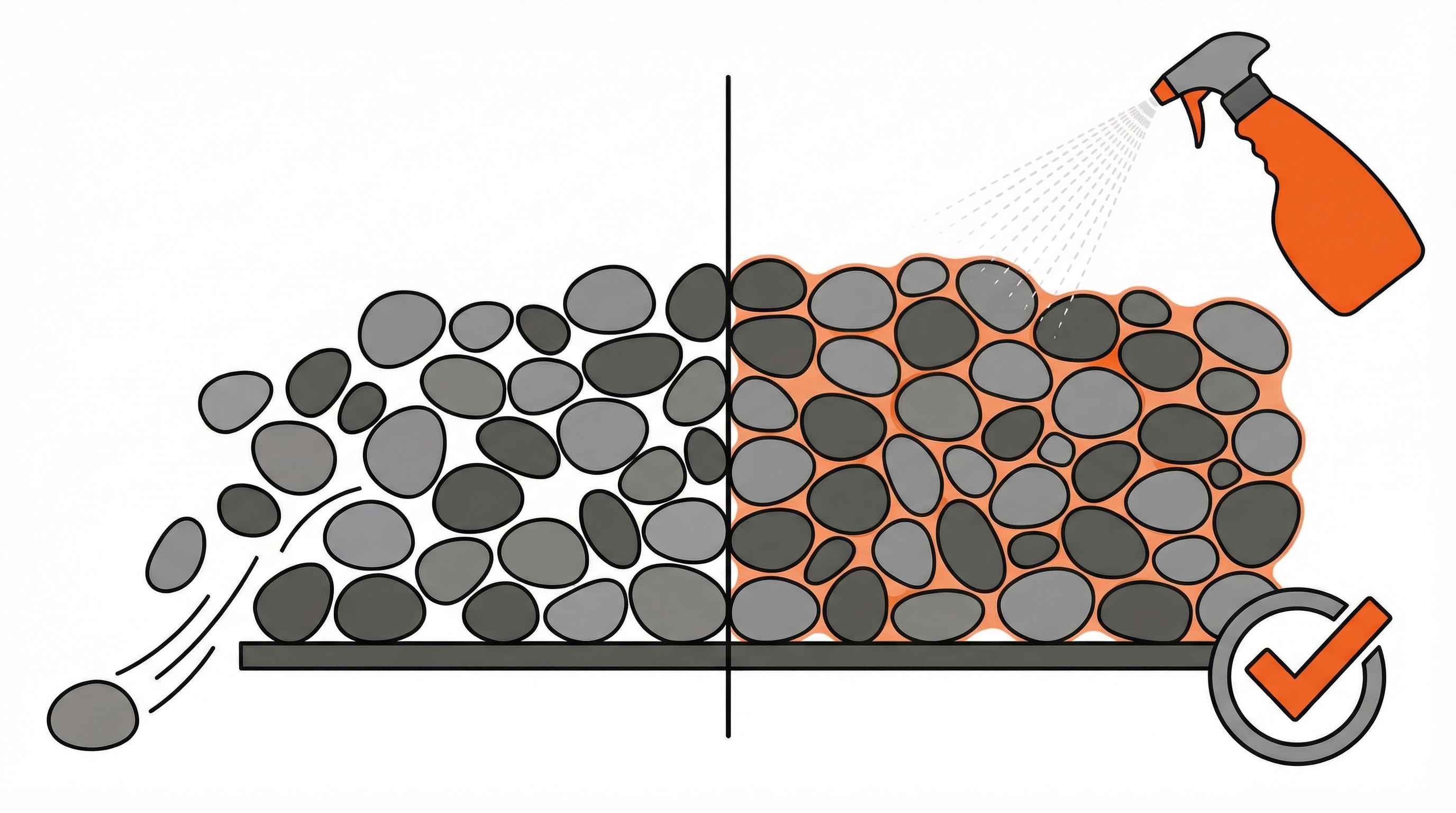
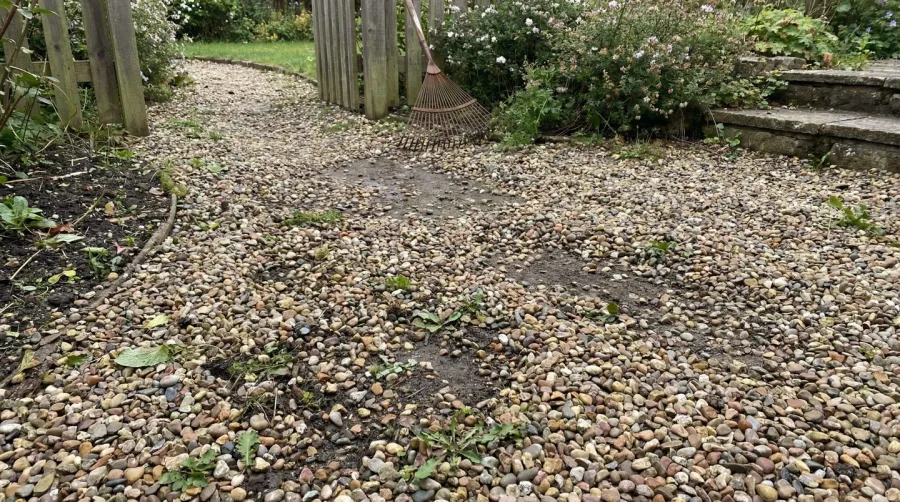
No, mulch glue is not effective for pea gravel. While mulch glue works well for organic materials like wood chips and bark, it struggles to create lasting bonds with non-porous pea gravel stones. The smooth, rounded surface of pea gravel prevents proper adhesion, and factors like rain, foot traffic, or wind can easily disrupt any superficial connection.
If you’re dealing with scattered pea gravel on your pathways or garden beds, you need a different solution. Gravel binders and stabilizers are specifically designed for stone materials and offer the durability you’re looking for.
Quick Fact: According to lowes.com, mulch glue is formulated specifically for organic materials and works by allowing water and nutrients to penetrate while keeping mulch in place.
Understanding pea gravel characteristics
Pea gravel consists of small, smooth stones typically measuring 1/8 to 3/8 inch in diameter. These naturally rounded stones are popular for pathways, patios, and decorative landscaping because they’re comfortable to walk on and provide excellent drainage.
The key challenge with pea gravel lies in its non-porous surface. Unlike organic mulch materials that have textured, absorbent surfaces, pea gravel stones are smooth and don’t readily accept adhesive products. This creates a fundamental compatibility issue with standard mulch glues.
Additionally, pea gravel’s weight and size make it prone to displacement. Even light foot traffic can cause individual stones to shift, and heavy rainfall can wash them away from their intended areas. Understanding how pea gravel drains is essential when considering stabilization methods.
Why mulch glue fails on pea gravel
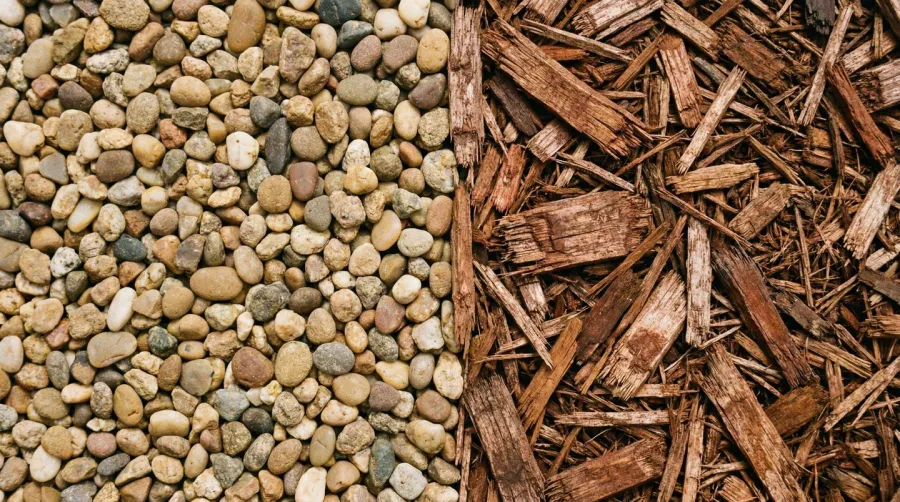
Mulch glue, also known as landscape adhesive, is specifically formulated for organic materials. As noted by accio.com, these products work by penetrating porous surfaces and creating flexible bonds that allow water infiltration.
When applied to pea gravel, mulch glue can only create surface-level contact. It doesn’t penetrate the stones or form the deep bonds necessary for long-term stability. Weather conditions quickly compromise these weak connections.
Heavy rain poses a particular challenge. Water can easily wash away the thin layer of adhesive between stones, causing the gravel to scatter just as it would without any treatment. Similarly, foot traffic applies direct pressure that breaks the superficial bonds.
Important Note: Professional landscapers report that mulch glue applications on pea gravel typically fail within weeks of installation, especially in high-traffic or weather-exposed areas.
Better alternatives for pea gravel stabilization
Gravel binders offer a superior solution for pea gravel projects. Unlike mulch glue, these products are engineered specifically for stone materials and create lasting stability. For those looking to properly secure decorative gravel, learning how to glue decorative gravel with the right products is crucial.
Gravel binders work by penetrating the spaces between stones rather than just coating surfaces. This creates a flexible matrix that holds stones in place while maintaining permeability for water drainage. The result is a stable surface that can withstand weather and moderate foot traffic.
According to blackdiamondcoatings.com, premium gravel stabilizers can last 12-24 months before requiring reapplication, compared to mulch glue which may fail within weeks on pea gravel.
| Product Type | Bond Strength | Durability | Water Permeability | Cost Range |
|---|---|---|---|---|
| Mulch Glue | Weak on gravel | 2-4 weeks | High | $3-6 per gallon |
| Gravel Binder | Strong | 12-24 months | High | $7-15 per gallon |
Application tips for gravel stabilizers
When using gravel binders, proper application ensures the best results. Start by cleaning debris from your pea gravel surface and ensuring the stones are completely dry before application.
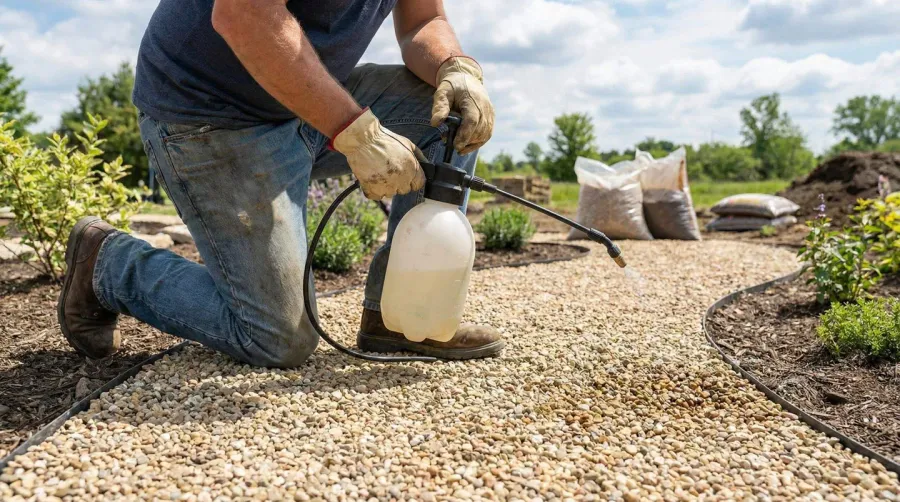
Use a garden sprayer for even coverage, applying the binder in thin, uniform coats. Most products require 6-24 hours to cure fully, depending on weather conditions. Avoid application when rain is forecast within 24 hours.
For areas with light foot traffic, consider compacting the gravel surface before applying the binder. While pea gravel doesn’t compact as well as angular materials, creating a more stable base improves the overall effectiveness of the stabilizer. This is especially important when working on garden paths or patio installations.
Pro Tip: Test any gravel binder on a small, inconspicuous area first to ensure you’re satisfied with the appearance and performance before treating the entire surface.
The environmental benefits of using proper gravel stabilizers extend beyond just aesthetics. When pea gravel stays in place, you reduce the need for frequent replacement, which decreases demand for quarrying and transportation. This approach supports more sustainable landscaping practices while maintaining the beautiful appearance of your outdoor spaces.
Choosing the right product for your pea gravel project makes all the difference. While mulch glue might seem like a convenient option, gravel binders provide the lasting stability and professional results you need for successful landscaping.
FAQ
Can you use mulch glue on pea gravel?
While some mulch glue products claim compatibility with pea gravel, they are not the most effective solution. Mulch glue is designed for organic materials and struggles to create lasting bonds with the smooth, non-porous surface of pea gravel. For better results, use gravel binders or stabilizers specifically designed for stone materials.
What are the best alternatives to mulch glue for pea gravel?
Gravel binders and stabilizers are the best alternatives to mulch glue for pea gravel. These products are specifically engineered for stone materials and create a flexible matrix that holds stones in place while maintaining water permeability. They typically last 12-24 months compared to mulch glue which may fail within weeks on pea gravel.
Is mulch glue permeable and environmentally safe?
Yes, most mulch glues are designed to be permeable, allowing water, air, and nutrients to pass through while stabilizing surfaces. Quality mulch glues are typically non-toxic and water-based, minimizing environmental impact. However, their effectiveness on pea gravel is limited compared to specialized gravel stabilizers.
How should gravel binders be applied to pea gravel?
Clean debris from the pea gravel surface and ensure stones are completely dry before application. Use a garden sprayer for even coverage, applying the binder in thin, uniform coats. Most products require 6-24 hours to cure fully, and you should avoid application when rain is forecast within 24 hours. Test on a small area first to ensure satisfaction with results.