
Crushed Stone vs Gravel for Bike Paths Complete Surface Comparison Guide
Guide handoff
Want help applying this guide to your project?
Share your ZIP and what you need help with. We'll use this guide as context when we follow up.
- 1 This guide gives us the context you were reading.
- 2 Ask about pricing, material choice, delivery timing, or quantity.
- 3 Keep it broad if you are still figuring out the project.
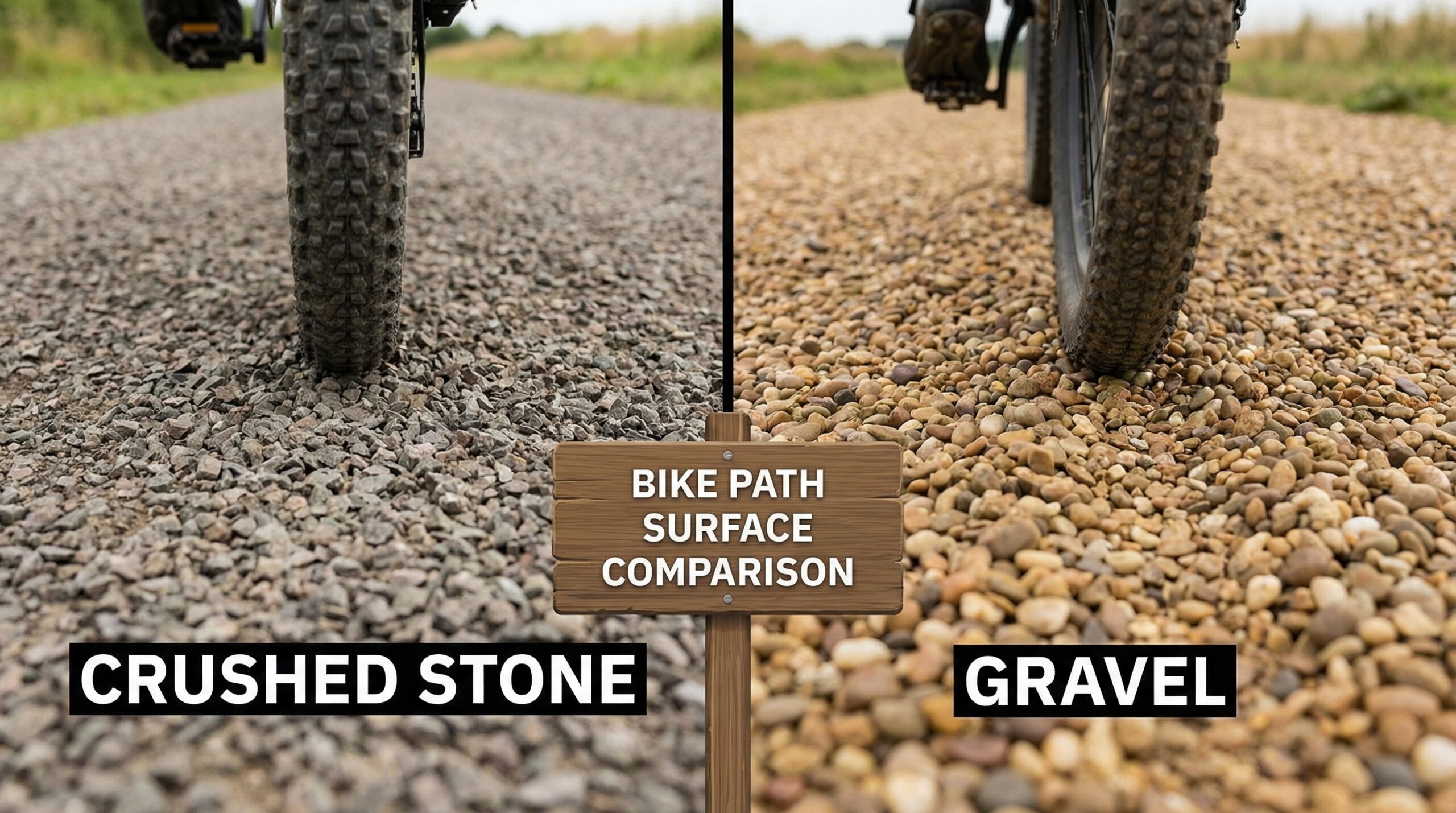
Building a bike path that stays rideable through all seasons starts with choosing the right surface material. You need something that won’t turn into a muddy mess after the first heavy rain or develop ruts that make cycling uncomfortable and potentially dangerous.
Crushed stone typically outperforms gravel for bike paths due to its superior stability and drainage characteristics. The angular particles interlock when compacted, creating a firm surface that handles bike traffic and weather conditions better than rounded gravel stones.
Quick Answer: Crushed stone offers better stability and drainage for high-traffic paths, while gravel provides a softer ride and natural look but requires more maintenance.
Your choice between these materials depends on your specific project needs, expected traffic levels, and long-term maintenance capabilities. This guide breaks down the performance differences to help you make the right decision for your trail.
Understanding crushed stone and gravel characteristics
The fundamental difference between these materials lies in their particle shape and how they behave when compacted. This affects everything from ride quality to long-term durability.
Crushed stone consists of mechanically broken rock with sharp, angular edges. When you compact these particles, they lock together like puzzle pieces, creating a stable foundation that resists movement under load. The angular shape provides excellent load-bearing capacity, similar to how hellogravel.com demonstrates in parking area applications.
Gravel features naturally rounded stones, typically smoothed by water erosion over thousands of years. These rounded particles don’t interlock as effectively, which can lead to shifting and movement, especially on slopes or under heavy use.
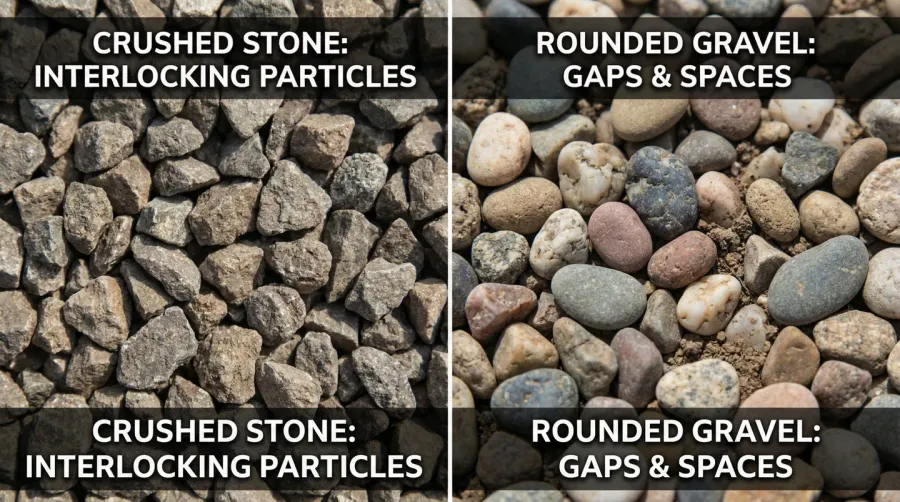
The shape difference significantly impacts bike path performance. Angular crushed stone provides better traction and stability, while rounded gravel offers a softer feel but may develop loose spots that affect bike handling and safety. For those considering exploring gravel alternatives for bike path projects, understanding these fundamental characteristics is essential.
Crushed stone performance and applications
Crushed stone excels when you need maximum stability and consistent performance across different weather conditions. The interlocking particles create a surface that maintains its structure under stress.
Stability and drainage advantages
The angular particles compact into a firm surface that handles varied weather conditions exceptionally well. Excellent drainage prevents puddle formation, while superior stability on inclines and corners reduces maintenance needs. Well-compacted crushed stone screenings create a surface comfortable for road bikes while accommodating mountain bikes and hybrids.
Best use scenarios
High-traffic commuter paths benefit most from crushed stone’s durability. Trails with significant elevation changes, areas with poor drainage or clay soils, and paths requiring maintenance vehicle access all perform better with this material. Municipal greenways and rails-to-trails conversions often choose crushed stone for its long-term reliability.
The key consideration involves proper sizing and installation. Screenings or 3/8-inch crushed stone work best for bike paths when properly compacted. Larger sizes create an uncomfortable, bumpy ride that discourages casual cyclists. If you’re interested in learning more about using crushed stone as a gravel alternative for bike path projects, you’ll find detailed installation guidance there.
Installation Tip: Proper base preparation and compaction prevent washboarding and loose spots that can cause crashes.
Gravel characteristics and ideal uses
Gravel paths offer a different riding experience that many cyclists prefer for recreational trails and scenic routes. The rounded particles create a softer surface that feels more natural under tires.
Comfort and aesthetic benefits
Gravel provides a comfortable ride quality for wider tires and maintains a natural aesthetic that blends into park settings. Installation proves easier for DIY projects, and initial material costs typically run lower than crushed stone. This makes gravel particularly suitable for family-friendly paths where speed isn’t the primary concern.
Optimal applications
Low-traffic park loops, nature trails, and interpretive paths work well with gravel surfaces. Temporary or seasonal routes benefit from gravel’s easier installation, especially in areas where maintaining a natural appearance matters most. Projects with limited budgets or where professional installation isn’t available often choose gravel.
However, gravel has performance limitations for high-traffic cycling. It can shift and ravel over time, creating loose spots that affect bike handling. Narrow road bike tires may struggle with larger gravel sizes, and the surface requires more frequent maintenance to stay smooth. Some builders also consider river rock as a gravel alternative for bike path projects, though it shares similar challenges with traditional gravel.
Performance comparison and cost analysis
Understanding how these materials perform across different factors helps you choose the right option for your specific trail conditions and user requirements.
| Factor | Crushed Stone | Gravel |
|---|---|---|
| Stability | Excellent – interlocks when compacted | Good – may shift over time |
| Drainage | Superior – angular voids shed water | Good – depends on size and fines |
| Comfort | Firm ride, minimal vibration | Softer feel, more forgiving |
| Maintenance | Moderate – occasional releveling | Higher – regular raking needed |
Performance differences become most apparent in challenging conditions. Crushed stone maintains its structure in wet weather and under heavy use, while gravel may develop soft spots or washouts. For speed and efficiency, crushed stone typically offers lower rolling resistance once properly compacted.
Cost considerations vary by region, but gravel often costs less initially. However, crushed stone’s lower maintenance requirements can make it more economical long-term for busy trails. Factor in the total cost of ownership, including periodic resurfacing and edge maintenance when making your decision. Some builders also evaluate quarry process as a gravel alternative for bike path projects for its cost-effectiveness.
Pro Tip: Invest in proper base preparation and edge details regardless of material choice. A well-built gravel path outperforms a poorly installed crushed stone trail every time.
Installation requirements and design considerations
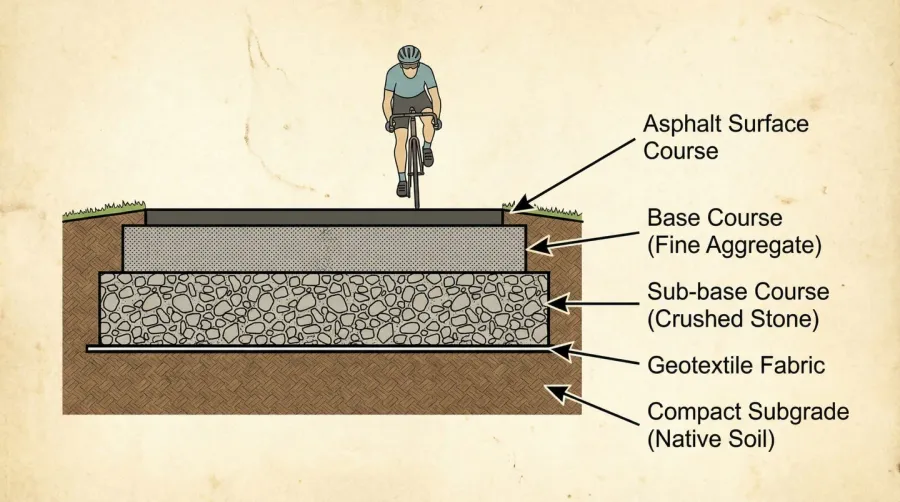
Successful bike path construction depends more on proper installation than material choice alone. Both crushed stone and gravel need adequate base preparation to perform well over time.
Essential preparation includes excavating to proper depth, installing a compacted sub-base when needed, ensuring proper drainage with cross-slope, and compacting each layer thoroughly. Most bike paths need 2-4 inches of surface material over a prepared base, following the same principles used in hellogravel.com limestone trail construction.
Key design factors include path width (typically 8-10 feet for shared use), edge containment to prevent material migration, and transition details at road crossings or bridges. Proper grading prevents water from pooling and undermining the surface over time.
For crushed stone paths, use screenings or small angular stone for the top layer. This creates a smooth, firm surface while maintaining the stability benefits of angular material. Gravel paths benefit from mixing some fines into the surface layer to improve compaction and reduce loose material. Builders may also want to consider decomposed granite as a gravel alternative for bike path projects for its excellent compaction properties.
The choice between crushed stone and gravel ultimately depends on your specific priorities and constraints. Crushed stone delivers better performance for high-traffic, all-weather use, while gravel works well for recreational trails where natural aesthetics and softer ride quality matter more than maximum durability. Consider your long-term maintenance capabilities and user expectations when making this important decision for your bike path project.
FAQ
Is crushed stone better than gravel for bike paths?
Yes, crushed stone is generally better than gravel for bike paths due to its angular particles that interlock when compacted, creating superior stability and drainage. While cyclists report being only 1-2 mph slower on crushed stone compared to pavement, the material handles heavy traffic and wet conditions much better than rounded gravel stones that tend to shift and create loose spots.
What size crushed stone is best for bike paths?
Screenings or 3/8-inch crushed stone work best for bike paths. These smaller sizes compact into a smooth, firm surface that’s comfortable for road bikes, hybrids, and mountain bikes while maintaining the stability benefits of angular material. Larger sizes create an uncomfortable, bumpy ride that discourages casual cyclists.
How thick should a crushed stone bike path be?
Most bike paths need 2-4 inches of crushed stone surface material over a properly prepared and compacted base. The total construction depth typically ranges from 6-10 inches depending on soil conditions and expected traffic levels. Proper base preparation and compaction are more important than sheer thickness for long-term performance.
Does crushed stone require more maintenance than gravel on bike paths?
No, crushed stone typically requires less maintenance than gravel on bike paths. The interlocking angular particles stay in place better, requiring only occasional releveling. Gravel paths need more frequent raking and maintenance to address shifting material and loose spots that develop over time, especially after heavy rain or on slopes.