
Complete Guide to Landscape Rock Delivery and Installation in 2026
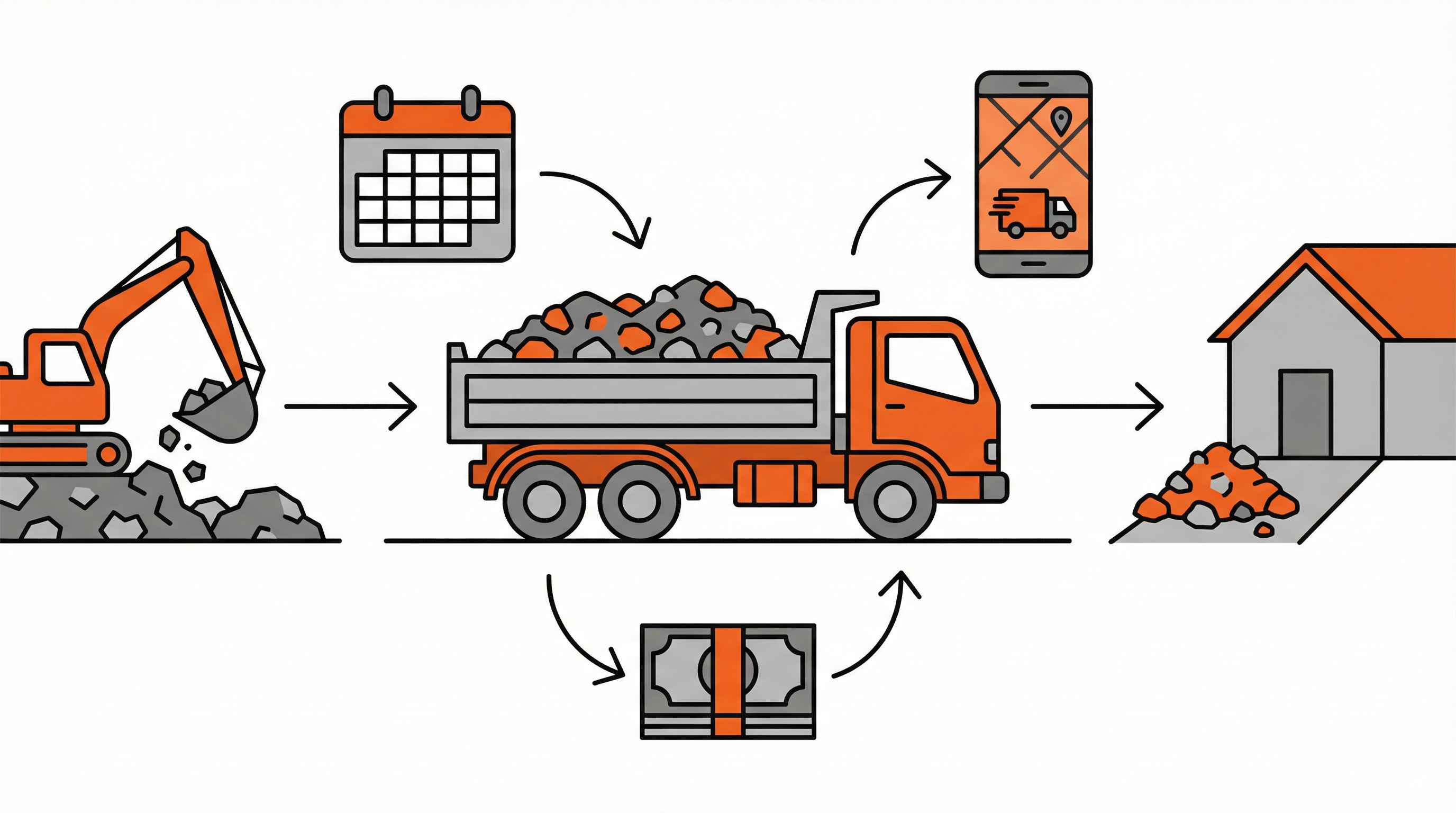
Guide handoff
Want help applying this guide to your project?
Share your ZIP and what you need help with. We'll use this guide as context when we follow up.
- 1 This guide gives us the context you were reading.
- 2 Ask about pricing, material choice, delivery timing, or quantity.
- 3 Keep it broad if you are still figuring out the project.
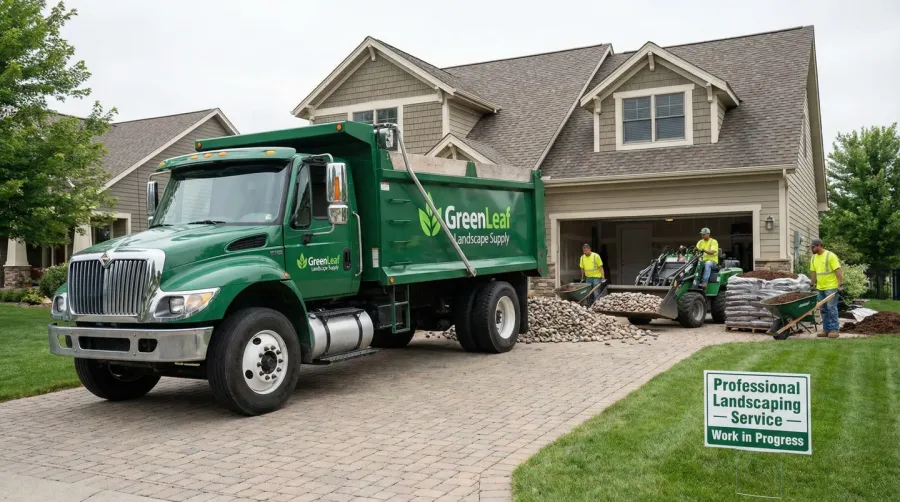
Planning to transform your outdoor space with landscape rocks? You’re making a smart choice that can dramatically enhance your property’s curb appeal while providing practical benefits like drainage and erosion control. Whether you’re creating garden pathways, decorative borders, or functional drainage solutions, understanding the delivery and installation process ensures your project succeeds.
Quick Answer: Most landscape rock delivery services require minimum orders of 3-5 tons, with costs ranging from $300-900 depending on rock type and delivery distance. Professional installation typically takes 1-3 days for residential projects.
This guide walks you through everything from selecting the right rocks to managing delivery logistics and proper installation techniques. You’ll discover how to calculate material needs accurately, prepare your property for delivery, and achieve professional-looking results that last for years.
Understanding landscape rock delivery basics
Getting landscape rocks delivered involves more than just placing an order and waiting for a truck to arrive. The process starts with understanding what types of materials work best for your specific project goals.
Most suppliers offer three main categories of landscape rocks. Decorative stones like river rocks and pea gravel enhance visual appeal and work perfectly for garden beds and walkways. Construction materials such as crushed limestone and granite provide structural support for retaining walls and drainage systems. Specialty rocks like flagstone create beautiful surfaces for patios and outdoor living areas.
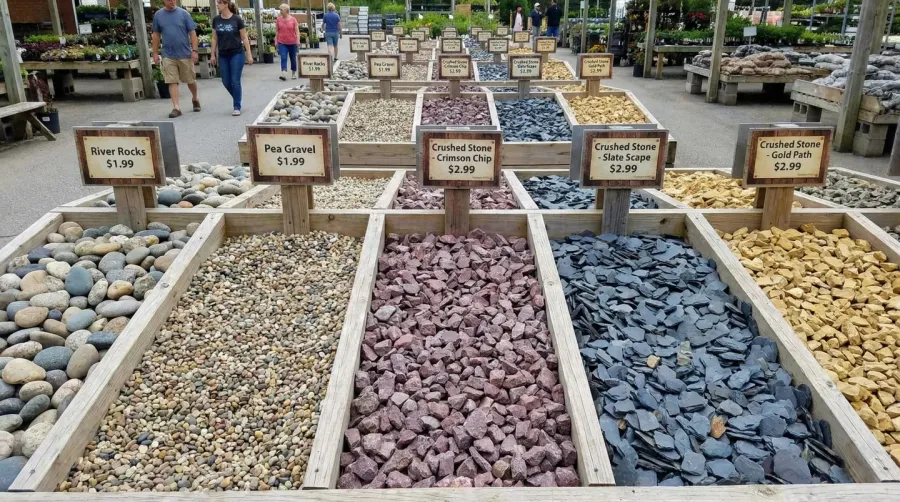
The delivery process itself requires coordination between you and the supplier. Professional delivery services use specialized trucks equipped with hydraulic lifts to safely transport and unload materials. These vehicles need adequate space to maneuver, typically requiring at least 12 feet of width and overhead clearance for safe operation.
Pro Tip: Schedule your delivery for a time when you can be present to direct placement and inspect materials for quality before the truck leaves your property.
Timing matters significantly for successful delivery. Most suppliers offer delivery windows rather than exact times, so plan your schedule accordingly. Weather conditions can affect delivery schedules, especially for unpaved access routes that become impassable when wet.
Calculating material needs and costs
Accurate quantity estimation prevents the frustration of running short on materials or overspending on excess rocks. The calculation process involves measuring your project area and determining the appropriate depth for your specific application.
Start by measuring the length and width of your project area in feet, then multiply these numbers to get square footage. Next, determine the depth you need based on your project type. Decorative applications typically require 2-3 inches of depth, while structural projects may need 4-6 inches or more.
| Rock Type | Cost Per Ton | Typical Coverage | Best Applications |
|---|---|---|---|
| River Rock | $100-200 | 80-100 sq ft (3″ deep) | Garden beds, water features |
| Pea Gravel | $80-150 | 100-120 sq ft (2″ deep) | Walkways, play areas |
| Crushed Stone | $30-80 | 90-110 sq ft (3″ deep) | Driveways, drainage |
Several factors influence your total project cost beyond just material prices. Delivery fees typically range from $50-150 depending on distance and load size. Most suppliers require minimum orders of 3-5 tons for delivery, making bulk purchases more cost-effective than multiple small orders.
Geographic location significantly affects pricing. Urban areas often have higher delivery costs due to traffic and parking restrictions, while rural locations may incur distance surcharges. Specialty rocks or custom color selections generally cost more than standard materials.
Preparing your property for delivery
Proper preparation ensures smooth delivery and protects both your property and the delivery crew. Start by clearing the delivery path of any obstacles that could impede truck access or damage your landscaping.
Remove parked vehicles, garden furniture, and any decorative elements from the delivery route. Trim overhanging branches that might interfere with the delivery truck’s hydraulic lift operation. If you have underground utilities, mark their locations clearly to prevent accidental damage during unloading.
Choose your material placement location carefully. Rocks should be deposited as close as possible to your installation site to minimize manual hauling later. However, ensure the location won’t damage existing landscaping or block normal property access during your project timeline.
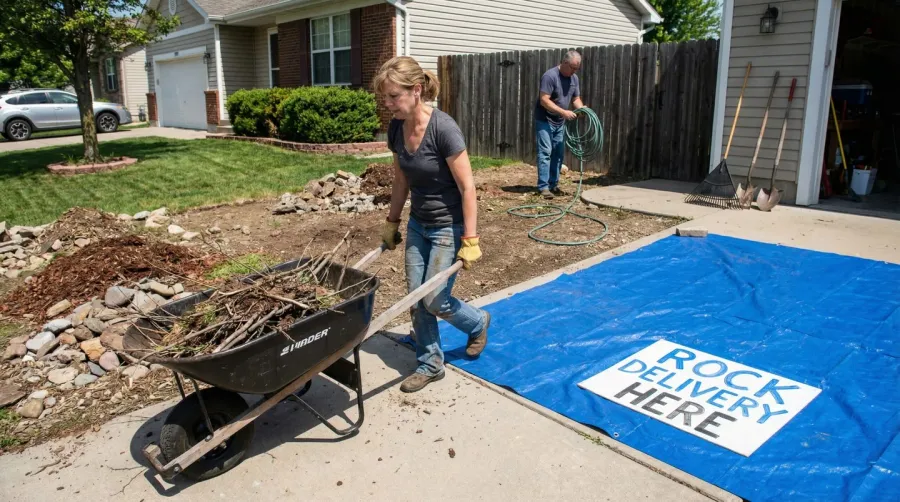
Consider ground conditions when selecting your drop-off location. Soft or recently watered soil may not support the weight of a fully loaded delivery truck. If necessary, request that materials be placed on a hard surface like your driveway, even if it means additional transport to your project site.
Safety preparation protects everyone involved in the delivery process. Keep children and pets indoors or in a secure area away from the delivery zone. Inform the delivery crew about any potential hazards on your property, such as septic systems, irrigation lines, or fragile landscaping features.
Important: Most delivery trucks weigh 25,000-40,000 pounds when fully loaded. Ensure your driveway and chosen unloading area can support this weight without damage.
Professional installation techniques
Successful landscape rock installation requires proper site preparation and systematic material placement. The process begins with preparing your installation area to ensure long-lasting results and optimal performance.
Clear the installation area of all vegetation, debris, and loose soil. Level the ground using a rake or shovel, removing any high spots that could create uneven surfaces later. For areas with poor drainage, consider adding a base layer of crushed stone to improve water flow and prevent settling.
Installing landscape fabric or weed barrier prevents unwanted plant growth while allowing proper drainage. Roll the fabric across your prepared area, overlapping seams by at least 6 inches. Secure edges with landscape pins or staples, ensuring the material lies flat without wrinkles or air pockets.
Begin rock placement systematically, starting from one corner and working across the area methodically. Pour rocks in small sections rather than dumping entire loads in one spot. This approach allows better control over depth and distribution while preventing damage to your weed barrier.
Use a rake to spread rocks evenly, maintaining consistent depth throughout the installation. For decorative applications, aim for 2-3 inches of depth, while functional projects like drainage areas may require 4-6 inches. Avoid walking directly on newly placed rocks, as this can create uneven spots and compact the material.
Create clean edges using metal or plastic edging materials to define your rock installation boundaries. This prevents rocks from migrating into lawn areas and maintains crisp, professional-looking borders. Install edging slightly below the final rock surface level for the most natural appearance.
The final step involves light compaction to settle materials and eliminate air pockets. Use a hand tamper for small areas or rent a plate compactor for larger installations. Work systematically across the entire area, making multiple passes until the surface feels stable and uniform.
Your landscape rock installation will provide years of beauty and functionality when properly executed. Regular maintenance involves occasional raking to redistribute settled materials and periodic inspection for any areas that may need additional rocks due to natural settling or weather effects. For more guidance on choosing the right landscape rock company or exploring decorative gravel options, consult with experienced suppliers who can help you select materials that match your specific needs.
Transform your outdoor space today with professional-quality landscape rock installation. The investment in proper materials and installation techniques pays dividends in enhanced property value and reduced long-term maintenance requirements.
FAQ
How much does a yard of landscape rock cover?
One cubic yard of landscape rock typically covers approximately 100 square feet at 3 inches deep, 162 square feet at 2 inches deep, or 324 square feet at 1 inch deep. The exact coverage depends on the rock size and your desired depth. For decorative applications like garden beds, plan for 2-3 inches deep, while functional projects may require 4-6 inches for proper drainage and stability.
What is the minimum order for landscape rock delivery?
Most landscape rock suppliers require minimum orders of 3-5 tons for delivery service. This translates to roughly 2-3 cubic yards depending on the rock type. Delivery fees typically range from $50-150 based on distance and load size, making bulk purchases more cost-effective than multiple small orders. Some suppliers offer reduced delivery fees for orders over 10 tons.
How do I prepare my property for landscape rock delivery?
Clear a delivery path at least 12 feet wide with adequate overhead clearance for the delivery truck. Remove parked vehicles, garden furniture, and trim overhanging branches. Choose a drop-off location as close as possible to your installation site on firm ground that can support 25,000-40,000 pounds. Mark underground utilities by calling 811, and keep children and pets away from the delivery area for safety.
How long does landscape rock installation take?
Professional landscape rock installation typically takes 1-3 days for residential projects, depending on the area size and complexity. A 500 square foot area can usually be completed in one day with proper preparation. Factors affecting timeline include site preparation requirements, accessibility, weather conditions, and whether you’re installing drainage systems or edging materials alongside the rocks.