
Best Rock for Driveway Base Complete Guide to Crushed Stone, Gravel & More
Guide handoff
Want help applying this guide to your project?
Share your ZIP and what you need help with. We'll use this guide as context when we follow up.
- 1 This guide gives us the context you were reading.
- 2 Ask about pricing, material choice, delivery timing, or quantity.
- 3 Keep it broad if you are still figuring out the project.
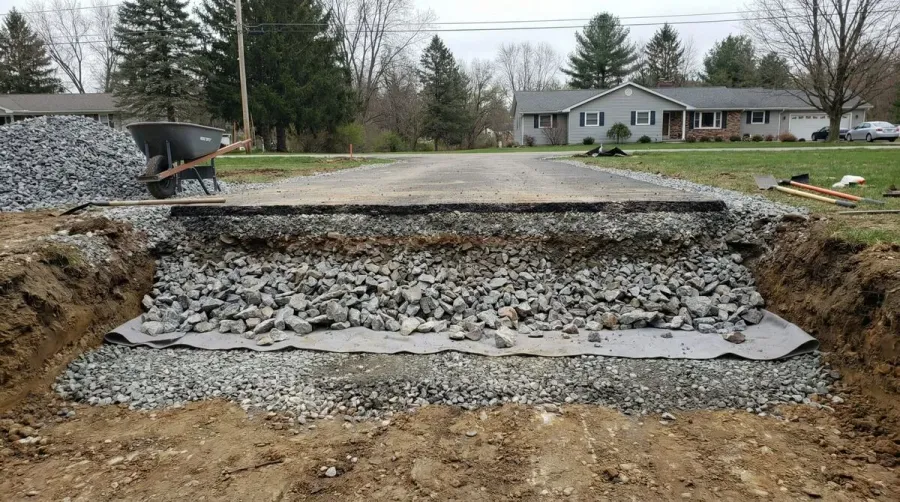
Building a driveway that lasts starts with choosing the right rock for your base. The foundation you select determines whether your driveway will crack within a few years or remain stable for decades. Crushed stone and road base are the most compactable and durable options for driveway foundations, offering superior stability compared to regular gravel or decorative stones.
Your driveway base acts like the foundation of a house. Without proper materials, even the best surface treatment will fail. The right rock base prevents settling, improves drainage, and distributes vehicle weight evenly across the surface.
Quick Fact: A properly installed rock base can reduce driveway maintenance costs by up to 75% over 10 years compared to poorly constructed foundations.
In this guide, you’ll discover which rock materials work best for different situations, how to evaluate your specific needs, and practical installation steps that ensure long-term success.
Understanding driveway base fundamentals
Your driveway base serves as the structural foundation that supports everything above it. Think of it like the concrete slab under your house – without it, everything shifts and cracks over time.
A solid base performs three critical functions. First, it distributes the weight of vehicles across a wider area, preventing concentrated pressure points that cause rutting. Second, it provides drainage pathways that direct water away from the surface, reducing freeze-thaw damage. Third, it creates a stable platform that prevents the surface materials from shifting or settling unevenly.
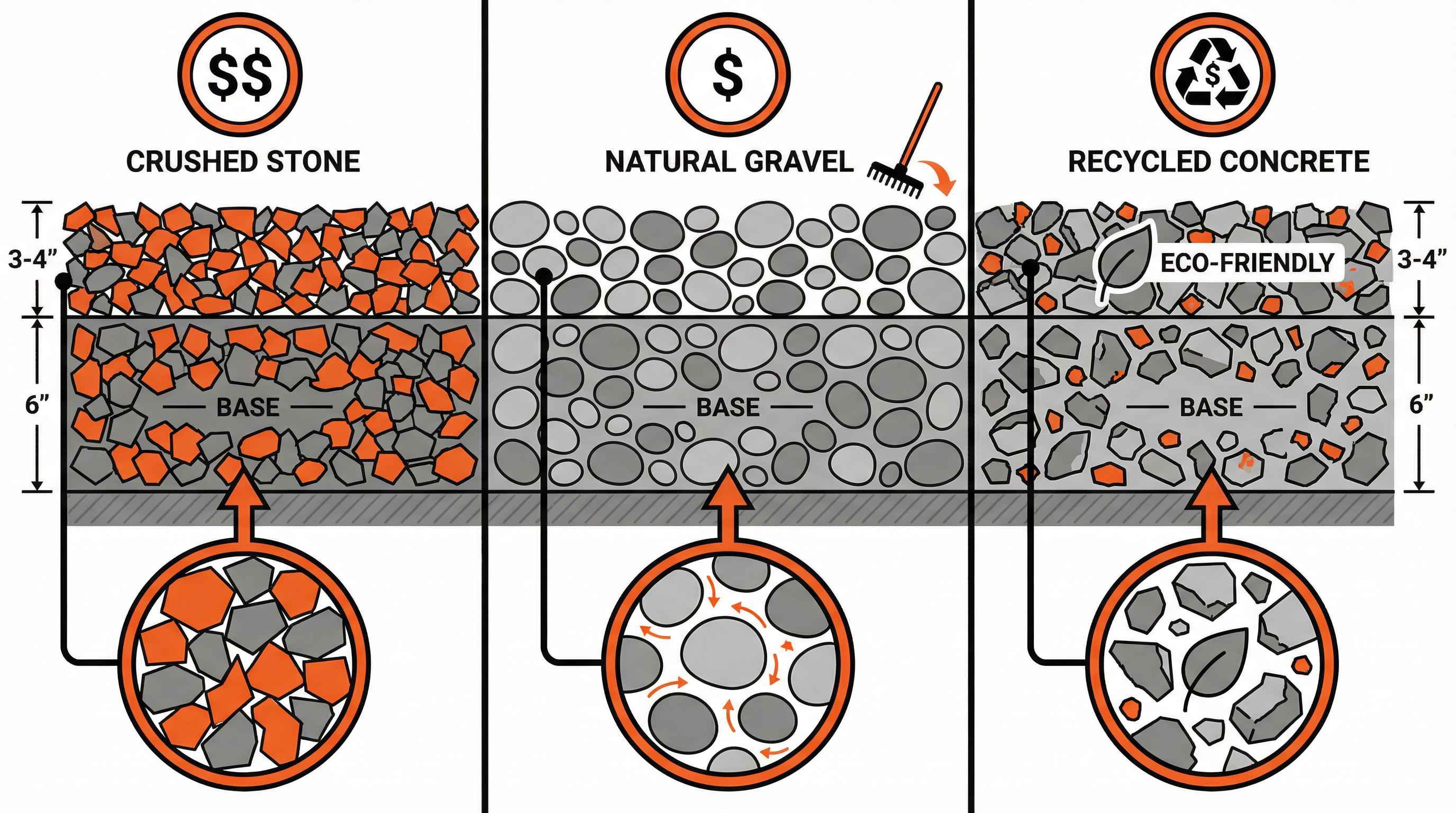
The base typically consists of angular, crushed materials rather than smooth, rounded stones. Angular pieces lock together when compacted, creating a stable matrix that resists movement. This interlocking effect is why crushed stone outperforms river rock or pea gravel for structural applications.
Most residential driveways require a base depth of 4-6 inches for standard passenger vehicles. Commercial applications or areas with heavy truck traffic may need 8-12 inches of base material to handle the increased loads safely.
Top rock materials for driveway bases
Crushed stone foundations
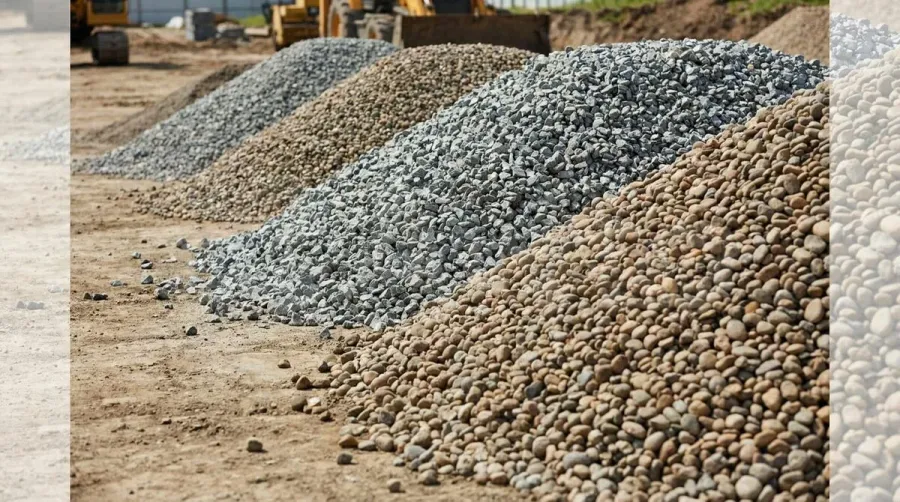
Crushed stone ranks as the premium choice for driveway bases due to its exceptional stability and drainage properties. The angular fragments, typically ranging from 3/4 inch to 2 inches, create strong interlocking connections when properly compacted.
The crushing process creates varied particle sizes that fill gaps between larger pieces, resulting in a dense, stable foundation. This material handles heavy loads exceptionally well and maintains its structure through multiple freeze-thaw cycles. Learning how to level a crushed stone base properly is essential for achieving optimal performance.
Installation requires proper grading and compaction in 2-inch lifts to achieve maximum density. While crushed stone costs more initially than other options, it typically requires less maintenance and provides superior long-term performance.
Road base and crusher run
Road base, also known as crusher run or ABC (Aggregate Base Course), combines crushed stone with fine particles to create an extremely stable foundation. The mixture includes stones ranging from 1.5 inches down to dust-sized particles.
This material compacts to form an almost concrete-like surface when properly installed. The fine particles fill voids between larger stones, creating exceptional load-bearing capacity and weather resistance. If you’re exploring the best aggregate base for driveways, road base consistently ranks among the top choices.
Installation Tip: Road base requires moisture during compaction to achieve proper binding. Light water application during rolling helps the fines bind together for maximum stability.
Road base works particularly well in areas with challenging soil conditions or high traffic loads. It’s often the preferred choice for commercial driveways and residential applications that regularly accommodate heavy vehicles.
Gravel base considerations
Traditional gravel offers an economical base option but requires careful selection to ensure adequate performance. The best gravel for base applications features angular shapes rather than rounded river rock.
Gravel provides excellent drainage but may require more frequent maintenance than crushed stone alternatives. The individual stones can shift over time, especially under heavy loads or during freeze-thaw cycles. For those seeking budget-friendly options, exploring the cheapest gravel for driveways can help balance cost with performance.
For residential applications with light to moderate traffic, properly installed gravel can provide satisfactory performance at a lower initial cost. However, expect to perform periodic releveling and material addition to maintain optimal conditions.
Choosing the right material for your situation
Your local climate significantly impacts material selection. Areas with frequent freeze-thaw cycles benefit from materials with excellent drainage properties, such as crushed stone or road base. These materials allow water to drain quickly, reducing the expansion forces that cause cracking and heaving.In regions with heavy rainfall, drainage becomes the primary concern. Materials that promote water flow while maintaining stability work best. Avoid fine-grained materials that can become saturated and lose their load-bearing capacity.
Consider your driveway’s intended use when selecting materials. A residential driveway serving two cars has different requirements than a commercial entrance handling delivery trucks daily. Heavy-duty applications require more robust base materials and greater depths to distribute loads safely. Understanding different types of driveway gravel helps you make an informed decision.
| Material Type | Cost Range | Load Capacity | Drainage | Maintenance |
|---|---|---|---|---|
| Crushed Stone | $$$ | Excellent | Excellent | Low |
| Road Base | $$ | Superior | Good | Very Low |
| Gravel | $ | Good | Excellent | Moderate |
Budget considerations extend beyond initial material costs. While premium materials cost more upfront, they typically require less maintenance and last longer, providing better value over time. Factor in long-term maintenance costs when making your decision.
Installation process and best practices
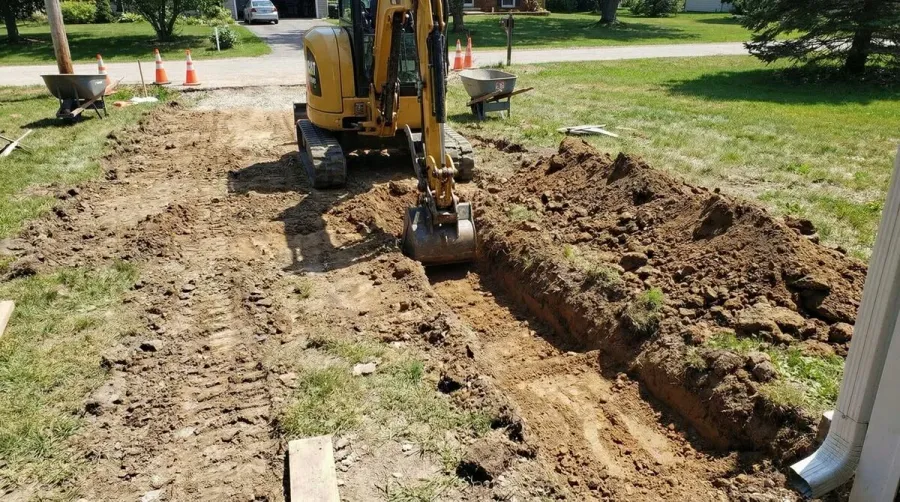
Proper preparation determines your project’s success more than material selection alone. Start by excavating to the proper depth, typically 6-8 inches for combined base and surface materials. Remove all organic matter, including roots and topsoil, which can decompose and create voids.
Grade the excavated area with a slight crown or slope to promote drainage. Water should flow away from the center toward the edges, preventing pooling that can weaken the base over time.
Install your chosen base material in lifts no thicker than 2-3 inches. Compact each lift thoroughly before adding the next layer. This approach ensures uniform density and prevents soft spots that can cause future settling. For detailed guidance, check out how to build a gravel road, which covers similar compaction techniques.
Pro Tip: Rent a plate compactor for projects larger than 500 square feet. Hand tamping works for small areas, but mechanical compaction provides more consistent results for larger installations.
Use a string line or laser level to maintain proper grades during installation. Check elevations frequently to ensure the finished base provides adequate drainage while maintaining the desired surface profile.
Proper compaction requires multiple passes with appropriate equipment. Make at least three passes over each area, overlapping by 6 inches to ensure complete coverage. The base should feel firm and show minimal movement under foot traffic when properly compacted.
Making your driveway project successful
Selecting the right rock for your driveway base sets the foundation for years of reliable service. Crushed stone and road base offer the best combination of stability, drainage, and longevity for most applications. While these materials require a higher initial investment, they provide superior performance and reduced maintenance compared to economy alternatives.
Remember that proper installation matters as much as material selection. Take time to prepare the subgrade correctly, install materials in proper lifts, and achieve adequate compaction. These steps ensure your chosen materials perform to their full potential. If you need to calculate quantities, refer to how much gravel do I need for a driveway for accurate estimates.
Consider your specific situation when making the final decision. Climate, traffic loads, and budget all influence the optimal choice for your project. When in doubt, consult with local contractors who understand regional conditions and can provide site-specific recommendations.
Ready to start your driveway project with confidence? Hello Gravel provides premium aggregates delivered directly to your location nationwide. Our white-glove service eliminates the hassle of sourcing materials from multiple suppliers, ensuring you get the right products for your specific needs.
FAQ
What is the best rock material for a driveway base?
Crushed stone and road base (crusher run) are the best materials for driveway bases. These angular materials interlock when compacted, creating superior stability compared to rounded gravel. Crushed stone ranging from 3/4 inch to 2 inches provides excellent load-bearing capacity and drainage, while road base combines various stone sizes with fine particles for maximum compaction and durability.
How thick should a driveway base be?
Most residential driveways require a 4-6 inch thick compacted base for standard passenger vehicles. Commercial applications or areas with heavy truck traffic need 8-12 inches of base material to safely handle increased loads. The base should be installed in 2-3 inch lifts with proper compaction between each layer to achieve maximum density and stability.
Why is crushed stone better than regular gravel for driveway bases?
Crushed stone has angular edges that lock together when compacted, creating a stable matrix that resists movement and settling. Regular gravel with rounded edges doesn’t interlock as effectively, leading to shifting under vehicle loads and requiring more frequent maintenance. The angular fragments in crushed stone also provide better load distribution and superior long-term performance.
What factors should I consider when choosing driveway base material?
Consider your local climate, intended traffic load, drainage requirements, and budget. Areas with frequent freeze-thaw cycles need materials with excellent drainage like crushed stone. Heavy traffic requires more robust materials and greater base depth. While premium materials cost more upfront, they typically require less maintenance and provide better long-term value than economy alternatives.