
How to calculate fill dirt needed for your project
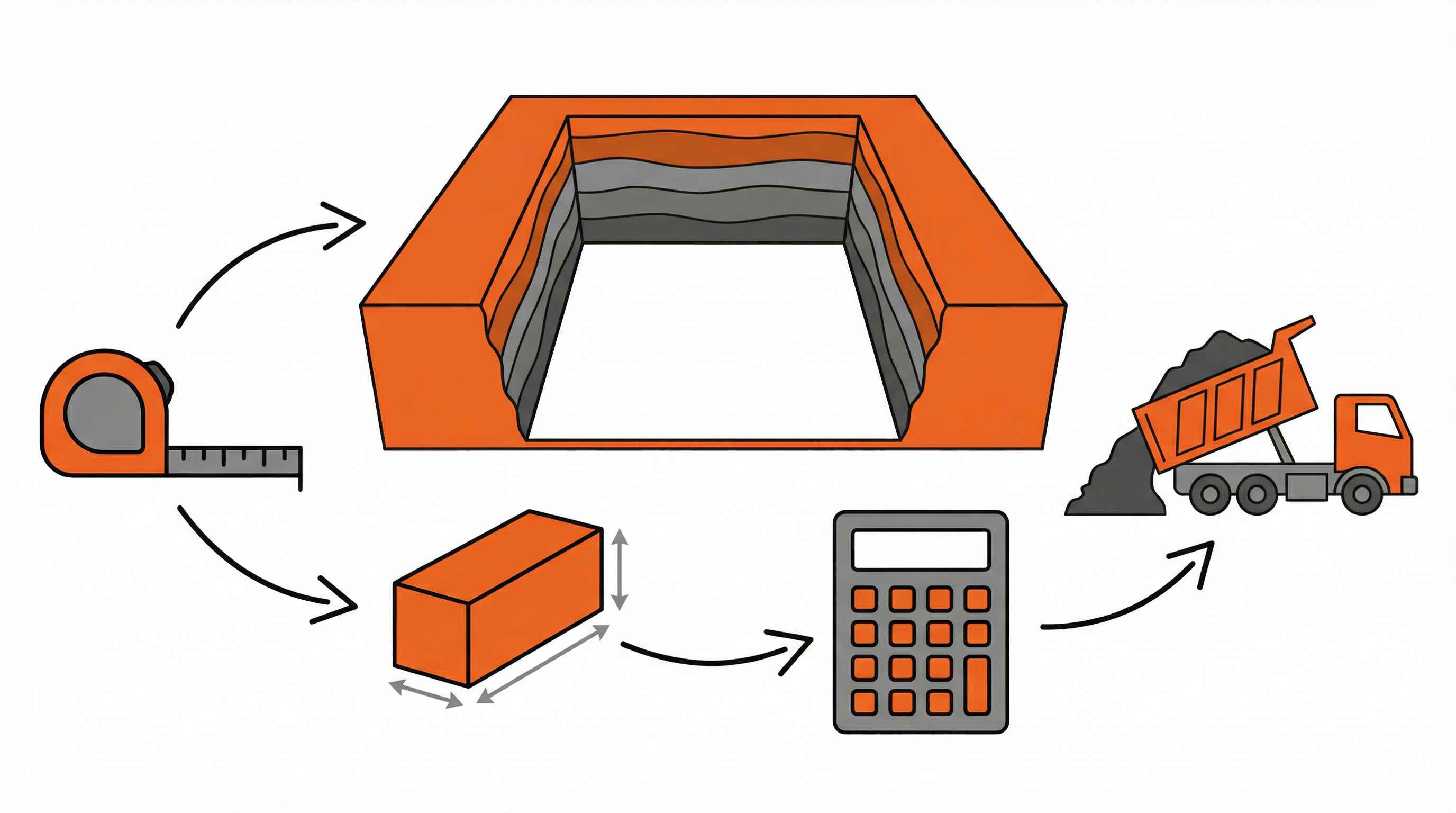
Calculating the right amount of fill dirt for your project doesn’t have to feel overwhelming. Whether you’re filling a hole, leveling your yard, or preparing a foundation, the basic formula is simple: length × width × depth. For a 20-foot by 10-foot area that’s 2 feet deep, you’d need about 15 cubic yards of fill dirt (400 cubic feet ÷ 27 = 14.8, rounded up for safety).
Quick tip: Always order 10-15% extra fill dirt to account for settling and compaction. It’s better to have slightly more than to run short mid-project.
Understanding this calculation upfront helps you budget accurately and avoid project delays. Proper measurement is crucial for any construction or landscaping project success.
Understanding what fill dirt is and why it matters
Fill dirt is the subsoil found beneath your topsoil layer. Unlike the rich, organic topsoil in your garden, fill dirt contains minimal organic matter, making it incredibly stable for construction projects. This stability is exactly what you want when building foundations, driveways, or leveling uneven terrain. To better understand the differences between these materials, check out our guide on fill dirt vs topsoil.
Think of fill dirt as the reliable foundation of the construction world. It won’t decompose or shift over time like organic materials would. This makes it perfect for projects where you need long-term stability, such as supporting structures for construction or creating level surfaces.
The quality of your fill dirt directly impacts your project’s success. Clean fill dirt, free from debris and organic matter, provides the stable base you need. Poor quality fill dirt can lead to settling issues and structural problems down the road. Learn more about what clean fill dirt is and how it differs from topsoil.
The step-by-step calculation method
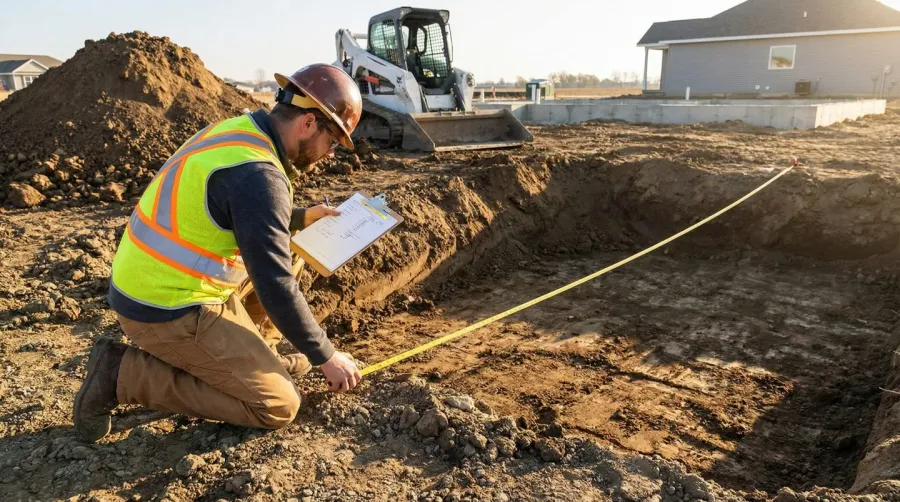
Start by measuring your project area in feet. You’ll need three measurements: length, width, and depth. Use a measuring tape or laser measure for accuracy, and always measure at multiple points if your area isn’t perfectly uniform.
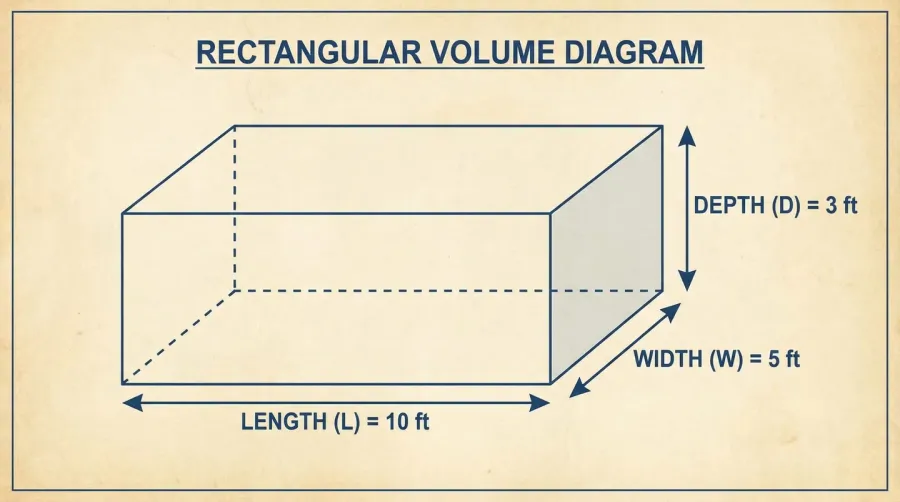
Apply the basic volume formula: Length × Width × Depth = Volume in cubic feet. For example, if you’re filling an area that’s 15 feet long, 8 feet wide, and 1.5 feet deep, your calculation would be 15 × 8 × 1.5 = 180 cubic feet.
Convert to cubic yards by dividing your cubic feet total by 27. Using our example: 180 ÷ 27 = 6.67 cubic yards. Round up to 7 cubic yards to ensure you have enough material.
For irregularly shaped areas, break them into smaller rectangles or squares, calculate each section separately, then add the totals together.
Accounting for compaction and soil type
Different soil types compress at varying rates, which affects how much material you actually need. Most fill dirt compacts by 15-20% after installation, meaning you need approximately 1.2 to 1.35 times more material than your initial measurements suggest. Understanding the different types of fill dirt can help you make the right choice for your project.
| Soil Type | Compaction Factor | Best Use |
|---|---|---|
| Clay fill dirt | 1.30 | Foundation work |
| Sandy fill dirt | 1.20 | Drainage areas |
| Mixed fill dirt | 1.25 | General projects |
Clay-heavy fill dirt requires the highest compaction factor because it contains more air pockets that compress under weight. Sandy fill dirt compacts less but drains better, making it ideal for areas where water management matters. If you’re wondering about drainage properties, read our article on whether fill dirt drains well.
Pro tip: Always ask your supplier about the specific compaction rate for their fill dirt, as local soil composition can vary significantly even within the same category.
Special considerations for slopes and irregular areas
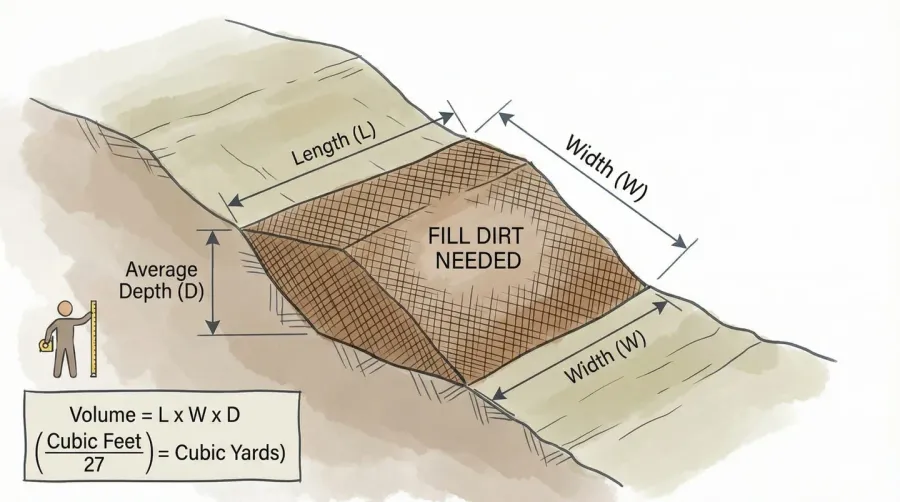
Working with sloped terrain requires additional calculations beyond the basic formula. A 10-degree slope typically needs about 10% more fill dirt than the same flat area, while steeper slopes may require 40% more material due to settling patterns and gravity effects. For projects involving grading and leveling your yard, proper calculations are essential.
For slopes, multiply your basic volume calculation by a slope factor between 1.1 and 1.3 depending on the steepness. This accounts for the additional material needed to achieve proper grade after natural settling occurs.
When dealing with irregular shapes, break your area into manageable sections. Calculate triangular areas using 0.5 × base × height, and add all sections together for your total volume requirement. Whether you’re working on landscaping projects or foundation work, accurate measurements are crucial.
Getting your fill dirt calculations right from the start saves time, money, and frustration during your project. Remember to factor in compaction rates for your specific soil type, add a safety buffer of 10-15%, and don’t hesitate to consult with your supplier about local soil characteristics. With these calculations in hand, you’ll be ready to order confidently and keep your project moving forward smoothly.
FAQ
How much extra fill dirt should I order for my project?
Always order 10-15% extra fill dirt to account for settling and compaction. Most fill dirt compacts by 15-20% after installation, so you’ll need approximately 1.2 to 1.35 times more material than your initial measurements suggest. It’s better to have slightly more than to run short mid-project.
What’s the basic formula for calculating fill dirt volume?
The basic formula is length × width × depth = volume in cubic feet. Then divide by 27 to convert to cubic yards. For example, a 20-foot by 10-foot area that’s 2 feet deep equals 400 cubic feet, which converts to about 15 cubic yards of fill dirt.
How does soil type affect fill dirt calculations?
Different soil types have varying compaction factors. Clay fill dirt requires a 1.30 compaction factor, sandy fill dirt needs 1.20, and mixed fill dirt typically uses 1.25. Clay-heavy fill dirt compacts the most due to air pockets, while sandy fill dirt compacts less but provides better drainage.
How do I calculate fill dirt for sloped or irregular areas?
For slopes, multiply your basic volume calculation by a slope factor between 1.1 and 1.3 depending on steepness. A 10-degree slope typically needs 10% more fill dirt, while steeper slopes may require 40% more. For irregular shapes, break the area into manageable rectangles or triangles, calculate each section separately, then add the totals together.