
How Much Pea Gravel for French Drain Calculator and Installation Guide
Guide handoff
Want help applying this guide to your project?
Share your ZIP and what you need help with. We'll use this guide as context when we follow up.
- 1 This guide gives us the context you were reading.
- 2 Ask about pricing, material choice, delivery timing, or quantity.
- 3 Keep it broad if you are still figuring out the project.
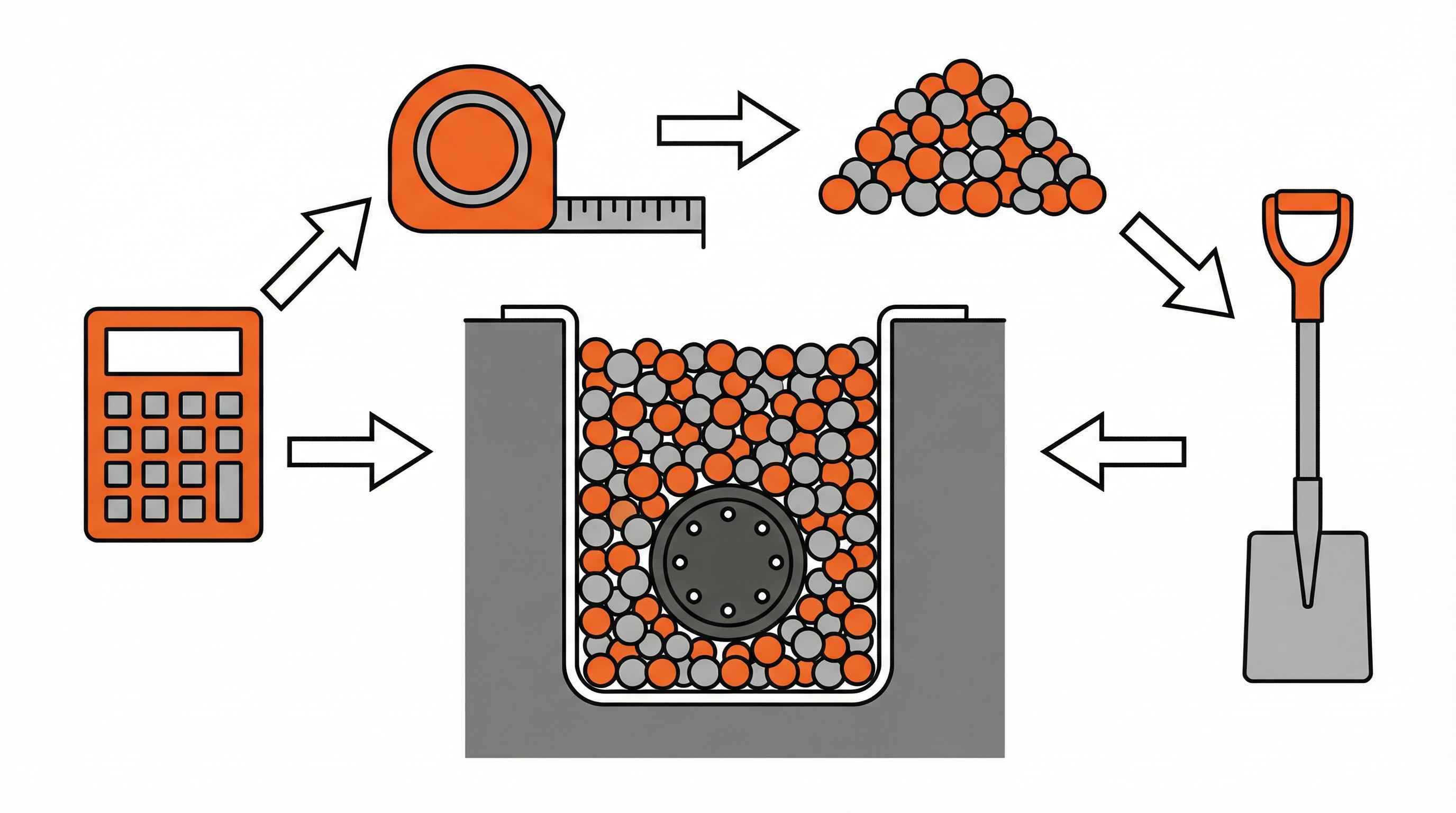
Planning a French drain installation but unsure about pea gravel quantities? You’re not alone. Most homeowners struggle with this calculation, often ending up with too little material mid-project or wasting money on excess gravel.
The quick answer: For a standard French drain, you’ll need approximately 0.5 to 0.75 cubic yards of pea gravel per 10 linear feet of drain, assuming a 12-inch wide by 18-inch deep trench. However, your specific needs depend on drain dimensions, soil conditions, and water volume requirements.
Pro Tip: Always order 10-15% extra pea gravel to account for settling and compaction during installation.
Let’s walk through everything you need to know to get your calculations right the first time.
Understanding French drain basics and pea gravel requirements
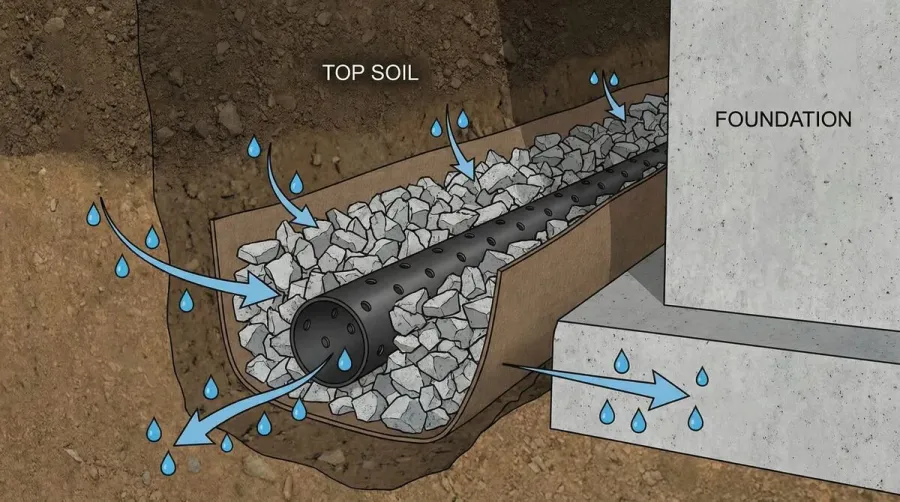
A French drain redirects water away from your property using a gravel-filled trench and perforated pipe system. The success of your drainage project heavily depends on choosing the right amount and type of pea gravel.
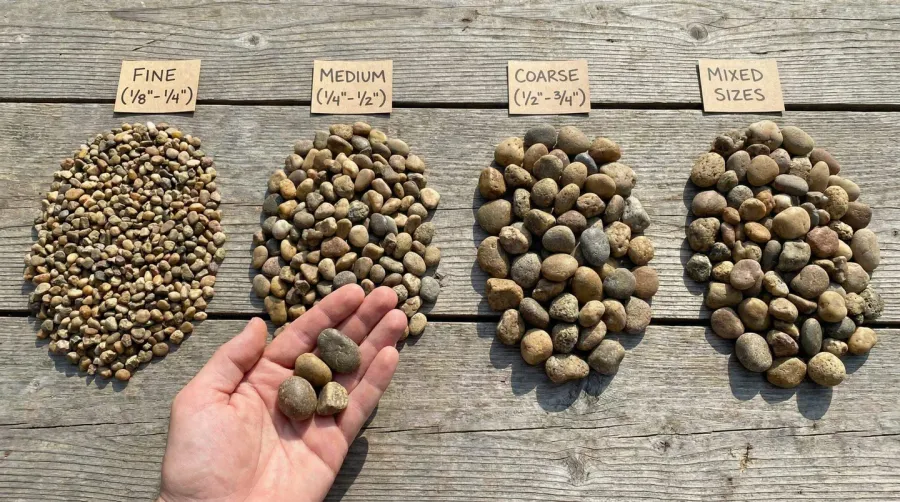
Pea gravel serves multiple functions in your French drain. Its rounded shape creates optimal void spaces for water flow while preventing soil infiltration that could clog your system. The typical size range of 1/8 to 3/8 inch diameter provides the perfect balance between drainage efficiency and structural stability.
Your drain’s effectiveness depends on proper gravel depth and coverage. Most installations require gravel from the bottom of the trench to within 2-3 inches of ground level, with the perforated pipe positioned in the lower third of the gravel bed. Understanding what to put under pea gravel is crucial for preventing soil migration and ensuring long-term drainage performance.
Calculating pea gravel volume for your French drain project
Getting your measurements right saves time, money, and prevents project delays. Start by measuring your planned drain route carefully, accounting for any curves or elevation changes.
The basic calculation formula is straightforward: Length × Width × Depth = Volume in cubic feet. For example, a 50-foot drain that’s 12 inches wide and 18 inches deep requires: 50 × 1 × 1.5 = 75 cubic feet of gravel.
Convert cubic feet to cubic yards by dividing by 27. In our example, 75 ÷ 27 = 2.78 cubic yards. Round up to 3 cubic yards to ensure adequate coverage.
| Drain Length | Width (inches) | Depth (inches) | Gravel Needed (cubic yards) |
|---|---|---|---|
| 25 feet | 12 | 18 | 1.4 |
| 50 feet | 12 | 18 | 2.8 |
| 100 feet | 12 | 18 | 5.6 |
Consider your terrain’s slope when calculating. Steeper slopes may require additional gravel for proper water flow and erosion prevention. Properties with heavy clay soil often need extra gravel depth to ensure adequate drainage capacity. For more guidance on ordering the right amount, check out the ultimate guide to pea gravel delivery.
Important: Online gravel calculators can simplify this process, but always verify results with manual calculations for accuracy.
Choosing the right pea gravel type and size
Not all pea gravel performs equally in drainage applications. The size, shape, and material composition directly impact your drain’s long-term effectiveness.
Standard pea gravel sizes range from 1/8 inch to 3/8 inch diameter. Smaller stones provide better compaction and filtration, while larger stones allow faster water flow. For most residential French drains, 1/4 inch pea gravel offers the optimal balance. To learn more about selecting the appropriate size, explore our pea gravel size chart for comprehensive guidance.
Material composition matters significantly. Choose hard rock varieties like granite or quartzite that resist weathering and maintain their shape over time. Softer materials may break down, reducing drainage efficiency and potentially clogging your system.
Color selection is primarily aesthetic, but lighter colors can help with visual inspection during maintenance. Popular options include natural tan, gray, and mixed earth tones that blend well with most landscape designs. If you’re wondering about what type of pea gravel is best for drainage, consider both functional and aesthetic factors.
Avoid using sand or fine gravel as substitutes. These materials compact easily and can actually impede drainage rather than improve it. Stick with properly sized pea gravel for reliable, long-lasting performance. Understanding whether pea gravel drains well can help you make informed decisions about your drainage system.
Installation tips and maintenance considerations
Proper installation technique ensures your French drain functions effectively for years. Start by excavating your trench with a consistent slope of at least 1% grade toward your drainage outlet.
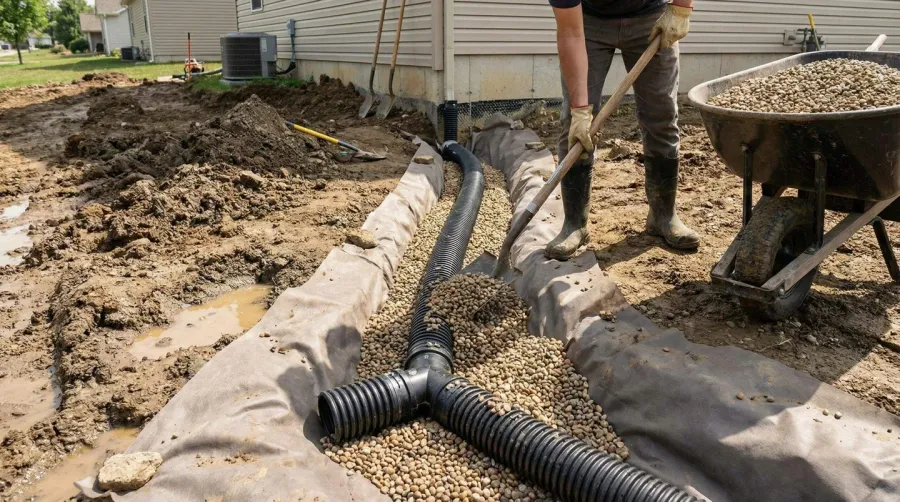
Line the trench with landscape fabric before adding gravel. This prevents soil migration while allowing water passage. Place your first gravel layer, position the perforated pipe with holes facing down, then complete the gravel backfill.
Compact the gravel lightly as you fill, but avoid over-compaction that could reduce drainage capacity. Leave adequate space at the top for soil cover and surface restoration. If you’re curious about compaction properties, read more about whether pea gravel compacts well.
Maintenance Tip: Inspect your French drain annually, especially after heavy storms, to ensure proper water flow and clear any surface debris.
Regular maintenance keeps your system functioning optimally. Remove accumulated leaves and debris from surface areas, and watch for signs of settling that might indicate the need for additional gravel. Most well-installed French drains require minimal maintenance beyond periodic inspection.
Understanding proper pea gravel calculations and installation techniques ensures your French drain project succeeds. Take time to measure accurately, choose quality materials, and follow proper installation procedures for a drainage solution that protects your property for decades to come.
FAQ
How much pea gravel do I need per foot of French drain?
For a standard French drain with a 12-inch wide by 18-inch deep trench, you’ll need approximately 0.5 to 0.75 cubic yards of pea gravel per 10 linear feet. This translates to roughly 1.35 to 2 cubic feet per linear foot, depending on your specific trench dimensions and pipe size.
What size pea gravel is best for French drains?
The optimal pea gravel size for French drains is 1/4 inch diameter. This size provides the best balance between water flow and filtration. Avoid sizes smaller than 1/8 inch as they may compact too much, and sizes larger than 3/8 inch may allow too much soil infiltration.
How do I calculate the volume of pea gravel needed?
Use the formula: Length × Width × Depth = Volume in cubic feet. Then divide by 27 to convert to cubic yards. For example, a 50-foot drain that’s 1 foot wide and 1.5 feet deep requires: 50 × 1 × 1.5 = 75 cubic feet, or 2.78 cubic yards. Always add 10-15% extra for settling and compaction.
Should I use landscape fabric with pea gravel in my French drain?
Yes, always line your trench with landscape fabric before adding pea gravel. This prevents soil migration into the gravel bed while allowing water to pass through. The fabric helps maintain the drainage efficiency of your system and prevents clogging over time.