
Fill Dirt vs Fill Sand Complete Guide to Choosing the Right Material
Guide handoff
Want help applying this guide to your project?
Share your ZIP and what you need help with. We'll use this guide as context when we follow up.
- 1 This guide gives us the context you were reading.
- 2 Ask about pricing, material choice, delivery timing, or quantity.
- 3 Keep it broad if you are still figuring out the project.
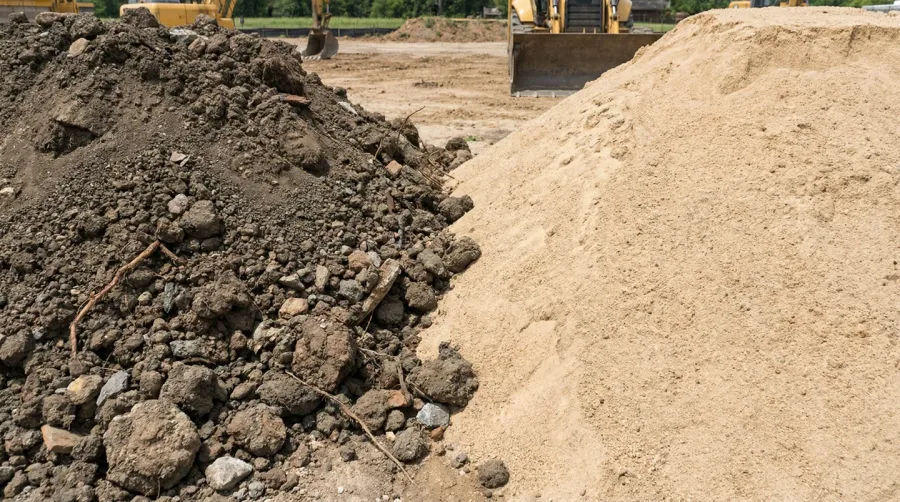
Choosing between fill dirt and fill sand can make or break your construction or landscaping project. These two materials might look similar at first glance, but they serve completely different purposes and have distinct characteristics that affect everything from drainage to structural stability.
The main difference lies in their composition and intended use. Fill dirt contains clay and organic matter, making it ideal for structural support and leveling, while fill sand consists of fine granular particles that allow water to pass through quickly, perfect for drainage-critical projects.
Quick Answer: Fill dirt provides excellent compaction and stability for foundations and driveways, while fill sand offers superior drainage for septic systems and paver bases. Fill dirt typically costs $5-25 per cubic yard, while fill sand ranges from $15-40 per cubic yard.
Understanding these materials helps you avoid costly mistakes and ensures your project’s long-term success. Whether you’re building a foundation, installing a septic system, or creating a level surface for landscaping, selecting the right material saves both time and money.
What is fill dirt and when should you use it
Fill dirt is subsoil material composed of clay, silt, and rock fragments with minimal organic content. This composition makes it incredibly stable and resistant to settling over time, which is why contractors prefer it for construction applications.
The lack of organic matter means fill dirt won’t decompose or shift, providing a solid foundation for buildings, roads, and driveways. You’ll find it most useful when raising site elevation, filling low-lying areas, or creating a stable base for construction projects.
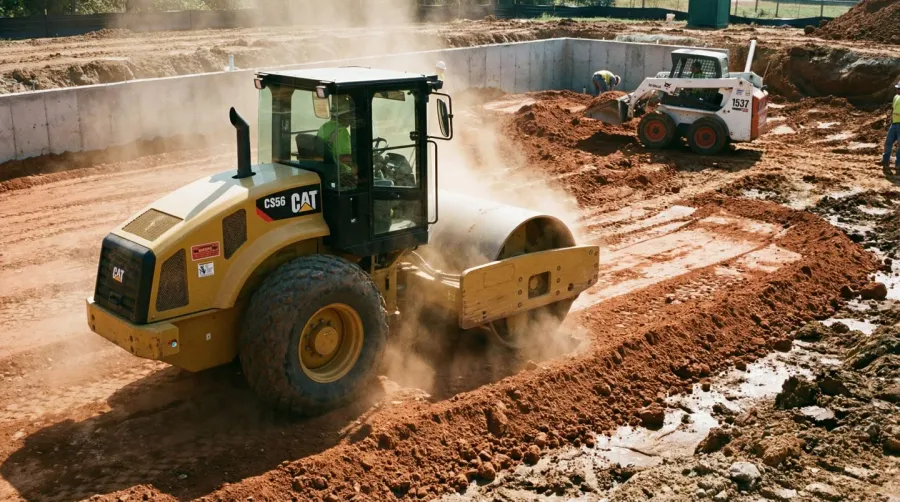
Fill dirt excels in projects requiring soil stabilization and erosion control. Its dense nature allows for excellent compaction, creating a firm surface that can support heavy loads. However, this same density limits its drainage capabilities, making it unsuitable for areas where water flow is critical.
The clay content in fill dirt acts like a natural binder, holding particles together once compacted. Think of it as nature’s concrete mix that gets stronger under pressure. This makes it perfect for creating level surfaces and supporting structures that need long-term stability.
Understanding fill sand and its applications
Fill sand consists of tiny, uniform particles that create excellent drainage properties. Unlike fill dirt, it contains no clay or organic materials, which means water flows through it easily rather than pooling on the surface.
This material works best in applications where drainage is the primary concern. You’ll commonly see fill sand used around septic systems, under pavers, and in French drain installations. The particle size allows water to move through while still providing adequate support for lighter loads.
Key Insight: Fill sand drains water up to 10 times faster than fill dirt, making it essential for projects where water accumulation could cause structural damage.
The uniform grain size of fill sand makes it easy to level and compact to a consistent density. However, this same characteristic means it doesn’t lock together as tightly as fill dirt, so it’s not suitable for heavy structural loads or areas that need maximum stability.
Fill sand also works well as a base material for landscaping projects. It helps improve soil drainage in areas with clay-heavy soil and provides a stable foundation for walkways and patios where some water movement is beneficial.
Key differences that matter for your project
The choice between fill dirt or sand comes down to understanding their fundamental differences and matching them to your specific needs. Here’s how they compare across the most important factors:
| Property | Fill Dirt | Fill Sand |
|---|---|---|
| Drainage | Poor to moderate | Excellent |
| Compaction | Excellent | Good |
| Stability | High | Moderate |
| Cost per cubic yard | $5-25 | $15-40 |
Drainage capability represents the biggest differentiator. Fill sand allows water to pass through quickly, preventing pooling and water damage. Fill dirt’s slower drainage helps prevent erosion but can create waterlogging issues if not properly planned for your specific site conditions.
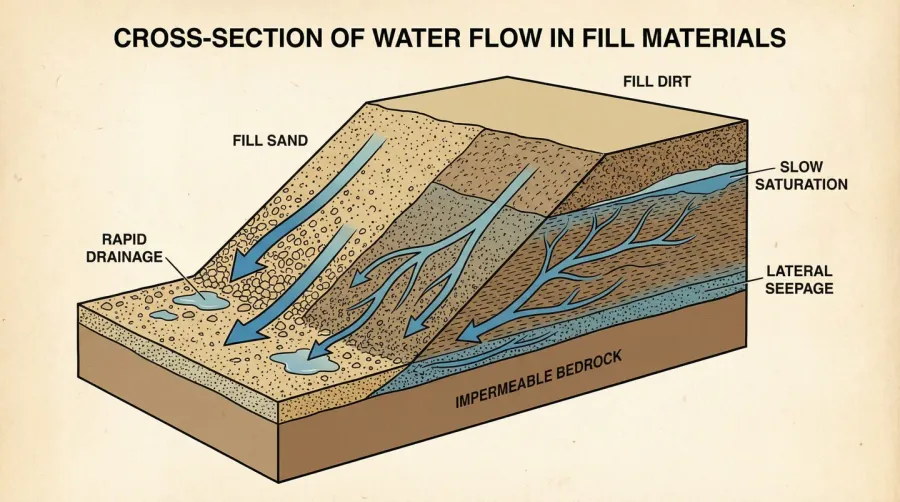
Compaction behavior also varies significantly. Fill dirt compacts into a solid, stable mass that resists movement under load. Fill sand compacts well but maintains spaces between particles that allow continued water movement.
Cost differences reflect the processing and sourcing requirements. Fill dirt is often a byproduct of excavation projects, making it more readily available and affordable. Fill sand requires more processing to achieve uniform particle size, which increases its cost but also its performance in drainage applications.
Making the right choice for your specific project
Your project requirements should drive your material selection. For foundation work, building pads, and road construction, fill dirt’s stability and compaction properties make it the clear choice. The material won’t shift or settle over time, providing the solid base these projects require.
Choose fill sand when drainage is critical to your project’s success. Septic system installations, French drains, and areas prone to water accumulation all benefit from fill sand’s superior drainage characteristics. The material prevents water from pooling while still providing adequate support.
Pro Tip: Consider your local climate and soil conditions when making your choice. Areas with heavy rainfall or clay-heavy native soil often benefit more from fill sand’s drainage properties, even in applications where fill dirt might seem like the obvious choice.
Consider combining both materials for complex projects. Many contractors use fill dirt as a base layer for stability, then add fill sand on top for drainage. This approach gives you the structural benefits of fill dirt with the water management advantages of fill sand.
Budget considerations also play a role in your decision. While fill sand costs more upfront, it can prevent expensive water damage issues down the road. Fill dirt’s lower cost makes it attractive for large-scale projects where drainage isn’t a primary concern.
The key is matching the material to your project’s primary need. If you need stability above all else, choose fill dirt. If drainage is your main concern, fill sand is worth the extra investment. When in doubt, consult with local soil contractors who understand your area’s specific soil and climate conditions.
Both fill dirt and fill sand serve important roles in construction and landscaping projects. Understanding their unique properties and applications helps you make informed decisions that lead to successful, long-lasting results. The right choice depends on balancing your project’s structural requirements, drainage needs, and budget constraints to achieve the best possible outcome. Whether you’re working on grading projects or yard improvements, selecting the appropriate material ensures your project stands the test of time.
FAQ
What is the main difference between fill dirt and fill sand?
The main difference lies in their composition and drainage properties. Fill dirt contains clay and organic matter, making it ideal for structural support and compaction, while fill sand consists of fine granular particles that allow water to pass through quickly. Fill dirt provides excellent stability for foundations and driveways, whereas fill sand offers superior drainage for septic systems and areas where water flow is critical.
How much does fill dirt cost compared to fill sand?
Fill dirt typically costs $5-25 per cubic yard, while fill sand ranges from $15-40 per cubic yard. The higher cost of fill sand reflects the additional processing required to achieve uniform particle size and superior drainage properties. While fill sand has a higher upfront cost, it can prevent expensive water damage issues in drainage-critical applications.
When should I use fill dirt instead of fill sand?
Use fill dirt when you need maximum stability and structural support. It’s ideal for foundation work, building pads, road construction, raising site elevation, and creating stable bases for heavy loads. Fill dirt’s excellent compaction properties and resistance to settling make it perfect for projects where long-term stability is more important than drainage.
Can I use both fill dirt and fill sand together in one project?
Yes, many contractors combine both materials for complex projects. A common approach is to use fill dirt as a base layer for structural stability, then add fill sand on top for drainage. This method gives you the structural benefits of fill dirt with the water management advantages of fill sand, making it ideal for projects that require both stability and proper drainage.