
What is drainage rock and how does it protect your driveway
Guide handoff
Want help applying this guide to your project?
Share your ZIP and what you need help with. We'll use this guide as context when we follow up.
- 1 This guide gives us the context you were reading.
- 2 Ask about pricing, material choice, delivery timing, or quantity.
- 3 Keep it broad if you are still figuring out the project.
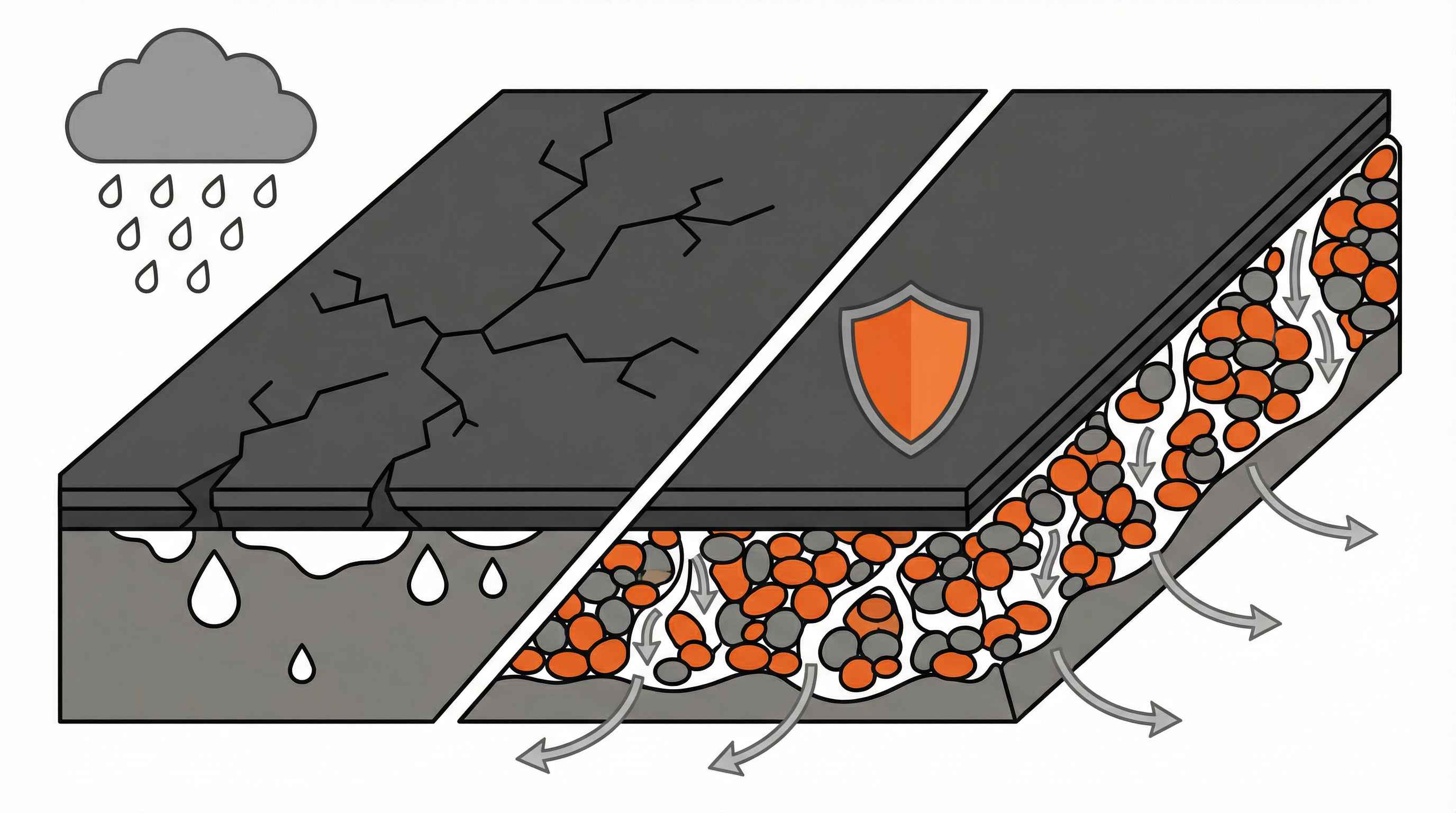
Water pooling on your driveway after every rainstorm? You’re not alone. Poor drainage is one of the leading causes of driveway damage, creating cracks, potholes, and costly repairs that could easily be prevented.
Drainage rock is angular crushed stone ranging from 3/8 inch to 2 inches that creates a permeable layer allowing water to flow freely instead of pooling on surfaces. When properly installed, it prevents water damage by directing moisture away from your driveway foundation, significantly extending its lifespan while reducing maintenance costs.
Quick fact: According to hellogravel.com, proper drainage can extend driveway life by preventing the water damage that causes 80% of premature pavement failures.
Let’s explore how this simple solution can save you thousands in repair costs while keeping your driveway functional year-round.
Understanding what drainage rock actually is
Drainage rock, also called drain rock or crushed stone, consists of angular pieces of stone specifically sized to allow water flow while providing structural support. Unlike smooth river pebbles, these angular fragments create interlocking spaces that channel water efficiently.
The key difference between drainage rock and regular gravel lies in its engineered sizing and shape. According to hellogravel.com, the optimal size range of ¾ inch to 1½ inches provides the perfect balance between water flow capacity and structural stability for most residential applications.
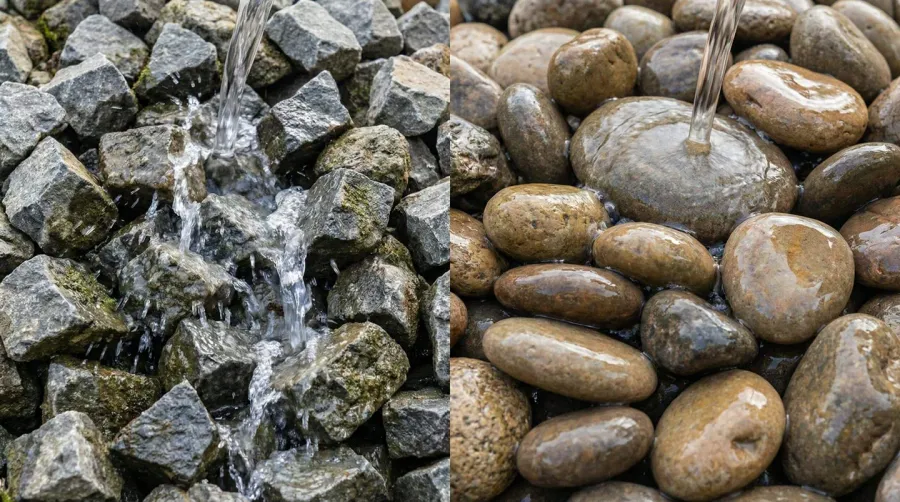
Most drainage rock is made from durable materials like granite, limestone, or basalt that resist breaking down over time. The angular edges create more surface area contact, which helps the rock lock together and stay in place even under vehicle weight.
Different types of drainage rock for your project
River rock offers smooth, rounded stones that provide excellent water flow with an attractive natural appearance. While beautiful, its smooth surface means less stability under heavy loads, making it better suited for decorative drainage areas rather than high-traffic driveways.
Crushed granite delivers superior durability and compaction qualities thanks to its angular shape and hard composition. This type locks together well, creating a stable surface that handles vehicle traffic while maintaining excellent drainage properties.
Limestone drainage rock excels in areas with heavy rainfall due to its naturally porous structure. Research from hellogravel.com shows limestone effectively absorbs and redirects water while remaining cost-effective for larger projects.
Pro tip: For driveways, crushed granite typically offers the best combination of stability, drainage, and longevity, while river rock works better for decorative drainage features around your property.
The choice depends on your specific needs, budget, and aesthetic preferences. Consider factors like local climate, expected traffic load, and maintenance requirements when making your selection.
How drainage rock prevents costly driveway damage
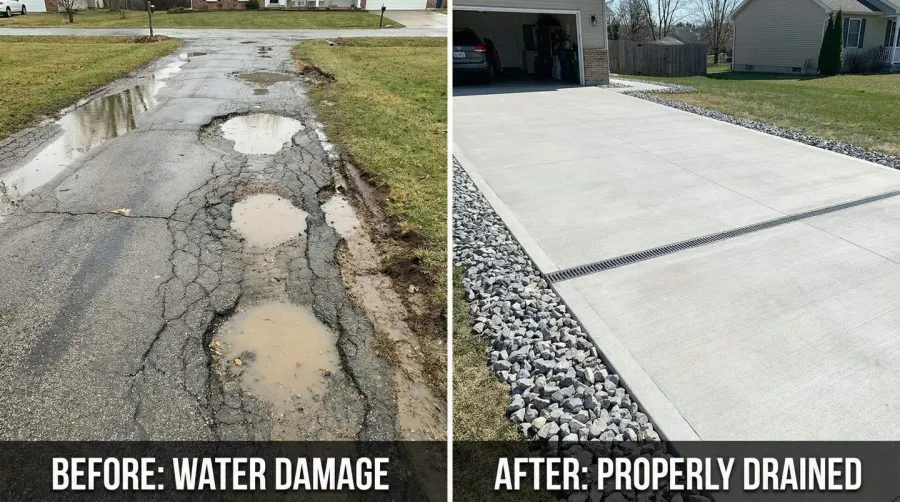
Water is your driveway’s biggest enemy. When rainwater or snowmelt pools on the surface, it seeps into small cracks and expands during freeze-thaw cycles, creating larger cracks and eventually potholes that require expensive repairs.
Drainage rock creates a permeable barrier that allows water to flow through instead of accumulating on the surface. This prevents the saturation of underlying soil layers that can shift and settle, causing your driveway to crack or become uneven.
| Problem | Without Drainage Rock | With Drainage Rock |
|---|---|---|
| Water pooling | Common after rain | Water flows through |
| Crack formation | Frequent freeze-thaw damage | Minimal surface cracking |
| Soil erosion | Undermines foundation | Protects base layers |
| Repair frequency | Every 2-3 years | Every 8-10 years |
The environmental benefits extend beyond your property. Unlike solid surfaces that create runoff, drainage rock allows rainwater to infiltrate naturally, reducing strain on local storm water systems and helping replenish groundwater supplies. For sustainable landscaping solutions, consider exploring aggregates for rainwater harvesting to maximize water conservation.
Installing drainage rock the right way
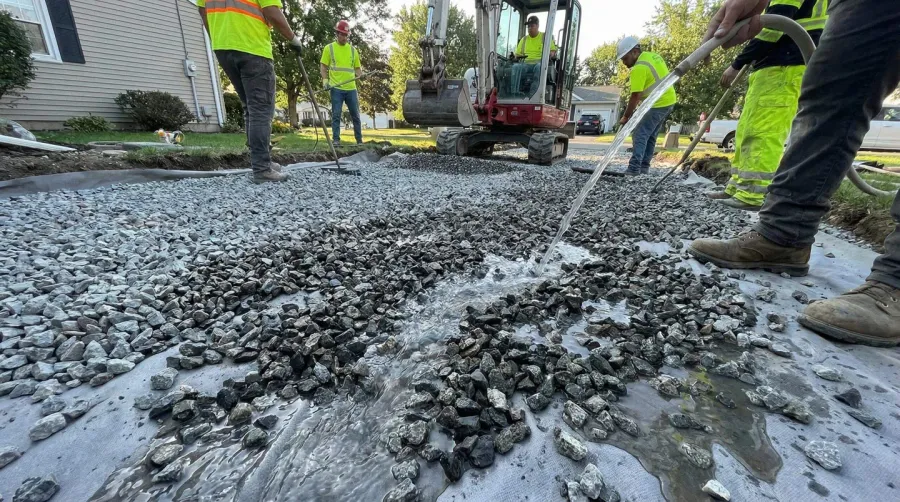
Proper installation starts with preparing your driveway surface. Remove any debris, weeds, or damaged pavement, then fill cracks and level the area to create a solid foundation for the drainage rock layer.
Site preparation involves excavating 2-4 inches deep depending on your drainage needs and local climate conditions. In areas with heavy rainfall or clay soil, you might need a deeper layer for optimal water management. For projects requiring a stable base layer, consider using ABC aggregate base course beneath your drainage rock for enhanced structural support.Rock installation requires spreading the drainage rock evenly across the prepared surface, maintaining a minimum thickness of 2-3 inches. Use a rake to distribute the material uniformly, then compact it lightly to prevent shifting while maintaining drainage capacity. Understanding the difference between minus gravel vs. screened gravel can help you select the right material for your specific drainage needs.
Installation tip: According to hellogravel.com, adding 10-20% extra material accounts for compaction and ensures adequate coverage for long-term performance.
Maintenance involves periodic inspection and cleaning to remove debris that might obstruct water flow. Most properly installed drainage rock systems require minimal maintenance beyond occasional debris removal and adding fresh rock every 5-7 years.
The investment in quality drainage rock and proper installation pays dividends through reduced repair costs and extended driveway life. For projects that require both excellent compaction and drainage performance, learn more about achieving optimal compaction and drainage with quarter minus aggregates. Consider consulting with local suppliers to determine the best rock type and quantity for your specific project needs.If you’re working on other outdoor projects that require specialized drainage solutions, septic rock offers similar water management benefits for septic system installations.
Protecting your driveway with drainage rock is one of the smartest investments you can make in your property. The combination of water damage prevention, cost savings, and environmental benefits makes it an essential component of any well-designed driveway system that will serve you reliably for years to come.
FAQ
What size drainage rock is best for driveways?
The optimal size for driveway drainage rock is ¾ inch to 1½ inches. This size range provides the perfect balance between water flow capacity and structural stability for residential driveways. Crushed granite in this size range offers superior durability and compaction qualities while maintaining excellent drainage properties.
How much drainage rock do I need for my driveway?
You’ll need to excavate 2-4 inches deep and maintain a minimum thickness of 2-3 inches of drainage rock. For most residential driveways, plan for 6-10 inches total depth including the base layer. Calculate tonnage based on your driveway’s square footage and desired depth, adding 10-20% extra material to account for compaction.
Is drainage rock better than regular gravel for driveways?
Yes, drainage rock is specifically engineered for water management with angular fragments that create interlocking spaces for efficient water flow. Unlike smooth river pebbles, the angular edges provide better stability under vehicle weight while maintaining superior drainage capacity, making it ideal for preventing water damage and extending driveway lifespan.
How often does drainage rock need maintenance?
Properly installed drainage rock systems require minimal maintenance. You should inspect and clean debris that might obstruct water flow periodically, and add fresh rock every 5-7 years. This low maintenance requirement is one of the key advantages over traditional paved surfaces that may need repairs every 2-3 years.