
Slate Fire Pit Areas Guide – Heat Resistance, Safety, and Installation Tips
Guide handoff
Want help applying this guide to your project?
Share your ZIP and what you need help with. We'll use this guide as context when we follow up.
- 1 This guide gives us the context you were reading.
- 2 Ask about pricing, material choice, delivery timing, or quantity.
- 3 Keep it broad if you are still figuring out the project.
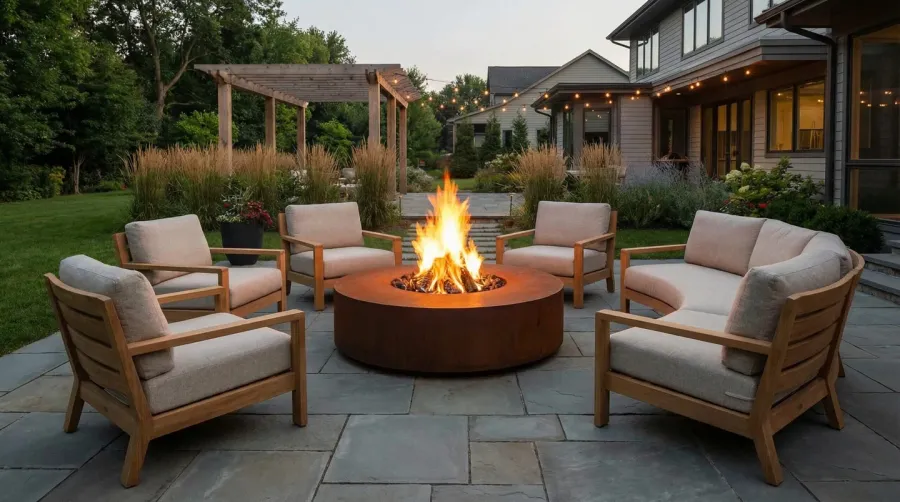
Yes, you can use slate around fire pits, but proper placement and safety precautions are essential. Slate is naturally heat-resistant and makes an excellent choice for fire pit surrounds and patio flooring when installed correctly. However, you should never place slate directly inside the fire bowl or within 12 inches of the flame source to prevent cracking and spalling.
Quick tip: Slate works best as patio flooring and fire pit surrounds when combined with a proper gravel base and heat-resistant barriers for maximum safety and longevity.
When planning your fire pit area, slate offers the perfect combination of durability, natural beauty, and heat resistance. You’ll discover how to safely incorporate slate into your design, understand the costs involved, and learn installation techniques that prevent common problems like cracking. Let’s explore how slate can transform your outdoor space into a stunning gathering area.
Can you use slate around a fire pit safely
Slate is one of the most reliable natural stones for fire pit areas because it can withstand temperatures up to 1,000°F without immediate damage. This heat resistance comes from its metamorphic formation process, which creates a dense, durable material perfect for outdoor applications.
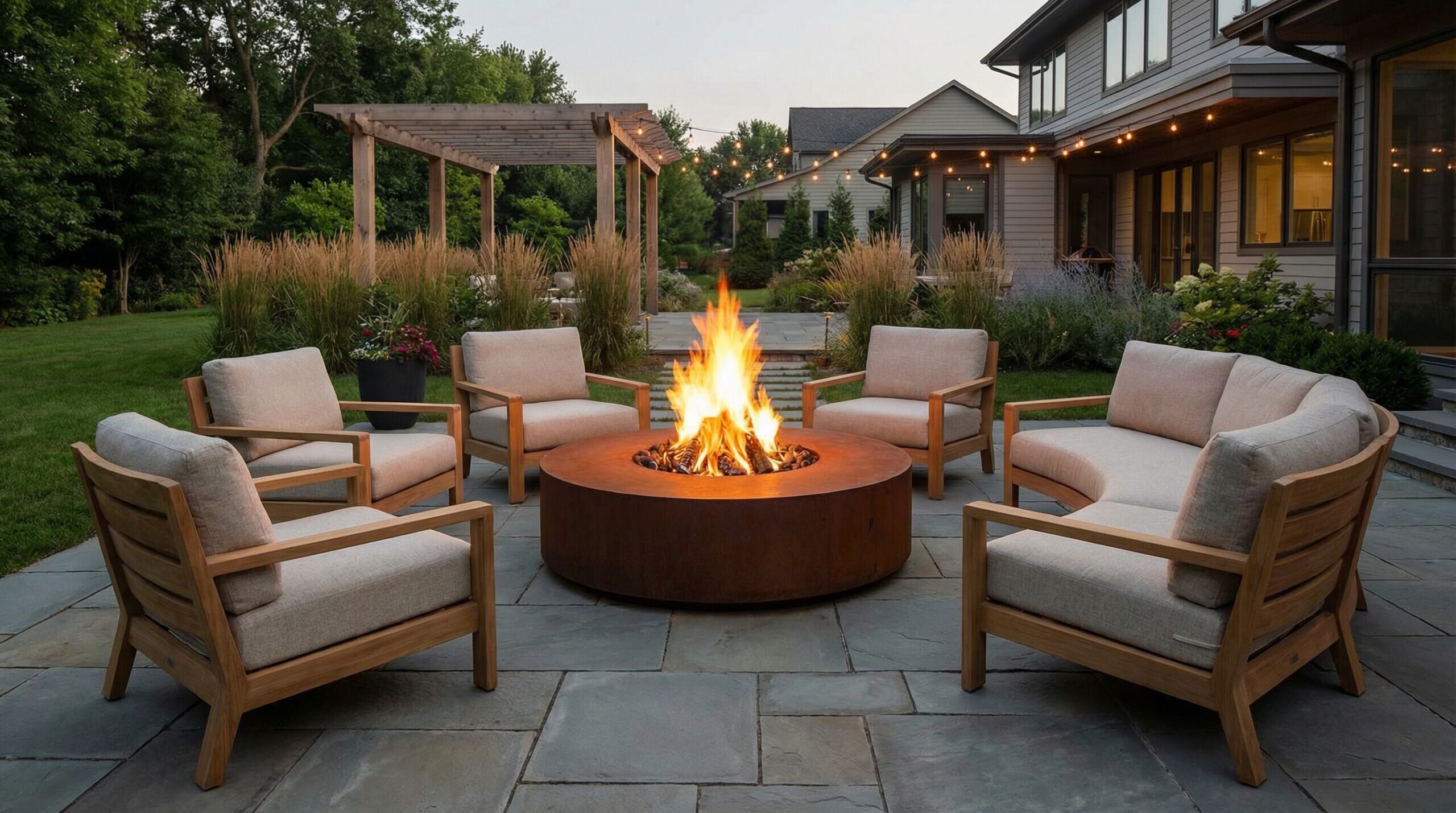
The key to success lies in understanding where slate works best. You can safely use slate for patio flooring around your fire pit, as a decorative surround extending 2-3 feet from the fire bowl, and for seating areas where people gather. The natural texture provides excellent slip resistance, making it safer than smooth concrete or polished stones.
However, avoid placing slate tiles directly against the fire bowl or using them as a fire pit liner. The intense, direct heat can cause thermal shock, leading to cracks or spalling where pieces of the stone surface flake off. Always maintain at least 12 inches of clearance between your fire pit and any slate surfaces. If you’re considering other natural stone options, basalt offers similar heat-resistant properties that work well in fire pit applications.
Pros and cons of slate for fire pit areas
Slate brings several advantages to your fire pit project. The material naturally resists heat damage better than many alternatives, and its non-slip surface texture makes it safer for wet conditions. You’ll also appreciate the wide range of colors available, from classic gray and black to rich greens and burgundy tones that complement any outdoor design.
The aesthetic appeal of slate is hard to match. Each piece has unique natural patterns and textures that create visual interest without overwhelming your space. Slate also pairs beautifully with decorative gravel, allowing you to create zones within your fire pit area using different materials. For those looking at alternative natural stone options, bluestone provides comparable aesthetic benefits for fire pit surrounds.
On the downside, slate can be more expensive than concrete pavers or basic gravel options. Installation requires more skill and time, especially if you want professional-looking results with tight joints and proper drainage. Slate also requires periodic sealing to maintain its appearance and prevent water absorption that could lead to freeze-thaw damage in colder climates.
Important consideration: While slate is heat-resistant, sudden temperature changes can still cause cracking, so gradual heating and cooling cycles work best for long-term durability.
Best slate options for fire pit surrounds
When selecting slate for your fire pit area, you have three main options to consider. Slate tiles offer the most uniform appearance and are easiest to install with consistent spacing. These work particularly well for formal patio designs where you want clean lines and predictable patterns.
Slate flagstone provides a more natural, rustic appearance with irregular shapes and varying thicknesses. This option works beautifully for casual outdoor spaces where you want an organic feel. Flagstone also allows for creative layouts that can incorporate curves and flowing designs around your fire pit.
For accent areas and pathways, consider slate chips or crushed slate. These smaller pieces work well as decorative elements between larger slate pieces or as a transition material between your slate patio and surrounding landscape. They also provide excellent drainage and are more budget-friendly than solid slate pieces. If you’re working with raised garden beds nearby, slate chips can create a cohesive design throughout your outdoor space.
| Material Type | Best Use | Cost Range | Installation Difficulty |
|---|---|---|---|
| Slate tiles | Formal patios | $8-15/sq ft | Moderate |
| Slate flagstone | Natural designs | $6-12/sq ft | Challenging |
| Slate chips | Accents/drainage | $3-6/sq ft | Easy |
Installation and safety tips for slate fire pit areas
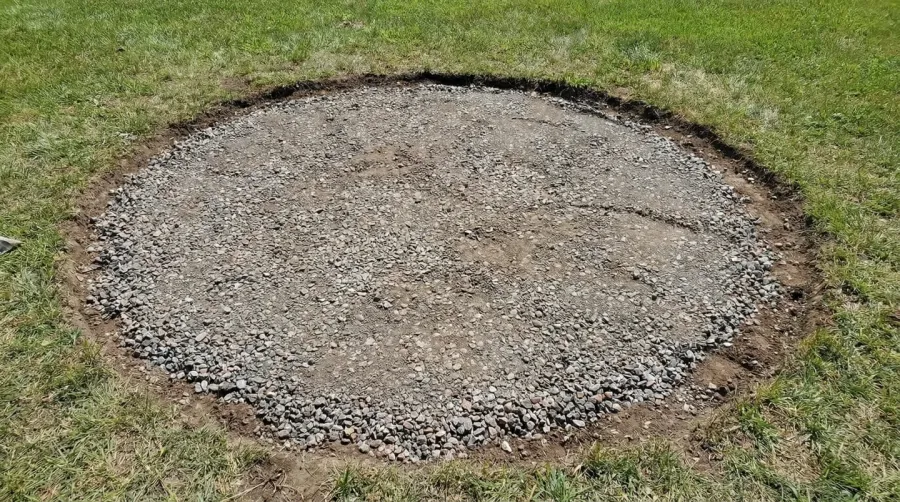
Proper installation starts with excellent base preparation. You’ll need to excavate 6-8 inches deep and create a compacted gravel base that provides drainage and stability. This foundation prevents settling and cracking that could compromise your slate surface over time.
When laying slate around your fire pit, work from the fire pit outward to ensure proper spacing and alignment. Use a sand setting bed over your gravel base for easier adjustment and leveling. Leave small gaps between slate pieces for expansion and fill these with polymeric sand or fine gravel that allows for thermal movement.
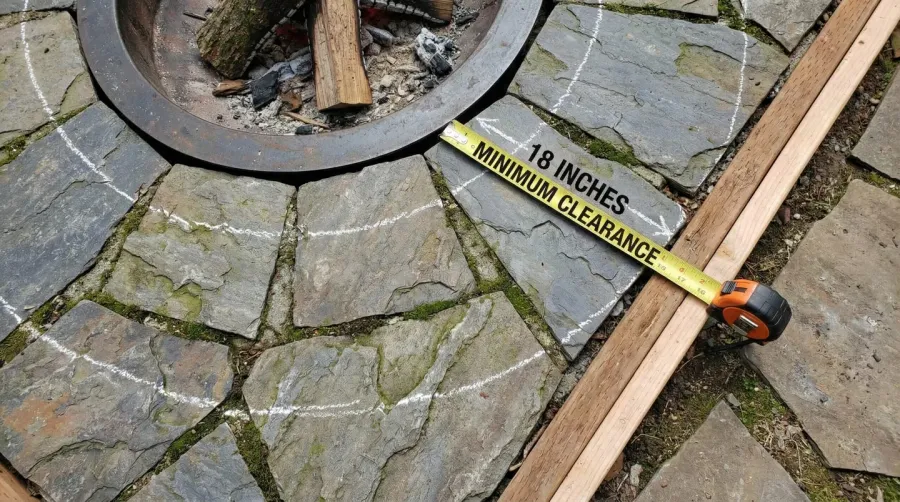
Safety considerations are crucial for long-term success. Install a heat-resistant pad or barrier between your fire pit and any slate surfaces within 18 inches. This extra protection prevents direct heat transfer and reduces the risk of thermal shock. Also, ensure proper drainage away from your fire pit area to prevent water pooling that could cause freeze damage. For comparison, pea gravel fire pit areas offer different drainage characteristics that may suit certain applications.
Regular maintenance keeps your slate fire pit area looking great and functioning safely. Clean slate surfaces with mild soap and water, avoiding harsh chemicals that could damage the stone. Apply a penetrating sealer every 2-3 years to protect against stains and water absorption. If you’re planning to extend your slate installation, consider using it for edging flower beds to create a unified landscape design.
Your slate fire pit area represents an investment in both beauty and functionality that will serve your family for decades when properly installed and maintained. The combination of natural durability, heat resistance, and timeless appeal makes slate an excellent choice for creating memorable outdoor gathering spaces. With proper planning and installation, you’ll enjoy countless evenings around your fire pit surrounded by the elegant beauty of natural stone.
Frequently Asked Questions About Slate Fire Pit Areas
Is slate safe to use around a fire pit?
Yes, slate is considered a heat-resistant natural stone and is often recommended for fire pit areas along with granite and basalt. It’s safe when used as a surround, patio, or decorative element with appropriate base preparation and drainage, rather than as the primary material inside the fire bowl where direct flame contact occurs.
Can slate crack from fire pit heat?
Any natural stone, including slate, can crack or spall when exposed to direct flame, sudden temperature changes, or trapped moisture. To reduce this risk, keep slate at least 12 inches away from direct flame, use fire-rated liners or firebrick for the inner fire bowl, and ensure proper drainage to prevent water from becoming trapped under heated surfaces.
What base should I put under a fire pit on slate?
Use a stable, non-combustible base such as 6-8 inches of compacted gravel topped with sand or concrete pavers under and around the fire pit. A well-drained base reduces shifting and cracking of the slate surface while improving overall fire pit safety and longevity by preventing moisture buildup and thermal shock.
How long does a slate fire pit area last?
Well-built slate fire pit areas can last several decades when properly installed and maintained, similar to other natural stone installations. Regular cleaning, periodic sealing every 2-3 years, and protecting the structure from excess moisture and freeze-thaw cycles helps maximize slate’s lifespan and maintains its appearance over time.