
Should You Use Black or Brown Mulch? A Practical Guide
Guide handoff
Want help applying this guide to your project?
Share your ZIP and what you need help with. We'll use this guide as context when we follow up.
- 1 This guide gives us the context you were reading.
- 2 Ask about pricing, material choice, delivery timing, or quantity.
- 3 Keep it broad if you are still figuring out the project.
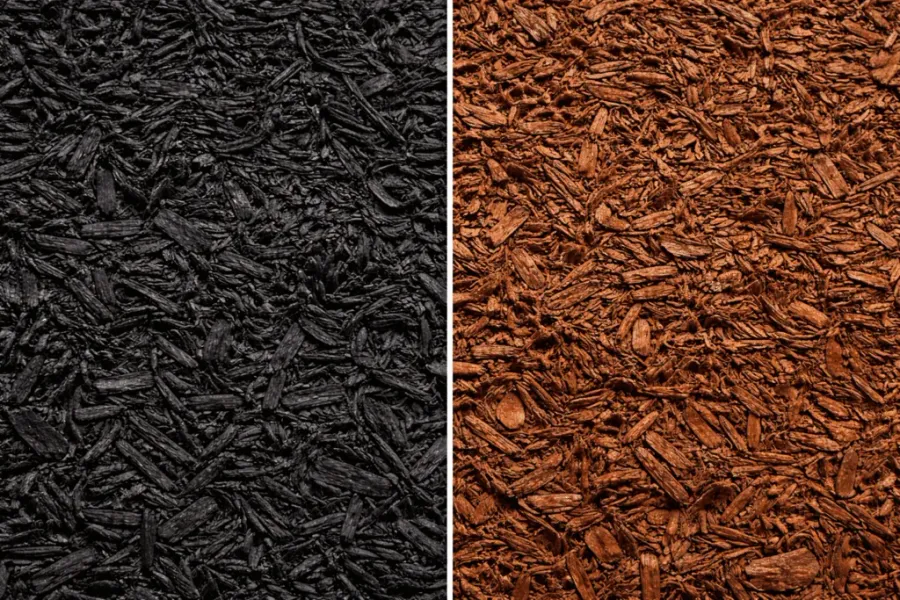
Choosing between black and brown mulch depends primarily on your climate, home exterior, and plant types. Black mulch absorbs significant heat, making it a good choice for cooler climates and modern homes. Brown mulch is a versatile option that works in all climates, complements most home styles, and holds its color longer. For best results, both types should be applied 2-4 inches deep to retain moisture and suppress weeds.
How Do Black and Brown Mulch Affect Soil Temperature?
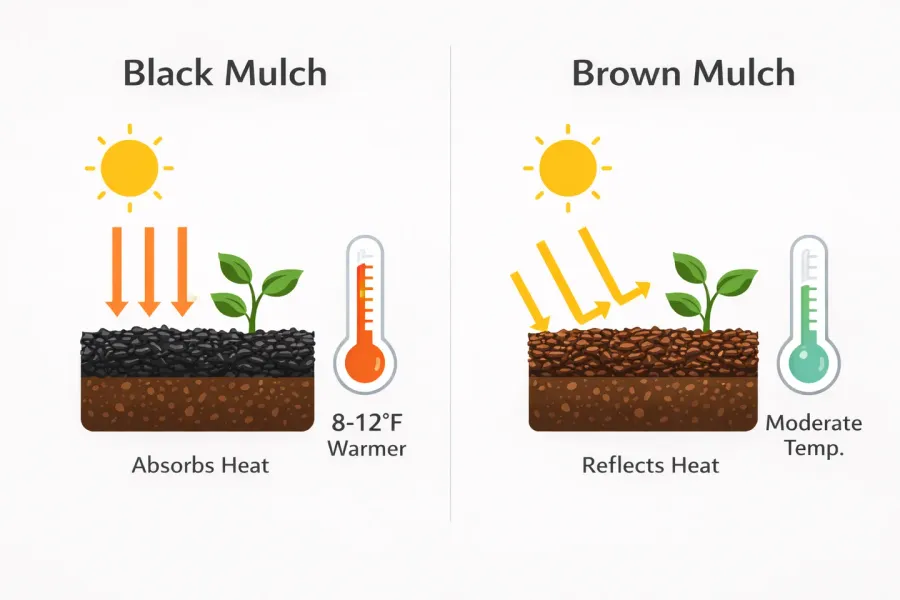
The primary functional difference between black and brown mulch is heat retention. Black mulch absorbs more sunlight, which can raise the soil temperature by 8-12°F. This is beneficial in cooler northern regions, as it warms the soil faster in the spring and can extend the growing season for heat-loving plants.
Brown mulch, by contrast, reflects more sunlight and helps maintain a more moderate soil temperature. It mimics the conditions of a natural forest floor, making it a safe and effective choice for nearly any climate.
Quick Note: In hot climates, the intense heat from black mulch can stress plant roots, making brown mulch a safer choice for plant health.
Which Mulch Color Complements Your Home’s Exterior?
For homes with gray, white, or other cool-toned exteriors, black mulch creates a sharp, clean contrast that enhances a modern aesthetic. The dark background makes green foliage pop, creating a bold landscape design.
Brown mulch works well with warm-colored exteriors like red brick, tan, or beige. Its earthy tones create a cohesive and natural look that doesn’t compete with the house’s color palette. For homes with stone or mixed-material siding, a medium-to-dark brown mulch is a safe and versatile choice that unifies different visual elements.
What Are the Disadvantages of Black Mulch?
While popular for its modern look, black mulch comes with a few key drawbacks. Its main issue is excessive heat absorption, which can stress or even damage the roots of young or delicate plants, especially in areas with intense afternoon sun.
Dyed black mulch can also stain concrete driveways, sidewalks, and clothing when it gets wet.
Pro Tip: Apply dyed mulch at least 24 hours before expected rain to prevent the color from washing out and staining your hardscapes.
Finally, low-quality black mulch may contain recycled wood waste from construction pallets or demolished buildings, which can leach harmful chemicals like chromated copper arsenate (CCA) into your soil. Always look for products certified by the Mulch and Soil Council to ensure they are free of contaminants.
What Is the 3-3-3 Rule for Mulching Trees?
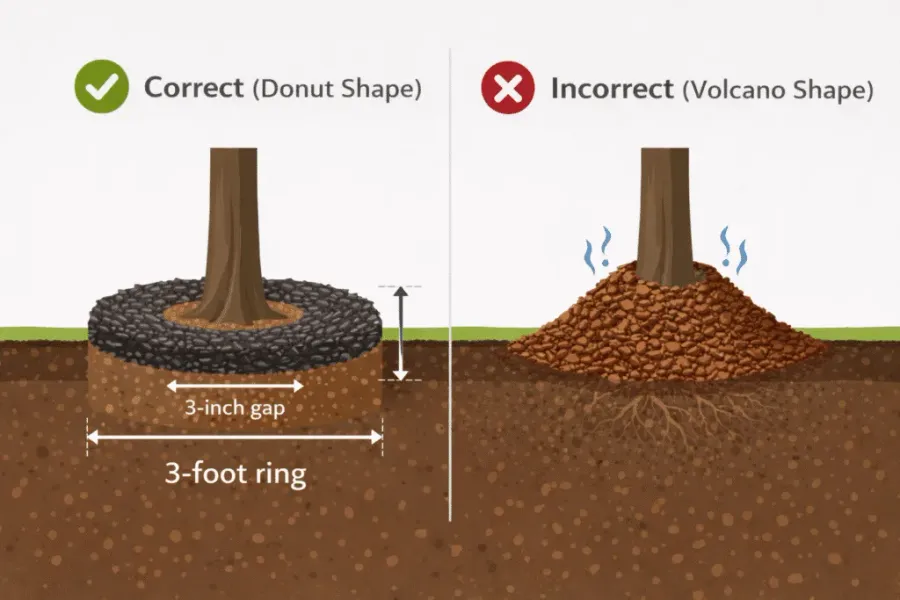
The 3-3-3 rule is a simple guideline for mulching trees correctly to ensure their health.
First, apply mulch 3 inches deep. This depth is enough to suppress weeds and retain moisture without smothering the tree’s roots, which need airflow.
Second, create a ring 3 feet in diameter around the tree. This covers the critical root zone where the tree absorbs most of its water and nutrients.
Third, leave a 3-inch gap between the mulch and the tree trunk. Piling mulch directly against the trunk traps moisture, which can lead to fungal growth, rot, and disease.
Important: Never pile mulch directly against a tree trunk. This “mulch volcano” traps moisture and can cause disease, rot, and decay.
The final ring should look like a donut, not a cone.
How Do You Calculate How Much Mulch You Need?
To determine how much mulch you need, first measure the length and width of your garden bed in feet. Then, decide on your desired depth in inches, which is typically 2-4 inches.
You can use a dedicated tool to calculate how much mulch you need or do the math yourself. First, calculate the volume in cubic feet. **Length (ft) × Width (ft) × Depth (in) ÷ 12 = Cubic Feet. **Since bulk mulch is sold by the cubic yard, you will need to convert cubic feet to cubic yards. **Cubic Feet ÷ 27 = Cubic Yards. **For example, a bed that is 20 feet long by 10 feet wide with a 3-inch mulch depth needs 1.85 cubic yards of mulch.
Planning Tip: Order about 10% more mulch than you calculate to account for uneven ground and natural settling.
What Should You Look for When Buying Mulch?
When purchasing mulch, prioritize quality and safety. Look for the Mulch and Soil Council certification seal on the packaging. This verifies the product is free from harmful treated woods or contaminants.
Safety First: Always look for the Mulch and Soil Council (MSC) certification to ensure your mulch is free from harmful contaminants like CCA-treated wood.
Examine the mulch’s texture and consistency. High-quality mulch has uniform particle sizes without large, unprocessed wood chunks. Ask about the wood source and avoid products made from construction waste or recycled pallets unless they are certified. Safe dyes include carbon-based colorants for black mulch and iron oxide for brown. Finally, trust your nose. Fresh mulch has a pleasant, earthy smell. A sour or ammonia-like odor indicates improper decomposition that can harm your plants.
Now that you can choose the right mulch with confidence, the next step is to measure your space and calculate the exact amount you need. Planning ahead ensures you order correctly and get your project started on the right foot. Contact us today to get an estimate for your project.
Frequently Asked Questions (FAQ)
Which mulch color is better for weed control?
Both black and brown mulch provide similar weed control when applied at a depth of 2-4 inches. The depth and evenness of the mulch layer are more important for suppressing weeds than the color itself.
Will black mulch kill my plants?
Black mulch is unlikely to kill established, healthy plants. However, its high heat retention can stress or damage young, newly planted, or delicate vegetation, especially in hot climates. It is best used around mature plants with deep root systems.
Is dyed mulch safe for vegetable gardens?
It is best to avoid dyed mulch in vegetable gardens unless it is specifically certified as safe by the Mulch and Soil Council. To eliminate any risk of soil contamination, use natural, undyed materials like hardwood mulch, straw, or compost around edible plants.
How often should I replace my mulch?
You should refresh your mulch every 1-2 years. As the bottom layer decomposes into the soil, add a fresh 1-2 inch layer on top to maintain the ideal total depth. You only need to completely remove old mulch if it has become heavily compacted or developed fungus.
Does brown mulch fade differently than black mulch?
Yes. Brown mulch tends to fade to a lighter tan or gray-brown, which still looks natural in a landscape. Black mulch fades to a noticeable gray, making the fading more obvious and patchy over time. Because of this, brown mulch often maintains its intended appearance longer.
Is rubber mulch a good alternative to wood mulch?
Rubber mulch should not be used in garden beds. While it lasts a long time, it does not decompose to enrich the soil and can leach zinc and other chemicals that are toxic to plants. It is also highly flammable. Its use is better suited for non-gardening applications like playgrounds.