
Rock Sizes for Construction Complete Guide to Selection and Applications
Guide handoff
Want help applying this guide to your project?
Share your ZIP and what you need help with. We'll use this guide as context when we follow up.
- 1 This guide gives us the context you were reading.
- 2 Ask about pricing, material choice, delivery timing, or quantity.
- 3 Keep it broad if you are still figuring out the project.
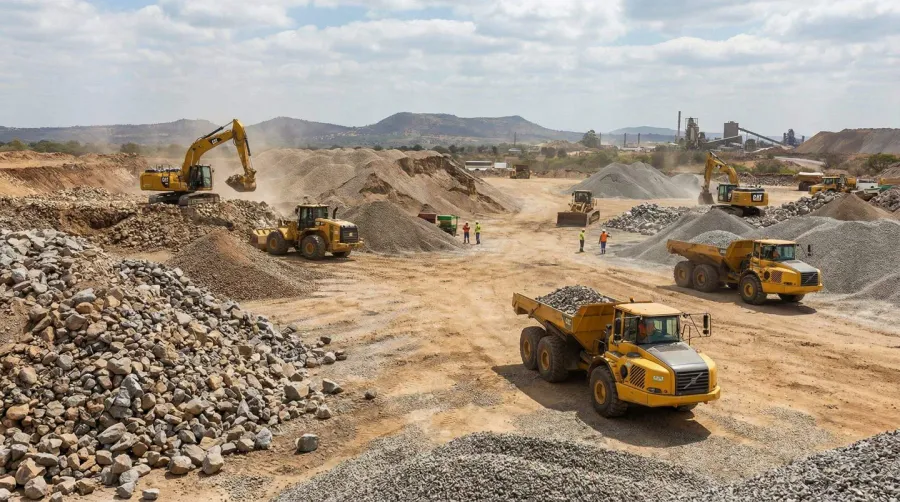
Choosing the right rock size for your construction project can make the difference between a stable, cost-effective build and expensive structural problems down the road. Rock sizes directly impact everything from foundation stability to project costs, making proper selection crucial for success.
Whether you’re building a residential foundation, constructing a retaining wall, or laying a roadway, understanding rock sizes helps you avoid costly mistakes and ensures your project meets engineering requirements. Different construction applications require specific rock sizes to achieve optimal performance, drainage, and load-bearing capacity.
Quick Fact: Small rocks (0.075-2 inches) excel in drainage applications, medium rocks (2-5 inches) provide ideal road stability, while large rocks (5+ inches) offer maximum structural support for retaining walls and erosion control.
Understanding Rock Types Used in Construction
The type of rock you choose affects both performance and cost. Construction professionals typically work with three main rock categories, each offering distinct advantages for specific applications.
Igneous rocks like granite and basalt form from cooled molten material. Granite’s high compressive strength makes it perfect for countertops and building facades, while basalt’s exceptional durability works well in road construction and concrete production. These rocks typically cost more but offer superior longevity.
Sedimentary rocks including limestone, sandstone, and shale develop through accumulated sediment over time. Limestone provides excellent durability for building construction at moderate costs. For those wondering about specific applications, limestone can be effectively used for raised garden beds and various landscaping projects. Sandstone offers natural beauty for decorative applications, while shale splits easily for brick and tile production.Metamorphic rocks such as marble, slate, and quartzite form under heat and pressure. Marble’s workability makes it ideal for interior finishes, slate’s weather resistance suits roofing applications, and quartzite’s wear resistance works perfectly for high-traffic areas.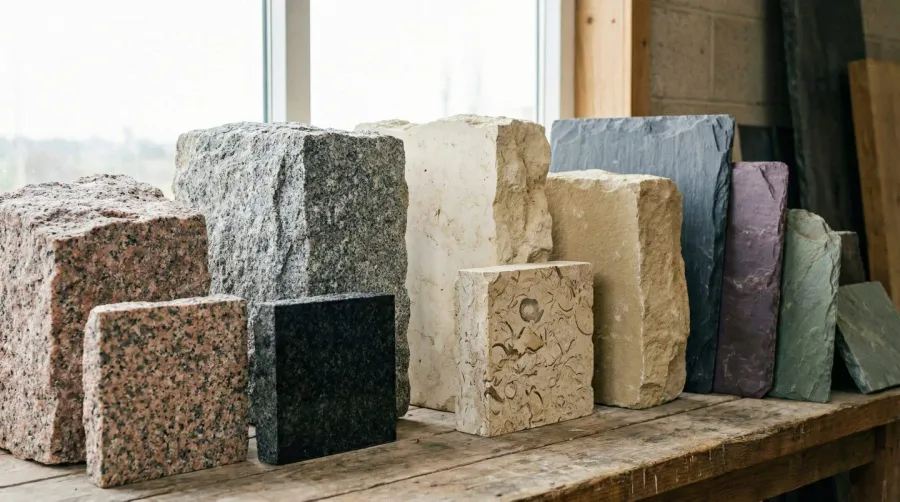
Standard Rock Size Categories and Their Applications
Construction projects use standardized rock sizes to ensure consistency and performance. Understanding these categories helps you select materials that match your specific needs and budget constraints.
Small rocks measuring 0.075 to 2 inches serve multiple construction purposes. You’ll find them used as fill material, drainage layers, and foundation bases. Their compact size allows tight packing, creating stable surfaces that handle water management effectively. These rocks, often called gravel or crushed stone, provide excellent load-bearing capabilities at reasonable costs. If you’re planning a foundation project, check out what is the best gravel size for a foundation for detailed guidance.
Medium-sized rocks ranging from 2 to 5 inches work perfectly for road construction, landscaping, and erosion control. They create stable, visually appealing surfaces for driveways, walkways, and parking areas. Their size balances stability with drainage, making them ideal for moderate-load applications where water flow matters. For patio projects, you might want to explore the best gravel size for a patio.
Large rocks exceeding 5 inches in diameter provide maximum stability for demanding applications. You’ll see them used in retaining walls, embankments, and erosion control projects. These boulders resist external forces effectively and can prevent landslides while protecting structural integrity. Learn more about using river rock for retaining wall base projects for specialized applications.
Cost Consideration: While larger rocks provide superior stability, they require heavy machinery for handling and placement, potentially increasing project costs by 20-40% compared to smaller alternatives.
| Rock Size Category | Size Range | Primary Applications | Cost Factor |
|---|---|---|---|
| Small | 0.075-2 inches | Drainage, fill, foundations | Low |
| Medium | 2-5 inches | Roads, walkways, landscaping | Moderate |
| Large | 5+ inches | Retaining walls, erosion control | High |
Measuring and Classification Methods
Accurate rock size measurement ensures your project meets specifications and performs as expected. Construction professionals use several standardized methods to classify and measure rocks effectively.
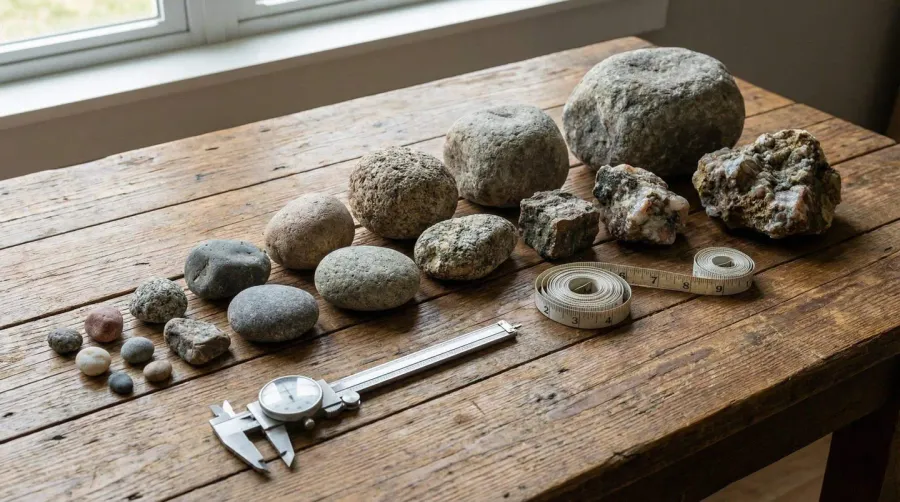
Measurement tools vary based on rock size and project requirements. Rulers and measuring tapes work well for smaller rocks, while calipers handle irregular shapes accurately. For larger rocks, grizzly screens provide efficient sizing and sorting capabilities.
Classification systems standardize communication between project stakeholders. The Unified Soil Classification System (USCS) categorizes rocks based on particle size distribution, making it easier to specify requirements. The Wentworth scale offers another common system, organizing rocks into classes like boulders, cobble, gravel, sand, and silt.
These systems help engineers communicate specifications clearly and ensure suppliers deliver appropriate materials. Using standardized classifications reduces errors and helps maintain quality control throughout your project. For comprehensive information on material selection, explore the ultimate guide to bulk aggregate.
Selection Factors and Common Mistakes
Selecting appropriate rock sizes requires careful consideration of multiple factors that affect both performance and costs. Understanding these considerations helps you make informed decisions that support project success.
Application requirements should drive your rock size selection. Road construction typically needs medium-sized rocks for stability and drainage, while foundation work might require smaller rocks for tight packing. For specific guidance on road projects, see what is the best gravel size for road construction. Retaining walls benefit from larger rocks that provide maximum stability against lateral forces.
Load-bearing needs determine minimum rock size requirements for your project. Calculate anticipated weights and forces to ensure selected rocks can handle structural demands safely. Undersized rocks may fail under load, while oversized rocks increase costs unnecessarily.
Transportation and handling costs significantly impact project budgets. Larger rocks require heavy equipment for movement and placement, increasing labor and equipment expenses. Consider these factors when balancing stability requirements against budget constraints.
Common Mistake Alert: Choosing rocks based solely on cost often leads to performance issues. A foundation built with undersized rocks may settle unevenly, requiring expensive repairs that far exceed initial material savings.
Frequent selection errors include choosing rocks that don’t match application requirements. Using rocks that are too small compromises structural stability, while oversized rocks create unnecessary expenses and installation challenges. Another mistake involves ignoring site-specific geological conditions that affect rock performance and selection requirements.
Successful rock selection balances performance needs, cost considerations, and practical installation requirements. Taking time to evaluate these factors thoroughly prevents costly mistakes and ensures your construction project achieves its intended goals effectively.
Ready to source the right rocks for your construction project? Bulk Aggregate Supply delivers premium construction materials nationwide, offering expert guidance and reliable delivery to keep your project on schedule and within budget.
FAQ
What are the standard rock sizes used in construction?
Construction projects use three main rock size categories: small rocks (0.075-2 inches) for drainage, fill material, and foundation bases; medium rocks (2-5 inches) for road construction, driveways, and landscaping; and large rocks (5+ inches) for retaining walls, erosion control, and structural support. Each size serves specific engineering requirements based on load-bearing needs and application demands.
How do I choose the right rock size for my construction project?
Rock size selection depends on your project’s specific requirements including load-bearing needs, drainage requirements, and application type. Consider factors like soil conditions, anticipated weight loads, water management needs, and transportation costs. For foundations, smaller rocks provide tight packing; for retaining walls, larger rocks offer maximum stability; and for roads, medium-sized rocks balance stability with drainage.
What’s the difference between igneous, sedimentary, and metamorphic rocks in construction?
Igneous rocks like granite and basalt offer high compressive strength and durability, making them ideal for structural applications and road construction. Sedimentary rocks including limestone and sandstone provide good durability at moderate costs, suitable for building construction and decorative applications. Metamorphic rocks such as marble, slate, and quartzite offer specialized properties like weather resistance and wear resistance for specific applications like roofing and high-traffic areas.
What are common mistakes when selecting rock sizes for construction?
The most common mistake is choosing rocks based solely on cost rather than performance requirements, which can lead to structural failures and expensive repairs. Other frequent errors include selecting rocks that are too small for load-bearing applications, compromising stability, or choosing oversized rocks that create unnecessary expenses and installation challenges. Ignoring site-specific geological conditions and drainage requirements also leads to poor performance outcomes.