
River rock truckload costs in 2026
Guide handoff
Want help applying this guide to your project?
Share your ZIP and what you need help with. We'll use this guide as context when we follow up.
- 1 This guide gives us the context you were reading.
- 2 Ask about pricing, material choice, delivery timing, or quantity.
- 3 Keep it broad if you are still figuring out the project.
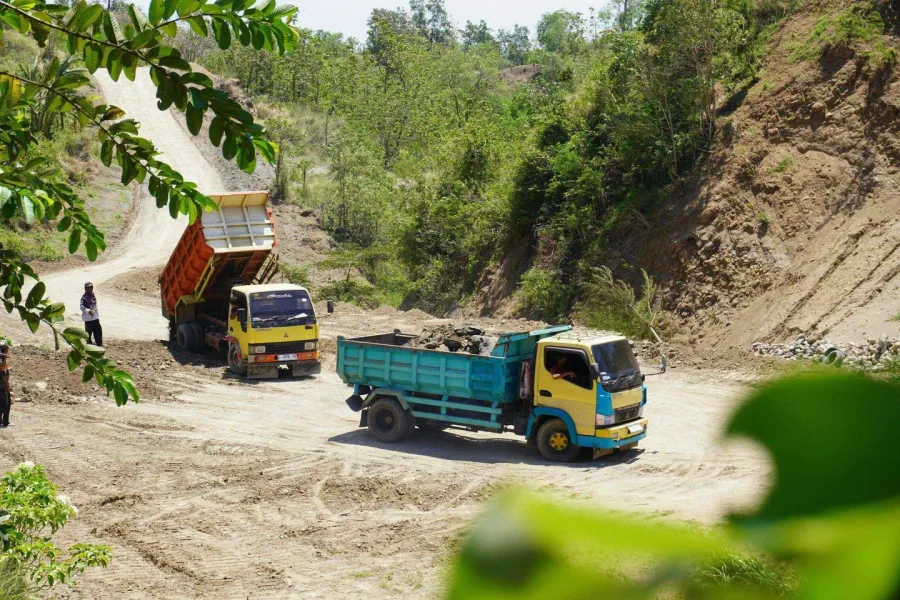
Planning a landscaping project with river rock? You’re looking at costs between $500 and $1,000 for a standard truckload, though prices can vary significantly based on rock type, size, and your location. Understanding these cost factors upfront helps you budget effectively and avoid surprises during your project.
Quick answer: A typical dump truck carries 10-13 tons of river rock, costing $500-$1,000 on average. Premium varieties like black river rock or larger decorative stones can push costs toward $1,500-$2,000 per load.
River rock remains one of the most popular choices for landscaping because it creates natural-looking features while requiring minimal maintenance. Whether you’re building a garden path, creating a water feature, or designing a rock garden, knowing the real costs helps you make informed decisions about your outdoor space.
What drives river rock pricing
Several key factors determine how much you’ll pay for your river rock delivery. The type and quality of stone you choose makes the biggest difference in your final cost.
Rock type and appearance significantly impact pricing. Standard gray or brown river rock typically costs less than specialty colors. Black river rock, for example, commands premium prices due to its striking appearance and limited availability. White or multicolored varieties also cost more than earth-toned options.
Stone size affects both price and coverage. Smaller stones like pea gravel cost less per ton but may require more material to achieve the same coverage depth. Larger decorative stones cost more upfront but often provide better visual impact for focal areas. Understanding the various sizes of river rock helps you select the right option for your specific landscaping needs.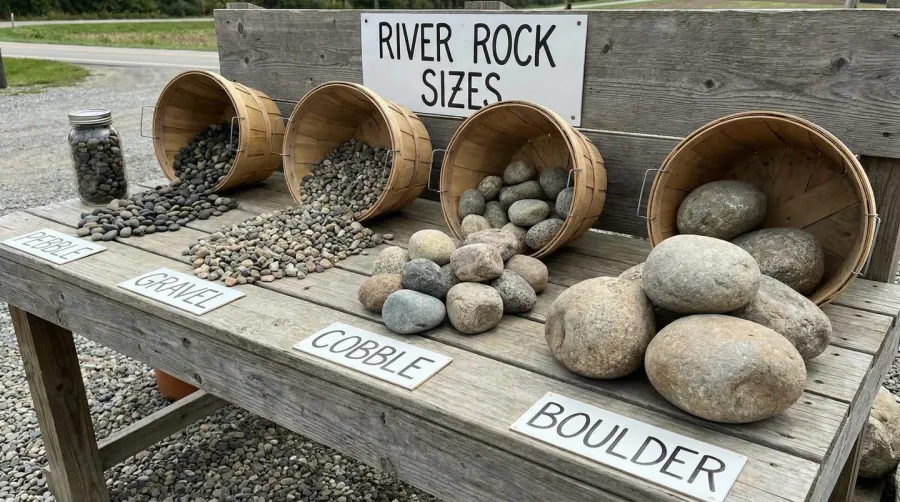 Quality grades vary between suppliers. Higher-grade river rock undergoes additional washing and sorting, resulting in cleaner stones with more consistent sizing. This extra processing increases costs but delivers better results for visible landscaping areas.
Your location and distance from quarries or suppliers directly affects delivery costs. Rural areas or locations far from stone sources typically see higher prices due to increased transportation expenses. If you’re wondering where to buy river rock, researching local suppliers versus regional quarries can reveal significant price differences.
Current market pricing breakdown
Understanding typical price ranges helps you evaluate quotes from different suppliers and plan your budget accordingly.
| Rock Type | Size Range | Price per Ton | Truckload Cost (12 tons) |
|---|---|---|---|
| Standard river rock | 1-3 inches | $45-$75 | $540-$900 |
| Pea gravel | 1/4-1/2 inch | $35-$55 | $420-$660 |
| Large decorative | 3-6 inches | $65-$120 | $780-$1,440 |
| Black river rock | 1-4 inches | $80-$150 | $960-$1,800 |
These prices reflect material costs only and don’t include delivery fees or installation services. Most suppliers offer bulk discounts for larger orders, so purchasing multiple truckloads at once often reduces your per-ton cost. For comprehensive pricing information, check out the ultimate guide to river rock prices.Seasonal pricing also affects your total cost. Spring and summer months typically see higher prices due to increased landscaping activity. Planning your project for fall or winter can sometimes save 10-20% on material costs.
Money-saving tip: Order during off-peak seasons (late fall through early spring) to take advantage of lower demand pricing and better supplier availability.
Additional expenses to consider
Beyond the river rock itself, several other costs factor into your total project budget. Planning for these expenses prevents budget overruns and project delays.
Delivery charges vary based on distance and accessibility. Most suppliers charge $50-$150 for local deliveries within 20 miles. Difficult access sites, steep driveways, or locations requiring special equipment may incur additional fees. Learning about transporting a truck load of river rock can help you prepare for delivery day.
Site preparation often requires professional help. Clearing existing vegetation, grading the area, and installing landscape fabric typically costs $2-$5 per square foot. Proper preparation ensures your river rock stays in place and looks professional.
Installation labor ranges from $3-$8 per square foot depending on project complexity. Simple spreading and leveling costs less than creating intricate patterns or building retaining features. Many homeowners handle basic installation themselves to save on labor costs.
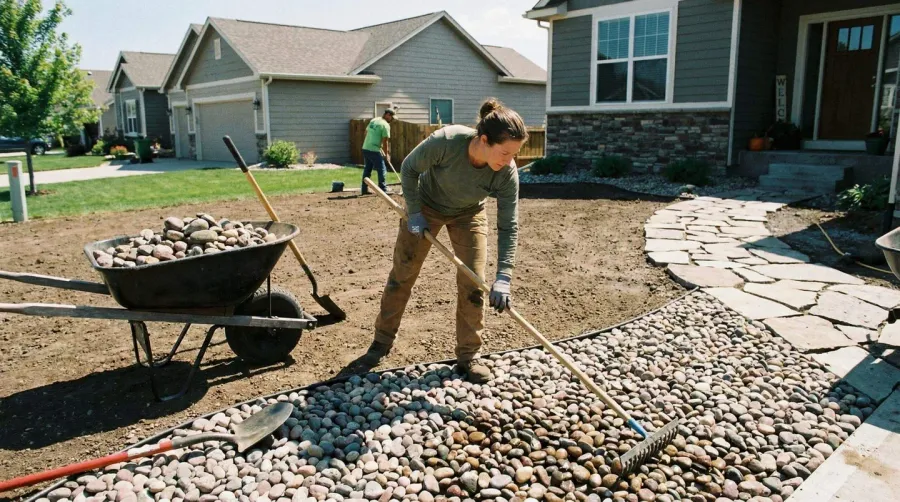
Equipment rental may be necessary for larger projects. Wheelbarrows, rakes, and compactors help achieve professional results. Budget $50-$100 per day for basic tool rentals if you don’t own the necessary equipment.
Smart strategies for reducing costs
Several approaches can help you get quality river rock while staying within your budget. These strategies work whether you’re tackling a small garden project or a large commercial installation.
Compare multiple suppliers before making your decision. Prices can vary significantly between local quarries, landscape supply stores, and national chains. Get quotes from at least three sources to ensure competitive pricing.
Consider mixed loads if you need different materials for your project. Many suppliers offer combination deliveries of river rock, topsoil, and mulch at reduced per-item costs compared to separate deliveries.
Plan for bulk purchases when possible. Buying 15-20 tons at once often qualifies for volume discounts and reduces delivery costs per ton. If you have storage space, purchasing extra material for future projects can provide long-term savings. For large-scale projects, explore where to buy river rocks in bulk wholesale to maximize your savings.Time your purchase strategically by avoiding peak landscaping seasons. Late fall through early spring typically offers the best pricing and supplier availability.
Pro tip: Ask suppliers about “contractor pricing” even for residential projects. Many offer reduced rates for customers willing to be flexible with delivery timing or who can accept partial loads.
Choose appropriate grades for different project areas. Use premium-grade river rock for highly visible areas and standard grades for areas that won’t be prominently featured. This approach maintains visual appeal while controlling costs. Consider river rock sizes for landscaping to determine which grades work best for each area of your project.
River rock represents a significant investment in your landscape, but understanding the cost factors helps you make informed decisions. Focus on finding the right balance between quality, appearance, and budget to create the outdoor space you envision. With proper planning and smart purchasing strategies, you can achieve professional results while keeping costs manageable.
FAQ
How much does a dump truck load of river rock cost?
A standard dump truck load of river rock (10-13 tons) costs between $500 and $1,000 on average, though prices can range from $420 to $1,800 depending on the type and quality of rock. Premium varieties like black river rock can push costs toward $1,500-$2,000 per load, while standard gray or brown river rock typically falls on the lower end of the price range.
What factors affect river rock truckload pricing?
Several key factors influence river rock pricing including rock type and color (black and specialty colors cost more), stone size (larger decorative stones are more expensive), quality grade (higher-grade washed and sorted rock costs more), and your location’s distance from quarries or suppliers. Seasonal demand also affects pricing, with spring and summer typically seeing 10-20% higher costs.
How much area does a truckload of river rock cover?
A typical dump truck load of 10-13 tons of river rock covers approximately 100-130 square feet at 6 inches deep, or 200-265 square feet at 3 inches deep. The exact coverage depends on the size of the stones, compaction, and the desired depth for your specific landscaping project.
Are there additional costs beyond the river rock material?
Yes, additional costs include delivery charges ($50-$150 for local deliveries within 20 miles), site preparation ($2-$5 per square foot), and installation labor ($3-$8 per square foot). Equipment rental may also be necessary for larger projects, typically costing $50-$100 per day for basic tools like wheelbarrows, rakes, and compactors.