
River Rock Retaining Wall Calculator – How Much Do You Need
Guide handoff
Want help applying this guide to your project?
Share your ZIP and what you need help with. We'll use this guide as context when we follow up.
- 1 This guide gives us the context you were reading.
- 2 Ask about pricing, material choice, delivery timing, or quantity.
- 3 Keep it broad if you are still figuring out the project.
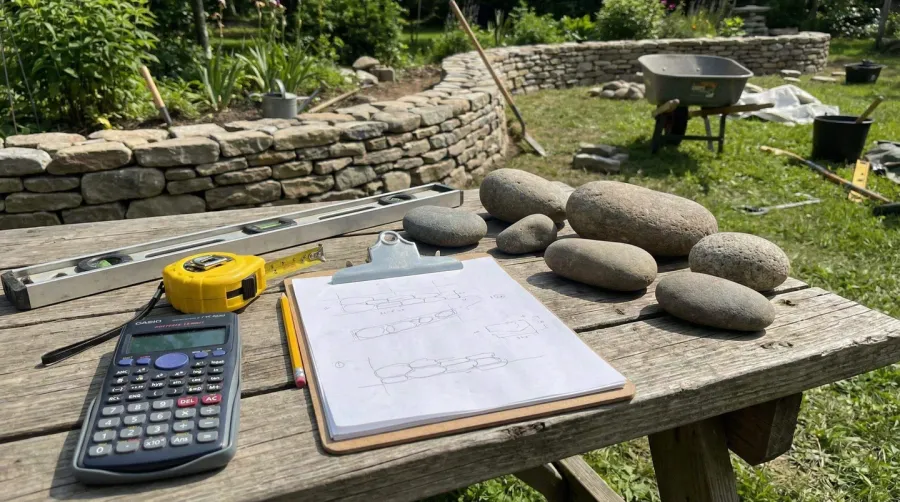
Building a retaining wall with river rock requires precise calculations to avoid costly overages or project delays. You need approximately 1.3 to 1.5 tons of river rock per cubic yard of wall volume, depending on rock size and packing density. This translates to roughly $65-$120 per linear foot for materials alone, based on current hellogravel.com pricing data.
Quick Answer: For a standard 3-foot high retaining wall, you need about 0.4 tons of river rock per linear foot. A 20-foot wall would require approximately 8 tons of material.
Understanding how to calculate your exact needs saves both time and money. River rock offers excellent drainage properties and natural aesthetics, making it a popular choice for landscape retaining walls. The key lies in accurate measurement and accounting for material waste during installation.
Understanding retaining wall volume calculations
The foundation of any river rock project starts with precise volume calculations. You measure length, height, and width to determine cubic footage, then convert to tons based on material density.
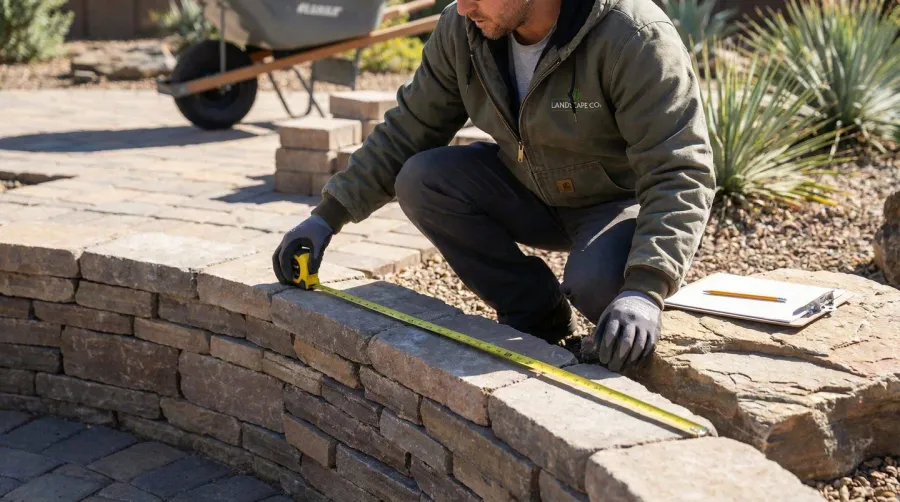
Start by measuring your planned wall dimensions in feet. Length represents the total distance your wall will span. Height measures from ground level to the top of your finished wall. Width depends on your wall design but typically ranges from 18 inches to 3 feet for stability.
Multiply these three dimensions together to get cubic feet. For example, a wall that’s 20 feet long, 3 feet high, and 2 feet wide equals 120 cubic feet. Convert to cubic yards by dividing by 27, giving you 4.44 cubic yards for this example.
River rock density varies by size and type, but most suppliers calculate coverage at 1.3 to 1.5 tons per cubic yard. Larger rocks create more air gaps, requiring additional material to fill voids. Smaller river rocks pack more densely but may need extra material for proper drainage behind the wall.
Pro Tip: Always add 10-15% extra material to your calculations. This accounts for settling, waste during installation, and future repairs.
River rock size and coverage rates
Different river rock sizes affect both your material needs and wall stability. Understanding these variations helps you choose the right size and calculate accurate quantities.
Small river rocks (1-3 inches) pack efficiently but require more tons per cubic yard due to reduced air space. These work well for shorter walls under 3 feet and provide excellent drainage. Coverage typically runs 1.4-1.5 tons per cubic yard.
Medium river rocks (3-6 inches) offer the best balance of stability and coverage for most retaining walls. They interlock naturally while maintaining good drainage properties. Plan for 1.3-1.4 tons per cubic yard with medium-sized rocks.
Large river rocks (6+ inches) create dramatic visual impact but require careful placement and additional smaller rocks to fill gaps. These work best for taller walls where stability matters most. Coverage drops to 1.2-1.3 tons per cubic yard due to increased air space.
| Rock Size | Coverage Rate | Best Use | Drainage |
|---|---|---|---|
| 1-3 inches | 1.4-1.5 tons/yd³ | Short walls | Excellent |
| 3-6 inches | 1.3-1.4 tons/yd³ | Most walls | Very good |
| 6+ inches | 1.2-1.3 tons/yd³ | Tall walls | Good |
The size you choose also impacts installation difficulty and final appearance. Smaller rocks require more individual placement but create uniform texture. Larger rocks move faster during installation but need careful positioning for stability. For more detailed guidance on selecting the appropriate dimensions, check out our comprehensive guide to river stone sizes.
Cost breakdown and budgeting
River rock costs vary significantly based on size, quality, and your location. Understanding these price factors helps you budget accurately and compare supplier options.Material costs typically range from $40-$80 per ton for standard river rock, according to hellogravel.com market data. Premium colors or larger sizes can push prices to $100+ per ton. Factor in delivery charges, which usually add $50-$150 depending on distance and order size. For a complete breakdown of current market rates, explore our ultimate guide to river rock prices.
Installation costs add another layer to your budget. Professional installation runs $15-$25 per square foot of wall face, including excavation and base preparation. DIY installation saves labor costs but requires proper tools and techniques for lasting results.

Additional materials include landscape fabric, drainage gravel, and potentially concrete for larger walls. Budget an extra 20-30% of your river rock cost for these supporting materials. A typical 20-foot wall might need $200-$400 in additional supplies beyond the river rock itself.
Budget Tip: Order slightly more than calculated needs. Most suppliers offer better per-ton pricing on larger orders, and having extra material prevents delays if you need more during installation.
Consider long-term value when comparing costs. River rock requires minimal maintenance compared to concrete or timber walls. The natural material weathers beautifully and typically lasts decades with proper installation and drainage. If you’re planning a larger project, learn more about how much a dump truck load of river rock costs to optimize your ordering strategy.
Installation and measurement tips
Proper installation techniques ensure your river rock retaining wall performs well and looks great for years. Focus on solid foundation preparation and systematic rock placement.
Excavate your foundation area 6-8 inches deep and 6 inches wider than your planned wall width. This creates space for a gravel base that provides drainage and stability. Compact the soil thoroughly before adding base materials.
Install a 4-6 inch layer of crushed gravel as your foundation. This base layer should extend beyond your wall footprint for proper support. Level and compact this base before beginning rock placement. For optimal water management, consider incorporating drainage rock to improve drainage in your foundation design.
Start with your largest, most stable rocks for the bottom course. These anchor rocks should sit firmly without rocking or shifting. Work systematically along your wall length, maintaining consistent height and alignment.
Fill gaps between larger rocks with smaller river rocks and stone chips. This interlocking pattern creates stability while maintaining drainage. Avoid using mortar unless your wall exceeds 4 feet in height or local codes require it.
Building a river rock retaining wall requires patience and attention to detail, but the results provide both function and natural beauty. Proper calculation ensures you have adequate materials without waste, while careful installation creates a lasting landscape feature that enhances your property value and prevents erosion effectively. Before starting your project, make sure you know where to buy river rock from reputable suppliers in your area.
FAQ
How much river rock do I need for a retaining wall?
Calculate your wall volume by multiplying length × height × width in feet, then divide by 27 to get cubic yards. For example, a 20ft × 3ft × 2ft wall equals 4.44 cubic yards. You’ll need approximately 1.3-1.5 tons of river rock per cubic yard, so this wall would require about 6-7 tons. Always add 10-15% extra for waste and settling.
What size river rock is best for retaining walls?
Medium river rocks (3-6 inches) offer the best balance for most retaining walls, providing good stability and drainage while covering 1.3-1.4 tons per cubic yard. Small rocks (1-3 inches) work well for shorter walls under 3 feet, while large rocks (6+ inches) are ideal for taller walls where maximum stability is needed.
How much does a river rock retaining wall cost per linear foot?
Materials alone cost $65-$120 per linear foot for a standard 3-foot high wall, based on river rock prices of $40-$80 per ton plus delivery. Professional installation adds $15-$25 per square foot of wall face. A complete installed wall typically costs $100-$300 per linear foot depending on height and local labor rates.
Do I need additional materials besides river rock for my retaining wall?
Yes, you’ll need a 4-6 inch crushed gravel base for foundation stability, landscape fabric for drainage, and potentially drainage pipe for walls over 3 feet. Budget an extra 20-30% of your river rock cost for these supporting materials. A typical project might need $200-$400 in additional supplies beyond the river rock itself.