
Pea Gravel vs Sand for Driveways and Landscaping 2025
Guide handoff
Want help applying this guide to your project?
Share your ZIP and what you need help with. We'll use this guide as context when we follow up.
- 1 This guide gives us the context you were reading.
- 2 Ask about pricing, material choice, delivery timing, or quantity.
- 3 Keep it broad if you are still figuring out the project.
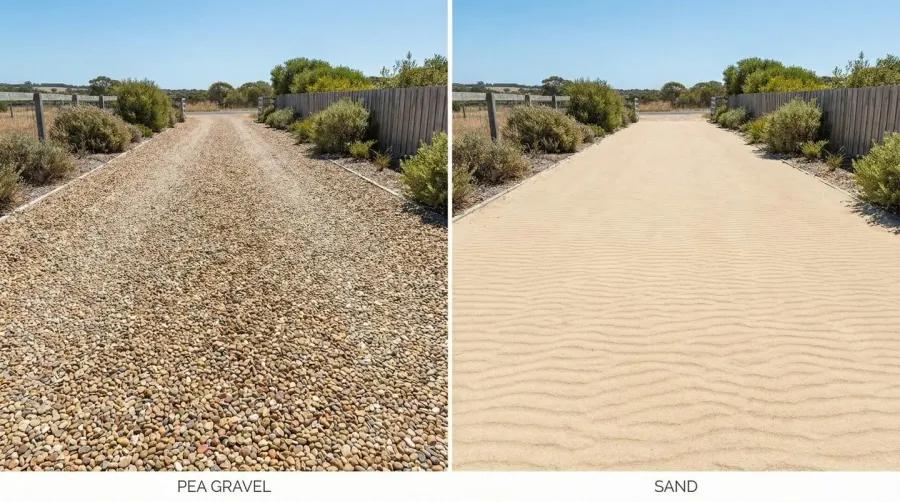
Choosing between pea gravel and sand for your driveway or landscaping project can feel overwhelming. Both materials offer unique benefits, but understanding their differences helps you make the right choice for your specific needs.
Quick answer: Pea gravel excels in drainage and aesthetics, making it perfect for pathways and decorative areas. Sand provides superior stability and compaction, ideal for driveway bases and paver installations. Cost-wise, sand typically runs $15-25 per ton while pea gravel costs $30-50 per ton.
Pro tip: For most driveway projects, use sand as your base layer and pea gravel as your top layer to get the best of both materials.
Let’s explore how these materials compare across the factors that matter most for your project.
What makes pea gravel different from sand
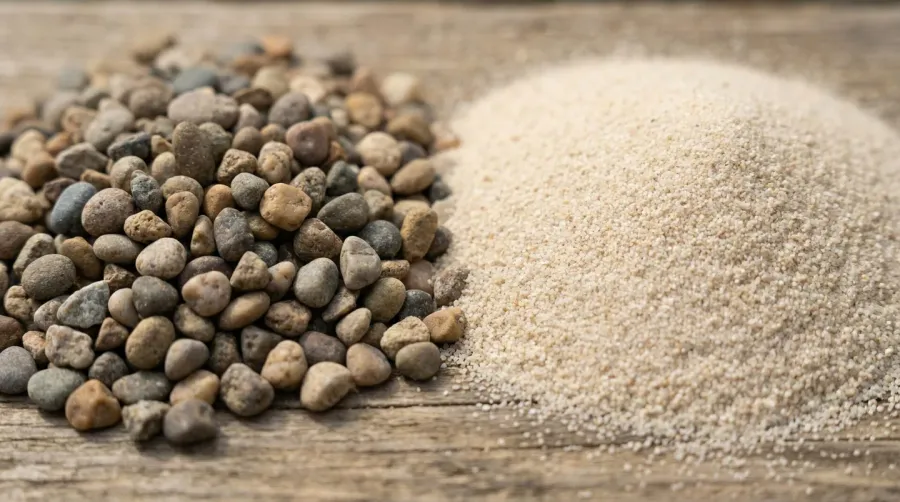
Pea gravel consists of small, rounded stones measuring 1/8 to 3/8 inches in diameter. These smooth stones form naturally through water erosion of larger rocks over thousands of years. The rounded shape and varied colors from beige to gray create an attractive, natural appearance. To learn more about the various colors and sizes of pea gravel, check out our comprehensive guide.
Sand contains much finer particles, typically less than 1/4 inch. It forms through similar erosion processes but breaks down further into tiny granules. This fine texture allows sand to compact tightly, creating a stable foundation that locks together when properly installed.
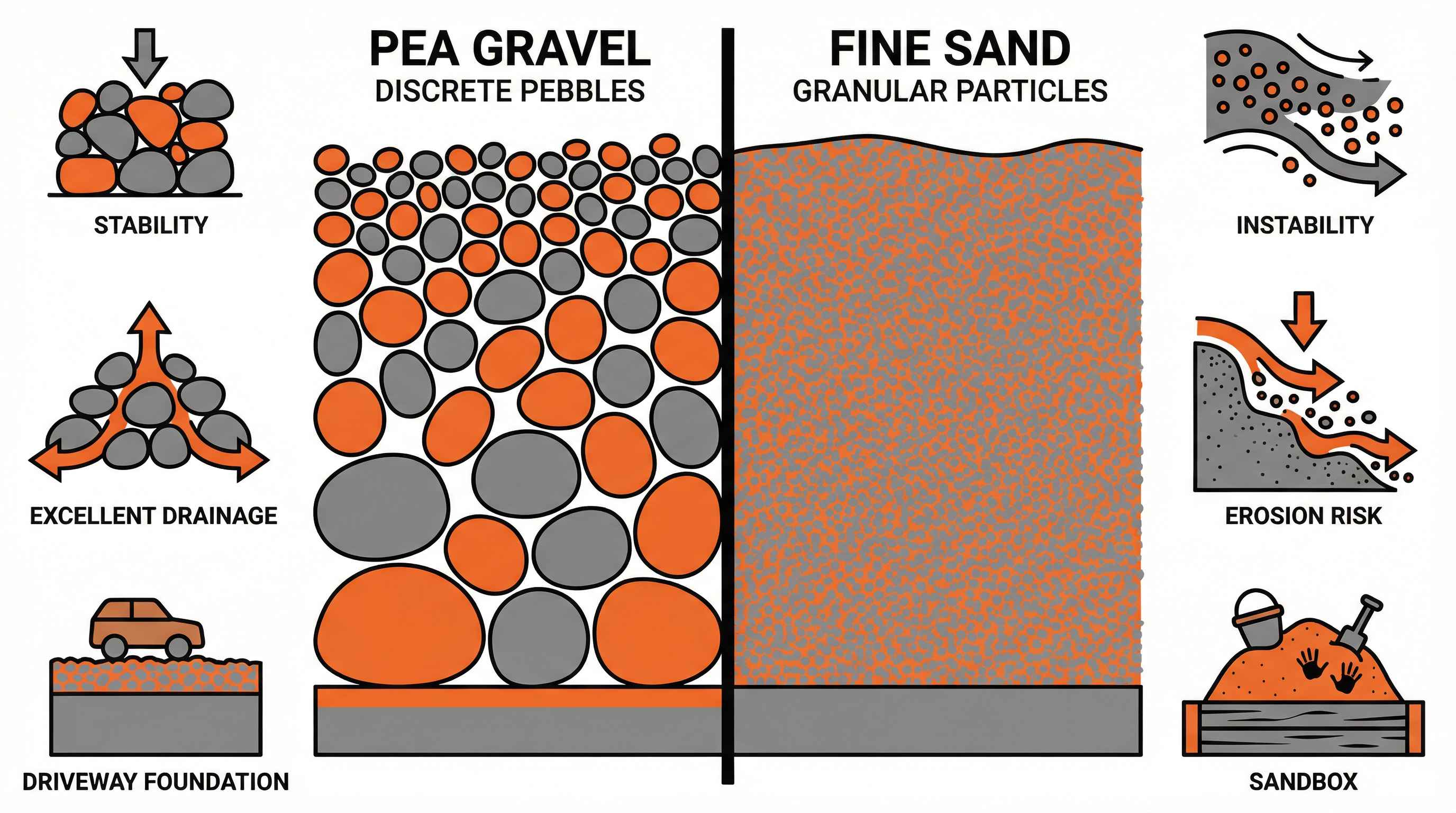
The key difference lies in their particle size and behavior. Pea gravel maintains space between stones, allowing excellent water drainage. Sand particles fit together closely, providing stability but slower drainage.
Cost comparison and budget planning
Understanding the financial impact helps you plan your project budget effectively. Sand generally costs less upfront, ranging from $15-25 per ton delivered. Pea gravel typically runs $30-50 per ton, making it roughly twice as expensive initially.
However, consider long-term costs too. Pea gravel may require replenishment every 2-3 years in high-traffic areas, adding $100-200 annually to maintenance costs. Sand compacts well and rarely needs replacement, though it may require occasional releveling.
For a typical 500 square foot driveway, expect to pay $150-300 for sand versus $300-500 for pea gravel. Factor in delivery fees of $50-100 depending on your location and order size.
| Material | Cost per ton | Coverage (sq ft) | Maintenance |
|---|---|---|---|
| Sand | $15-25 | 100-120 | Low |
| Pea Gravel | $30-50 | 80-100 | Moderate |
Installation and maintenance requirements
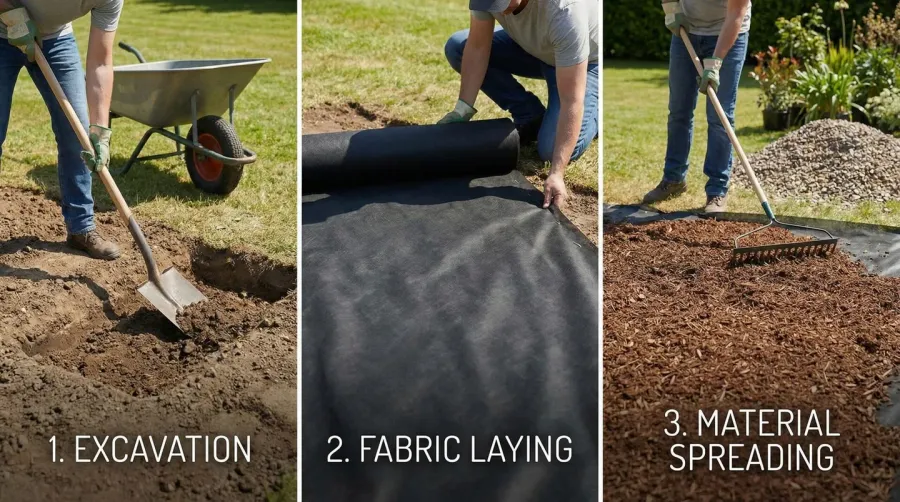
Installing sand requires careful preparation but straightforward execution. You’ll excavate 4-6 inches deep, add a geotextile fabric, then spread and compact the sand in 2-inch lifts. The compaction process creates the stable surface that makes sand so reliable for heavy loads.
Pea gravel installation focuses more on drainage and containment. After excavating 3-4 inches, install edging to prevent spreading, then spread the gravel evenly. No compaction is needed since the stones naturally settle into place.
Maintenance differs significantly between materials. Sand occasionally needs releveling and weed control but rarely requires replacement. Pea gravel needs periodic raking to maintain appearance and may require adding fresh material where stones have migrated or embedded into soil.
For weed prevention, both materials benefit from landscape fabric underneath, though pea gravel’s larger gaps make weed growth more likely over time. If you’re considering pea gravel as a landscaping mulch alternative, understanding these maintenance requirements is crucial.
Best applications for each material
Your project type should guide your material choice. Sand excels as a base layer under pavers, concrete slabs, and in areas requiring maximum stability. Its compaction ability makes it perfect for high-traffic driveways and walkways that need to support vehicles. If you’re wondering whether you can use pea gravel for paver base, it’s important to understand the limitations compared to sand.
Pea gravel shines in decorative applications like garden pathways, around plants, and in areas where drainage is crucial. Its attractive appearance and excellent water flow make it ideal for French drains, rain gardens, and decorative landscaping features. For those interested in specialized uses of pea gravel for experienced contractors, there are many advanced applications to explore.
Consider combining both materials for optimal results. Use sand as your stable base layer, then top with pea gravel for aesthetics and drainage. This approach gives you the structural benefits of sand with the visual appeal and water management of pea gravel. Understanding pea gravel vs base material differences helps you make informed decisions about layering strategies.
Application tip: For driveways, pea gravel alone can shift under tires and create ruts. Always use it over a compacted sand or gravel base for vehicle areas.
The choice between pea gravel and sand ultimately depends on your priorities. If you value stability and lower costs, sand delivers reliable performance. If drainage and appearance matter more, pea gravel provides superior results despite higher costs. Many successful projects use both materials strategically to maximize benefits while managing expenses. To explore more comparisons and discover the benefits and uses of pea stones gravel, visit our detailed guide.
FAQ
Which is better for driveways: pea gravel or sand?
For driveways, sand provides superior stability and compaction, making it ideal as a base layer. However, the best approach is using sand as your foundation (4-6 inches deep) topped with pea gravel for aesthetics and drainage. Pea gravel alone can shift under vehicle tires and create ruts, so it should never be used without a stable base.
What’s the cost difference between pea gravel and sand?
Sand typically costs $15-25 per ton while pea gravel ranges from $30-50 per ton, making pea gravel roughly twice as expensive initially. For a 500 square foot project, expect $150-300 for sand versus $300-500 for pea gravel. However, pea gravel’s durability can provide better long-term value despite higher upfront costs.
Which material offers better drainage: pea gravel or sand?
Pea gravel provides superior drainage due to the spaces between its rounded stones, allowing water to flow freely through the material. This makes it excellent for French drains, rain gardens, and areas prone to water accumulation. Sand compacts tightly and drains more slowly, though it still offers adequate drainage for most applications.
How much maintenance do pea gravel and sand require?
Sand requires minimal maintenance – occasional releveling and weed control – and rarely needs replacement once properly installed. Pea gravel needs periodic raking to maintain appearance and may require adding fresh material every 2-3 years in high-traffic areas, adding $100-200 annually to maintenance costs. Both benefit from landscape fabric underneath for weed prevention.