
How to Increase Road Base Load-Bearing Capacity for Stronger Pavements
When you’re dealing with pavement failures, rutting, or premature road deterioration, the problem often starts beneath the surface. The load-bearing capacity of your road base determines whether your pavement will last decades or require costly repairs within just a few years.
Road base load-bearing capacity refers to the maximum weight and stress your pavement foundation can handle without deformation or failure. You can significantly enhance this capacity through proper aggregate selection, stabilization techniques, and installation methods. The key lies in creating a strong, well-compacted foundation that distributes traffic loads evenly to the underlying soil.
A properly designed aggregate base course can increase pavement lifespan by 40-60% compared to inadequate base materials, according to Hello Gravel.
Understanding aggregate base course fundamentals
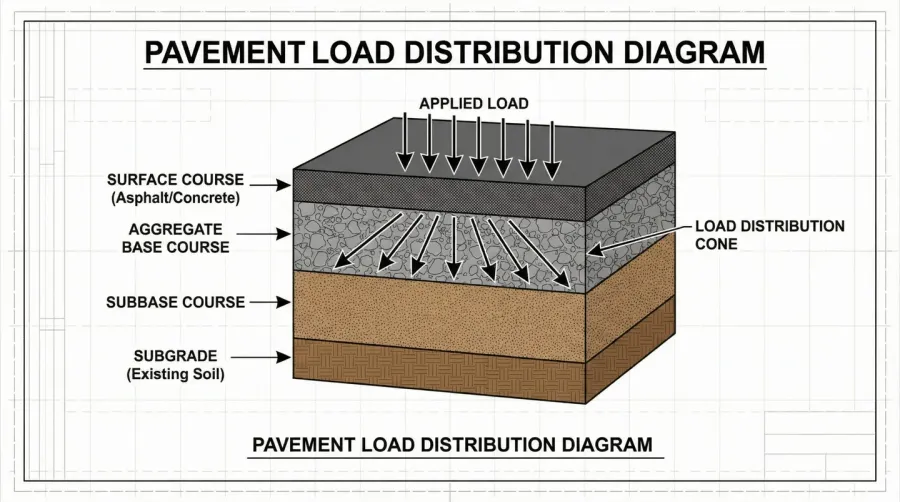
The aggregate base course sits between your pavement surface and the natural soil beneath. Think of it as the backbone of your road structure. This layer consists of carefully graded crushed stone, gravel, or recycled concrete that works together to create a stable platform.
Your base course serves three critical functions. First, it distributes the weight from vehicles across a wider area, reducing pressure on the subgrade soil. Second, it provides a level, stable surface for pavement installation. Third, it allows water drainage, preventing moisture-related damage that weakens the foundation.
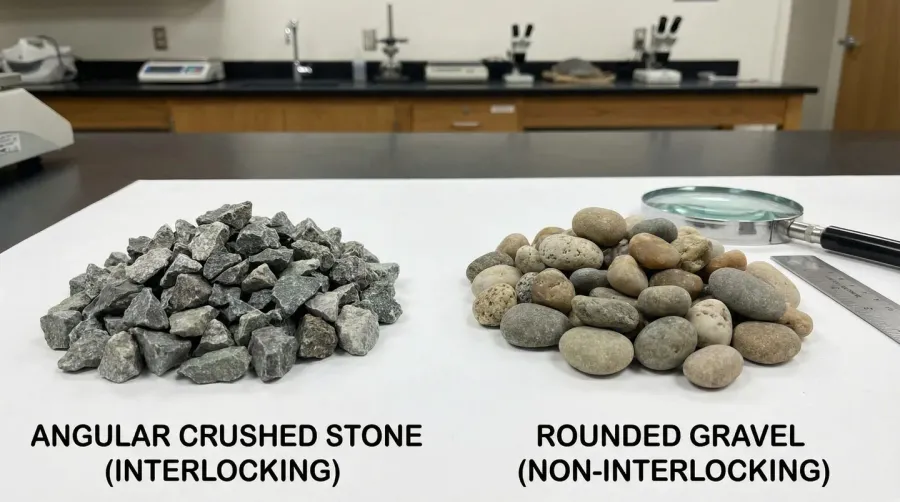
The material composition matters significantly. Well-graded aggregates with angular particles interlock better than rounded materials, creating superior stability. The gradation should include various particle sizes to fill voids and maximize density when compacted. At Hello Gravel, we source high-quality crushed stone and gravel from local pits across all 50 states, ensuring you get the right materials for optimal base course performance. Understanding the benefits of gravel fill for construction projects can help you make informed decisions about your base course materials.
Methods to enhance load-bearing capacity
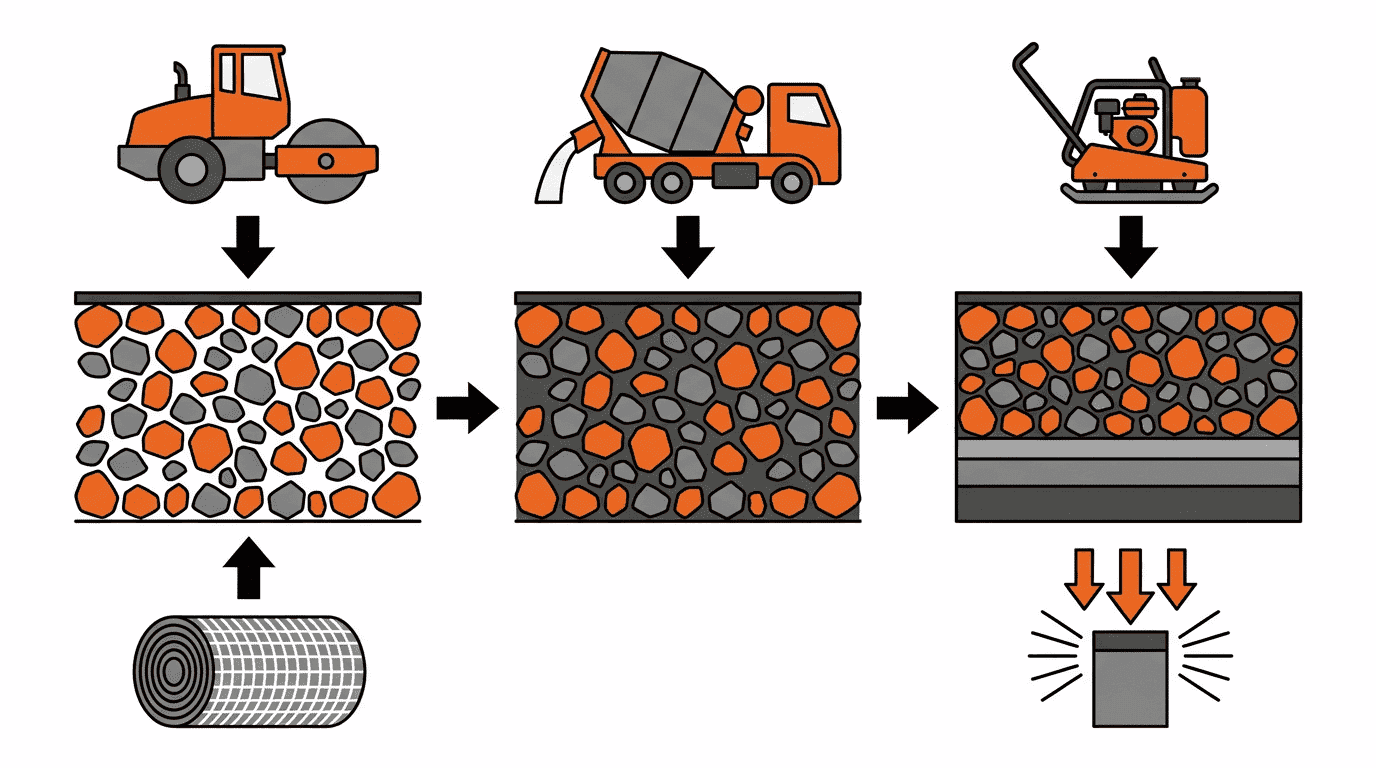
You have several proven techniques to boost your road base performance. Geogrid reinforcement involves placing synthetic mesh layers within the aggregate base. These polymer grids provide tensile strength that prevents lateral movement of aggregate particles under heavy loads.
Cementitious stabilization offers another effective approach. By mixing cement or lime with your aggregate base material, you create chemical bonds between particles. This process transforms loose aggregates into a semi-rigid layer that can handle significantly higher loads.
Chemical stabilization can reduce maintenance requirements by up to 50% compared to unstabilized gravel roads, requiring maintenance every 3-5 years instead of annually.
Modern additives also play a crucial role. Polymer stabilizers improve particle cohesion, while fiber reinforcement adds tensile strength to prevent cracking. These materials work at the molecular level to create stronger bonds between aggregate particles.
| Stabilization Method | Load Increase | Cost Factor | Best Application |
|---|---|---|---|
| Geogrid reinforcement | 30-40% | Medium | Heavy traffic areas |
| Cement stabilization | 50-70% | High | Permanent roads |
| Polymer additives | 20-30% | Low | Rural roads |
Selecting the right aggregate materials
Your material choice directly impacts load-bearing performance. Crushed stone provides the best interlocking properties due to its angular shape and rough texture. The sharp edges create mechanical bonds that resist movement under load.
Class 5 road base represents the gold standard for many applications. This material combines crushed stone with specific gradations that optimize compaction and stability. The mix includes particles ranging from 1.5 inches down to fine dust, creating a dense matrix when properly compacted. Our network of local suppliers ensures you receive properly graded materials that meet specifications for your specific project needs. When selecting materials, consider what type of gravel is best for a walkway principles, as similar considerations apply to road base selection.
Recycled concrete offers an environmentally friendly alternative without sacrificing performance. When properly processed, recycled concrete can match the strength characteristics of virgin aggregates while reducing project costs and environmental impact. Our local sourcing approach helps minimize transportation costs and environmental impact while ensuring fast delivery to your job site.
Properly graded aggregate base course can distribute vehicle loads across a wider area, reducing pressure on weak subgrade soils by up to 75% compared to direct loading.
Installation techniques for maximum strength
Layer thickness plays a critical role in load distribution. Most applications require 6-12 inches of compacted base course, but heavy-duty applications may need thicker layers. Build your base in lifts of 6-8 inches, compacting each layer before adding the next.
Compaction technique makes the difference between success and failure. Use vibratory rollers to achieve 95-98% of maximum density. Pay special attention to edges and transitions where inadequate compaction often leads to premature failure.
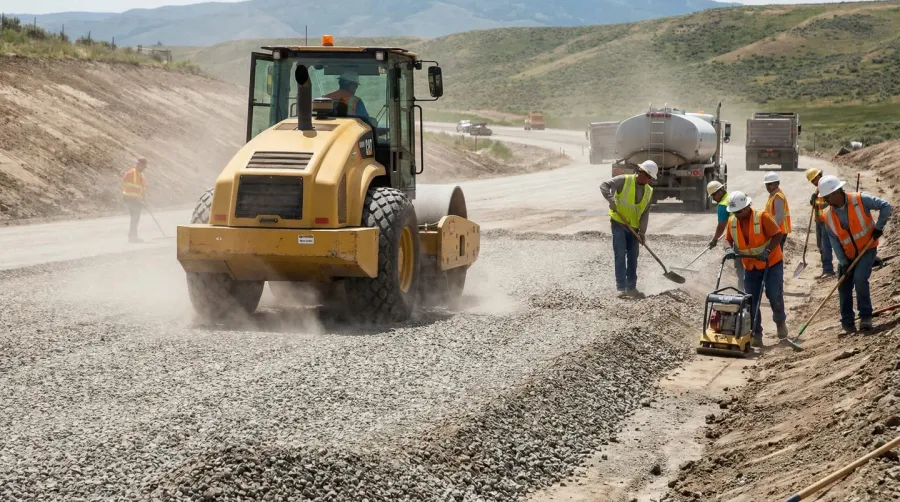
Moisture content during compaction affects your results significantly. The aggregate should be slightly damp but not saturated. Too much water creates a pumping action that prevents proper compaction, while too little moisture prevents particles from binding together effectively.
Your road base load-bearing capacity depends on getting these fundamentals right. By selecting appropriate materials, applying proven stabilization techniques, and following proper installation procedures, you create a foundation that supports heavy loads and extends pavement life. Whether you’re working on enhancing project resilience with quality construction materials or planning a smaller-scale project like using gravel for a patio base, the investment in quality base course construction pays dividends through reduced maintenance costs and improved performance over the pavement’s lifetime. With Hello Gravel’s nationwide coverage and local sourcing network, you can access the right materials for your project with delivery as soon as 2 business days.
FAQ
What is the optimal thickness for a road base course?
Most applications require 6-12 inches of compacted base course material. For heavy-duty applications with significant traffic loads, thicker layers may be necessary. The base should be built in lifts of 6-8 inches, with each layer properly compacted before adding the next to ensure maximum load-bearing capacity and stability.
How much can stabilization methods increase load-bearing capacity?
Different stabilization methods provide varying levels of improvement. Geogrid reinforcement can increase load capacity by 30-40%, cement stabilization offers 50-70% improvement, and polymer additives provide 20-30% enhancement. Cement stabilization offers the highest increase but comes with higher costs, making it ideal for permanent road applications.
Why is crushed stone better than rounded gravel for road base?
Crushed stone provides superior interlocking properties due to its angular shape and rough texture. The sharp edges create mechanical bonds that resist movement under load, while rounded gravel particles tend to roll past each other. This interlocking action in crushed stone creates a more stable foundation that can handle heavier loads without deformation.
What compaction density should be achieved for road base?
Road base should be compacted to achieve 95-98% of maximum density using vibratory rollers. The aggregate should be slightly damp but not saturated during compaction. Proper moisture content is crucial – too much water creates pumping action that prevents compaction, while too little moisture prevents particles from binding together effectively.