
How to Get Gravel Out of Grass Easily
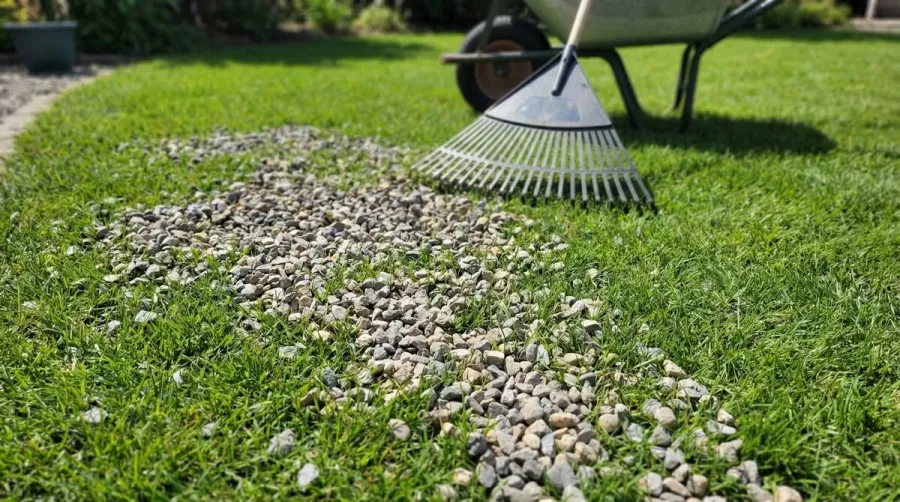
Gravel scattered across your grass can turn your beautiful lawn into an eyesore and safety hazard. Whether it migrated from your driveway during heavy rain or got tracked in from construction work, removing gravel from grass requires the right approach to avoid damaging your turf.
The good news? You can restore your lawn to its former glory with basic tools and proven techniques. Most homeowners can clear surface gravel in just a few hours using manual methods, while embedded stones may require specialized equipment like power rakes or gravel vacuums.
Quick Answer: Use a bow rake to gather loose gravel into piles, then scoop with a shovel into a wheelbarrow. For embedded gravel, try a power broom or specialized gravel vacuum for efficient removal without damaging grass roots.
Why gravel damages your lawn
Gravel creates multiple problems for your grass that go beyond just appearance. When stones cover your soil, they block essential sunlight from reaching grass blades, preventing proper photosynthesis. This leads to yellowing, thinning, and eventual death of your turf.
The weight of gravel also compacts soil underneath, making it harder for grass roots to access water and nutrients. Over time, this creates dead patches that require reseeding or sodding to repair. Understanding the importance of gravel soil in construction helps explain why gravel behaves differently than other materials on your lawn.
Additionally, gravel makes lawn maintenance nearly impossible. Mowing becomes dangerous as stones can damage mower blades or become projectiles. Walking on gravel-covered grass is uncomfortable and potentially harmful for children and pets.
Pro Tip: Remove gravel as soon as you notice it. The longer it sits, the deeper it embeds into your soil, making removal significantly more difficult.
Essential tools for gravel removal
The right tools make gravel removal faster and more effective. Your choice depends on the amount of gravel and size of the affected area.
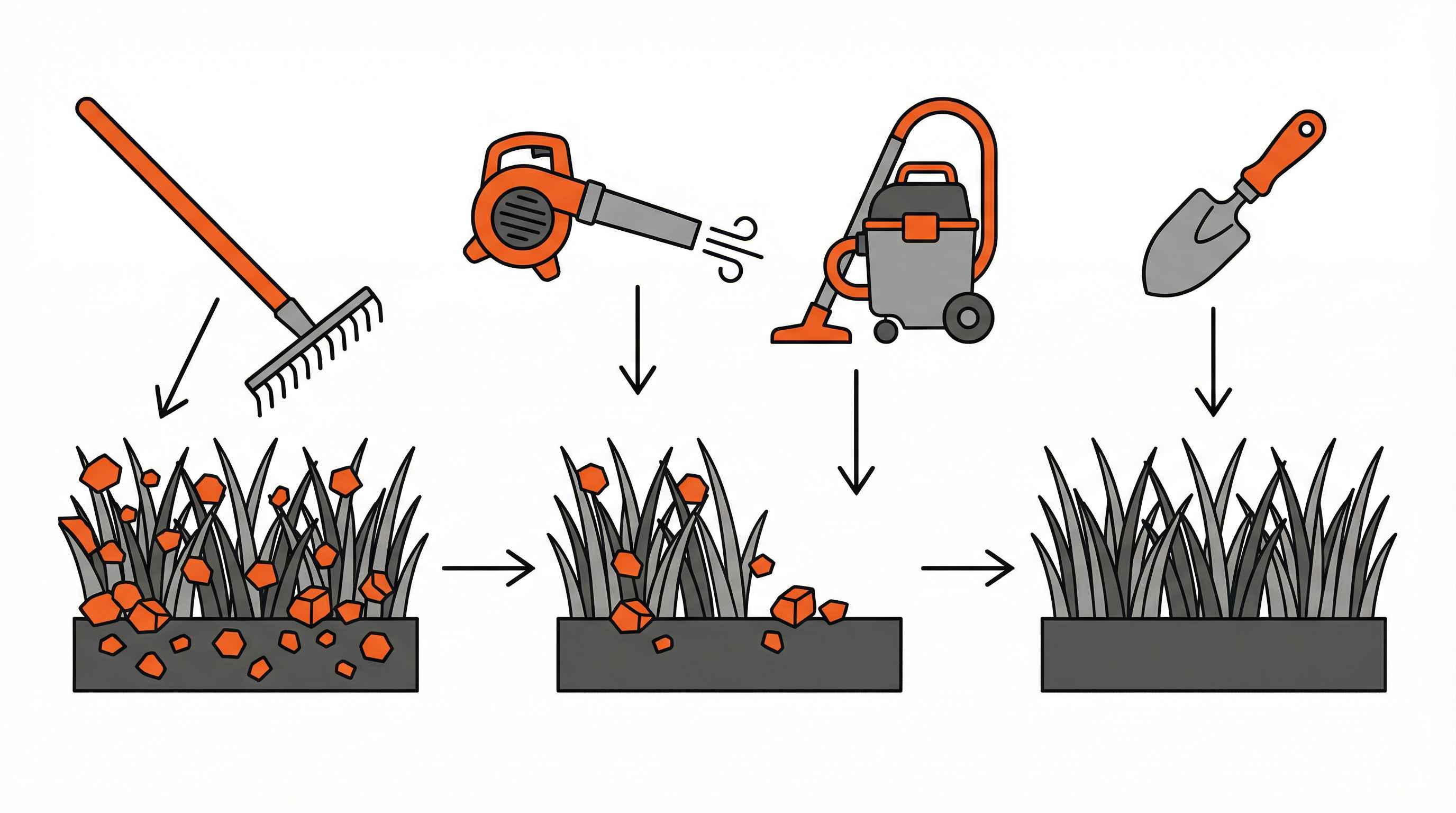
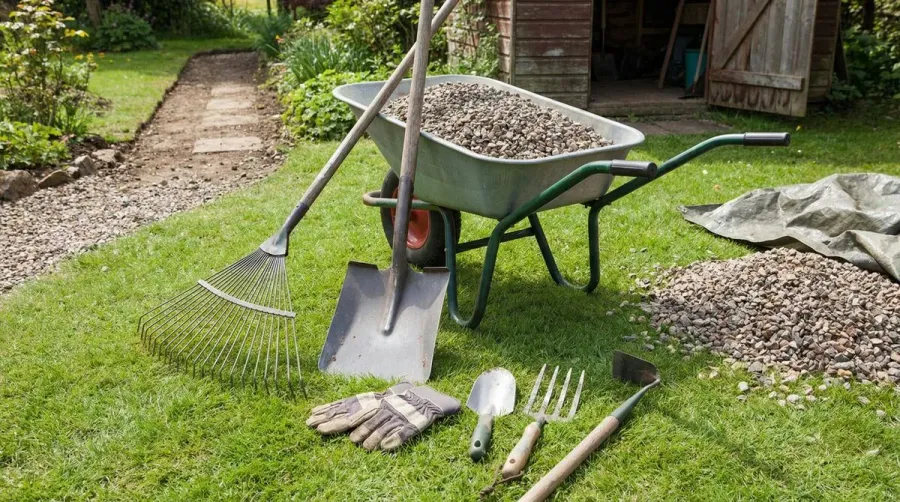
For small areas with light gravel coverage, basic hand tools work perfectly. A bow rake with curved tines effectively gathers loose stones, while a standard shovel lets you scoop gravel into a wheelbarrow for transport.
Medium to large areas require more powerful equipment. A power broom attachment for your lawn tractor can sweep gravel into neat piles across expansive spaces. For heavy deposits, consider renting a specialized gravel vacuum that suctions stones directly into a collection drum.
| Tool Type | Best For | Coverage Rate | Rental Cost |
|---|---|---|---|
| Hand rake | Small patches | 100 sq ft/hour | Own tool |
| Power broom | Large areas | 1000 sq ft/hour | $75/day |
| Gravel vacuum | Medium areas | 500 sq ft/hour | $150/day |
Step-by-step removal process
Start by assessing your gravel situation. Walk your entire lawn and mark affected areas with spray paint or flags. This helps you plan your approach and track progress.
Begin removal at one corner and work systematically across the area. Use your rake to gather loose gravel into manageable piles, then shovel these piles into your wheelbarrow. For embedded stones, work the rake tines deeper into the grass, being careful not to damage roots.
After clearing surface gravel, inspect for any remaining embedded pieces. Use a hand trowel or garden fork to carefully extract stubborn stones without disturbing surrounding grass. If you encounter heavily embedded gravel, consider using a power rake set to a shallow depth.
Safety First: Always wear safety glasses and work gloves when removing gravel. Stones can fly unexpectedly, especially when using power equipment.
Once all gravel is removed, rake the area smooth and fill any depressions with topsoil. If you’re wondering about filling dirt for holes in your yard, using quality fill material is essential for proper lawn recovery. Water thoroughly and overseed thin spots to encourage rapid grass recovery. Many homeowners ask will fill dirt grow grass, and the answer depends on the quality of the fill and proper preparation.
Preventing future gravel problems
The best strategy is stopping gravel from reaching your lawn in the first place. Install landscape edging along driveways and walkways to create a physical barrier that contains loose stones. When planning your driveway, understanding the benefits of fill dirt for driveway construction can help you make better decisions about materials.
Proper drainage also prevents gravel migration during heavy rains. Ensure your gutters direct water away from gravel areas, and consider installing French drains if water regularly flows across gravel surfaces toward your lawn. Understanding whether fill dirt will wash away is crucial when planning drainage solutions.
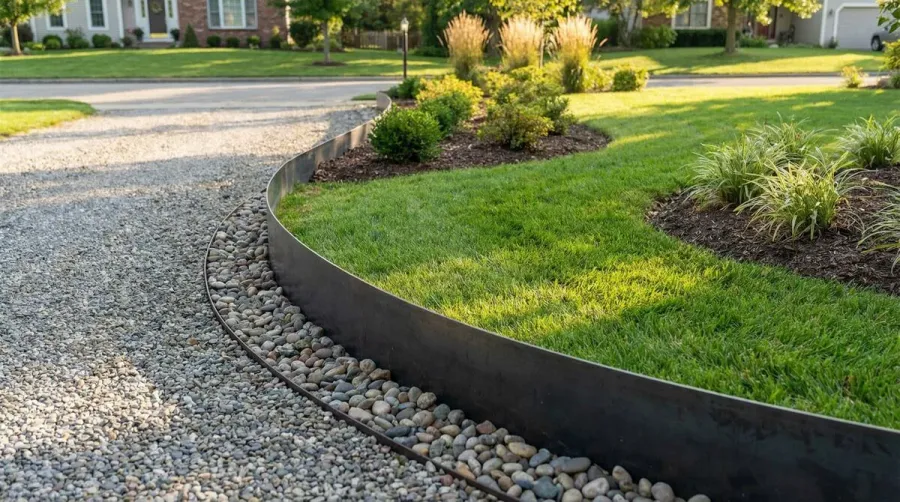
Regular maintenance helps too. Sweep driveways and walkways weekly to remove loose gravel before it can spread. After winter, inspect these areas for damage that might allow stones to escape.
If you’re planning new gravel installations, choose angular gravel over rounded stones. Angular pieces lock together better and are less likely to roll or wash away onto your grass. For those considering alternatives, comparing fill dirt vs gravel can help you choose the best material for your specific landscaping needs.
With the right tools and systematic approach, you can eliminate gravel from your grass and restore your lawn’s health and beauty. The key is acting quickly when you spot the problem and using appropriate removal methods for your specific situation. Your grass will thank you with lush, green growth once those troublesome stones are gone.
FAQ
What is the fastest way to remove gravel from grass?
For small areas, use a bow rake to gather loose gravel into piles, then scoop with a shovel into a wheelbarrow. For larger areas, rent a power broom or specialized gravel vacuum which can cover 500-1000 square feet per hour compared to 100 square feet per hour with hand tools.
How do I remove embedded gravel without damaging my grass?
Use a power rake set to shallow depth or work rake tines carefully into the grass without disturbing roots. For stubborn embedded stones, use a hand trowel or garden fork to extract individual pieces. Always work when soil is slightly moist but not waterlogged to minimize grass damage.
What tools do I need to get gravel out of my lawn?
Essential tools include a bow rake with curved tines, shovel, and wheelbarrow for basic removal. For larger areas, consider renting a power broom ($75/day) or gravel vacuum ($150/day). Always wear safety glasses and work gloves when removing gravel to protect against flying stones.
How can I prevent gravel from spreading onto my grass again?
Install landscape edging along driveways and walkways to create physical barriers. Ensure proper drainage by directing gutters away from gravel areas and consider French drains if needed. Choose angular gravel over rounded stones as they lock together better, and sweep driveways weekly to remove loose stones before they can migrate.