
How Much River Rock Do I Need for a French Drain
Guide handoff
Want help applying this guide to your project?
Share your ZIP and what you need help with. We'll use this guide as context when we follow up.
- 1 This guide gives us the context you were reading.
- 2 Ask about pricing, material choice, delivery timing, or quantity.
- 3 Keep it broad if you are still figuring out the project.
Planning a French drain installation and wondering how much river rock you’ll need? You’re not alone. Getting the right amount of river rock is crucial for effective drainage and avoiding costly overruns. For most French drains, you’ll need approximately 0.5 to 1 cubic yard of river rock per 10 linear feet, depending on your trench dimensions and rock size.
Quick Answer: Calculate your trench volume (length × width × depth) and multiply by 1.2 to account for settling. Most homeowners need 3-5 tons of river rock for a typical 100-foot French drain.
A French drain redirects water away from problem areas using a gravel-filled trench that creates a path for water to flow naturally. The river rock serves as both the drainage medium and filter, making proper sizing essential for long-term performance. Let’s break down exactly how to calculate your needs and choose the right materials.
Understanding French drain basics and river rock’s role
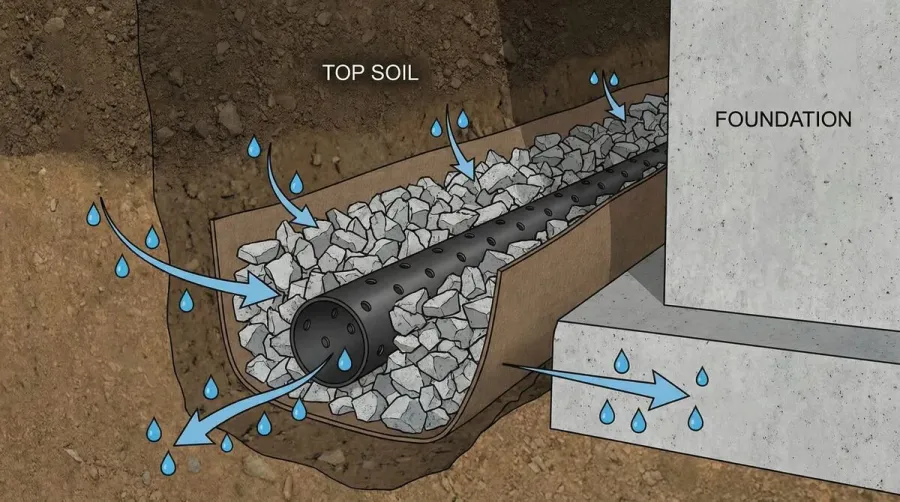
French drains work by creating an underground channel that captures and redirects water using gravity. The system consists of a sloped trench filled with permeable materials, typically river rock, that allows water to flow freely while filtering out debris.
River rock plays multiple critical roles in this system. According to drainage experts at hellogravel.com, the gaps between rocks create pathways for water movement while the rock itself acts as a natural filter. This dual function prevents clogging and maintains drainage efficiency over time.
The size and shape of river rock matter significantly. Rounded stones promote smoother water flow compared to angular alternatives, while the 3/4-inch to 1.5-inch diameter range provides optimal balance between drainage capacity and stability. Larger rocks offer excellent drainage but can be challenging to install, while smaller sizes may compact and reduce effectiveness.
Pro Tip: Choose washed river rock to prevent fine particles from clogging your drainage system. Clean rock maintains better water flow and reduces maintenance needs.
Calculating your river rock requirements
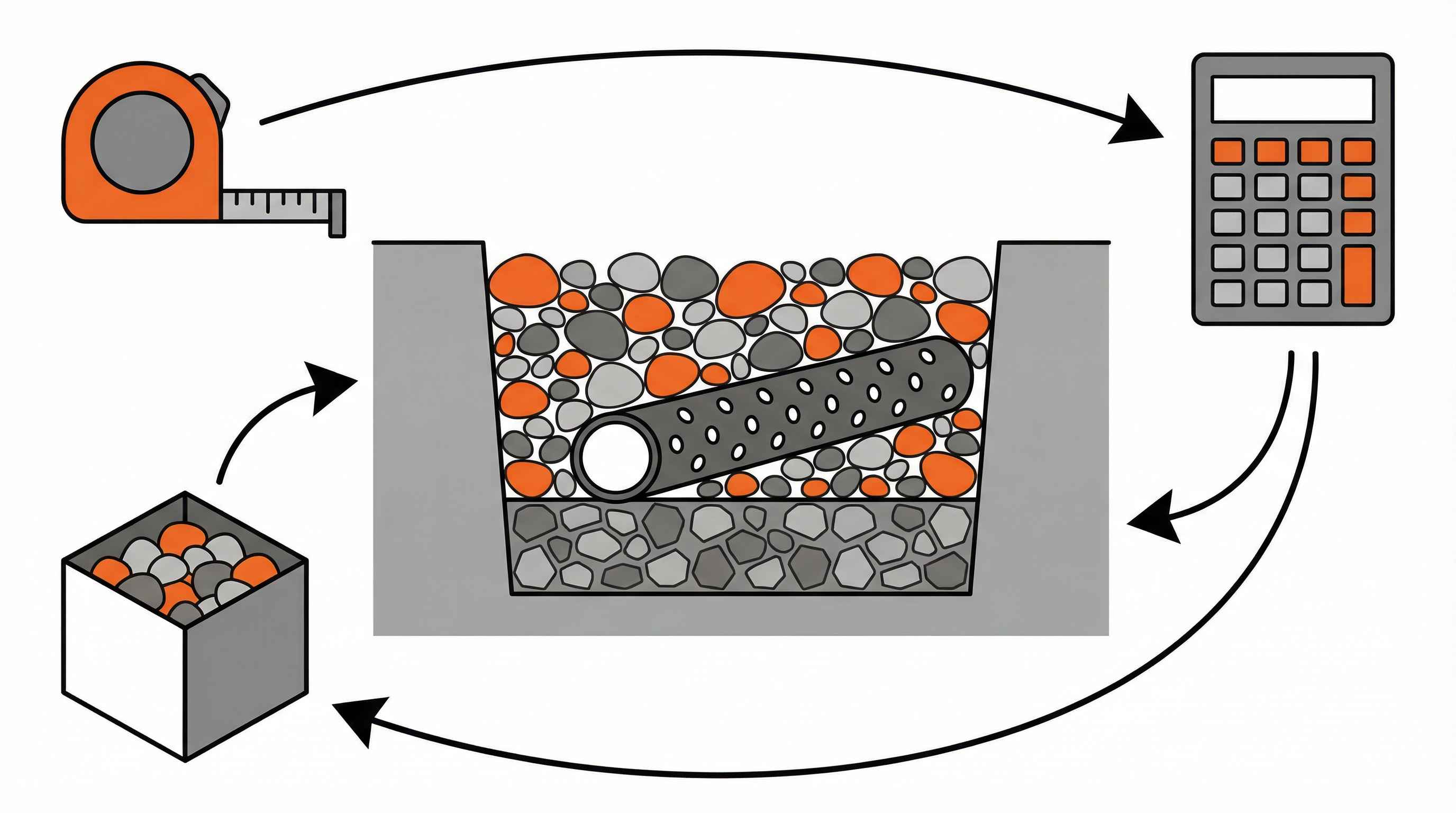
Determining the exact amount of river rock starts with measuring your trench dimensions. You’ll need the length, width, and depth of your planned French drain to calculate the total volume.
The basic formula is straightforward: Length × Width × Depth = Volume in cubic feet. For example, a 50-foot drain that’s 1 foot wide and 2 feet deep requires 100 cubic feet of material. Convert this to cubic yards by dividing by 27 (100 ÷ 27 = 3.7 cubic yards).
However, real-world installation requires additional considerations. Add 20% to your calculated volume to account for settling and compaction. This buffer ensures you have enough material to maintain proper drainage depth after installation. Professional installers consistently recommend this approach based on field experience.
Consider your specific drainage needs when sizing the trench. Areas with heavy rainfall or clay soil may require wider or deeper trenches, directly impacting your rock requirements. The slope of your terrain also affects calculations, as steeper grades may need additional rock for stability.
Choosing the right river rock size and type
River rock comes in several sizes, each with specific advantages for French drain applications. Understanding these differences helps you select the most appropriate option for your project.
The 3/4-inch to 1.5-inch size range represents the sweet spot for most residential French drains. This size provides excellent drainage while remaining manageable during installation. According to angi.com, this size creates adequate spacing between rocks for water flow while preventing excessive shifting over time.
Larger river rocks (2-6 inches) offer superior drainage capacity and long-term stability. They’re less likely to shift or settle, making them ideal for high-flow areas or permanent installations. However, their weight and size make installation more challenging and may require professional equipment.
| Rock Size | Drainage Rate | Installation Ease | Best Use Case |
|---|---|---|---|
| 3/4″ – 1.5″ | Good | Easy | Standard residential drains |
| 1.5″ – 3″ | Excellent | Moderate | High-flow areas |
| 2″ – 6″ | Superior | Difficult | Commercial/heavy-duty |
Color and aesthetic considerations also matter, especially for visible portions of your drainage system. Neutral colors like gray or beige blend well with most landscapes, while the natural variation in river rock adds visual appeal to your outdoor space. For a comprehensive look at available options, check out our guide to understanding river stone sizes.
Cost considerations and purchasing tips
River rock pricing varies significantly based on size, quality, and local availability. Expect to pay between $100 and $800 per ton, with smaller sizes typically costing less than larger options. Regional factors heavily influence pricing, so obtaining local quotes is essential for accurate budgeting. For detailed pricing information, explore our ultimate guide to river rock prices.
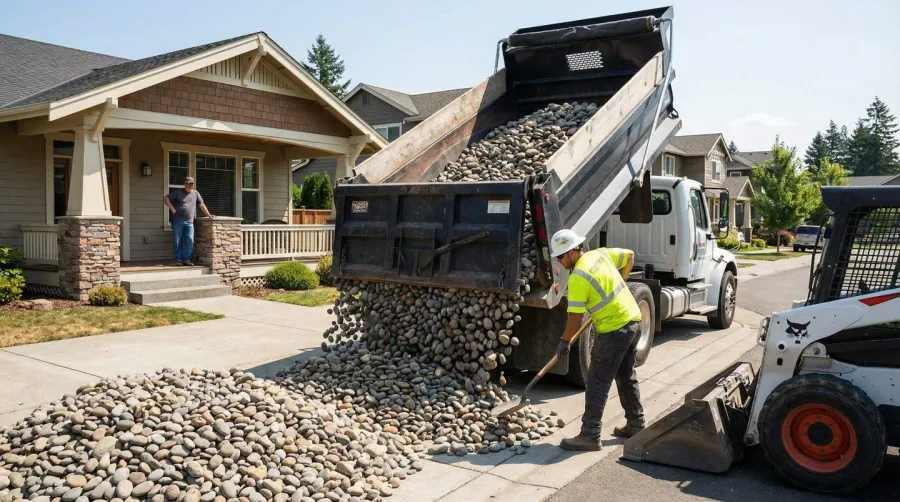
Transportation represents a significant portion of total project costs. River rock is heavy, with one cubic yard weighing approximately 1.3 to 1.7 tons. Factor in delivery charges when comparing suppliers, as these can add $50 to $200 to your total cost depending on distance and quantity. Learn more about how much a dump truck load of river rock costs to better plan your budget.
Money-Saving Tip: Order slightly more than calculated to avoid expensive small deliveries later. Most suppliers offer better per-ton pricing for larger orders, and having extra rock ensures project completion without delays.
Timing your purchase strategically can yield savings. Many suppliers offer seasonal discounts during slower periods, typically late fall through early spring. Planning ahead allows you to take advantage of these opportunities while ensuring material availability for your project timeline.
Consider the total project scope when purchasing. If you’re planning additional landscaping projects, ordering river rock in bulk for multiple uses often provides better value than separate smaller orders. For bulk purchasing options, review our guide on where to buy river rocks in bulk wholesale.
Installation best practices and common mistakes
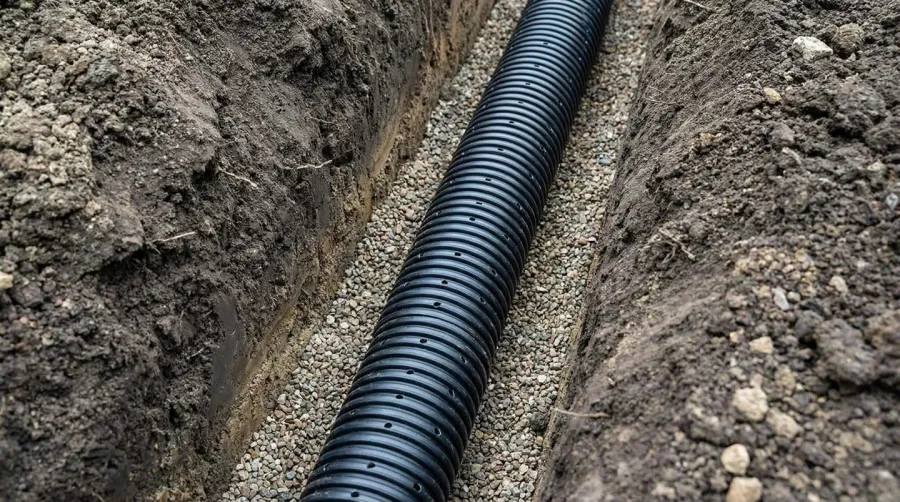
Proper installation ensures your French drain performs effectively for years. Start by excavating your trench to the calculated dimensions, maintaining a consistent slope of at least 1% (1 inch drop per 100 feet) toward your drainage outlet.
Install landscape fabric before adding river rock to prevent soil infiltration while allowing water passage. This step is crucial for long-term performance, as it prevents fine particles from clogging the rock matrix over time.
Layer your river rock carefully, starting with a 2-inch base layer before installing any drainage pipe. If using a perforated pipe, surround it completely with rock, maintaining at least 3 inches of coverage on all sides. Continue filling to within 6 inches of ground level, then cover with landscape fabric before backfilling with soil. For more information on selecting the right materials, see our article on what type of river rock is best for drainage.
Avoid these common installation mistakes that can compromise drainage effectiveness. Don’t compact the river rock too aggressively, as this reduces the void space needed for water flow. Ensure proper slope throughout the entire length, as flat spots create water accumulation points. Finally, never skip the landscape fabric, as soil infiltration will eventually clog even the best river rock.
Test your installation by running water through the system before final backfilling. This simple check can identify problems while they’re still easy to fix, saving significant time and expense later.
Getting your river rock calculations right from the start sets your French drain project up for success. Remember that proper sizing, quality materials, and careful installation work together to create an effective drainage solution. Take time to measure accurately, choose appropriate rock sizes for your specific needs, and don’t cut corners on installation quality. Your investment in doing it right the first time will pay dividends in reliable drainage performance for years to come.
FAQ
How much river rock do I need for a French drain?
Calculate your trench volume by multiplying length × width × depth, then multiply by 1.2 to account for settling. For most French drains, you’ll need approximately 0.5 to 1 cubic yard of river rock per 10 linear feet. A typical 100-foot French drain requires 3-5 tons of river rock, depending on your trench dimensions.
What size river rock is best for French drains?
The optimal size range is 3/4-inch to 1.5-inch diameter river rock. This size provides excellent drainage while remaining manageable during installation. Choose washed river rock to prevent fine particles from clogging your drainage system, and avoid smaller sizes that may compact over time.
How do I calculate the exact volume of river rock needed?
Use the formula: Length × Width × Depth = Volume in cubic feet. Convert to cubic yards by dividing by 27. For example, a 50-foot drain that’s 1 foot wide and 2 feet deep requires 100 cubic feet (3.7 cubic yards). Always add 20% extra for settling and compaction.
What factors affect how much river rock I need?
Several factors impact your river rock requirements: trench dimensions, soil type (clay soil may require wider trenches), rainfall intensity, terrain slope, and whether you’re using a perforated pipe. Areas with heavy drainage needs or steep slopes may require additional rock for stability and proper water flow.