
Gravel Size Chart: Complete Guide to Gravel Grades and Best Uses
Guide handoff
Want help applying this guide to your project?
Share your ZIP and what you need help with. We'll use this guide as context when we follow up.
- 1 This guide gives us the context you were reading.
- 2 Ask about pricing, material choice, delivery timing, or quantity.
- 3 Keep it broad if you are still figuring out the project.
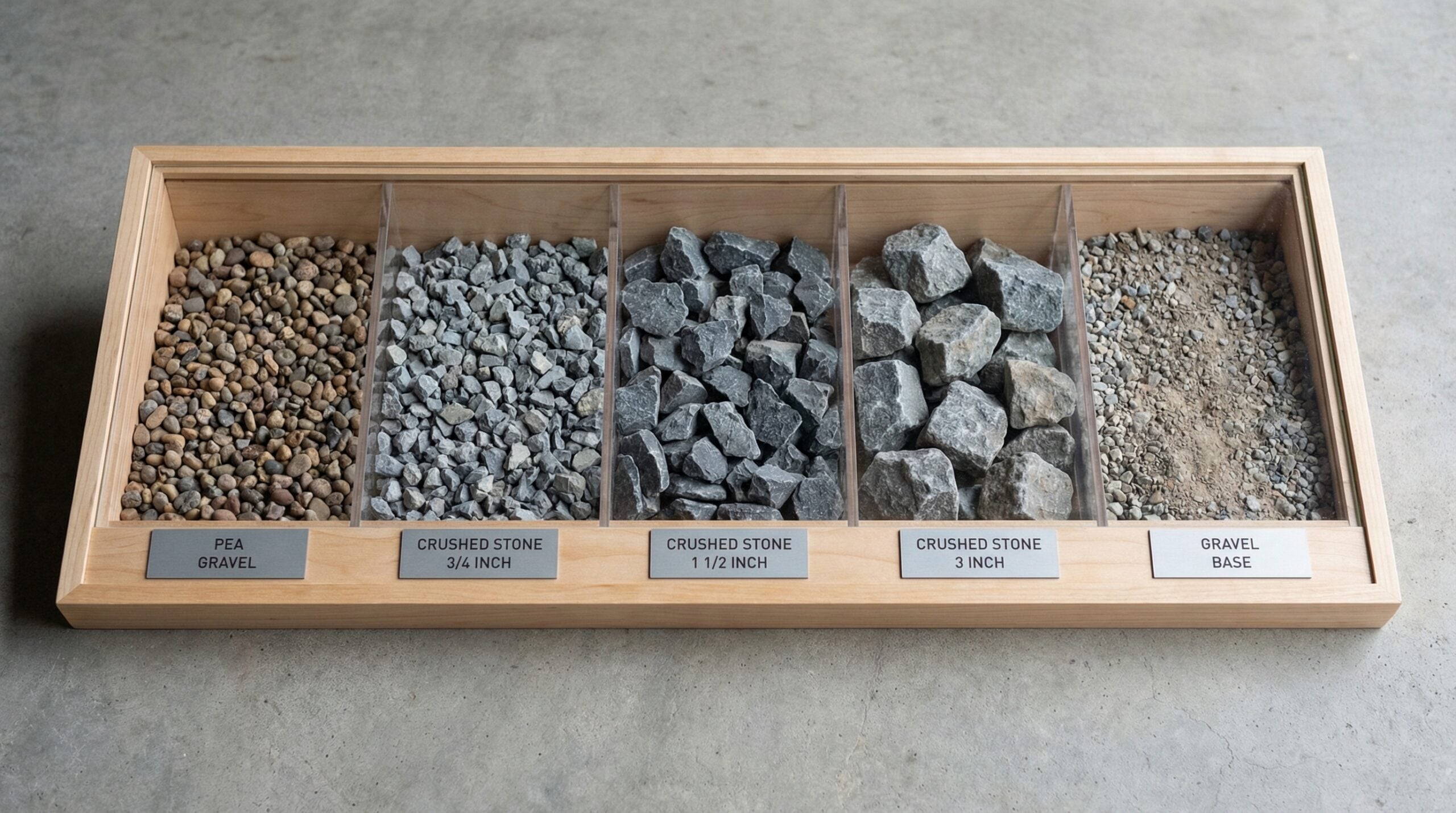
If you’re confused by gravel names like #57 stone or pea gravel, you’re not alone. These numbers and names refer to gravel grades, which are based on particle size and determine where each type works best. Understanding gravel size helps you choose the right material for your driveway, drainage project, or landscaping needs.
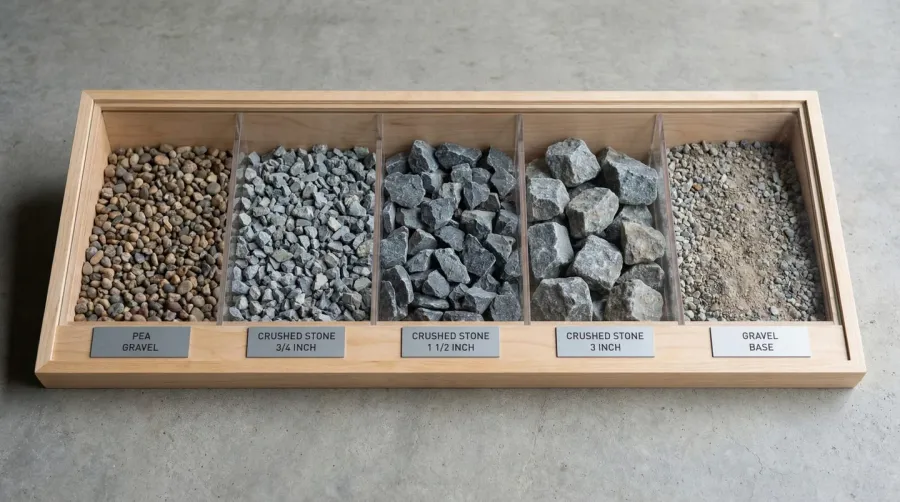
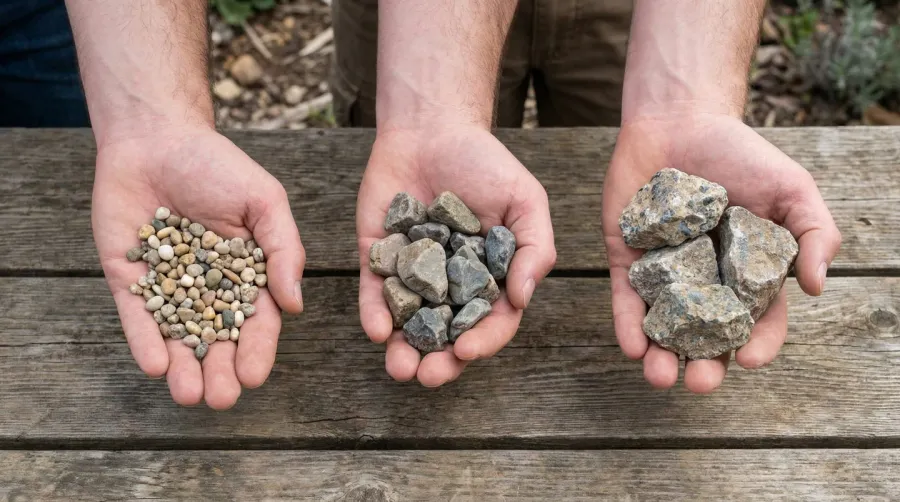
This guide provides a complete gravel size chart with measurements in both inches and millimeters, plus clear recommendations for each project type. You’ll also find pictures to help identify different sizes and a quick selection tool to match your specific needs.
Quick Answer: Gravel sizes range from 3mm pea gravel for walkways to 100mm+ stone for heavy drainage. Most driveways use #57 stone (1/2″ to 1″), while French drains work best with #3 or #2 stone (1″ to 3″).
What is gravel size and why does it matter
Gravel size, also called grade, refers to the range of particle sizes in the material. These sizes are determined by passing gravel through different mesh screens, with each grade containing particles within a specific range.
The size directly affects how the gravel performs. Smaller gravel like pea gravel allows better water flow but can shift under weight. Larger gravel provides more stability for heavy loads but may not compact as tightly. Understanding these differences helps you pick the right size for your project’s specific needs.
Most gravel is measured in both inches and millimeters, with common grades ranging from fine (3-8mm) to coarse (50-100mm+). Regional suppliers may have slight variations, but the general size ranges remain consistent across most areas.
Gravel size chart with inches and millimeters
Use this chart to compare common gravel grades, their particle sizes, and the projects they work best for:
| Grade/Name | Size Range (inches) | Size Range (mm) | Type | Best For |
|---|---|---|---|---|
| Pea Gravel | 1/8″ – 3/8″ | 3-8 mm | Rounded | Walkways, playgrounds, decorative beds |
| #8 Stone | 1/8″ – 1/2″ | 3-12 mm | Angular | Concrete mix, pipe bedding |
| #57 Stone | 1/2″ – 1″ | 12-25 mm | Angular | Driveway base, drainage, concrete base |
| #67 Stone | 1/4″ – 3/4″ | 6-19 mm | Angular | Concrete mix, surface drainage |
| #411 DGA | 0-1″ | 0-25 mm | Mixed | Driveway surface, compactable base |
| #3 Stone | 1″ – 2″ | 25-50 mm | Angular | Road base, heavy drainage |
| #2 Stone | 2″ – 4″ | 50-100 mm | Angular | French drains, erosion control |
Remember that exact sizes can vary slightly between suppliers and regions, but these ranges represent standard industry measurements.
Common gravel sizes and their specific uses
Pea gravel (3-8mm)
Pea gravel gets its name from its small, rounded shape that resembles garden peas. This smooth texture makes it comfortable for walking and popular for pathways and play areas. However, its rounded shape means it doesn’t lock together well, so avoid using it on slopes or areas with vehicle traffic where it might shift.
#57 stone (1/2″ to 1″)
This is probably the most versatile gravel size for residential projects. The angular particles lock together well while still allowing good drainage. It’s perfect as a driveway base layer, around drainage pipes, or under concrete slabs. Many contractors consider this their go-to size for general construction work, making it one of the most common gravel sizes for various applications.
#411 dense grade aggregate
Also called DGA, this material mixes #57 stone with smaller particles and stone dust. When compacted, it creates an extremely stable surface that’s ideal for driveway tops or anywhere you need a solid, compactable base. The fine particles fill gaps between larger stones, creating a tight, durable surface.
Pro Tip: #411 DGA works best when slightly damp during compaction. The moisture helps the fine particles bind together for maximum stability.
#3 and #2 stone (1″ to 4″)
These larger sizes handle heavy-duty applications. #3 stone works well for road bases and areas that need to support heavy equipment. #2 stone and larger are perfect for French drains, where you need maximum water flow around drainage pipes, or for erosion control along slopes and shorelines. For more details on construction stone sizes and their applications, understanding these larger grades is essential.
How to choose the right gravel size for your project
Start with your project type
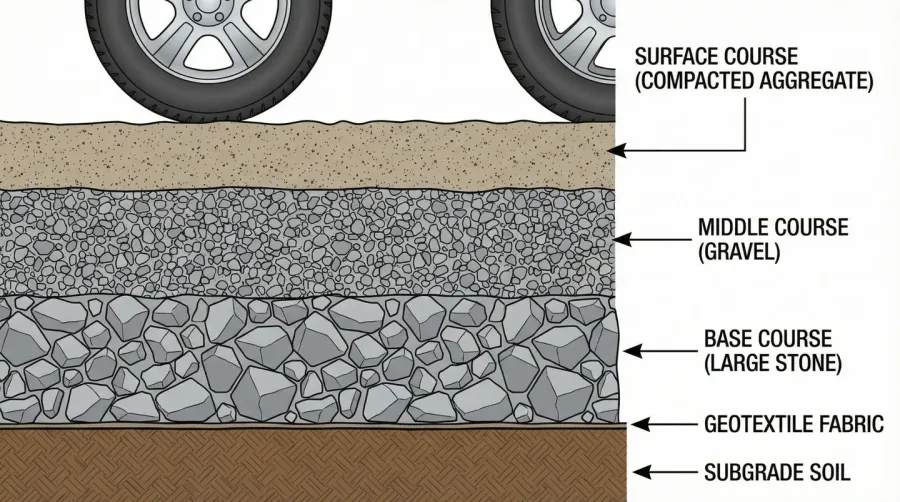
Different projects have specific size requirements based on their function. For driveways, you typically want #57 stone as a base with #411 DGA on top for the best combination of drainage and stability. Walkways work well with pea gravel or smaller decorative stone that’s comfortable underfoot.
French drains need larger, clean stone like #2 or #3 to allow maximum water flow around the drainage pipe. Garden beds and decorative areas can use pea gravel or small decorative stone that complements your landscape design. If you’re working on outdoor projects, our comprehensive landscape stone size chart can help you find the perfect fit.
Consider drainage and traffic patterns
Areas with heavy vehicle traffic need larger, more angular gravel that locks together under weight. If drainage is a priority, avoid gravel with too many fine particles that might clog over time. For areas prone to erosion, larger stone provides better protection against water flow.
Important: Always check local building codes for specific requirements, especially for driveways and drainage systems that might need permits.
Quick selection guide
Here’s a simple way to match your project with the right gravel size. For new driveways, use 4-6 inches of #57 stone base topped with 2-3 inches of #411 DGA. Our ultimate driveway stone size chart provides even more detailed recommendations for creating durable driveways. Walkways need 2-3 inches of pea gravel or small decorative stone over landscape fabric.
French drains work best with #2 or #3 clean stone around perforated pipe, while garden beds typically use 2-3 inches of pea gravel or decorative stone for weed control and moisture retention.
Frequently asked questions about gravel sizes
What size gravel works best for driveways? Most driveways perform best with a #57 stone base (4-6 inches deep) topped with #411 DGA (2-3 inches). This combination provides good drainage while creating a stable, compactable surface that resists rutting.
Can I mix different gravel sizes? Yes, mixing sizes can actually improve performance in many cases. The smaller particles fill gaps between larger ones, creating better compaction and stability. However, avoid mixing rounded and angular gravel, as they don’t work well together. To better understand how different sizes of gravel work together, consider the specific application.
How much gravel do I need? Calculate volume by multiplying length × width × depth in feet, then divide by 27 to get cubic yards. For example, a 12×20 foot driveway with 6 inches of gravel needs about 4.5 cubic yards.
What’s the difference between gravel and crushed stone? Gravel typically refers to naturally rounded stones, while crushed stone is mechanically broken into angular pieces. Crushed stone generally provides better compaction and stability for construction projects. For a deeper dive into quarry stone and crushed stone sizes, explore the different grades available.
Ready to get the right gravel size for your project? At Hello Gravel, we deliver quality aggregates directly to your site with expert guidance on sizing and quantities. Our team helps ensure you get exactly what you need for professional results that last.
Frequently asked questions about gravel sizes
What size gravel is best for driveways?
Most driveways perform best with #57 stone (1/2″ to 1″) as a base layer, topped with #411 DGA for the surface. This combination provides excellent drainage while creating a stable, compactable surface that resists rutting. For heavy vehicle traffic, consider using #3 stone (1″ to 2″) as the base layer for extra strength.
What size gravel is best for French drains?
French drains work best with #2 or #3 clean stone (1″ to 4″ diameter) around the perforated pipe. These larger, angular stones create maximum void space for water flow while resisting compaction. Avoid gravel with fines or dust, as these particles can clog the drain over time and reduce its effectiveness.
What’s the difference between pea gravel and crushed stone?
Pea gravel consists of small, naturally rounded stones (3-8mm) that are smooth and comfortable for walking but don’t lock together well. Crushed stone is mechanically broken into angular pieces that interlock when compacted, providing better stability for driveways and structural applications. Choose pea gravel for decorative areas and crushed stone for load-bearing projects.
Can I mix different gravel sizes together?
Yes, mixing gravel sizes often improves performance by allowing smaller particles to fill gaps between larger ones, creating better compaction and stability. Products like #411 DGA are specifically designed blends. However, avoid mixing rounded gravel with angular crushed stone, as they don’t work well together and can reduce overall stability.