
Gravel Grades Explained Complete Guide to Sizes, Types and Best Uses
Guide handoff
Want help applying this guide to your project?
Share your ZIP and what you need help with. We'll use this guide as context when we follow up.
- 1 This guide gives us the context you were reading.
- 2 Ask about pricing, material choice, delivery timing, or quantity.
- 3 Keep it broad if you are still figuring out the project.
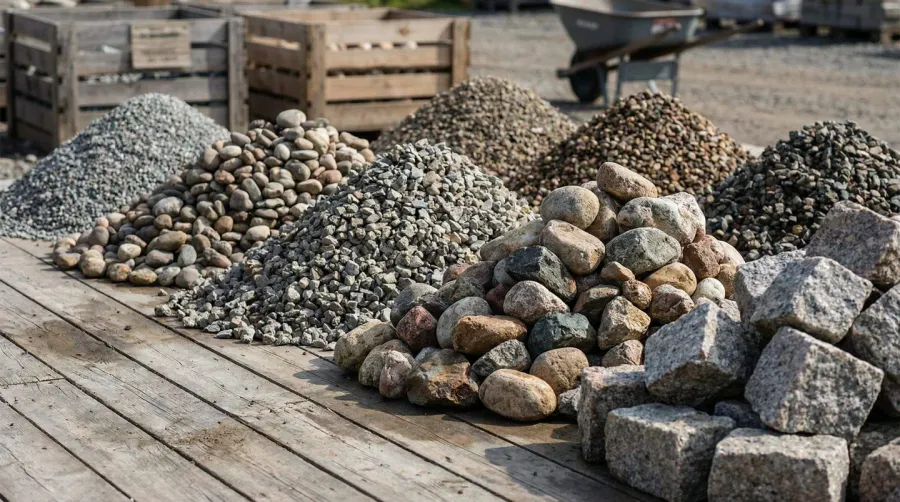
Choosing the right gravel grade can make or break your construction or landscaping project. Whether you’re building a driveway, installing drainage, or creating garden pathways, understanding gravel grades helps you select materials that perform well and look great for years to come.
Gravel grades refer to the size, shape, and composition of individual particles. Fine gravel (1/8 to 1/4 inch) works best for decorative applications, medium gravel (1/4 to 3/4 inch) suits most driveways and pathways, while coarse gravel (3/4 inch and larger) provides maximum stability for heavy-duty construction projects.
Quick Tip: The wrong gravel grade can cause your driveway to shift, create drainage problems, or simply look unprofessional. Taking time to understand grades upfront saves costly repairs later.
Why gravel grades matter for your project
Gravel grades directly impact three critical aspects of your project: structural performance, water management, and visual appeal. Getting this choice right from the start prevents headaches down the road.
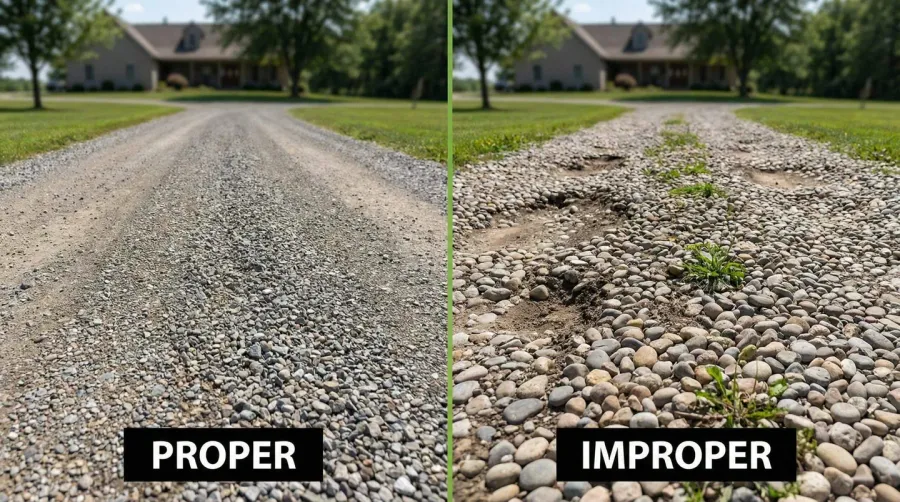
Structural stability depends on particle size and shape. Angular crushed stone locks together better than rounded river rock, providing superior load-bearing capacity for driveways and foundations. Fine particles fill gaps between larger stones, creating a more compact surface that resists shifting under traffic.
Drainage performance varies dramatically between grades. Larger particles allow faster water flow, making them ideal for French drains and erosion control. Smaller particles slow water movement, which helps with filtration but can cause pooling if not properly graded.
Visual impact changes with particle size and color. Uniform pea gravel creates clean, modern lines for pathways. Mixed-size river rock adds natural texture to landscaping. The grade you choose sets the entire aesthetic tone of your outdoor space.
Common gravel types and their best applications
Different gravel types serve specific purposes based on their origin, processing method, and particle characteristics. Understanding these differences helps you match materials to your project needs.
Crushed stone comes from mechanically crushing larger rocks, creating angular particles that interlock well. This makes it perfect for driveways, road bases, and any application requiring maximum stability. The sharp edges provide excellent compaction and resist movement under load. Learn more about using crushed stone as a base for various projects.Pea gravel features small, rounded stones about the size of a pea. Its smooth texture feels comfortable underfoot, making it popular for walkways, playgrounds, and decorative landscaping. The rounded shape allows good drainage while creating an attractive, uniform appearance. Discover whether pea gravel can be used for fire pit areas.
River rock offers natural beauty with its smooth, water-worn appearance. Available in various sizes and colors, it works well for decorative applications like dry creek beds, garden borders, and water features. However, its rounded shape provides less stability than angular alternatives.
Decomposed granite creates a natural-looking surface that compacts well. This finely ground material works excellently for pathways, patios, and areas where you want a more refined appearance than traditional gravel provides.
Understanding the gravel grading system
The grading system categorizes gravel by particle size, shape, and material composition. This standardized approach helps you communicate clearly with suppliers and ensures you get the right material for your specific application.
Size categories range from very fine (under 1/8 inch) to very coarse (over 2.5 inches). Fine grades work well for decorative purposes and top dressing. Medium grades suit most residential applications like driveways and pathways. Coarse grades provide maximum stability for heavy-duty construction and drainage projects.
| Grade | Size Range | Best Uses | Key Benefits |
|---|---|---|---|
| Fine | 1/8″ – 1/4″ | Decorative, top dressing | Smooth appearance, easy to walk on |
| Medium | 1/4″ – 3/4″ | Driveways, pathways | Good balance of stability and comfort |
| Coarse | 3/4″ – 2.5″ | Heavy construction, drainage | Maximum stability, excellent drainage |
Particle shape affects performance significantly. Angular particles from crushed stone provide better interlocking and stability. Rounded particles from natural weathering offer smoother surfaces and better drainage flow.
Material composition influences durability, color, and specific performance characteristics. Granite provides exceptional hardness and weather resistance. Limestone offers good drainage and natural filtration. Sandstone delivers attractive colors and moderate durability.
Important Note: Always specify both size and material type when ordering gravel. A “medium grade” can mean different things to different suppliers without additional specifications.
How to choose the right gravel grade
Selecting the perfect gravel grade requires balancing your project requirements, budget constraints, and local availability. Consider these key factors to make the best choice for your specific situation.
Assess your project requirements first. Heavy traffic areas need larger, more angular gravel for stability. Decorative applications can use smaller, more attractive grades. Drainage projects require specific size ranges to achieve proper flow rates without clogging. For specific guidance, check out what is the best gravel size for a patio.
Consider your budget carefully. Larger grades typically cost more due to additional processing and transportation weight. However, they often last longer and require less maintenance, potentially saving money over time. Factor in both upfront costs and long-term maintenance when comparing options.
Check local availability and environmental impact. Locally sourced materials reduce transportation costs and support your community. Some regions have specific gravel types that perform better in local climate conditions. Ask suppliers about regional recommendations based on your area’s weather patterns and soil conditions.
Think about maintenance requirements. Smaller grades may need more frequent raking and redistribution. Larger grades resist displacement but can be harder to level if problems develop. Choose a grade that matches your willingness and ability to perform ongoing maintenance. For foundation projects, explore what is the best gravel size for a foundation.
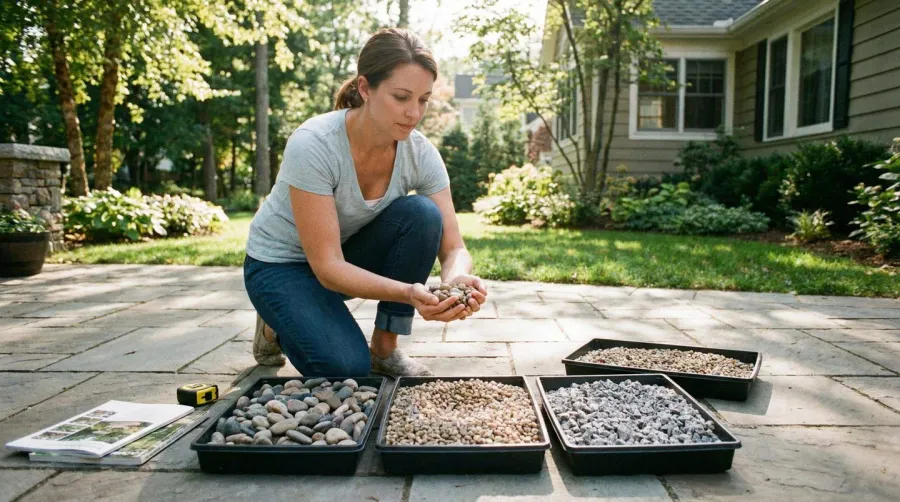
Understanding gravel grades empowers you to make informed decisions that result in successful, long-lasting projects. Whether you’re installing a new driveway, improving drainage, or enhancing your landscape, the right gravel grade provides the foundation for outstanding results. Take time to match your specific needs with the appropriate grade, and your project will perform beautifully for years to come.
FAQ
What are the different grades of gravel?
Gravel grades are categorized by particle size: fine gravel (1/8″ to 1/4″) for decorative applications, medium gravel (1/4″ to 3/4″) for driveways and pathways, and coarse gravel (3/4″ and larger) for heavy-duty construction. The grading system also considers particle shape, with angular crushed stone providing better stability than rounded river rock.
What is the best gravel size for a driveway?
Medium grade gravel (1/4″ to 3/4″) works best for most residential driveways, providing a good balance of stability and comfort. Angular crushed stone in this size range offers superior load-bearing capacity and resists shifting under vehicle traffic better than rounded alternatives.
What is pea gravel and what is it used for?
Pea gravel features small, rounded stones about the size of a pea, typically in the fine grade category (1/8″ to 1/4″). Its smooth texture makes it comfortable underfoot, making it popular for walkways, playgrounds, decorative landscaping, and areas where you want an attractive, uniform appearance with good drainage.
How do I choose the right gravel grade for my project?
Choose gravel grade based on your project requirements: heavy traffic areas need larger, angular gravel for stability; decorative applications can use smaller, attractive grades; drainage projects require specific size ranges for proper flow. Consider your budget, local availability, and maintenance requirements when making your selection.