
Decomposed Granite Fire Pit Installation Guide and Cost Breakdown
Guide handoff
Want help applying this guide to your project?
Share your ZIP and what you need help with. We'll use this guide as context when we follow up.
- 1 This guide gives us the context you were reading.
- 2 Ask about pricing, material choice, delivery timing, or quantity.
- 3 Keep it broad if you are still figuring out the project.
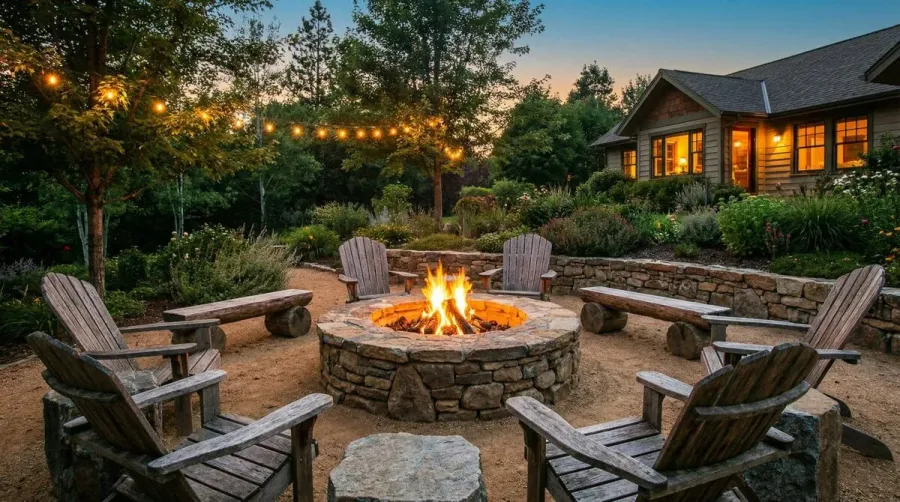
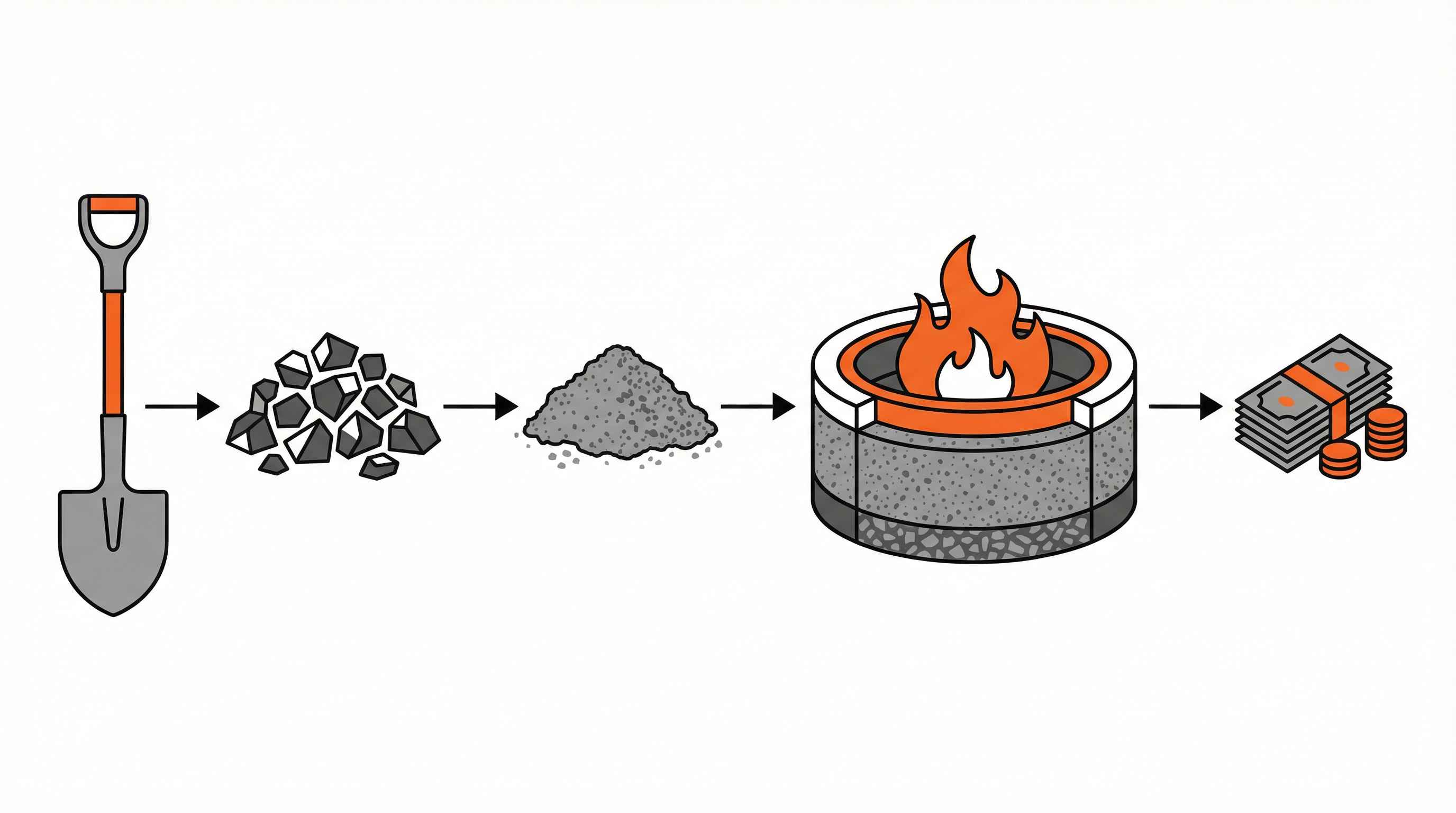
Creating a fire pit area with decomposed granite transforms your backyard into a functional outdoor living space that combines durability with natural beauty. Decomposed granite, commonly called DG, costs 40-60% less than traditional paving materials while providing excellent heat resistance and drainage for fire pit installations.
This guide walks you through everything you need to know about using decomposed granite for your fire pit project, from material selection to installation steps and long-term maintenance. Whether you’re building a small intimate gathering space or a larger entertainment area, decomposed granite offers the perfect balance of affordability, functionality, and aesthetic appeal.
Quick Fact: Properly installed decomposed granite fire pit areas can last 8-12 years with minimal maintenance, making them one of the most cost-effective outdoor surface options available.
Understanding decomposed granite for fire pits
Decomposed granite forms naturally when granite rock weathers and breaks down into small particles ranging from fine sand to pea-sized pieces. This creates a material that compacts well while maintaining excellent drainage properties, making it ideal for fire pit applications.
The key advantage of DG around fire pits lies in its heat resistance. Unlike mulch or wood chips that can ignite, decomposed granite won’t burn or crack under high temperatures. The material also allows water to drain through rather than pooling on the surface, preventing muddy conditions after rain.
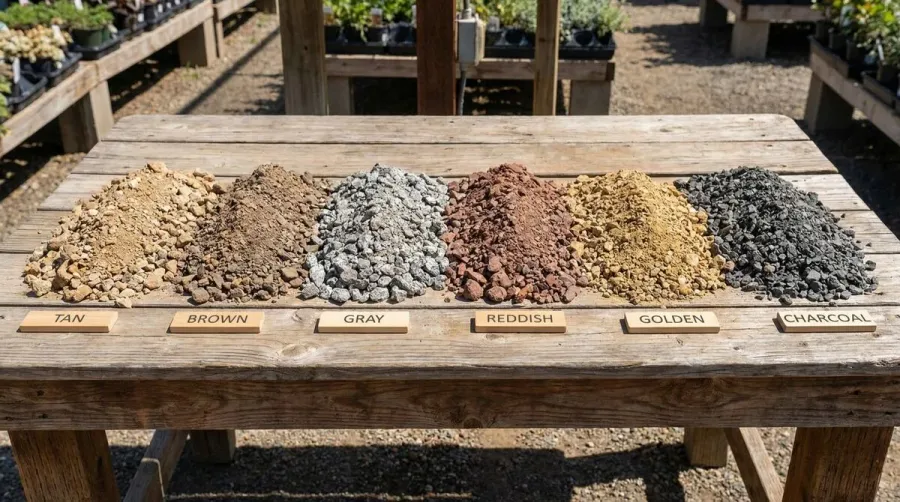
You’ll find decomposed granite in various colors including tan, brown, gray, and reddish hues depending on the source quarry. This natural color variation lets you match your fire pit area to existing landscape elements or create interesting contrasts with your outdoor furniture and plantings. For those interested in exploring other granite options, blue granite rock offers unique aesthetic possibilities for complementary landscaping features.
Choosing the right type of decomposed granite
Two main types of decomposed granite work for fire pit installations, each with distinct characteristics that affect performance and maintenance requirements.
Natural decomposed granite consists of pure weathered granite particles without additives. This type provides excellent drainage and a softer walking surface but requires more frequent maintenance as particles can shift over time. Natural DG works best for low-traffic fire pit areas where you prioritize natural appearance over maximum stability.
Stabilized decomposed granite includes polymer or cement binders that help particles lock together when compacted. This creates a firmer surface that resists erosion and requires less maintenance. Stabilized DG costs slightly more upfront but saves money long-term through reduced upkeep needs, making it the preferred choice for high-use fire pit areas.
The particle size also matters for fire pit applications. Fine-grade DG (¼ inch and smaller) compacts tighter and provides smoother surfaces, while coarser grades offer better drainage but may feel less comfortable underfoot. If you’re considering decomposed granite for drainage applications, understanding these particle size differences becomes even more critical.
| Material Type | Cost per Cubic Yard | Maintenance Level | Best Use Case |
|---|---|---|---|
| Natural DG | $35-50 | High | Low-traffic areas |
| Stabilized DG | $45-65 | Low | High-traffic areas |
| Fine Grade | $40-55 | Medium | Seating areas |
| Coarse Grade | $35-50 | Medium | Drainage zones |
Step-by-step installation process
Installing decomposed granite around your fire pit requires careful preparation and proper technique to ensure long-lasting results. The process typically takes one weekend for most residential fire pit areas.
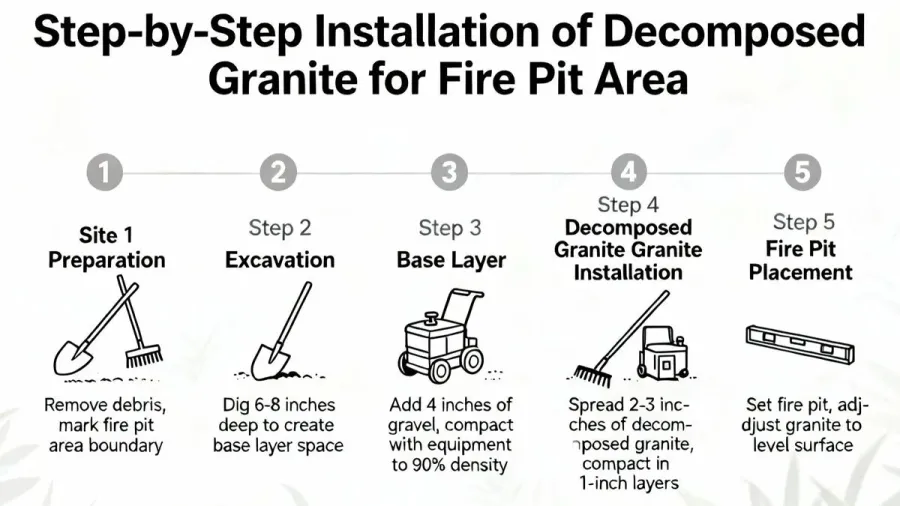
Start by marking your fire pit area boundaries and removing all vegetation within the installation zone. Excavate the area to a depth of 3-4 inches, creating a slight slope away from the fire pit for drainage. Compact the soil base using a hand tamper or plate compactor to prevent future settling.
Install landscape edging around the perimeter to contain the decomposed granite and prevent spreading into adjacent areas. Metal or plastic edging works well, though natural stone borders provide a more attractive finished appearance.
Spread the decomposed granite evenly across the prepared area using a rake or shovel. Aim for a uniform depth of 2-3 inches before compaction. Lightly mist the surface with water to activate any stabilizers and aid in compaction.
Pro Tip: Compact the DG in thin lifts rather than all at once. Add half the material, compact it, then add the remaining material and compact again for better density and stability.
Compact the decomposed granite using a plate compactor or hand tamper, working in overlapping passes until the surface feels firm underfoot. The finished surface should be level with surrounding areas and slope gently away from the fire pit for proper drainage. If you’re planning to extend your project, consider how decomposed granite works as a patio base for adjacent outdoor living spaces.
Cost analysis and project planning
Understanding the total cost of a decomposed granite fire pit project helps you budget effectively and compare options. Material costs represent only part of the total investment when you factor in tools, delivery, and potential labor expenses.
For a typical 12×12 foot fire pit area, you’ll need approximately 1.5 cubic yards of decomposed granite. Material costs range from $50-100 depending on the type and local availability, according to hellogravel.com. Add delivery fees of $75-150 for most residential locations.
Tool rental or purchase adds $100-200 to the project cost if you don’t own a plate compactor and basic excavation tools. Professional installation typically costs $8-12 per square foot including materials, making DIY installation an attractive option for budget-conscious homeowners.
Compare this to alternative materials like pavers ($15-25 per square foot installed) or stamped concrete ($12-20 per square foot), and decomposed granite offers significant savings without sacrificing functionality or appearance. For those planning larger outdoor projects, understanding how much decomposed granite you need for a patio can help with comprehensive budget planning.
Budget Insight: Most homeowners spend $300-600 total for a complete DIY decomposed granite fire pit area, compared to $1,500-3,000 for equivalent paver installations.
The long-term value proposition improves further when you consider maintenance costs. Decomposed granite requires occasional raking and adding fresh material every few years, while pavers may need releveling, joint sand replacement, and potential repairs from freeze-thaw damage.
Maintenance and longevity tips
Proper maintenance keeps your decomposed granite fire pit area looking great and functioning well for many years. The good news is that DG requires minimal ongoing care compared to other outdoor surface materials.
Regular maintenance involves raking the surface monthly to redistribute particles and remove debris. This prevents the formation of ruts or uneven spots that could collect water or create tripping hazards. After heavy rains, you may need to re-compact areas where the material has loosened.
Weed control becomes important since decomposed granite allows some plant growth through the surface. Apply pre-emergent herbicide in early spring or install landscape fabric beneath the DG during installation to minimize weed issues. Hand-pulling weeds when they appear prevents them from establishing deep root systems. If you’re interested in using decomposed granite in other areas, explore how it functions as a landscaping mulch alternative for garden beds.
Plan to add fresh decomposed granite every 2-3 years to maintain proper depth and appearance. High-traffic areas may need attention more frequently, while protected areas can go longer between applications. This maintenance cost averages $50-100 annually for typical residential fire pit areas.
Winter preparation involves ensuring proper drainage to prevent ice formation and potential frost heaving. Clear leaves and debris that could block water flow, and consider adding a thin layer of fresh DG before winter to provide extra protection against freeze-thaw cycles.
Creating a beautiful and functional fire pit area with decomposed granite combines affordability with long-term durability. The natural appearance complements most landscape styles while providing excellent heat resistance and drainage properties essential for safe fire pit operation. With proper installation and minimal maintenance, your decomposed granite fire pit area will provide years of outdoor enjoyment at a fraction of the cost of traditional paving materials.
FAQ
How deep should decomposed granite be for a fire pit area?
For a fire pit area, excavate 3-4 inches deep and install decomposed granite at a uniform depth of 2-3 inches before compaction. After compacting with a plate compactor, the final surface should be level with surrounding areas and slope gently away from the fire pit for proper drainage.
Is decomposed granite safe around fire pits?
Yes, decomposed granite is very safe for fire pit areas. Unlike mulch or wood chips that can ignite, decomposed granite won’t burn or crack under high temperatures due to its excellent heat resistance properties. It also provides superior drainage to prevent water pooling and muddy conditions.
What’s the difference between natural and stabilized decomposed granite for fire pits?
Natural decomposed granite consists of pure weathered granite particles without additives, providing excellent drainage but requiring more maintenance as particles can shift over time. Stabilized decomposed granite includes polymer or cement binders that help particles lock together when compacted, creating a firmer surface that resists erosion and requires less long-term maintenance.
How much does a decomposed granite fire pit area cost?
For a typical 12×12 foot fire pit area, material costs range from $50-100 for decomposed granite, plus $75-150 for delivery. Most homeowners spend $300-600 total for a complete DIY installation, compared to $1,500-3,000 for equivalent paver installations, making decomposed granite 40-60% less expensive than traditional paving materials.