
Complete Guide to Number 3 Gravel for Driveways and Construction Projects
Guide handoff
Want help applying this guide to your project?
Share your ZIP and what you need help with. We'll use this guide as context when we follow up.
- 1 This guide gives us the context you were reading.
- 2 Ask about pricing, material choice, delivery timing, or quantity.
- 3 Keep it broad if you are still figuring out the project.
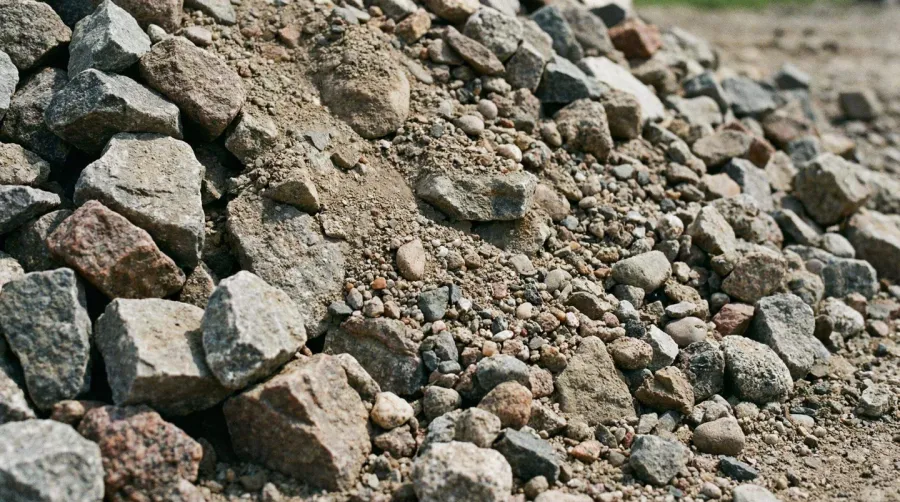
Number 3 gravel stands out as one of the most versatile construction materials you can use for your driveway, foundation, or landscaping project. This crushed stone aggregate, ranging from 3/4 inch down to fine dust particles, offers exceptional durability and load-bearing capacity that makes it perfect for heavy-duty applications.
Whether you’re planning a new driveway installation or need a reliable base material for construction work, understanding the properties and applications of number 3 gravel will help you make the right choice for your project. This crushed limestone or granite material provides excellent compaction, superior drainage, and long-lasting performance that can handle everything from daily vehicle traffic to harsh weather conditions.
Quick Answer: Number 3 gravel is a crushed stone aggregate with particles ranging from 3/4 inch to fine dust, commonly used for driveway bases, construction foundations, and drainage applications due to its excellent compaction and load-bearing properties.
What is number 3 gravel
Number 3 gravel, also known as CA-2 or 3/4 inch minus crushed stone, consists of angular rock particles that create superior interlocking when compacted. The material typically comes from crushed limestone or granite quarries, where large rocks are mechanically broken down into specific size ranges.
The “minus” designation means the gravel contains particles from the maximum size (3/4 inch) down to fine dust. This gradation is crucial because the smaller particles fill voids between larger stones, creating a dense, stable base when properly compacted. The angular shape of crushed stone provides better interlocking compared to rounded river gravel.
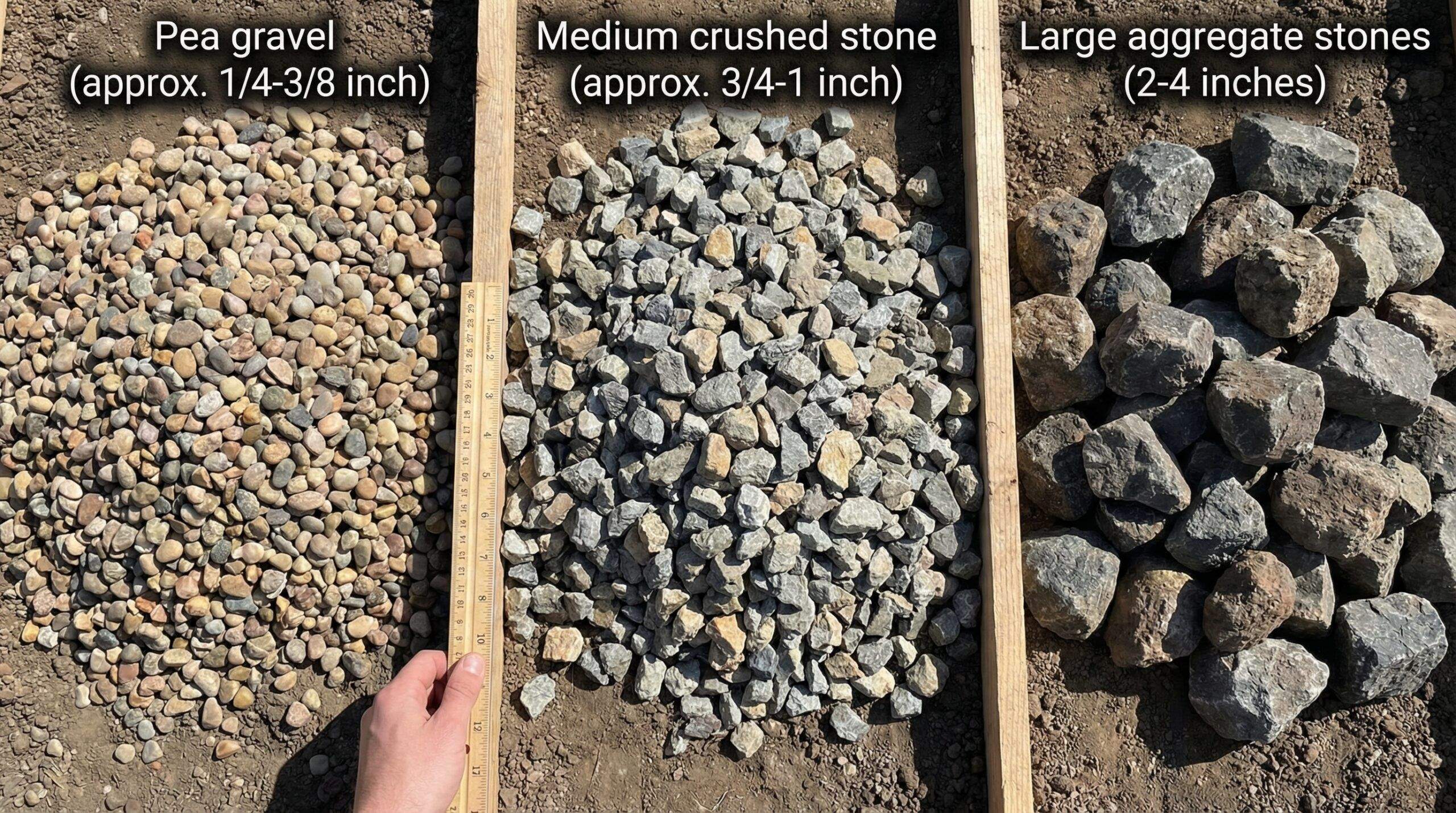
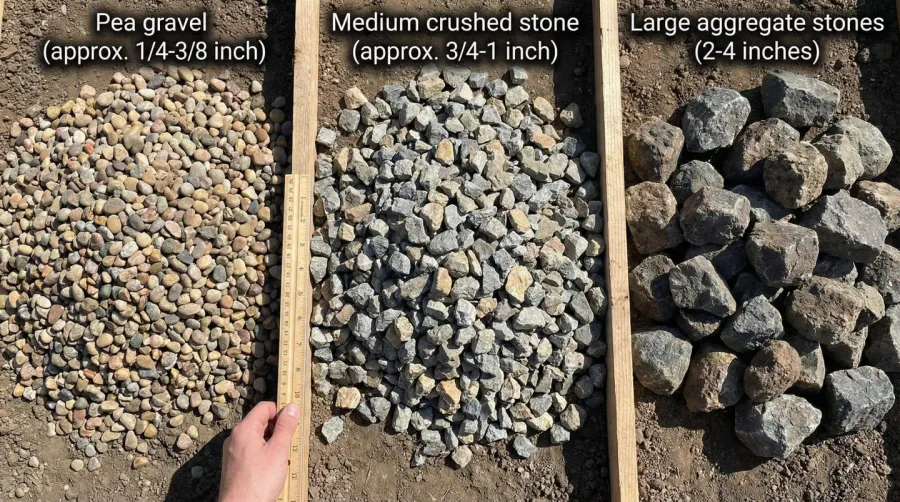
You’ll find number 3 gravel differs significantly from other common sizes like number 57 stone (3/4 to 1/2 inch) or number 8 stone (3/8 to 1/2 inch). The inclusion of fine particles in number 3 gravel makes it ideal for applications requiring maximum stability and minimal settling over time. To understand how different types of gravel for construction compare, it’s important to know their specific gradations and applications.
Key benefits of using number 3 gravel
The durability of number 3 gravel comes from its crushed stone composition and excellent compaction characteristics. When properly installed, this material can support heavy loads without shifting or settling, making it perfect for driveways that need to handle trucks, RVs, or construction equipment.
The angular particles lock together tightly when compacted, creating a solid surface that resists rutting and pothole formation. Unlike softer materials that break down under pressure, crushed limestone and granite maintain their structural integrity for decades with minimal maintenance.
Pro Tip: Number 3 gravel’s self-draining properties prevent frost heave damage, making it ideal for regions with freeze-thaw cycles that can destroy other driveway materials.
From a landscaping perspective, number 3 gravel offers versatility that few other materials can match. You can use it as a base for patios, walkways, and retaining walls, or as a decorative element in xeriscaping projects. The neutral gray color complements most architectural styles and landscape designs.
The drainage capabilities of number 3 gravel solve many common property issues. Water flows freely through the voids between particles, preventing puddles and reducing erosion. This makes it excellent for French drains, foundation drainage, and areas prone to standing water. For more information on selecting materials with optimal drainage, check out our guide on the best gravel for drainage.
Primary applications and uses
In construction projects, number 3 gravel serves as the foundation for roads, parking lots, and building pads. Contractors rely on its load-bearing capacity to create stable bases that won’t shift under heavy equipment or structural loads. The material compacts to approximately 95% density, meeting most engineering specifications for base course applications.
You’ll also find number 3 gravel used in concrete and asphalt production. The well-graded particle distribution contributes to the strength and workability of these materials, making them suitable for everything from sidewalks to highway construction.
For residential applications, number 3 gravel excels as a driveway material. It provides a firm driving surface that handles daily traffic while allowing water to drain naturally. Many homeowners choose it over asphalt or concrete because of its lower cost and easier maintenance requirements. When planning your project, understanding what is the best gravel size for a patio can help you make informed decisions for different outdoor areas.
The landscaping applications are equally impressive. You can use number 3 gravel to create permeable pathways that prevent erosion while maintaining accessibility. It works well around foundations to improve drainage and prevent water damage to basement walls. For projects requiring excellent compaction, explore our comprehensive guide on the best gravel for compacting.
Buying and installation considerations
When selecting number 3 gravel, source quality matters significantly. Look for suppliers who can provide clean material free from excessive clay, organic matter, or oversized particles. The best suppliers will provide gradation reports showing the exact particle size distribution.
Cost varies by location and quantity, but expect to pay between $25 to $50 per ton for number 3 gravel. Transportation costs can add significantly to your project budget, so consider local suppliers first. Most residential driveways require 2 to 4 inches of compacted thickness, which translates to roughly 1.5 tons per 100 square feet. For detailed information on ordering and delivery, our guide on how to get a load of gravel delivered provides step-by-step instructions.
Installation Tip: Always use a geotextile fabric beneath number 3 gravel to prevent mixing with subgrade soil and improve long-term stability.
Proper installation starts with adequate site preparation. Remove all vegetation, organic matter, and unstable soil before placing the gravel. Grade the area to ensure proper drainage away from structures, typically maintaining a 2% slope minimum.
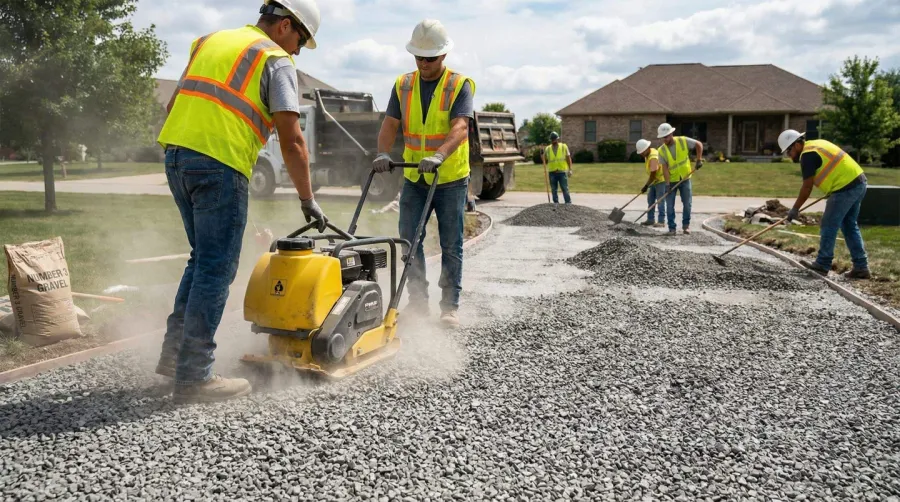
Spread the gravel in lifts no thicker than 6 inches, compacting each layer with a vibrating plate compactor or roller. Proper compaction is essential for achieving maximum density and preventing future settling. Add water during compaction if the material appears too dry, but avoid overwatering which can reduce compaction effectiveness.
The versatility and proven performance of number 3 gravel make it an excellent choice for both residential and commercial projects. Its combination of durability, drainage, and cost-effectiveness explains why contractors and homeowners continue to rely on this time-tested material for their most demanding applications. Whether you’re working on using crushed stone as a base for playground equipment or other specialized projects, understanding proper installation techniques ensures long-lasting results.
| Gravel Type | Particle Size | Best Use | Compaction |
|---|---|---|---|
| Number 3 | 3/4″ to dust | Driveways, bases | Excellent |
| Number 57 | 3/4″ to 1/2″ | Drainage, concrete | Good |
| Number 8 | 3/8″ to 1/2″ | Walkways, patios | Moderate |
| ## FAQ |
What size particles are in number 3 gravel?
Number 3 gravel consists of crushed stone particles ranging from 3/4 inch down to fine dust particles. This gradation, also known as “3/4 inch minus,” includes all sizes from the maximum 3/4 inch down to powder-fine material, which allows for excellent compaction and interlocking when properly installed.
How much number 3 gravel do I need for my driveway?
Most residential driveways require 2 to 4 inches of compacted number 3 gravel thickness. This translates to roughly 1.5 tons per 100 square feet. For a typical single-car driveway (10×20 feet), you would need approximately 3 tons of number 3 gravel for a 4-inch thick base.
What’s the difference between number 3 gravel and number 57 stone?
Number 3 gravel ranges from 3/4 inch down to fine dust particles, while number 57 stone consists of particles from 3/4 inch to 1/2 inch with no fines. Number 3 gravel provides superior compaction for driveways and bases due to its fine particles filling voids, whereas number 57 stone is better for drainage applications and concrete production.
How much does number 3 gravel cost per ton?
Number 3 gravel typically costs between $25 to $50 per ton, depending on your location, supplier, and quantity ordered. Transportation costs can significantly impact the total price, so it’s recommended to source from local suppliers when possible. Always request quotes from multiple suppliers to ensure competitive pricing for your project.