
Trench Drain Calculator
— How Much Do You Need?
Quickly estimate concrete, gravel, pipe and bedding for trench drains with instant truckload pricing.
How to Use This Trench Drain Calculator
Planning a trench drain requires precise measurements to ensure you order enough material without overspending.
- 1 Measure Area: Measure the length and width of your planned trench drain area in feet.
- 2 Determine Depth: For most trench drain projects, a depth of 4 to 6 inches is recommended for stability.
- 3 Review Results: The calculator provides both cubic yards (for bulk volume) and tons (for ordering weight).
Common Materials for Trench Drains
Choosing the right aggregate for bedding, filter envelopes, and backfill directly impacts drainage performance, pipe stability, and long-term system integrity.
| Material | Description | Best For | Est. Cost |
|---|---|---|---|
| #57 Crushed Stone | Angular, 3/4-inch crushed stone with good void space and drainage capacity. | Filter Envelope, Backfill, Pipe Bedding | $$ |
| Pea Gravel | Smooth, rounded gravel typically 3/8- to 1/2-inch in diameter with excellent flow-through characteristics. | Filter Envelope, Pipe Bedding, Tight Trench Spaces | $$ |
| Concrete Sand (ASTM C33) | Well-graded fine to medium sand with angular particles that compact firmly and resist displacement. | Pipe Bedding, Blinding Layer, Grade Setting | $ |
| Crusher Run (QP) | Blend of crushed stone and stone dust ranging from 3/4-inch down to fines that compacts into a dense, stable mass. | Structural Backfill, Trench Stabilization, Not Filter Envelope | $ |
Understanding the Cost
Several factors influence the final price of your trench drain project.
Material Volume
The dimensions of your project directly dictate the tonnage needed. Deeper bases require significantly more material.
Delivery Distance
Transport logistics play a major role. Being closer to the quarry or depot reduces delivery fees significantly.
Material Type
Decorative stones cost more than utility grades. Choose based on your project's functional and aesthetic requirements.
Recommended Products for Your Trench Drain

Gravel Calculator
This gravel calculator estimates cubic yards, tons, and coverage for any area. Enter dimensions and depth for driveways, patios, paths, and landscaping.
Crushed Stone Calculator
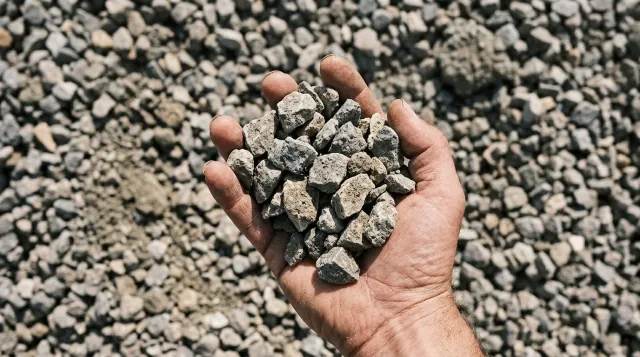
This calculator estimates crushed stone quantity and weight. Enter dimensions for results in cubic feet, cubic yards, and tons with density factored in.
Drainage Rock Calculator
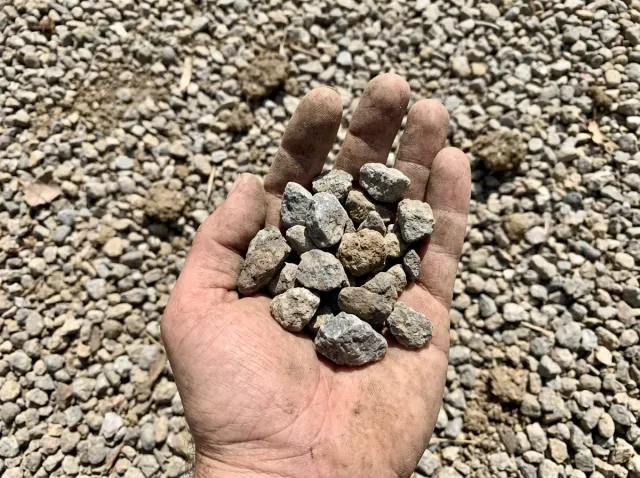
This calculator estimates drainage gravel for French drains, yard drainage, and erosion control. Factors in the 4-6 inch depth most systems need.
Concrete Sand Calculator
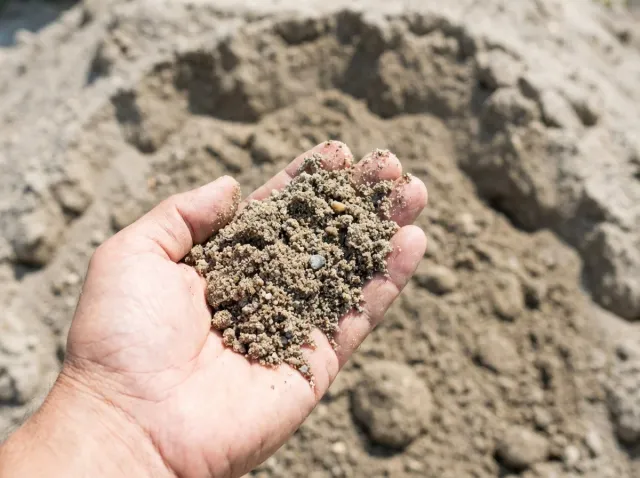
Concrete sand calculator — estimate volume and weight based on your project's length, width, and depth. Results in cubic yards and tons, ready for ordering.
Frequently Asked Questions
What aggregate materials are used in a trench drain installation?
A trench drain installation has two main aggregate needs: a bedding layer beneath the channel and a stone surround packed in on both sides. The bedding layer gives the channel a firm, level surface to rest on so it does not shift or settle after installation. The stone surround fills the trench on either side of the channel body and serves a drainage function, allowing water to migrate down into the channel rather than pooling beside it. The most commonly specified materials for both roles are clean #57 crushed stone, #67 crushed stone, and washed pea gravel. All three have enough open void space to let water pass through freely while still providing the structural support the channel needs to stay in place. The most important characteristic any of these materials share is that they are clean, meaning they have been washed or screened to remove fine particles, dust, and clay. That clean, open structure is what keeps the drainage path working the way it should. Hello Gravel carries these materials in bulk and delivers them by the truckload directly to your site, whether you are working on a residential driveway drain or a large commercial installation.
What size crushed stone should I use for trench drain bedding and backfill?
For most trench drain projects, #57 crushed stone is the most widely used choice. It runs roughly 3/4 inch to 1 inch in size, compacts firmly enough to hold the channel in position, and still maintains the open gaps needed for water to drain through freely. #67 stone is a close alternative in a slightly finer size range and performs similarly in most applications. Pea gravel, which typically runs between 3/8 and 1/2 inch in diameter, is another popular option. Its smooth, rounded shape means it does not lock together under compaction quite the way angular crushed stone does, but it drains exceptionally well and is easier to work with by hand. It is a particularly good fit for residential installations around pool decks, patio edges, and pedestrian areas where heavy vehicle loads are not a concern. For driveways or commercial applications where vehicles will be crossing over the drain, the angular structure of #57 or #67 crushed stone provides better stability under load. If you are unsure which size is the best fit for your specific project, the Hello Gravel team is happy to walk you through it.
Why does trench drain aggregate need to be clean and free of fines, and what materials should I avoid?
The aggregate surrounding a trench drain has one job above everything else: keep water moving toward the channel. If the stone you use contains a lot of fine particles, those fines settle into the void spaces between the larger pieces over time and gradually close off the drainage path. Instead of water flowing cleanly into the channel, it ends up trapped in saturated material right alongside the drain, which is exactly the problem the trench drain was installed to prevent. Clean stone is stone that has been washed or screened to remove dust, stone powder, and clay. When you look at a pile of clean #57 stone or washed pea gravel, you should see clearly defined individual pieces with visible gaps between them. That open structure is what you are paying for in a drainage application. Materials to avoid around a trench drain include crusher run, road base, decomposed granite, fill dirt, topsoil, and any material with a noticeable clay or silt content. These products are excellent for other purposes, but they are not suitable for drain surround work because they reduce permeability and can cause the system to fail over time. If you have any questions about which materials Hello Gravel carries are appropriate for drainage applications, the team can point you in the right direction before you place your order.
How deep should the aggregate bed be beneath and around a trench drain channel?
Most trench drain installations call for a minimum of 4 inches of compacted aggregate beneath the channel as a bedding base. Many contractors use 6 inches as a standard depth, particularly in areas with softer or less stable subgrade, or in locations where vehicles will be crossing the drain. A well-compacted bedding layer is what keeps the channel from rocking, tilting, or settling unevenly once the installation is complete. On the sides of the channel, clean stone should be packed in firmly from the bottom of the excavation up to within a few inches of the finished surface. The exact depth of the side surround depends on how deep you excavate and how tall the channel body is, but the principle is the same: fill the space around the channel with clean, compactable stone all the way up, leaving only enough room at the top for the final surface material, whether that is concrete, pavers, or another hardscape finish. If your installation is in a high-traffic driveway or commercial setting, do not cut corners on the base depth. A deeper, well-compacted aggregate bed takes more material up front but protects the channel and the surrounding surface from settling and cracking down the road.
How much aggregate do I need for a trench drain project, and how do I calculate it?
The quantity of stone you need depends on three dimensions: the length of your trench drain run, the width of the excavated trench, and the depth of aggregate from the bottom of the excavation to the finished surface. Multiply those three figures together to get your volume in cubic feet, then divide by 27 to convert to cubic yards. As a practical example, consider a 50-foot residential driveway trench drain with an 18-inch-wide excavation and an aggregate depth of 12 inches. That works out to 50 x 1.5 x 1, which equals 75 cubic feet, or about 2.8 cubic yards. Clean crushed stone weighs approximately 1.4 tons per cubic yard, so that particular project would need roughly 4 tons of material. Keep in mind this estimate is based on those specific dimensions at 12 inches of aggregate depth, and your actual numbers may vary depending on how deep you excavate and how wide your trench runs. Longer commercial runs, wider excavations, or deeper aggregate fills will push that figure higher, sometimes significantly. The most reliable way to get a precise quantity for your specific project is to use the Hello Gravel online calculator, which works through the math automatically based on the exact dimensions you enter. It takes about a minute and gives you a clear material estimate before you place your order.
More Project Calculators

Playground Calculator
This calculator estimates mulch, rubber, or wood fiber surfacing for playgrounds. Enter area and recommended depth to get cubic yards and tons.

Chicken Coop Calculator
Use this calculator to estimate how much gravel your coop base requires. Input dimensions and depth for volume in cubic yards and stone type guidance.

Basketball Court Calculator
Court base calculator — estimate gravel, sand, and sub-base quantities for backyard or regulation basketball courts. Input court size for material totals.

Tennis Court Calculator
Use this calculator to estimate the crushed stone base for a new or resurfaced tennis court. Enter dimensions and depth for volume and tonnage.
Delivery Logistics & Truck Info
Know your delivery options and access requirements before scheduling your order.
Truck Capacities
- Standard Dump Truck10–14 tons
- Tandem Axle14–18 tons
- Semi End Dump20–25 tons
A standard cubic yard weighs approximately 2,000–2,700 lbs depending on material and moisture.
Site Access Requirements
- Trucks require a minimum 12-ft wide, overhead-clear access path
- Soft ground or slopes over 10% may limit truck access — contact us before ordering
- Ensure no underground utilities or irrigation lines are in the drop zone
- Mark your desired drop location clearly before delivery
Important Notes
- Delivery estimates are based on available inventory and route proximity
- Minimum order quantities apply — typically 5 cubic yards or 1 truckload
- Material certification is available upon request for permitted projects
- Always confirm local ordinances before major material placement