
Greenhouse Foundation Calculator
— How Much Do You Need?
Estimate gravel, sand & crushed stone for a stable greenhouse foundation — truckload delivery.
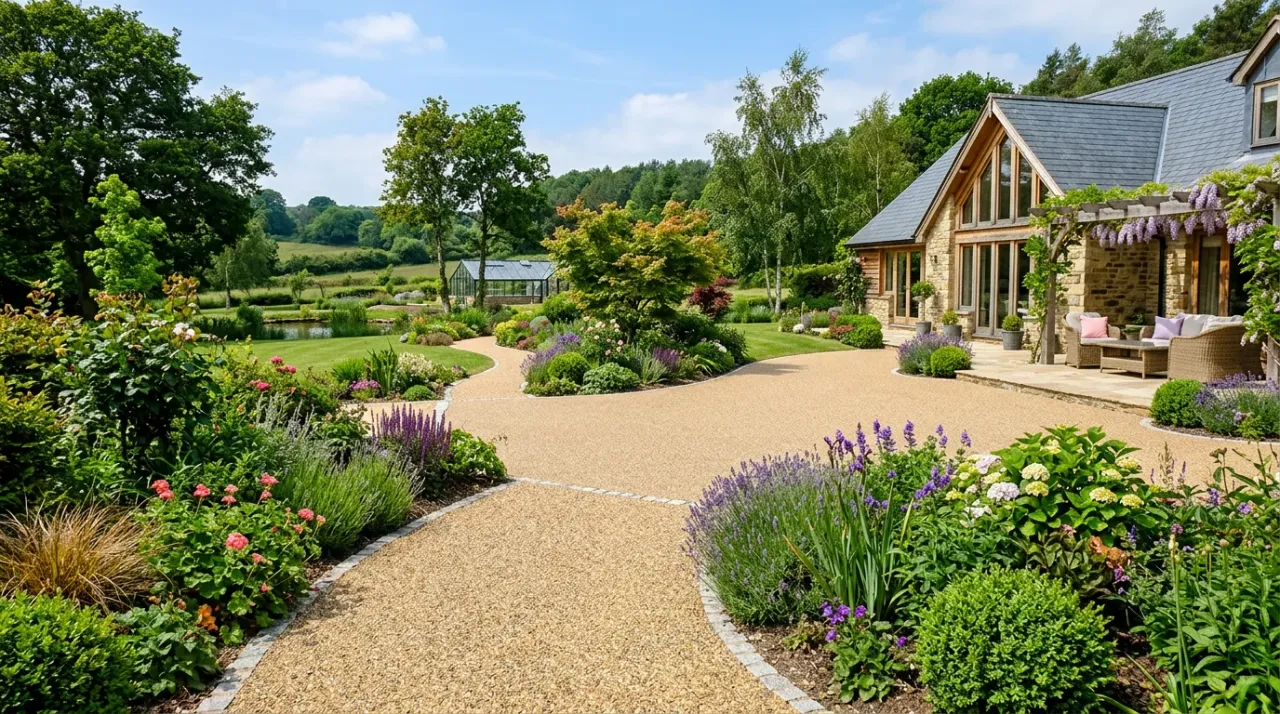
How to Use This Greenhouse Foundation Calculator
Planning a greenhouse foundation requires precise measurements to ensure you order enough material without overspending.
- 1 Measure Area: Measure the length and width of your planned greenhouse foundation area in feet.
- 2 Determine Depth: For most greenhouse foundation projects, a depth of 4 to 6 inches is recommended for stability.
- 3 Review Results: The calculator provides both cubic yards (for bulk volume) and tons (for ordering weight).
Common Materials for Greenhouse Foundations
Choosing the right base material ensures proper drainage, stable compaction, and long-term structural support to prevent settling or frost heave under your greenhouse.
| Material | Description | Best For | Est. Cost |
|---|---|---|---|
| Crusher Run (QP) | Angular, 3/4-inch minus crushed stone blended with fines that compact tightly into a dense, stable layer. | Compacted Sub-Base, Gravel Base Layer, Slab Foundation Prep, Frost-Depth Footings | $ |
| #57 Crushed Stone | Clean, uniformly graded 3/4-inch angular crushed aggregate with minimal fines and excellent void space for drainage. | Drainage Layer, Gravel Sub-Base, Pier Block Bedding, Under Concrete Slabs | $$ |
| Concrete (Ready-Mix) | Pre-batched mixture of Portland cement, sand, and coarse aggregate delivered by truck for poured slabs or strip footings. | Concrete Slab Foundations, Strip Footings, Pier Blocks, Commercial-Scale Greenhouses | $$$ |
| Masonry Sand | Fine, well-graded angular sand with consistent particle size used for leveling and bedding applications. | Fine Leveling Layer, Top of Gravel Base, Limited Use | $ |
Understanding the Cost
Several factors influence the final price of your greenhouse foundation project.
Material Volume
The dimensions of your project directly dictate the tonnage needed. Deeper bases require significantly more material.
Delivery Distance
Transport logistics play a major role. Being closer to the quarry or depot reduces delivery fees significantly.
Material Type
Decorative stones cost more than utility grades. Choose based on your project's functional and aesthetic requirements.
Recommended Products for Your Greenhouse Foundation
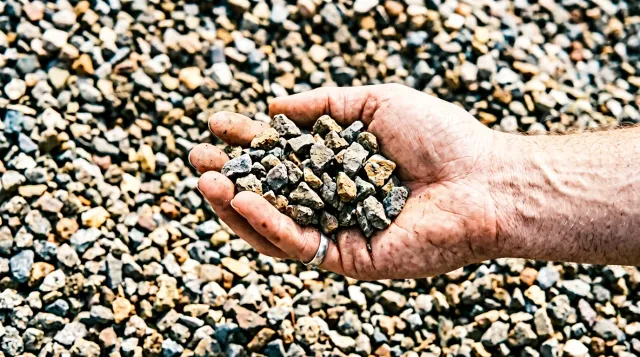
Gravel Calculator
This gravel calculator estimates cubic yards, tons, and coverage for any area. Enter dimensions and depth for driveways, patios, paths, and landscaping.
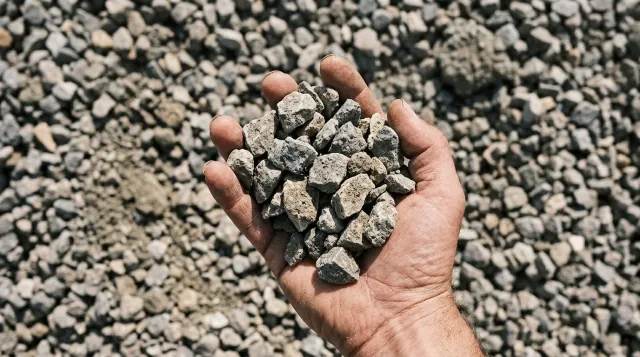
Crushed Stone Calculator
This calculator estimates crushed stone quantity and weight. Enter dimensions for results in cubic feet, cubic yards, and tons with density factored in.
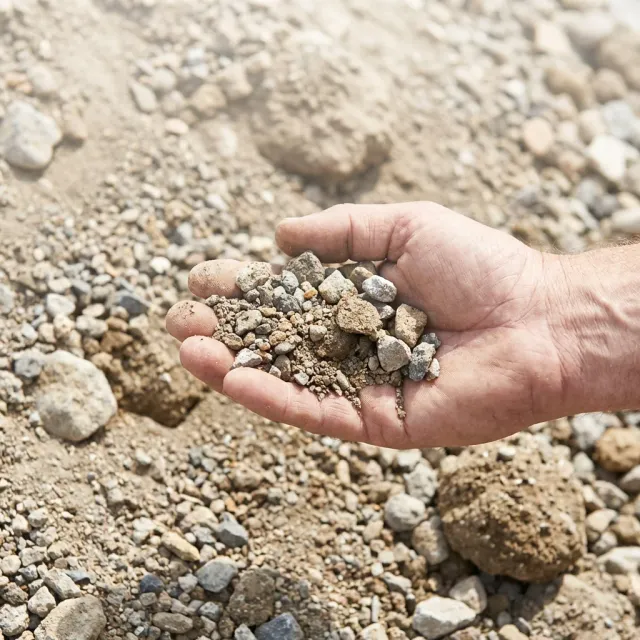
Road Base Calculator
Road base calculator — enter length, width, and depth to estimate volume and tonnage for crushed limestone, recycled concrete, and aggregate base.
Concrete Sand Calculator
Concrete sand calculator — estimate volume and weight based on your project's length, width, and depth. Results in cubic yards and tons, ready for ordering.
Frequently Asked Questions
What is the best foundation for a greenhouse?
For most homeowners and hobby growers, a compacted gravel base is the best foundation choice for a greenhouse. Here is why that matters: greenhouses are wet environments. You water plants constantly, humidity builds up, and moisture has nowhere to go if your floor does not drain properly. A gravel foundation solves that problem naturally by letting water move down and away from your structure rather than pooling beneath it. A concrete slab might seem like the more permanent or "professional" option, but concrete has real drawbacks for greenhouse use. It does not drain. Cracks develop over time as the ground shifts. It is far more expensive to install, and if you ever want to move or expand your greenhouse, you are stuck with a permanent slab. The approach we recommend to most buyers is a two-layer gravel system. Start with a 4-inch base of compacted crusher run, which is a dense-graded aggregate that compacts tightly and creates a stable, load-bearing surface. Then top that with 2 to 3 inches of clean drainage stone, such as pea gravel or a washed stone, to give you a finished surface that water passes through easily. This combination gives you a firm, level floor that drains beautifully and can be installed without heavy equipment or professional labor. If you are ordering through Hello Gravel, you can get both materials delivered by the truckload and choose your own delivery date to fit your project schedule.
What should I put under my greenhouse floor before laying gravel?
The work you do before the first piece of gravel goes down is just as important as the gravel itself. Skipping this step is one of the most common reasons a greenhouse foundation settles unevenly or develops drainage problems down the road. Start by removing all grass, sod, and organic material from the footprint of your greenhouse. Roots and organic matter break down over time, and when they do, they create voids beneath your base that cause settling and soft spots. Dig down at least 4 to 6 inches below your finished grade, depending on how deep you plan to go with your gravel layers. Once the area is excavated, check that the ground is reasonably level. You do not need a perfectly engineered surface, but if you have significant high and low spots, grade them out now. A 6-foot level and a rake will get you close enough for most residential projects. Many builders place a layer of landscape fabric at this point, before any gravel goes in. Landscape fabric does not act as a weed barrier in the traditional sense here. Its real job is to separate your imported gravel from the native soil beneath it, which keeps the fine particles in your base from migrating down and losing their compaction over time. With the ground prepped and your fabric down, you are ready to bring in your base material. Hello Gravel delivers crusher run and other base aggregates by the truckload, so you can have everything on site and ready to go before you start spreading.
What kind of gravel hardens like concrete and works well for a greenhouse base?
The material you are looking for is crusher run, also commonly called dense-graded aggregate, road base, or processed gravel depending on your region. It is the aggregate that compacts down and behaves almost like a rigid surface once it is properly installed. Crusher run is made by crushing stone and leaving the mix unsorted, so it contains particles of many different sizes, from larger crushed rock down to fine stone dust. When you compact this blend, the large pieces lock together and the fines fill the voids between them. The result is a surface that resists movement, sheds water, and supports the weight of your greenhouse structure and everything inside it. This is very different from using a clean or washed stone as your only base layer. Clean gravel, like pea gravel or washed river rock, is made up of uniformly rounded pieces that will roll and shift under foot traffic because there is nothing binding them together. Clean stone has an important role to play as the top drainage layer of your greenhouse floor, but it should not be your structural base. For a greenhouse, crusher run is typically installed at 4 inches of compacted depth for most residential projects on firm ground. If your soil is soft, clay-heavy, or prone to shifting, going to 6 inches gives you a more reliable base. Hello Gravel carries crusher run and delivers it in bulk, so you can get the quantity your project actually calls for without overpaying for more than you need.
How deep should a greenhouse foundation be?
For a standard gravel greenhouse foundation, plan on at least 4 inches of compacted base material as your starting point. If your native soil is soft, poorly drained, or rich in clay, step that up to 6 inches for better long-term stability. These depths refer to your compacted base layer, not how deep you need to excavate. Because gravel compresses as it is packed down, you will typically need to bring in 20 to 25 percent more material than your finished depth suggests. Depth matters differently at the interior floor versus the perimeter. The interior floor mainly needs to support foot traffic, water, and the weight of potting benches and planting containers. The perimeter is where your greenhouse frame anchors into or rests on the base, so it carries the structural load of the building itself. A simple principle applies here: the load from your greenhouse walls and frame spreads downward and outward through your base material at roughly a 45-degree angle from the point of contact. This means your gravel base should extend a few inches beyond the greenhouse footprint on all sides, not just directly under the frame. In climates where the ground freezes, depth at the perimeter becomes even more important. Frost heave pushes upward on foundations when the water in the soil expands as it freezes. Gravel drains well and holds far less water than clay or loam, which naturally reduces frost heave risk. Even so, if you are building in a cold climate, going deeper at the perimeter, down toward your local frost line, helps protect your greenhouse frame from seasonal movement. If you are not sure what depth is right for your specific site and soil conditions, the Hello Gravel team is happy to help you think through it before you order.
How much gravel do I need for a greenhouse foundation?
The exact amount depends on three things: the length and width of your greenhouse, the total depth of your gravel layers, and the type of material you are using. Here is a straightforward way to estimate it. To find your cubic yardage, multiply the length by the width (in feet), then multiply that result by your depth in feet (so 4 inches becomes 0.33, and 6 inches becomes 0.5). Divide that final number by 27 to convert cubic feet into cubic yards. To convert cubic yards into tons, multiply by roughly 1.4 for crusher run or similar dense base material. As a real-world example, a 12 by 20 foot greenhouse with a 4-inch compacted crusher run base and a 2-inch drainage stone top layer breaks down like this. The crusher run layer (12 x 20 x 0.33 / 27) comes to about 3 cubic yards, or roughly 4 tons. The drainage stone layer (12 x 20 x 0.17 / 27) comes to about 1.5 cubic yards, or roughly 2 tons. That is approximately 6 tons total for both layers on a 240 square foot footprint. Keep in mind that compaction will reduce the volume slightly, so it is smart to order a modest amount extra rather than come up short mid-project. These are good estimates for planning purposes, but your actual numbers will vary based on your site grade, how well your native soil is compacted, and whether you need additional material around the perimeter. The Hello Gravel online calculator is the fastest way to get a more precise quantity based on your exact dimensions, and it takes just a minute to run the numbers.
More Project Calculators
Playground Calculator
This calculator estimates mulch, rubber, or wood fiber surfacing for playgrounds. Enter area and recommended depth to get cubic yards and tons.
Chicken Coop Calculator
Use this calculator to estimate how much gravel your coop base requires. Input dimensions and depth for volume in cubic yards and stone type guidance.
Basketball Court Calculator
Court base calculator — estimate gravel, sand, and sub-base quantities for backyard or regulation basketball courts. Input court size for material totals.
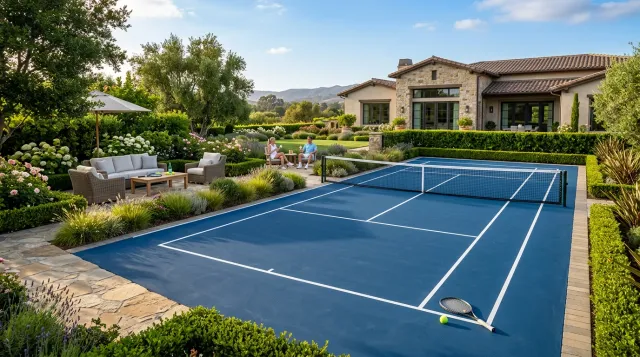
Tennis Court Calculator
Use this calculator to estimate the crushed stone base for a new or resurfaced tennis court. Enter dimensions and depth for volume and tonnage.
Delivery Logistics & Truck Info
Know your delivery options and access requirements before scheduling your order.
Truck Capacities
- Standard Dump Truck10–14 tons
- Tandem Axle14–18 tons
- Semi End Dump20–25 tons
A standard cubic yard weighs approximately 2,000–2,700 lbs depending on material and moisture.
Site Access Requirements
- Trucks require a minimum 12-ft wide, overhead-clear access path
- Soft ground or slopes over 10% may limit truck access — contact us before ordering
- Ensure no underground utilities or irrigation lines are in the drop zone
- Mark your desired drop location clearly before delivery
Important Notes
- Delivery estimates are based on available inventory and route proximity
- Minimum order quantities apply — typically 5 cubic yards or 1 truckload
- Material certification is available upon request for permitted projects
- Always confirm local ordinances before major material placement